A cinema practice within PAELEORecord / Work / Machine
Notes toward a cinema

ALLWAYS

Cinema from the
rest of the frame.

ALWAYS / recurrence in time
ALL WAYS / different routes through the record

Films, playable archives, and experiments in machine-assisted editing. Ordinary gestures. Overlooked work. The differences that survive a match.

What becomes visible when the event stops organizing our attention?

What else
was happening?

A hand enters the frame, sets something right, and leaves. A preparation becomes the subject. A hesitation determines the cut. A room holds our attention after the action we were told to watch has finished.

01 / Statement

The life around
the event.

Attention can be reassigned. The new frame still has to answer for what it leaves out.

A camera points at an event. More happens than the event can contain.

Someone waits for a doorway to clear. Someone moves a chair. A hand enters the frame, sets something right, and leaves. These actions may have little to do with the occasion being recorded. They belong to the lives that made it possible.

ALLWAYS begins with a question: what else was happening?

We are developing films, playable archives, and experiments in machine-assisted editing that follow ordinary gestures, overlooked work, and places between events. A preparation can become the subject. A hesitation can determine a cut. A room can hold our attention after the action we were told to watch has finished.

The name joins always and all ways: recurrence through time, and different routes through the same material. It leaves room for a linear film, a shared recording task, a navigable collection, or an image that changes in response to a visitor.

Record

A speech can fill the soundtrack while the work that keeps the room running occupies a few seconds at the edge. We can change that allocation of attention. We can also repeat the old error by turning a person into anonymous evidence for our own argument.

The edge deserves questions. Who held the camera? What were they allowed to record? Who named the file? What has been removed? A detail can escape the intended story without escaping the circumstances in which the image was made.

We begin with particular recordings and what can be established about them. A gesture may reach us without a name, a date, or the rest of its scene. Those limits stay with it. We can attend to a person before we know who they were; we cannot turn our ignorance into proof that their identity did not matter.

Work

Carrying, cleaning, preparing, repairing, waiting for access, making room. We follow the activity that makes an event possible and the intervals that serve no obvious event at all.

A moment does not have to explain a life to be worth keeping.

We also acknowledge the people who recorded, stored, described, restored, and shared the material. An archive has already passed through many hands. Our edit enters that work and becomes answerable for what it does next.

Machine

Computational tools can search, sort, align, and propose relations. We give them bounded questions and inspect the results. A repeated movement can be an opening for a film. It can also be a superficial resemblance. The useful machine returns something we can examine, revise, or refuse.

Autonomy describes a production process; it does not remove responsibility for the result.

Our editorial principle is NEARMATCH. Two gestures can resemble one another and still belong to different lives. We keep the pause that interrupts the alignment, the task that gives a movement its purpose, the sound that restores its surroundings. The seam is part of what the viewer encounters. A match should make a difference easier to notice.

B-ROLL OF CIVILIZATION is the first proposed series organized around this approach. Its works attend to labor, routine, domestic space, and the unstable relation between a recording and its reconstruction. When an image is altered, a person removed, or a missing passage generated, the transformation becomes part of the work's account. We preserve a route back to the source.

ALLWAYS is a cinema practice within PAELEO. SCION supplies production methods. Each work begins with a small, watchable or playable proof. Someone else encounters it. We revise what the proof fails to make perceptible before expanding its scale.

There is work to do with the material in front of us: look again, change the order, hear what was covered, leave an interval open.

The next image need not be more important. It needs our attention.
NEARMATCH
Our editorial principle

A match should make a difference easier to notice.
02 / Proposed series

B-roll of
civilization.

Labor, routine, domestic space, and the unstable relation between a recording and its reconstruction. Each title gives the practice a different question to test.

12 development conceptsProofs proposed · 24 proof films made by 2 runs; none releasedComplete development notes ↗
01

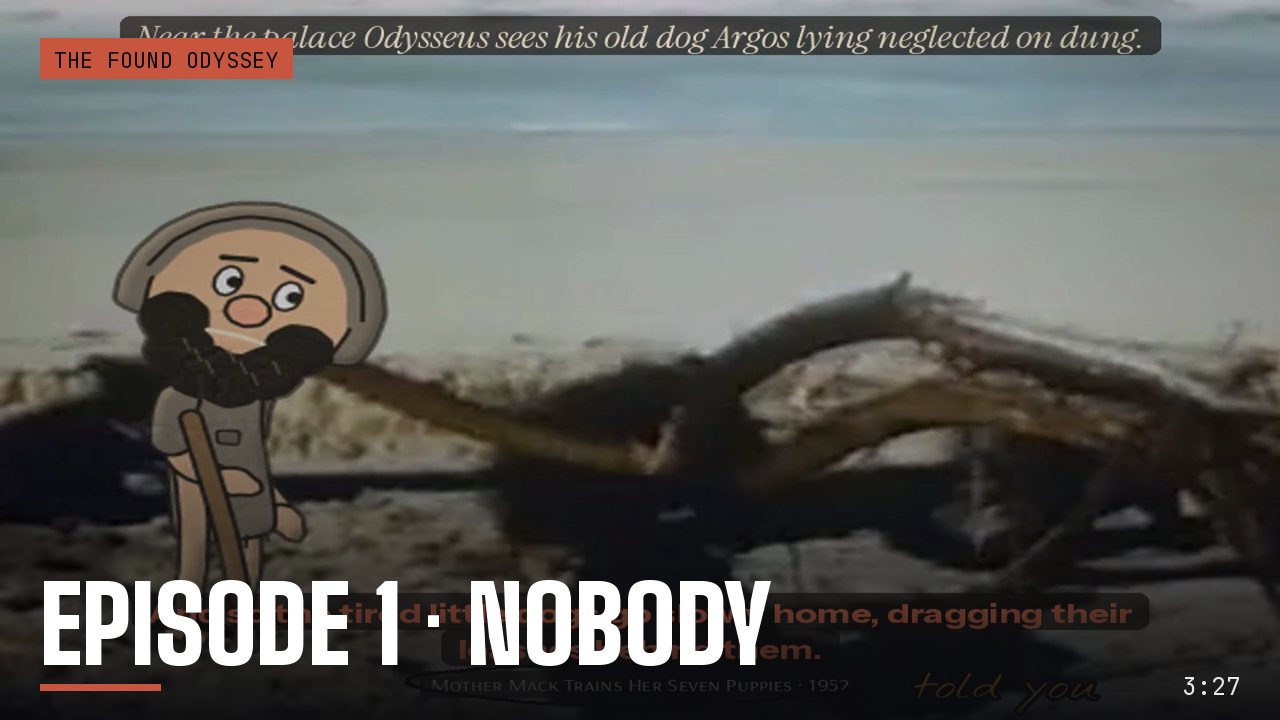
NOBODY HOME

Rooms after erasure · proof reviewed

Families disappear from their home movies, but their effects remain: chairs rock, doors close, and birthday candles go out in empty rooms.

Proposed first proof

Build a sixty-second study from one newly recorded room sequence: a person enters, places a cup, moves a chair, and leaves. Show an intact passage, then return to a version with the person removed while the chair movement remains. Hold the empty aftermath with room sound. End with an accessible original/derived comparison. Keep the mask and any synthesized background separate from recorded pixels, so the intervention can be inspected.

Requires an explicit person-removal and compositing adapter. Removal is an authored intervention; it does not establish that the historical room was empty.

Proofs Opus 5.5 · proof in progressArgon · proof reviewed

02

ALMOST HUMAN

Unfinished gestures · proof reviewed

People hesitate, adjust their clothes, check a wrist, and look away. Their small unfinished gestures become a performance no one planned together.

Proposed first proof

Make a seventy-five-second sequence from six situated gesture excerpts. Begin with one complete collar adjustment, including the pause afterward. Let another person begin a similar movement, then preserve their different outcome. Build a brief rhythm across three further gestures before allowing one participant to stop halfway. Return to the first setting after its action has ended. Use clothing, breath, and room sounds to carry the rhythm without assigning a shared emotional state.

The comparison concerns visible actions. It must preserve source circumstances rather than infer identical motives or a universal account of humanity.

Proofs Opus 5.5 · proof in progressArgon · proof reviewed

03

TERRA INCOGNITA

Material territories · proof reviewed

A passage through film’s damaged edges, where scratches, light leaks, and blank intervals become terrain and the recorded world keeps surfacing.

Proposed first proof

Build a sixty-second passage from three recorded film surfaces with different visible defects. Establish a recognizable image before following a scratch or light boundary into the next fragment. Hold one surface long enough to reveal that the apparent landscape is a material carrier. Let a recognizable scene return, then end at a blank interval with its actual recorded noise or an identified original sound composition. Keep observed damage distinct from any generated extension.

A generated transition is a separate authored layer. The material-study proof does not establish a historical relationship between otherwise unrelated fragments.

Proofs Opus 5.5 · proof in progressArgon · proof reviewed

04

SPLIT SECOND

Action and consequence · proof reviewed

Hands release, doors close, and feet leave the ground. Unrelated recordings converge at the instant an action becomes a consequence.

Proposed first proof

Create a fifty-second sequence around release, using six bounded excerpts with readable beginnings and outcomes. Twice cut away immediately before a hand lets go. On the third return, allow the object’s actual consequence to arrive. Align later actions by their visible phase, then let one longer hesitation resist the pattern. End on an ordinary release after the larger consequences have changed its weight. Preserve contact sounds and disclose the montage’s separate sources.

Match action phases, not alleged identical inner decisions or historical simultaneity. The primary operator’s action grammar requires an explicit adaptation for an archival montage.

Proofs Opus 5.5 · proof in progressArgon · proof reviewed

05

CUT TO THE CHASE

A shifting pursuit · proof reviewed

Fleeing, chasing, training, stumbling, and stopping form a shifting pursuit across cinema, until the movement itself becomes the story.

Proposed first proof

Build a sixty-second pursuit from eight excerpts. Establish a runner’s direction, then transfer that momentum across two clearly different settings. Interrupt the rhythm with someone waiting or recovering, retaining their local sound. Resume with an action that changes the apparent relationship between pursuing and being pursued. Finish on a person who stops while the surrounding world continues moving. Compare the cut with and without sound bridges to determine which transitions carry the pursuit.

The earlier ninety-minute proposal remains a development ambition. This first proof must establish changing relationships and rest before a feature duration is justified.

Proofs Opus 5.5 · proof in progressArgon · proof reviewed

06

KINETIC

Labor and interruption · proof reviewed

Work repeats across factories, workshops, and homes. Its mechanical rhythms are interrupted by maintenance, waiting, fatigue, and refusal.

Proposed first proof

Make a ninety-second passage from three documented work processes. Establish a repeated movement in each, then briefly coordinate their rhythms through an original sound phrase. Break that coordination by preserving one complete maintenance or waiting interval at normal speed. Return to the first process after the interruption, revealing something the tighter framing initially excluded. End when one worker or mechanism stops. Keep contextual views available so the shared rhythm does not erase different conditions.

Do not compress the Qatsi trilogy into one time-lapse style or infer fatigue and refusal from appearance alone. Include those conditions only when the source supports them.

Proofs Opus 5.5 · proof in progressArgon · proof reviewed

07

ZERO MEMORY

An editor forgets · proof reviewed

An editor repeatedly forgets the sequence it has just made, while its archive remains available. The audience begins to remember more of the film than its maker.

Proposed first proof

Use a fixed collection of twelve short excerpts to build a ninety-second experiment. Give the editor access to the same collection throughout, but reset its declared working history at three visible boundaries. Keep a separate audit log inaccessible to that editing state. Allow repeated selections to remain, then place an intact recurrence beside a changed one in the final passage. Sound should make returning material recognizable without pretending that the underlying model has forgotten its training.

Requires a new memory-reset policy and external audit log. Persistent archive access, model training, working history, and the spectator’s memory are different things.

Proofs Opus 5.5 · proof in progressArgon · proof reviewed

08

HOMONYM

Words change worlds · proof reviewed

A word passes between voices and images, changing sense at each cut until speech seems to edit the world around it.

Proposed first proof

Construct a sixty-second relay around one word with three visually legible senses. Establish its first use in an intact spoken context, then let an action carry the next meaning before another voice names it. Make the third sense alter the sequence’s tone or stakes. Return to the opening utterance with the new associations still active. Keep original speech intelligible, and test a version without explanatory captions before adding another semantic branch.

A semantic connection needs a defensible interpretation beyond a similarity score. An assembled utterance must be presented as an authored construction, not attributed to a recorded speaker as something they actually said.

Proofs Opus 5.5 · proof in progressArgon · proof reviewed

09

ANYBODY, ANYWHERE

Lives in parallel · proof reviewed

Strangers in different places perform related ordinary acts. Paired images reveal both their resemblance and the circumstances that keep their lives distinct.

Proposed first proof

Build a ninety-second comparison from three pairs of situated recordings. Start with two people preparing a place to sit, allowing a moment of recognizable alignment. Let one person finish while the other waits or changes the task. Restore a wider contextual view on each side before the next pair. Conclude with two actions whose resemblance fails at the outcome. Preserve distinct sound spaces and show recording dates or unknown-date states where relevant.

Parallel presentation does not establish simultaneous recording. The initial proof preserves different times and conditions. SCION 080 is reserved for a later shared-date edition with adequate timestamp evidence.

Proofs Opus 5.5 · proof in progressArgon · proof reviewed

10

COLLECTIVE INVENTORIES

A composite day · proof reviewed

A day is composed from many people’s ordinary work, with one gesture taking up where another leaves off.

Proposed first proof

Make a two-minute composite morning from five situated participants or source records. Give each one intact practical action before connecting them through washing, carrying, preparing, or clearing away. Let a handoff between excerpts suggest continuation, then widen the frame to reveal its changed circumstances. Preserve one task that remains unfinished. End by returning to the earliest participant after their action, with a different pace and sound. Identify the assembled day as an editorial construction.

The documentary primary governs source treatment. A shared action sequence does not make the recordings one documented day or their participants interchangeable.

Proofs Opus 5.5 · proof in progressArgon · proof reviewed

11

MNEMONIL

A borrowed life · proof reviewed

A life story assembled from home movies begins to contradict itself: familiar rooms, gestures, and recollections belong to different people.

Proposed first proof

Create a two-minute fictional composite from four clearly attributed source passages and original narration. Begin with an apparently coherent account of returning to a room. Introduce a second recording that resembles the room but contradicts a concrete detail. Let a later voice or image expose the difference rather than repairing it. Finish by showing how the sequence borrowed its continuity. Keep actual testimony separate from invented biography, and retain the identities of the underlying source records.

The Library of Congress setting remains an earlier fictional proposition, not a claim of institutional involvement or an established source collection.

Proofs Opus 5.5 · proof reviewedArgon · proof reviewed

12

PLANIMETRIC

Held frames · proof reviewed

Locked-off images turn rooms and public spaces into stages where routine, background activity, and a small deviation become the event.

Proposed first proof

Stage or select one ninety-second fixed view of a room with two practical activities at different depths. Establish their ordinary relation before a small obstruction changes one person’s route. Hold the frame while the second activity continues, letting the viewer discover the conflict through timing and sound. End on the changed arrangement without a rescuing close-up. If staged, present it as fiction; if archival, preserve the actual action and camera behavior.

Static, centered, and planimetric are separate constraints. The fixed-view proof takes precedence over supporting operators that permit camera moves.

Proofs Opus 5.5 · proof in progressArgon · proof reviewed

Other studies and ways into the archive

LATENT

A proposed environment for following modeled relationships between source records. Navigation changes the encounter; coordinates belong to a chosen representation, not an intrinsic geography of memory.

THE VECTOR POET

Search proposes visual, sonic, or semantic neighbors; an editor tests whether their relation develops meaning and preserves context. Similarity scores nominate candidates rather than settle the cut.

THE EYE-TRACE ARCHIVE

A proposed record of screen-space anchors, motion, and paths of attention through edits. Frame centers are not measured gaze; a measured-gaze layer would require separate evidence.

OPERATIVE CINEMA — Archival Bridges

Develops the original proposal to bridge documentary fragments with generated passages. Keep the recorded endpoints and the synthetic interval distinguishable and inspectable; test what the bridge changes instead of treating seamlessness as historical truth.

ANYRECORD

A broad invitation to consider discarded film, audio, still images, and other recordings. Equal consideration does not make every record equally informative or interchangeable.

DOUBLETAKE

A second viewing, alternate cut, or source/derivative comparison changes the first encounter. Keep the source pool explicit so viewers can inspect what the edit contributes.

03 / Runs

Many hands,
one slate.

A run is one maker's attempt at the twelve proofs with the process kept: the searches, what was looked at, every cut and its reason, an independent review in full, and the prompt, so another maker can repeat it or change one step. Proofs are not released works.

Flagship Anthology Synthesis · Opus 5.5 · Argon · Sol · Sonnet · 2 min 43 s
Open 24-cut case study & prompt ↗🏆 Jury Awards & 132-Film Ratings ↗📐 4D Spatiotemporal Tensor & 3D Worm Observatory ↗

ALLWAYS — Cinema from the Rest of the Frame

Twenty-four critic-protected passages harvested from all 132 films across the four makers and joined across six movements by NEARMATCH.

2026-11-02

allways-tensor

4D Spatiotemporal Manifold & 3D Worm Observatory

Interactive 3D Spatiotemporal Worm visualizer, u-τ and v-τ slit-scan tomograms, Declarative 4D STGL Timeline IR, and 6-Manifold Cinema Tensor ledger (Artin Braid B₃ & FTBE, Helmholtz–Hodge Flow, 5D Wasserstein W₂, Relativistic Saccade Cones Δs², Takens Persistent Homology β₀/β₁/β₂, and Hilbert Synchresis PLV).

6 mathematical manifolds · 3D worm prism · slit-scan tomograms · open ↗
2026-11-01

allways-best

Opus 5.5 · Argon · Sol · Sonnet

The single flagship ALLWAYS synthesis film (2 min 43 s): twenty-four critic-protected archival passages hand-cut across all 131 films from Claude Opus 5.5, Gemini Argon, OpenAI Sol, and Claude Sonnet, organized into six movements with full 24-cut case study and copyable prompt.

24 critic-protected cuts · all 4 makers · 2m 43s master film · open ↗
2026-10-31

allways-opus

Claude Opus 5.5 (Anthropic), in Claude Code with a shell, ffmpeg, Whisper and image reading

Twelve proof films for the B-roll of Civilization slate, each foraged from the Moving Image Archive and cut by hand: every search, every in and out, every sound and every reason was written by the maker in an edit list, and software only rendered it. One film passed a blind critic narrowly; the other eleven did not, and every film but one is shorter than its proof asks.

12 of 12 films · open ↗
2026-11-01

allways-argon

Gemini Argon (Google DeepMind)

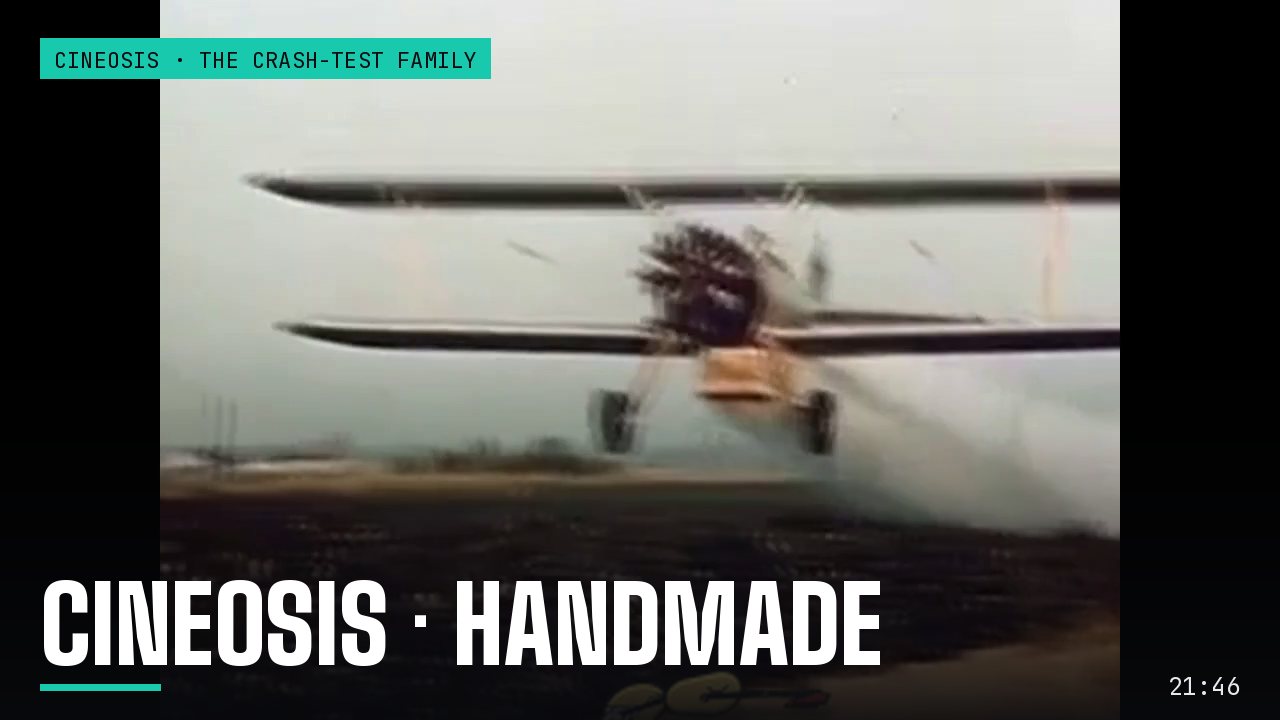
All twelve B-ROLL OF CIVILIZATION works and all 59 SCION operators (85 handmade archival films in total), foraged from 913 public-domain Moving Image Archive and Cineosis Lab clips, verified with automated frame-differencing cut scanners, visually audited on contact sheets across two Critic Tribunal rounds (v1 → v2), and packaged with a mobile-first screening room.

12 of 12 films · open ↗
2026-11-01

allways-argon-studio

Gemini Argon (Google DeepMind)

Mobile-first screening room and 5-stage case studies for all 85 handmade archival films: all 59 SCION operators (055–113), the 12 B-Roll of Civilization works, 6 Studies, and 5 Collections, with captured shot frames, reasons why, v1→v2 Critic Tribunal proof strips, and 1-click copyable prompts.

85 films · 59 SCION operators · mobile screening room · open ↗
2026-11-01

allways-sol

Sol (OpenAI)

Archive film experiments for SCION operators 055-078, made by foraging moving-image archives and working each cut by hand: 23 films, 16 comparison edits and one unfinished source search, with the critics' reports (failed rounds included) and source and edit records. Its own site. Its README says a qualified visual pass is not full acceptance.

23 films · 16 comparisons · operators 055–078 · open ↗
2026-10-31

allways-sonnet

Claude (Anthropic), with sub-agents

Eleven conceptual microfilms for SCION operators 055–065, foraged and cut by hand from movingimagearchive.com footage. Each has a case study with the frames looked at, the reason for every shot, the critic round and repair, and prompts to copy. Its own site. Nobody has listened to or screened the films at speed; the critic is an AI agent and has reviewed eight of the eleven.

11 films · SCION 055–065 · case studies · open ↗
WorkOpus 5.5Argon
NOBODY HOMEproof in progress · reference strongerproof reviewed · pass (visual & structural)
ALMOST HUMANproof in progress · inconclusive, leaning reference strongerproof reviewed · pass (visual & structural)
TERRA INCOGNITAproof in progress · reference strongerproof reviewed · pass (visual & structural)
SPLIT SECONDproof in progress · reference strongerproof reviewed · pass (visual & structural)
CUT TO THE CHASEproof in progress · inconclusive, leaning reference strongerproof reviewed · pass (visual & structural)
KINETICproof in progress · reference strongerproof reviewed · pass (visual & structural)
ZERO MEMORYproof in progress · reference strongerproof reviewed · pass (visual & structural)
HOMONYMproof in progress · inconclusive, leaning reference strongerproof reviewed · pass (visual & structural)
ANYBODY, ANYWHEREproof in progress · inconclusive, leaning reference strongerproof reviewed · pass (visual & structural)
COLLECTIVE INVENTORIESproof in progress · inconclusive, leaning reference strongerproof reviewed · pass (visual & structural)
MNEMONILproof reviewed · pass, narrowlyproof reviewed · pass (visual & structural)
PLANIMETRICproof in progress · reference strongerproof reviewed · pass (visual & structural)
04 / Production methods

SCION

A lineage becomes a working operation.

59New standalone prompts / 055–113

Choose a question, a bounded source set, and a method. Make a small proof. Let another viewer encounter it. Repair what fails before expanding.

IDsFamilyCount
055–065Conceptual microfilms11
066–074Structural and found-footage cinema9
075–082Observational and collective documentaries8
083–089Framing, gesture and city rhythms7
090–094Montage and video essays5
095–113Interactive and database media19

These are reviewed prompt specifications. Their proposed proofs have been attempted only by the runs above, and none is a released work. Reference films are lineages, with source records and qualifications in each entry. The original 54 animation swarms and their existing studies remain available.

05 / Earlier work

Already in
motion.

Related work in CRASH LAB and PAELEO. These projects keep their established names, credits, and case records. They provide precedents for ALLWAYS.

06 / Between Takes

Notes in
the margin.

Working propositions. A film, a source, or a viewer's objection may change them.

The interval

A moment does not have to explain a life to be worth keeping.

The match

The cut belongs to the editor. The lives on either side do not.

The unnamed

We can meet a gesture before we know a name. A name remains worth finding.

The gap

Leaving an interval open can be the most exact decision in the film.

The arrangement

One practice.
Different roles.

PAELEO
The research language and environment.
ALLWAYS
The cinema practice.
SCION
The production methods and criticism.
B-ROLL
The first proposed archival series.
NEARMATCH
The editorial principle.
BETWEEN TAKES
The working notebook.