43 s · ends with a 5 s card naming every source. I cannot hear; neither could the critics. Sound is unjudged until a person listens.
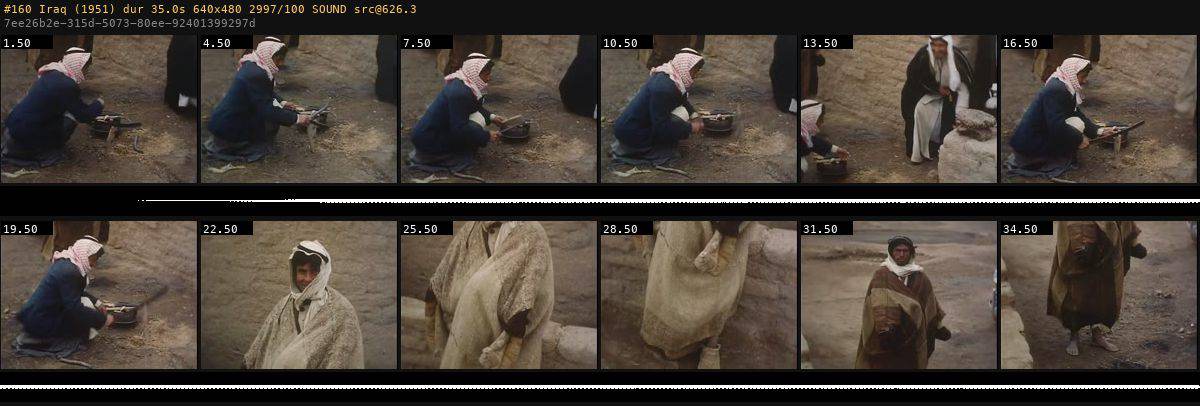
Pairs of strangers doing related things, side by side, each half with its own sound and its own date. 1961 and 1944 prepare a place to sit; one has sat down and the other has left the chairs empty. Iraq 1951 lights a fire in silence beside an American kitchen film talking about productivity. Two people sweep.
12searches
9filmstrips looked at
12shots
1review rounds
1 The brief
Strangers in different places perform related ordinary acts. Paired images reveal both their resemblance and the circumstances that keep their lives distinct.
First proof. Build a ninety-second comparison from three pairs of situated recordings. Start with two people preparing a place to sit, allowing a moment of recognizable alignment. Let one person finish while the other waits or changes the task. Restore a wider contextual view on each side before the next pair. Conclude with two actions whose resemblance fails at the outcome. Preserve distinct sound spaces and show recording dates or unknown-date states where relevant.
Development boundary. Parallel presentation does not establish simultaneous recording. The initial proof preserves different times and conditions. SCION 080 is reserved for a later shared-date edition with adequate timestamp evidence.
The operator’s acceptance criteria
The first correspondence can be understood at the intended display size.
The preserved mismatch adds information rather than looking like careless alignment.
Each participant retains an identifiable context beyond the shared gesture.
The final hold has a different expectation from the opening.
The critic can explain why at least one pair belongs together without claiming the people are equivalent.
2 The prompt
The method prompt for this run, followed by this film's inputs. Paste it into an agent with a shell, ffmpeg, a speech recognizer and image reading. It is a reconstruction of what the run did, written afterwards; the run itself began from a short request.
1,148 words
You are making one proof film for ALLWAYS (a cinema practice within PAELEO) from the Moving Image Archive (movingimagearchive.com; public-domain films, which the site says are free to reuse). You work as a hand editor.

"By hand" means: you search, you look at what came back, you listen, and you write every in-point, out-point, order, gain and reason yourself, in an edit list. Software renders the list; it never chooses a shot, a trim or a sound. Do not generate footage. Do not pick shots by similarity score. Do not run a pipeline that edits for you.

## Input

- `[FILM]` the title, concept, first proof and development boundary (below).
- `[OPERATOR]` the primary SCION operator and its acceptance criteria (below; the full prompt is at `operator.html#s<N>`).
- `[SOURCE SET]` the archive's search API: `POST https://www.movingimagearchive.com/api/search` with `{"query": "..."}` returns clips with `videoUrl`, `thumbnailUrl`, `startSeconds`, `endSeconds`, `sourceTitle`, `sourceYear`, `sourceSlug`. One request at a time, about 1.4 s apart; it rate-limits.
- `[DELIVERY]` one film, 4:3, with sound, no longer than the proof asks, plus the case-study folder described in `RUNS.md`.

## Process (do all of it, in order; keep what you make, including what fails)

1. **Read the proof.** Write the three to six specific things a viewer must be able to notice. These are what you will judge your own cut against.
2. **Forage.** Write 8 to 14 searches in plain visible-action language ("a woman adjusts her hat, looking at herself"), not themes. Run each, save the results, and make one numbered contact sheet per query (thumbnail, #number, duration, year, title). Look at every sheet.
3. **Look closer.** For each candidate, fetch the clip and make a time-coded filmstrip with its waveform. Find where the action starts, completes, and what follows it. Note the native size and whether it has sound.
4. **Listen.** Transcribe candidates with word timings. Speech recognition invents words in hiss ("Thank you."). Check against the waveform and loudness before believing a word. An invented word is never evidence. If you cannot hear audio, say so in the case study and treat sound decisions as unverified.
5. **Write the edit list.** For each shot: clip number, in, out, gain, any sound taken from another clip (with its source), speed, hold, caption, and one sentence of reason that a reader could disagree with. Sound or captions from another source go in the ledger as such.
6. **Render, then check the render.** Make a contact sheet of every shot's head, middle and tail; transcribe the render; measure loudness per shot. Fix what you find. Known traps: a clip's closing cut can show up in your trim; holding a last frame can freeze the next shot of the source.
7. **Disclose derived layers.** If you remove, extend, generate, retime, mirror, or re-voice anything: keep the original, mark the derived layer on screen or in the ledger, and say what is unknown. Authored narration is labelled invented and synthetic.
8. **Blind critic.** Give a fresh agent only: a timecoded contact sheet of the final film, a transcript with loudness per 2 s, and the film's brief and acceptance criteria. Not your edit list, ledger, reasons or summaries. It names one specific event before it reads the brief. It returns a verdict (pass / reference stronger / inconclusive), the largest gap, up to three repairs each with a timecode and a checkable condition, and one strength to protect. It cannot hear: take no sound verdicts from it, and check its claims against the cut before obeying them.
9. **Repair what is true; leave what is wrong and say so.** If you changed the film, ask a new critic. Stop when you can say honestly what still falls short of the brief.
10. **Package** the case study per `RUNS.md`: searches and sheets, strips, the edit list with reasons, the ledger, the critic packets and verbatim reports, repairs, and what is open.

## Rules

- Status is not self-awarded. A film is "proof in progress" unless a blind critic passed it; "released" is for a person to say.
- Unknown dates and names stay unknown. Never imply two clips recorded the same event.
- Do not make assembled speech look like a speaker's own statement.
- Say what you could not perceive. A maker that cannot hear, or cannot see motion, must say so, because it changes what the cut proves.

## Tools (in `tools/`; Python 3, ffmpeg, Pillow, numpy)

- `forage.py <film> "query" ...` runs searches one at a time, writes `forage.json` and a contact sheet per query.
- `look.py <film> <n>[:step[:in:out]] ...` makes a time-coded filmstrip with waveform for clip #n.
- `hear.py <film> <n> ...` word timings (needs `mlx_whisper`, Apple silicon; substitute any word-timing ASR).
- `beats.py <film> <n> <in> <out>` motion-energy peaks, a helper for the eye.
- `cut.py <film>` renders `edl.json`; it chooses nothing. `pairs.py <film>` renders side-by-side pairs from `pairs.json`.
- `reel.py <film>` contact sheet of the rendered film, shot by shot.
- `packet.py <film>` builds what the critic gets.
- `erase.py` + `erase_plate.py` person removal for NOBODY HOME (SAM 2.1 tracked mask; replacement pixels from the same shot; unknowns listed). Set `SAM2_ROOT` to a folder with `models/sam2.1_hiera_small.pt`.
- `speak.py` authored narration with Kokoro-82M. `adopt.py` brings clips found in a local word index into a film's forage (set `CINEOSIS_LAB`).

---

## This film

**Title:** ANYBODY, ANYWHERE (Lives in parallel)

**Concept:** Strangers in different places perform related ordinary acts. Paired images reveal both their resemblance and the circumstances that keep their lives distinct.

**First proof:** Build a ninety-second comparison from three pairs of situated recordings. Start with two people preparing a place to sit, allowing a moment of recognizable alignment. Let one person finish while the other waits or changes the task. Restore a wider contextual view on each side before the next pair. Conclude with two actions whose resemblance fails at the outcome. Preserve distinct sound spaces and show recording dates or unknown-date states where relevant.

**Development boundary:** Parallel presentation does not establish simultaneous recording. The initial proof preserves different times and conditions. SCION 080 is reserved for a later shared-date edition with adequate timestamp evidence.

**Primary operator:** SCION 56 · Symmetry — Imperfect Pairing. Full operator prompt: https://hartswf0.github.io/bolas/paeleo/allways/operator.html#s56
**Supporting:** SCION 99 · Out My Window — Situated Panorama of Voices

**Operator's creative theorem:** Create a paired image that first satisfies an expectation of correspondence, then reveals a difference consequential enough to alter the relation. Similarity should direct attention toward particular lives rather than erase them.

**Acceptance criteria (from the operator):**
- The first correspondence can be understood at the intended display size.
- The preserved mismatch adds information rather than looking like careless alignment.
- Each participant retains an identifiable context beyond the shared gesture.
- The final hold has a different expectation from the opening.
- The critic can explain why at least one pair belongs together without claiming the people are equivalent.
3 What was searched
One search at a time, in plain visible-action language. Each sheet is what came back: numbered thumbnails with duration, year and title. These are the images the maker looked at (or, where it could not, see the note below).
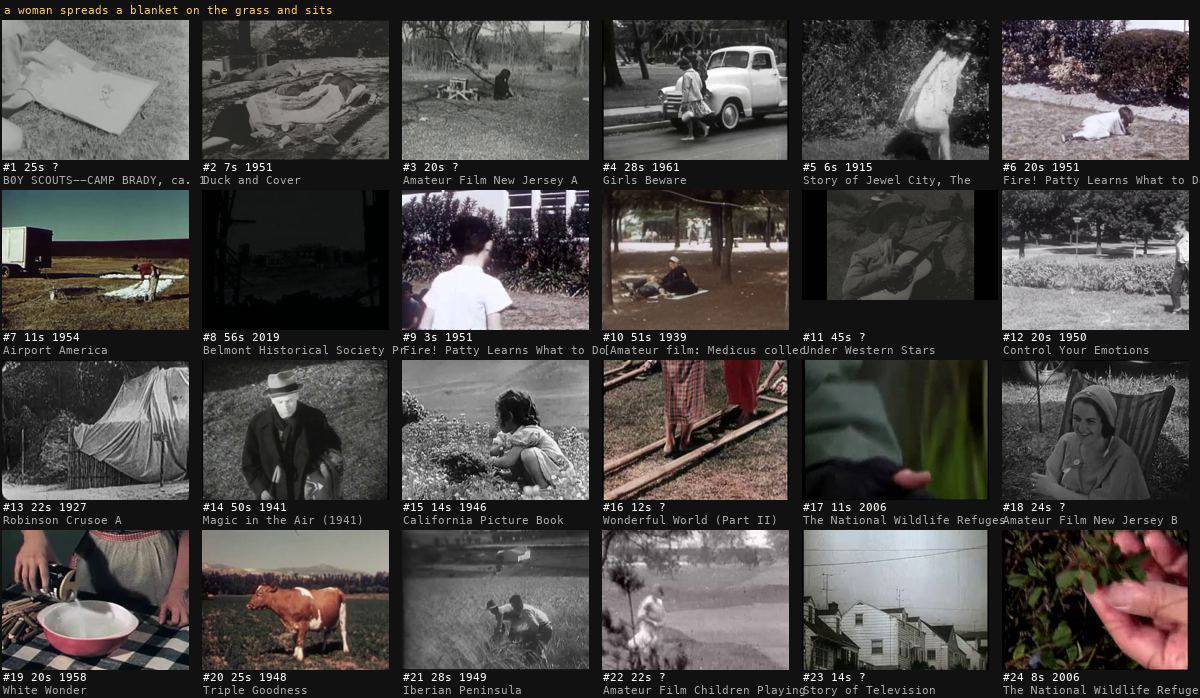
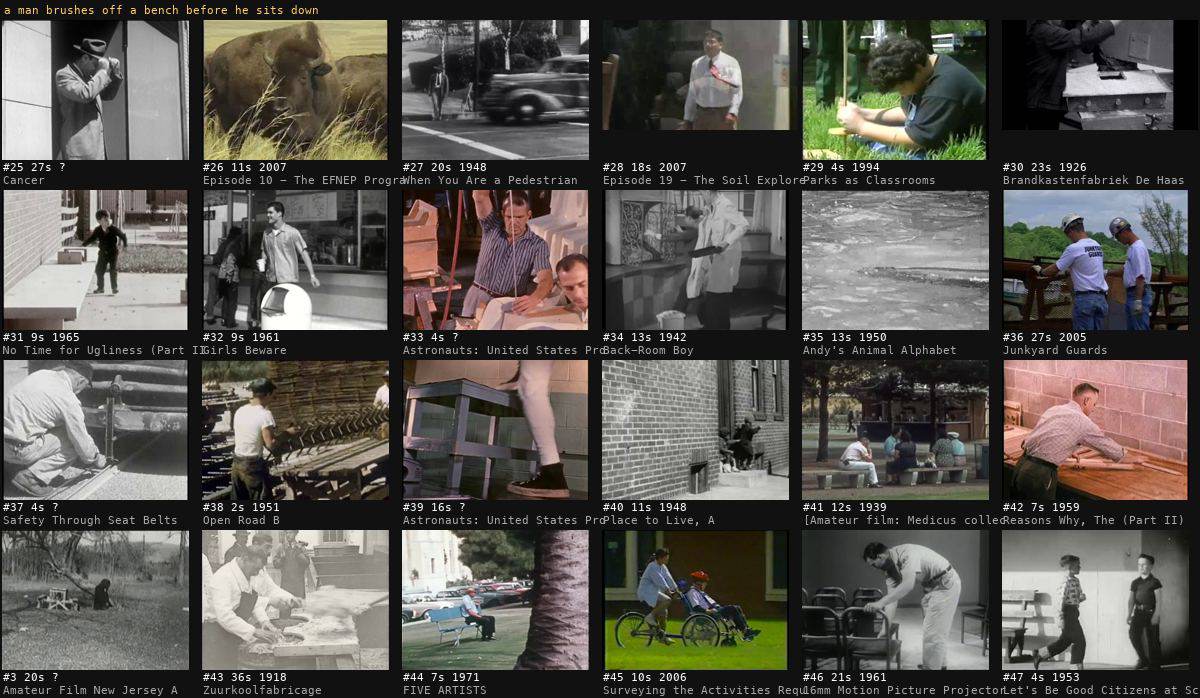
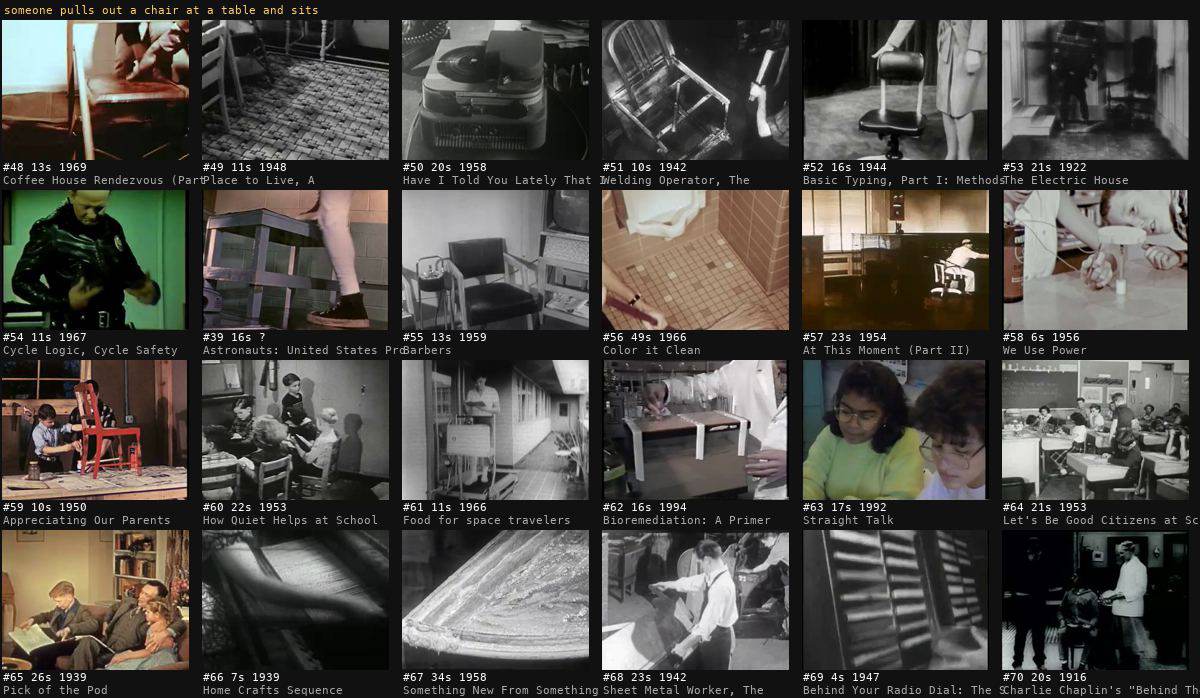
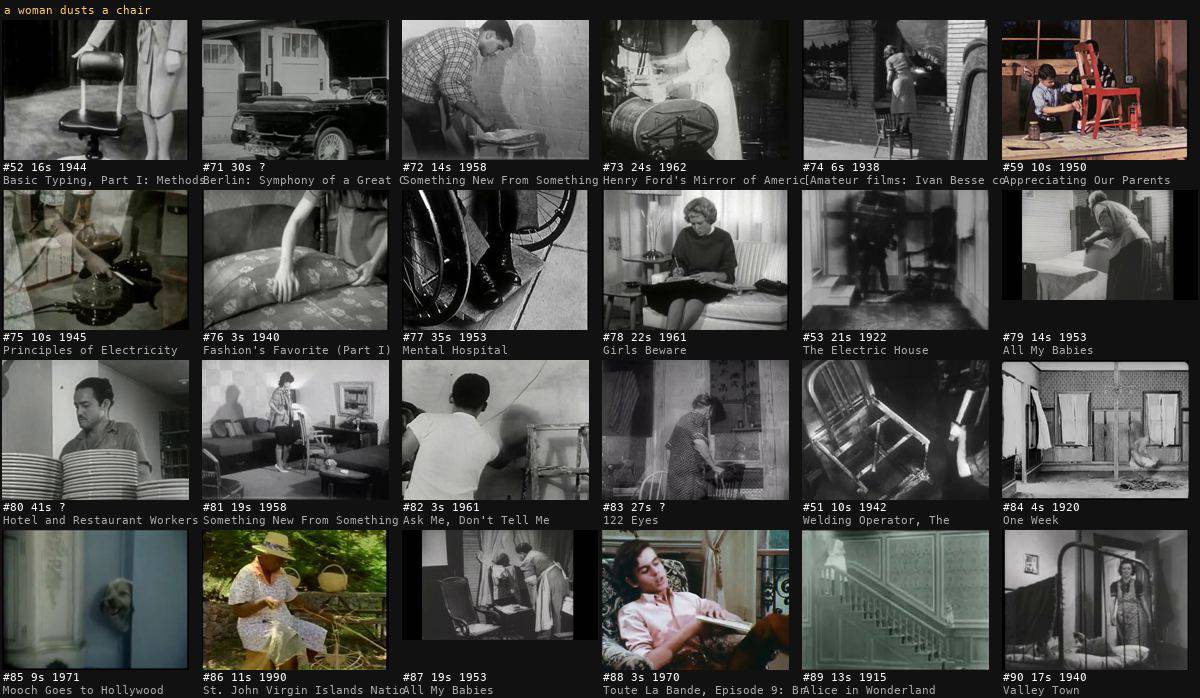
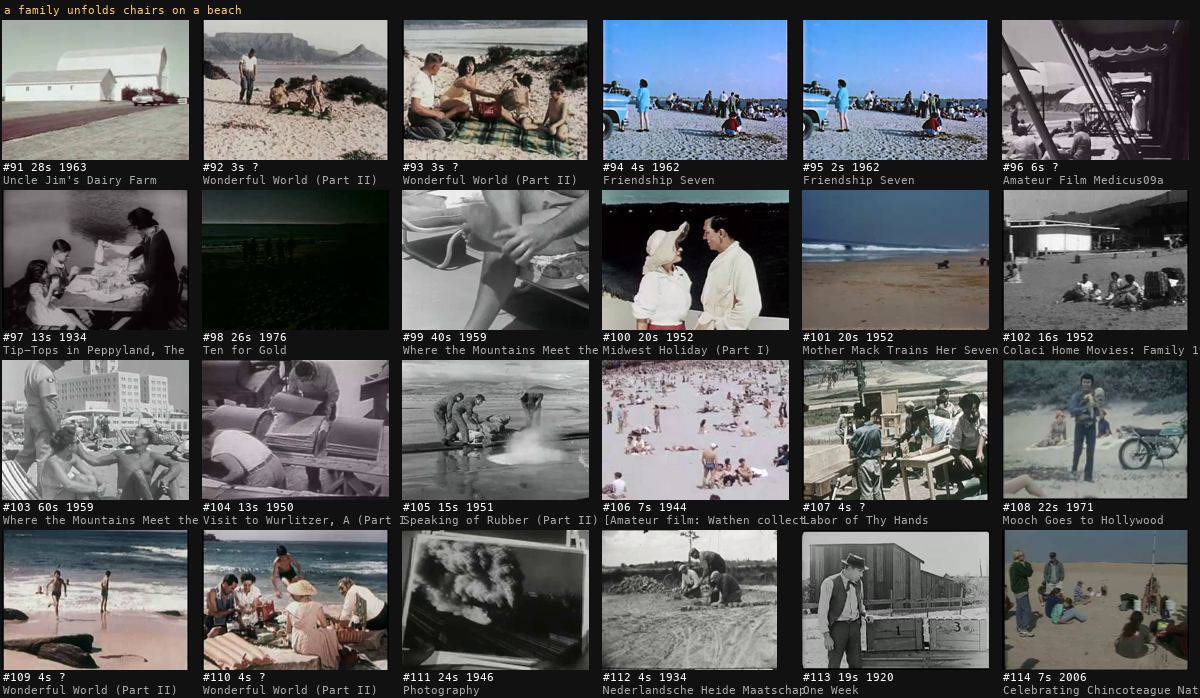
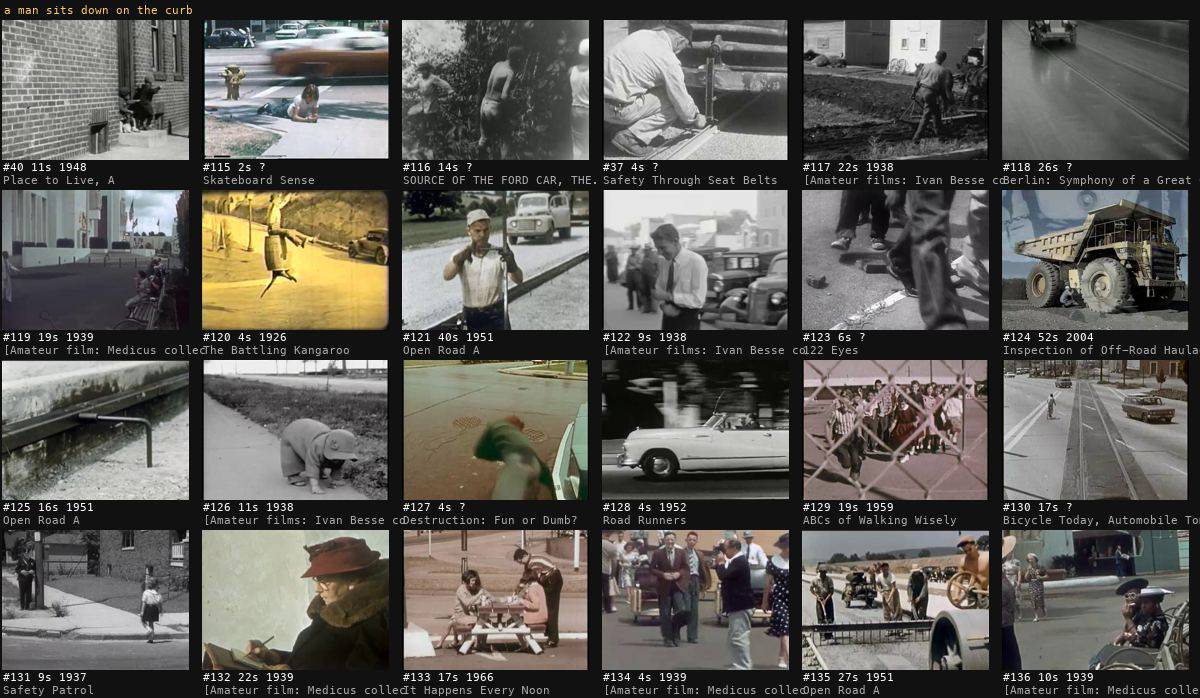
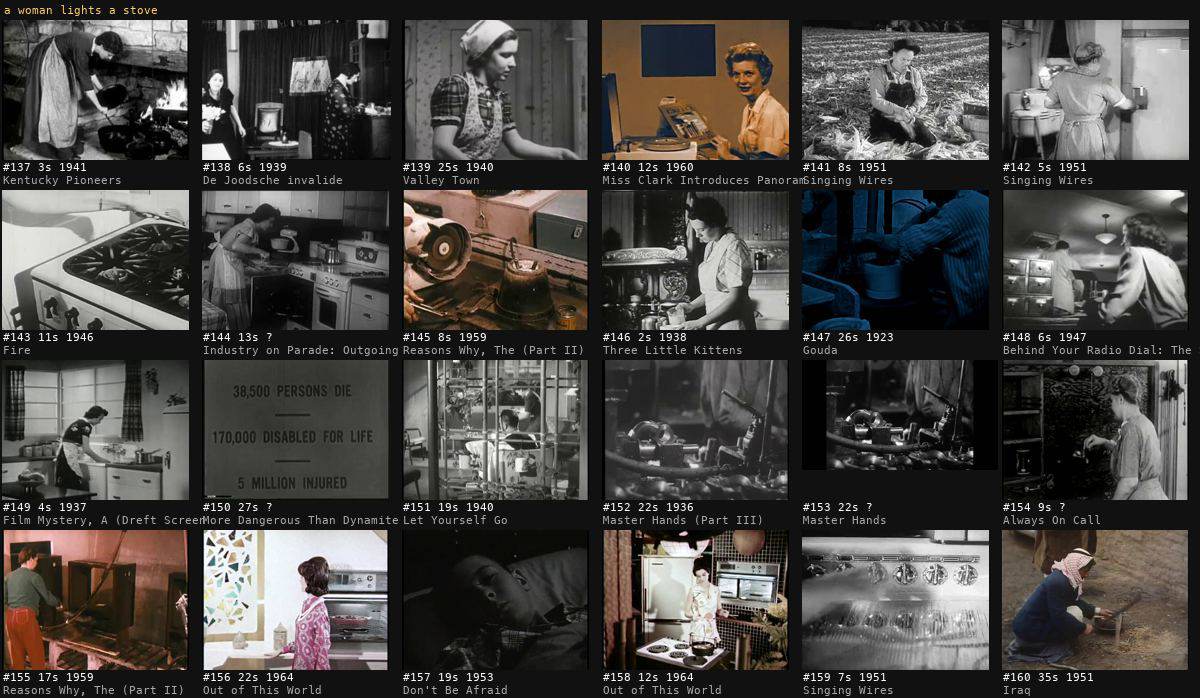
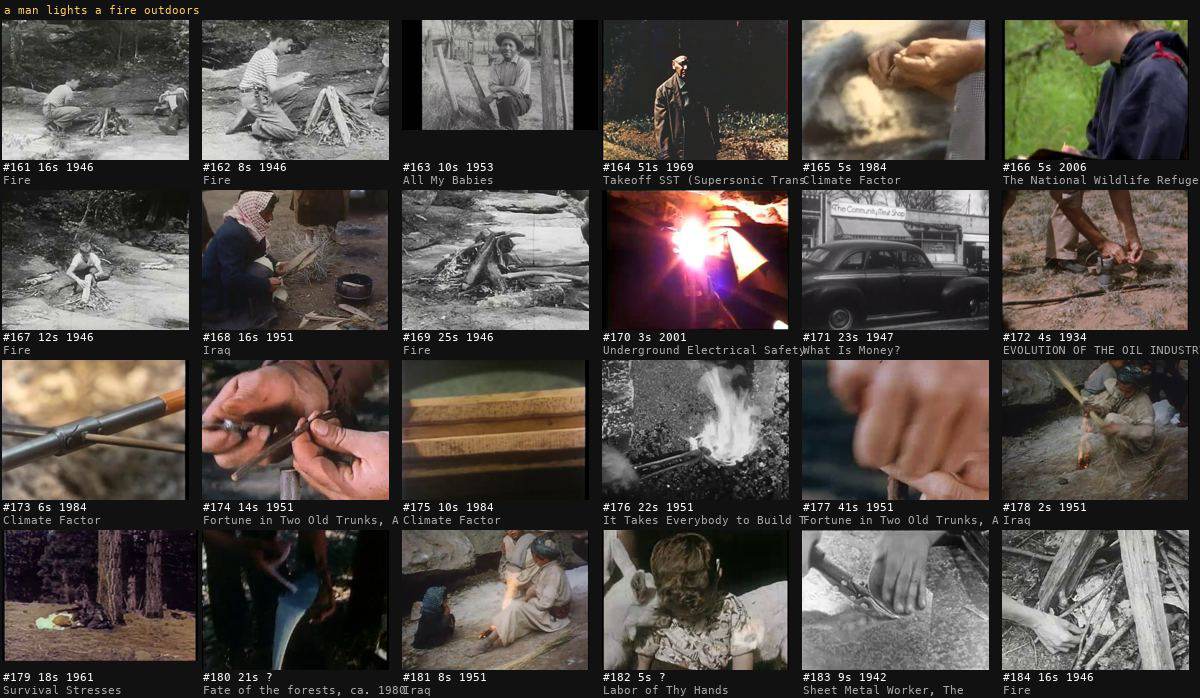
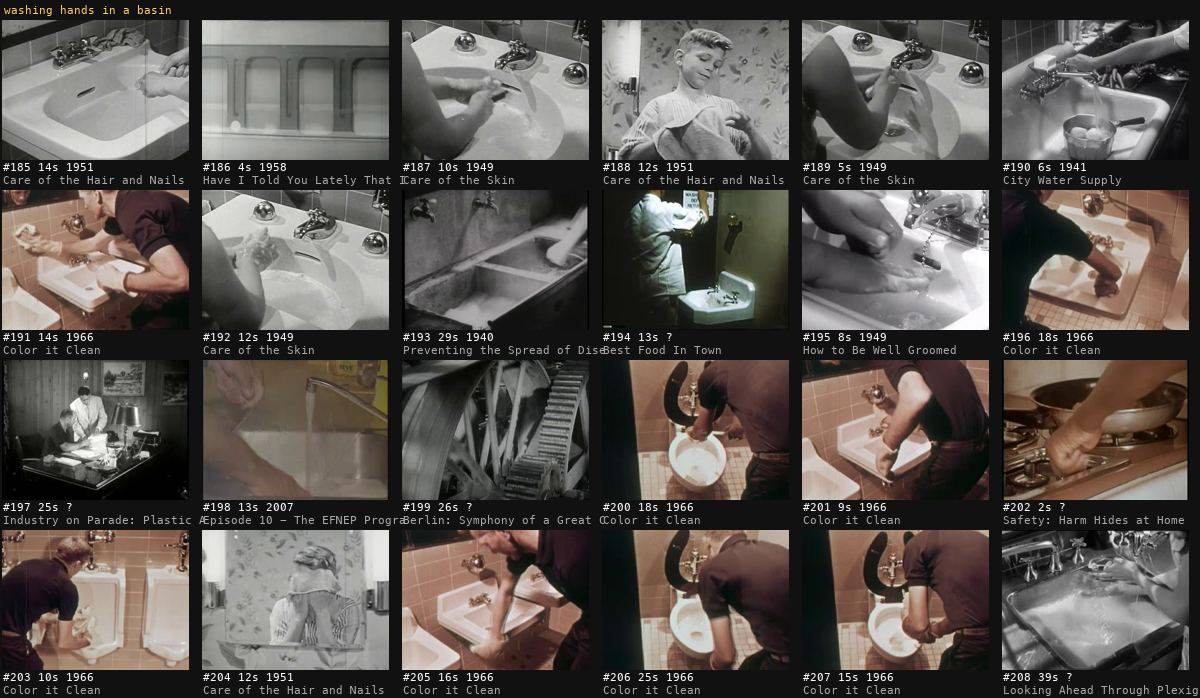
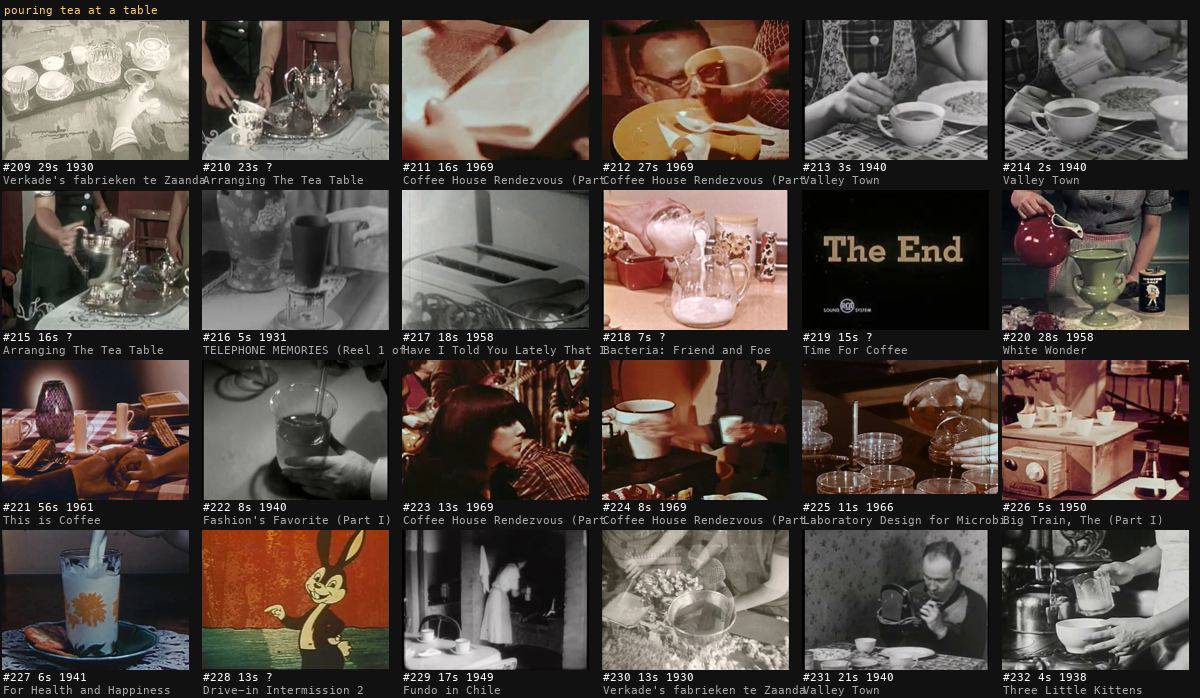
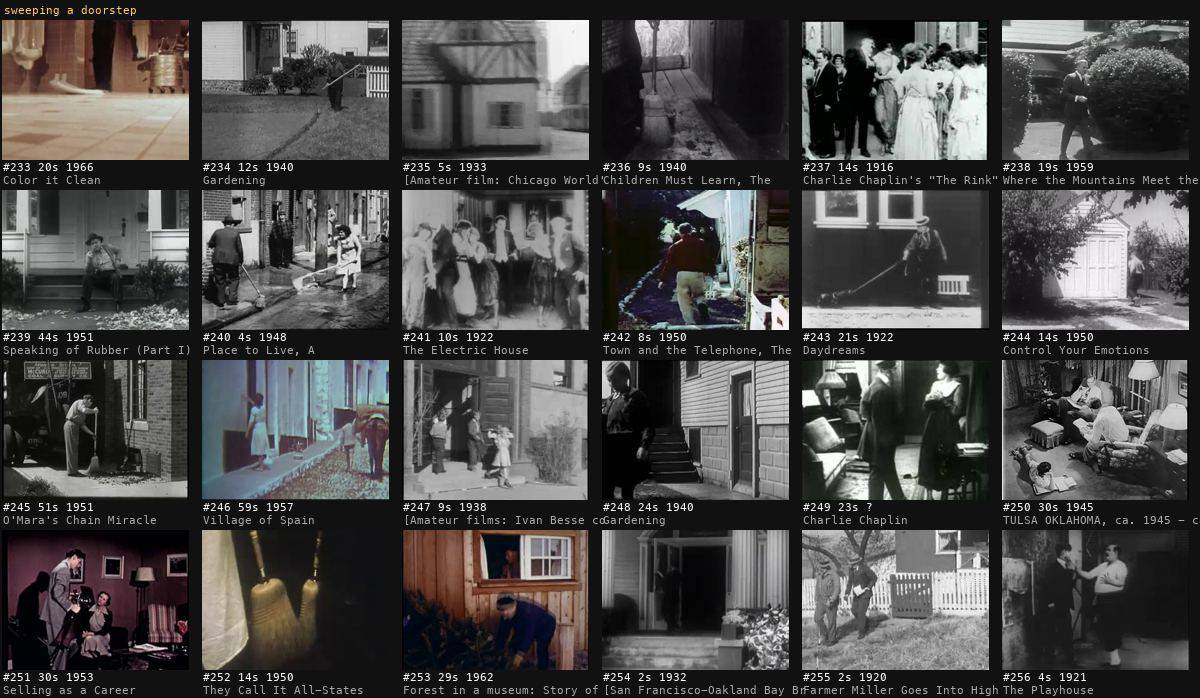
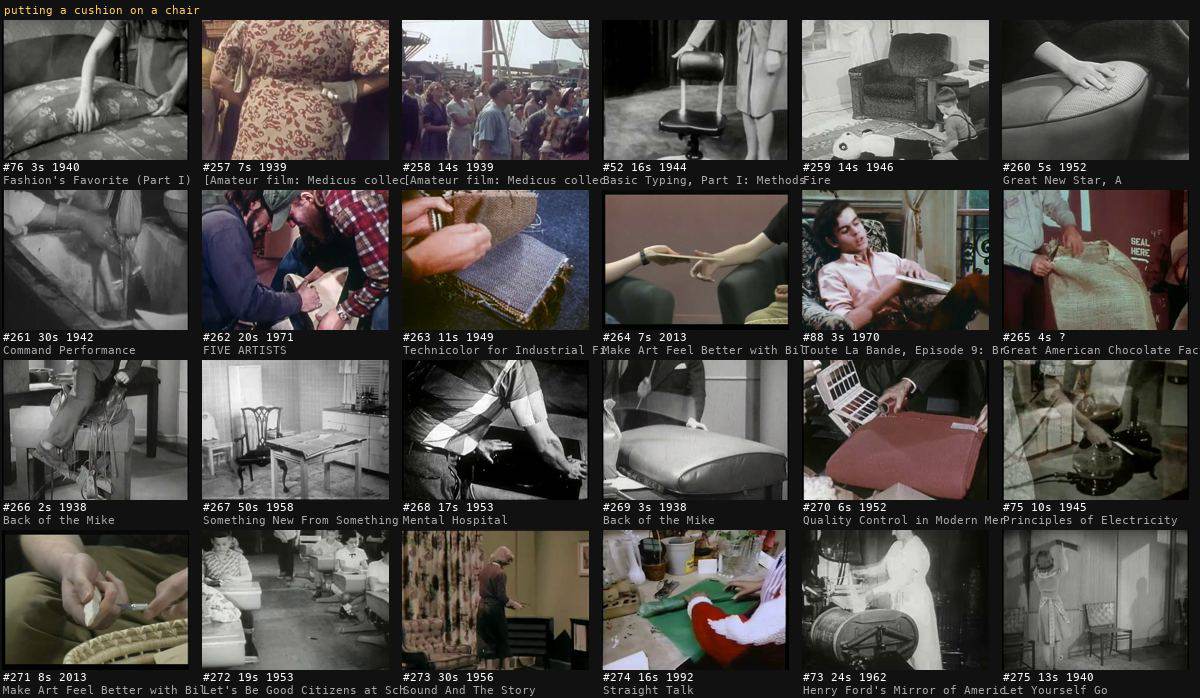
a woman spreads a blanket on the grass and sits · 24 resultsa man brushes off a bench before he sits down · 24 resultssomeone pulls out a chair at a table and sits · 24 resultsa woman dusts a chair · 24 resultsa family unfolds chairs on a beach · 24 resultsa man sits down on the curb · 24 resultsa woman lights a stove · 24 resultsa man lights a fire outdoors · 24 resultswashing hands in a basin · 24 resultspouring tea at a table · 24 resultssweeping a doorstep · 24 resultsputting a cushion on a chair · 24 results
4 What was looked at closely
A time-coded filmstrip and waveform for each candidate. Outlined strips are in the cut.
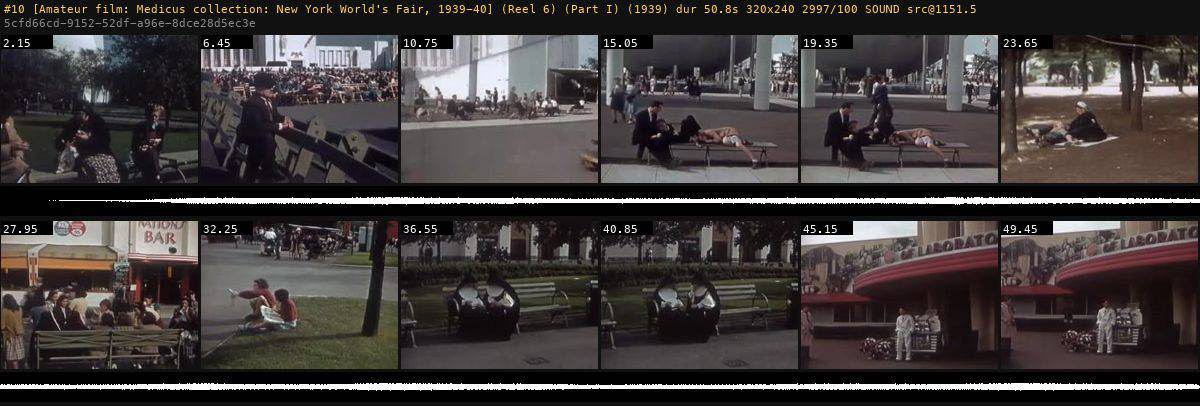
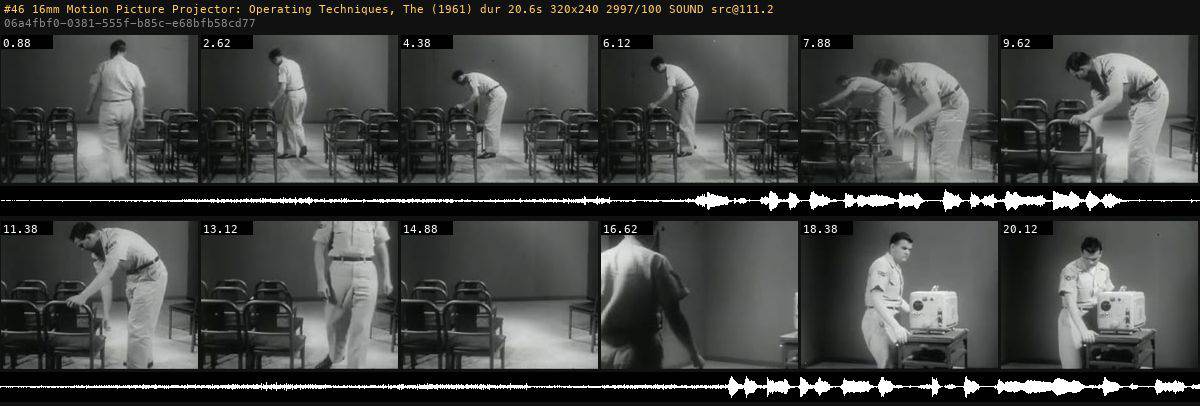
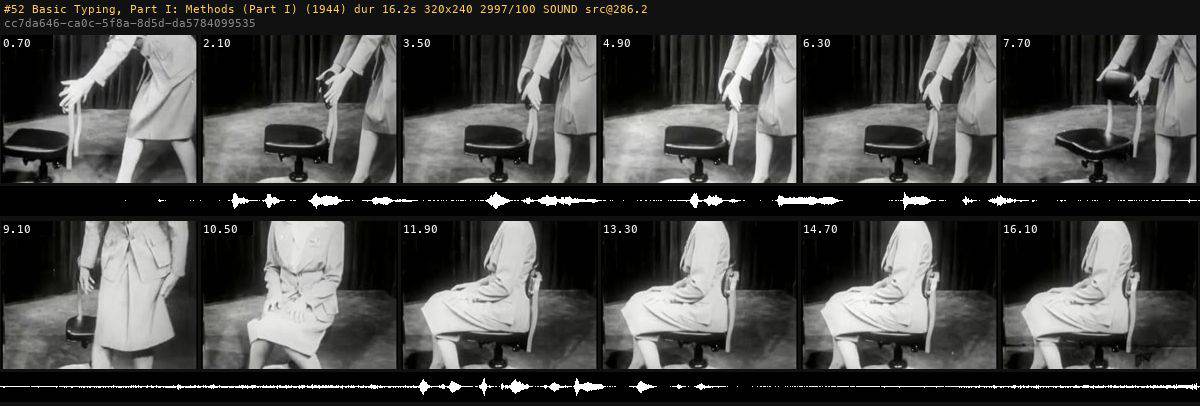
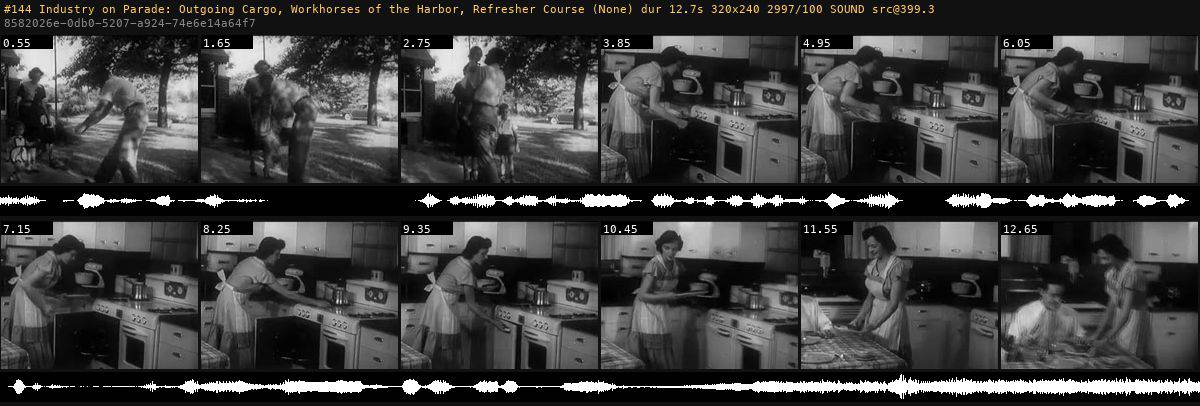
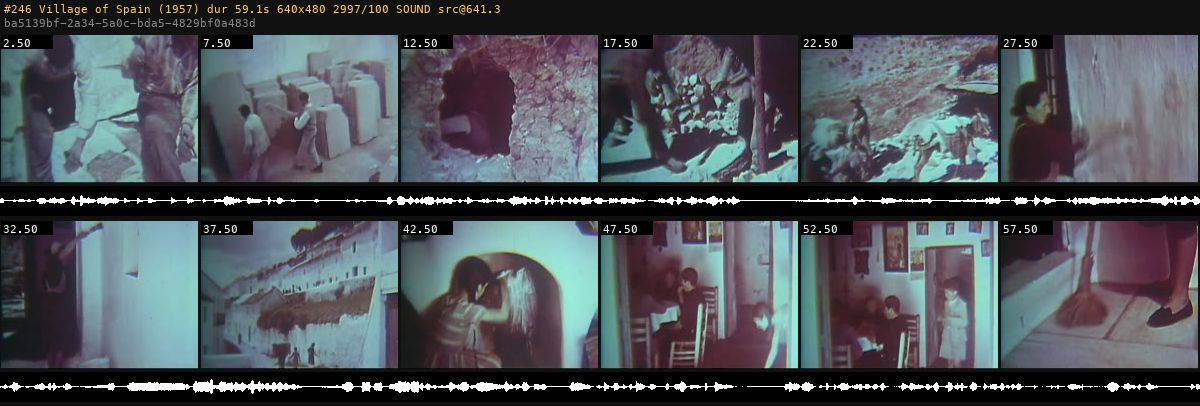
#10 [Amateur film: Medicus collection: New York World's Fair, 1939-40] (Reel 6) (Part I) (1939) · looked at, not used#46 16mm Motion Picture Projector: Operating Techniques, The (1961) · in the cut (shot 1, 2)#52 Basic Typing, Part I: Methods (Part I) (1944) · in the cut (shot 1, 2)#144 Industry on Parade: Outgoing Cargo, Workhorses of the Harbor, Refresher Course (undated) · in the cut (shot 3, 4)#160 Iraq (1951) · in the cut (shot 3, 4)#240 Place to Live, A (1948) · in the cut (shot 6)#245 O'Mara's Chain Miracle (1951) · in the cut (shot 5, 6)#245 O'Mara's Chain Miracle (1951) · in the cut (shot 5, 6)#246 Village of Spain (1957) · in the cut (shot 5)
5 The cut
The finished film, shot by shot (first, middle and last frame of each):
The final cut as a contact sheet
Every shot, where it came from, and why it is here. Source seconds are in the original film. Links go to the archive's own copy of the clip.
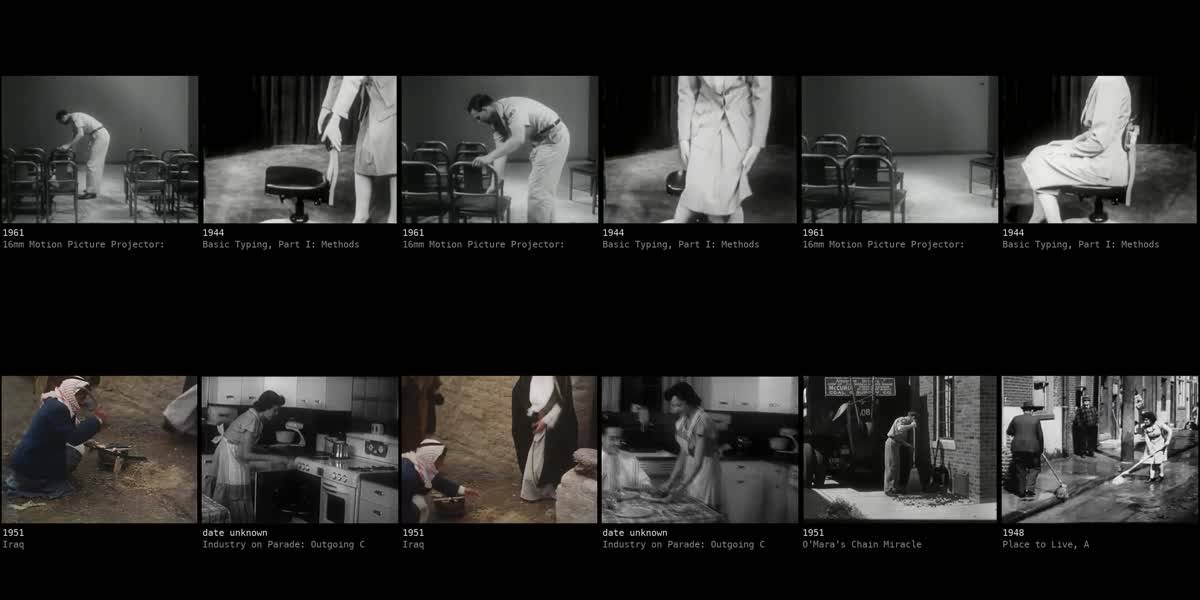
preparing a place to sit: 1961, an airman squaring rows of chairs for an audience not yet there; 1944, a woman adjusting a typing chair for herself. Recognizable alignment on the bend at the chair.
preparing a place to sit: 1961, an airman squaring rows of chairs for an audience not yet there; 1944, a woman adjusting a typing chair for herself. Recognizable alignment on the bend at the chair.
lighting a fire and working an oven. Iraq 1951 has no spoken sound at all; the American kitchen film talks the whole way through about productivity. That inequality is left audible.
lighting a fire and working an oven. Iraq 1951 has no spoken sound at all; the American kitchen film talks the whole way through about productivity. That inequality is left audible.
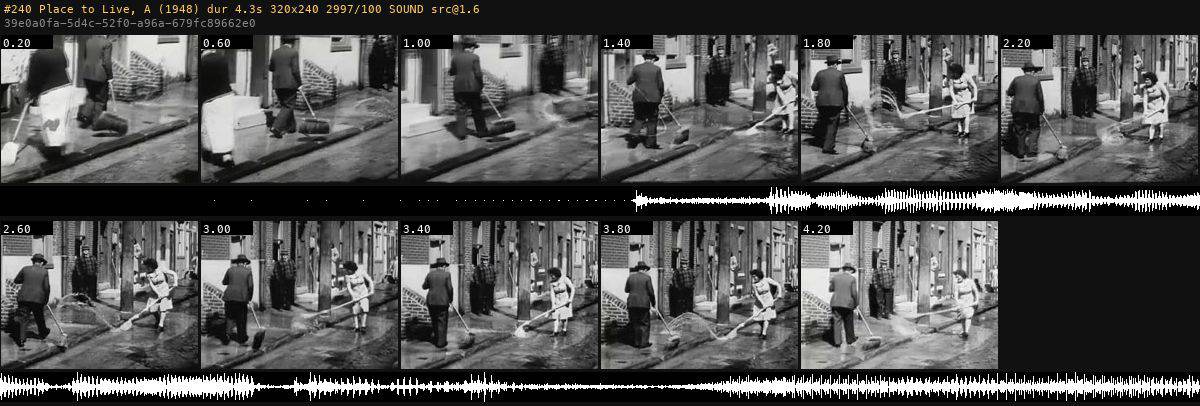
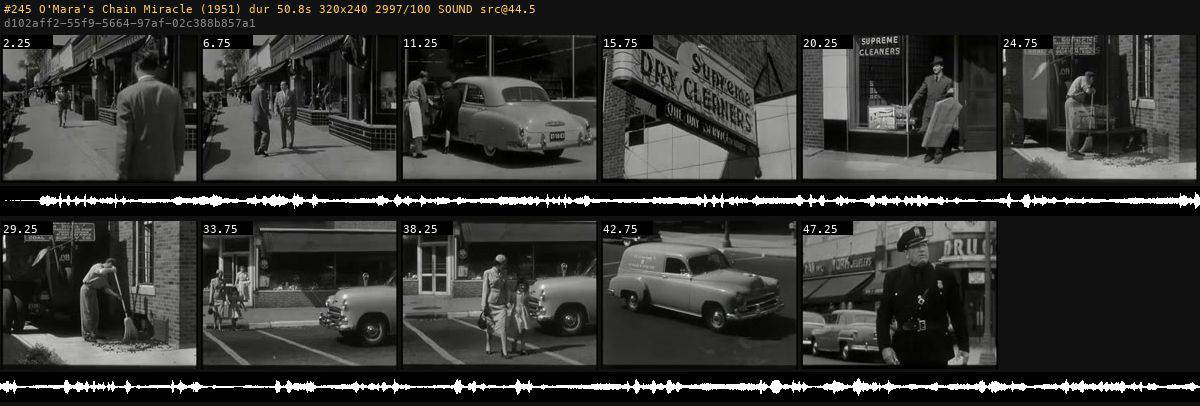
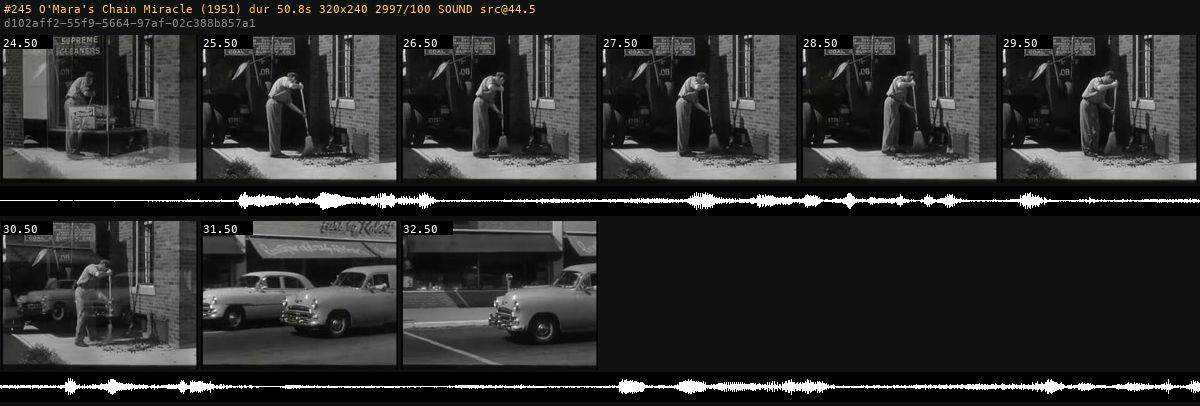
the resemblance fails at the outcome: he has stopped and is leaning on the broom; she throws water down a row-house street while a voice asks what they imagine they can make out of this.
the resemblance fails at the outcome: he has stopped and is leaning on the broom; she throws water down a row-house street while a voice asks what they imagine they can make out of this.
6 Review
A fresh agent was given only a timecoded contact sheet of the film, a transcript with loudness, and the brief. Not the edit list, the ledger, or these reasons. It cannot hear.
Round 1 inconclusive, leaning reference stronger
independent critic (fresh Claude Sonnet 5.5 agent). Its report, verbatim:
The report
VERDICT: inconclusive, leaning reference stronger. I can't hear the film, so the sound-space criterion is unjudged.

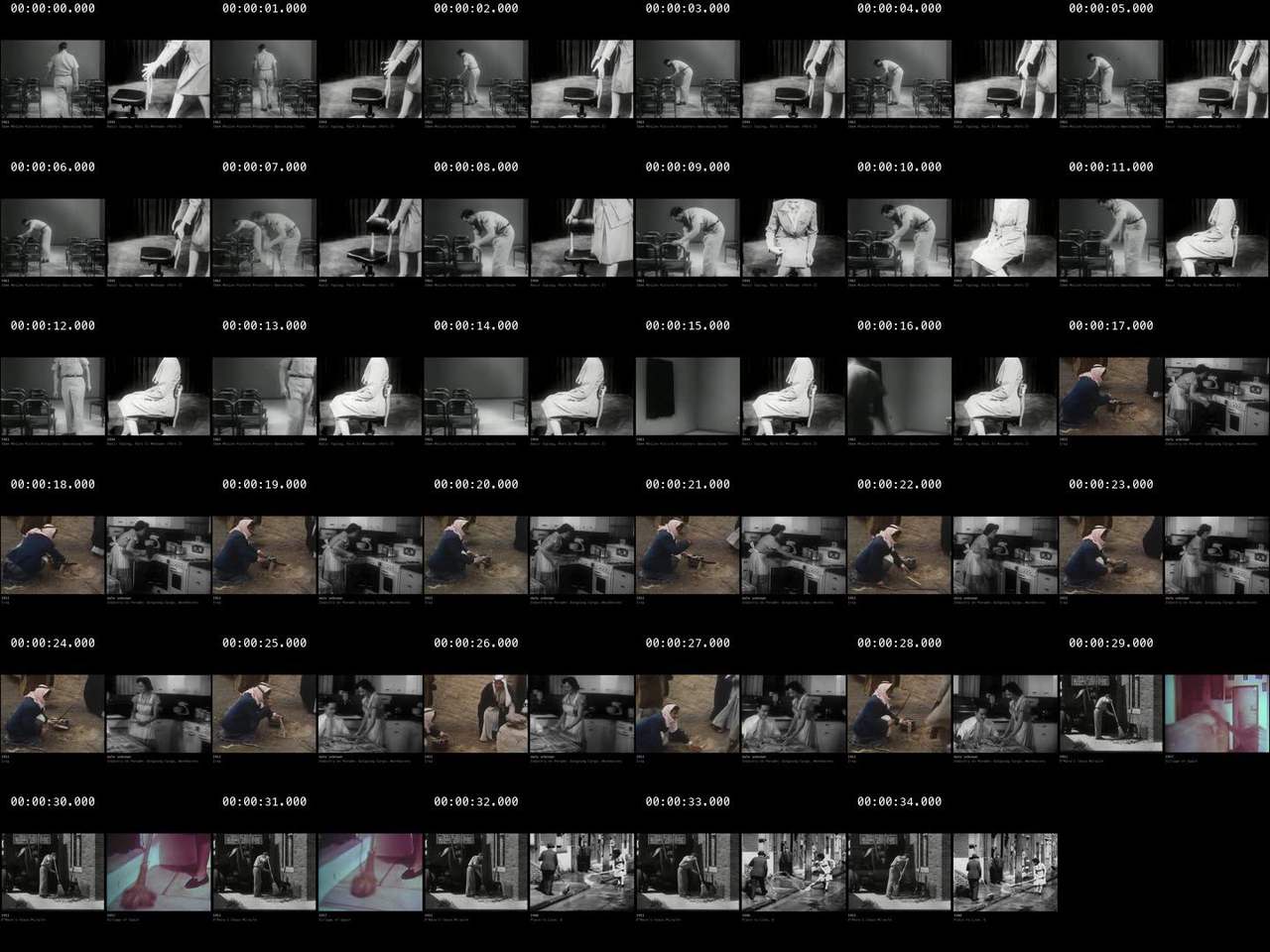
Noticed before the brief: at 0:03-0:11 a man bends to arrange theatre chairs while a woman's hands tilt and then sit on a swivel chair. The two are cut in alternating one-second steps. Both are "preparing a seat", and the narration ("chair should have a firm back support", 0:00-0:05) rhymes with both. That alignment is clear and earned.

Largest gap: the film never reaches the "different outcome" it was built for. The 0:17-0:34 pairs are Iraq 1951 crouching on straw / kitchen, then sweeping / sweeping. All of it is cut at a steady one-second alternation, so the mismatch doesn't register as a mismatch. There is no wider context shot (the brief's "restore a wider view") and no final hold. The last frames (0:32-0:34) just keep cutting between brooms, so the ending feels the same as the opening. The people are not set apart as particular lives. The 1957 magenta clip at 0:29 and 0:31 reads as glitch, not information. At 34 seconds, the film is far short of the 90-second target. The small caption text is unreadable at this size, so the date states cannot be judged.

Repairs:
1. 0:12-0:16: one side drops to a black or empty frame (0:15, 0:16) while the other holds. Condition: replace it with a shot of the person finishing or waiting.
2. 0:29-0:31: the 1957 pink clip. Condition: either it carries a legible date and place card, or it is cut.
3. 0:32-0:34: end on a single held wide frame of one pair for 3 seconds or more. Condition: the shot ends the cutting rhythm that came before it.

Strength to protect: the chair pair at 0:03-0:11, where the cuts, the narration and the gesture all agree.
The critic read the two halves as alternating one-second cuts. They play at the same time, each with its own sound. Date labels were too small: enlarged. The film now ends on a held pair. A wider context shot and dropping the 1957 clip were not done.
7 What happened
Repairs after review
Enlarged the date and title labels.
Ended on a held pair (about three seconds of last frames) instead of continuing to cut.
What worked
Each side keeps its own sound in its own ear, and a year is printed under each; undated sources say 'date unknown'.
The inequality is left audible: one half has no sound at all.
What failed
The first caption text was unreadable; enlarged.
The critic read the pairs as one-second alternating cuts; they play simultaneously. I could not tell from the sheet whether that is a flaw of the sheet or of the film.
38 s against 90 s.
What is still open
A wider context shot for each side.
Three pairs were asked for; the cut has four and is not tight.
8 Files
ledger.jsonledger: each shot traced to its source seconds
 Argon