64 s · ends with a 5 s card naming every source. I cannot hear; neither could the critics. Sound is unjudged until a person listens.
Three kinds of work (a piston being fitted, a mallet and wedge, a tire-bead machine) share seven seconds of one sung work verse, then it breaks. A refinery worker, a man waiting beside hot rail in Belo Horizonte, a complete interval at a machine, and a hand that stops.
17searches
14filmstrips looked at
14shots
2review rounds
1 The brief
Work repeats across factories, workshops, and homes. Its mechanical rhythms are interrupted by maintenance, waiting, fatigue, and refusal.
First proof. Make a ninety-second passage from three documented work processes. Establish a repeated movement in each, then briefly coordinate their rhythms through an original sound phrase. Break that coordination by preserving one complete maintenance or waiting interval at normal speed. Return to the first process after the interruption, revealing something the tighter framing initially excluded. End when one worker or mechanism stops. Keep contextual views available so the shared rhythm does not erase different conditions.
Development boundary. Do not compress the Qatsi trilogy into one time-lapse style or infer fatigue and refusal from appearance alone. Include those conditions only when the source supports them.
The operator’s acceptance criteria
The viewer can recognize recurring places and the passage through day phases.
At least two rhythms interact rather than all actions following one metronome.
A contextual shot reveals what a graphic match temporarily abstracts.
A pause changes the experienced tempo rather than serving only as a transition.
The final return registers a district’s changed state.
2 The prompt
The method prompt for this run, followed by this film's inputs. Paste it into an agent with a shell, ffmpeg, a speech recognizer and image reading. It is a reconstruction of what the run did, written afterwards; the run itself began from a short request.
1,162 words
You are making one proof film for ALLWAYS (a cinema practice within PAELEO) from the Moving Image Archive (movingimagearchive.com; public-domain films, which the site says are free to reuse). You work as a hand editor.

"By hand" means: you search, you look at what came back, you listen, and you write every in-point, out-point, order, gain and reason yourself, in an edit list. Software renders the list; it never chooses a shot, a trim or a sound. Do not generate footage. Do not pick shots by similarity score. Do not run a pipeline that edits for you.

## Input

- `[FILM]` the title, concept, first proof and development boundary (below).
- `[OPERATOR]` the primary SCION operator and its acceptance criteria (below; the full prompt is at `operator.html#s<N>`).
- `[SOURCE SET]` the archive's search API: `POST https://www.movingimagearchive.com/api/search` with `{"query": "..."}` returns clips with `videoUrl`, `thumbnailUrl`, `startSeconds`, `endSeconds`, `sourceTitle`, `sourceYear`, `sourceSlug`. One request at a time, about 1.4 s apart; it rate-limits.
- `[DELIVERY]` one film, 4:3, with sound, no longer than the proof asks, plus the case-study folder described in `RUNS.md`.

## Process (do all of it, in order; keep what you make, including what fails)

1. **Read the proof.** Write the three to six specific things a viewer must be able to notice. These are what you will judge your own cut against.
2. **Forage.** Write 8 to 14 searches in plain visible-action language ("a woman adjusts her hat, looking at herself"), not themes. Run each, save the results, and make one numbered contact sheet per query (thumbnail, #number, duration, year, title). Look at every sheet.
3. **Look closer.** For each candidate, fetch the clip and make a time-coded filmstrip with its waveform. Find where the action starts, completes, and what follows it. Note the native size and whether it has sound.
4. **Listen.** Transcribe candidates with word timings. Speech recognition invents words in hiss ("Thank you."). Check against the waveform and loudness before believing a word. An invented word is never evidence. If you cannot hear audio, say so in the case study and treat sound decisions as unverified.
5. **Write the edit list.** For each shot: clip number, in, out, gain, any sound taken from another clip (with its source), speed, hold, caption, and one sentence of reason that a reader could disagree with. Sound or captions from another source go in the ledger as such.
6. **Render, then check the render.** Make a contact sheet of every shot's head, middle and tail; transcribe the render; measure loudness per shot. Fix what you find. Known traps: a clip's closing cut can show up in your trim; holding a last frame can freeze the next shot of the source.
7. **Disclose derived layers.** If you remove, extend, generate, retime, mirror, or re-voice anything: keep the original, mark the derived layer on screen or in the ledger, and say what is unknown. Authored narration is labelled invented and synthetic.
8. **Blind critic.** Give a fresh agent only: a timecoded contact sheet of the final film, a transcript with loudness per 2 s, and the film's brief and acceptance criteria. Not your edit list, ledger, reasons or summaries. It names one specific event before it reads the brief. It returns a verdict (pass / reference stronger / inconclusive), the largest gap, up to three repairs each with a timecode and a checkable condition, and one strength to protect. It cannot hear: take no sound verdicts from it, and check its claims against the cut before obeying them.
9. **Repair what is true; leave what is wrong and say so.** If you changed the film, ask a new critic. Stop when you can say honestly what still falls short of the brief.
10. **Package** the case study per `RUNS.md`: searches and sheets, strips, the edit list with reasons, the ledger, the critic packets and verbatim reports, repairs, and what is open.

## Rules

- Status is not self-awarded. A film is "proof in progress" unless a blind critic passed it; "released" is for a person to say.
- Unknown dates and names stay unknown. Never imply two clips recorded the same event.
- Do not make assembled speech look like a speaker's own statement.
- Say what you could not perceive. A maker that cannot hear, or cannot see motion, must say so, because it changes what the cut proves.

## Tools (in `tools/`; Python 3, ffmpeg, Pillow, numpy)

- `forage.py <film> "query" ...` runs searches one at a time, writes `forage.json` and a contact sheet per query.
- `look.py <film> <n>[:step[:in:out]] ...` makes a time-coded filmstrip with waveform for clip #n.
- `hear.py <film> <n> ...` word timings (needs `mlx_whisper`, Apple silicon; substitute any word-timing ASR).
- `beats.py <film> <n> <in> <out>` motion-energy peaks, a helper for the eye.
- `cut.py <film>` renders `edl.json`; it chooses nothing. `pairs.py <film>` renders side-by-side pairs from `pairs.json`.
- `reel.py <film>` contact sheet of the rendered film, shot by shot.
- `packet.py <film>` builds what the critic gets.
- `erase.py` + `erase_plate.py` person removal for NOBODY HOME (SAM 2.1 tracked mask; replacement pixels from the same shot; unknowns listed). Set `SAM2_ROOT` to a folder with `models/sam2.1_hiera_small.pt`.
- `speak.py` authored narration with Kokoro-82M. `adopt.py` brings clips found in a local word index into a film's forage (set `CINEOSIS_LAB`).

---

## This film

**Title:** KINETIC (Labor and interruption)

**Concept:** Work repeats across factories, workshops, and homes. Its mechanical rhythms are interrupted by maintenance, waiting, fatigue, and refusal.

**First proof:** Make a ninety-second passage from three documented work processes. Establish a repeated movement in each, then briefly coordinate their rhythms through an original sound phrase. Break that coordination by preserving one complete maintenance or waiting interval at normal speed. Return to the first process after the interruption, revealing something the tighter framing initially excluded. End when one worker or mechanism stops. Keep contextual views available so the shared rhythm does not erase different conditions.

**Development boundary:** Do not compress the Qatsi trilogy into one time-lapse style or infer fatigue and refusal from appearance alone. Include those conditions only when the source supports them.

**Primary operator:** SCION 83 · Berlin: Symphony of a Great City — Civic Rhythm with Unequal Pulses. Full operator prompt: https://hartswf0.github.io/bolas/paeleo/allways/operator.html#s83
**Supporting:** SCION 79 · The Qatsi Trilogy — Three Regimes of Technological Time, SCION 78 · Samsara — Material Cycles and Changed Returns

**Operator's creative theorem:** Make a district legible as interacting rhythms whose coordination is incomplete. A day arc should emerge from openings, flows, pauses, and shutdowns while showing that a city’s people do not all inhabit the same tempo.

**Acceptance criteria (from the operator):**
- The viewer can recognize recurring places and the passage through day phases.
- At least two rhythms interact rather than all actions following one metronome.
- A contextual shot reveals what a graphic match temporarily abstracts.
- A pause changes the experienced tempo rather than serving only as a transition.
- The final return registers a district’s changed state.
3 What was searched
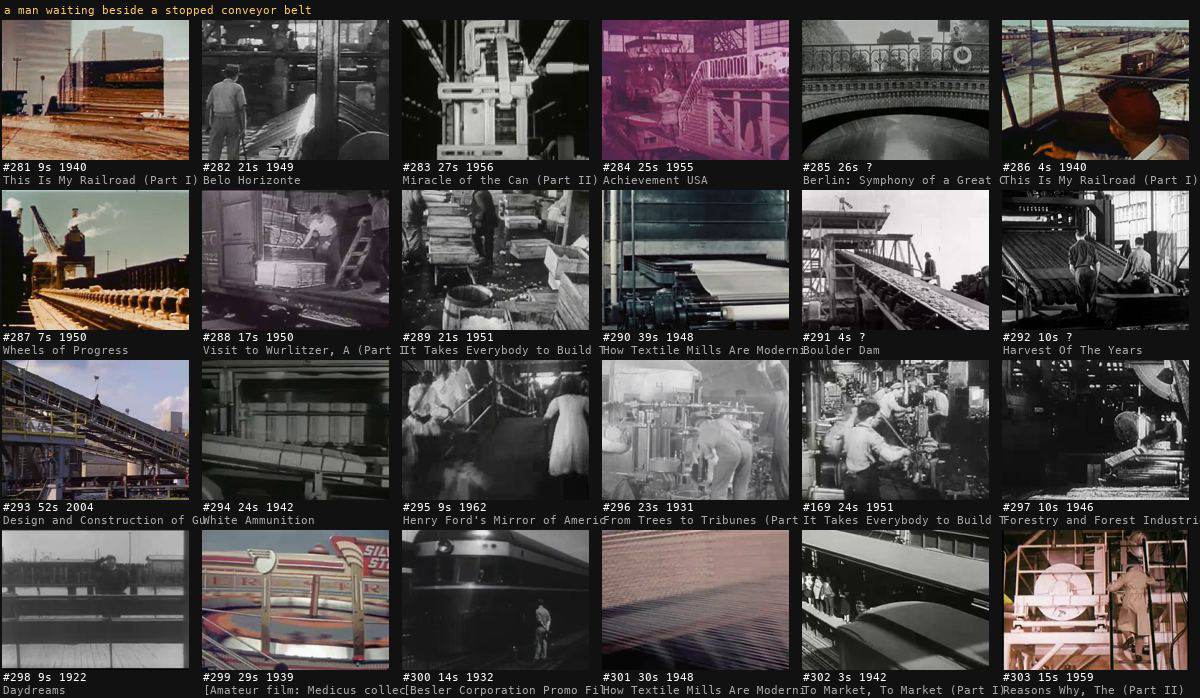
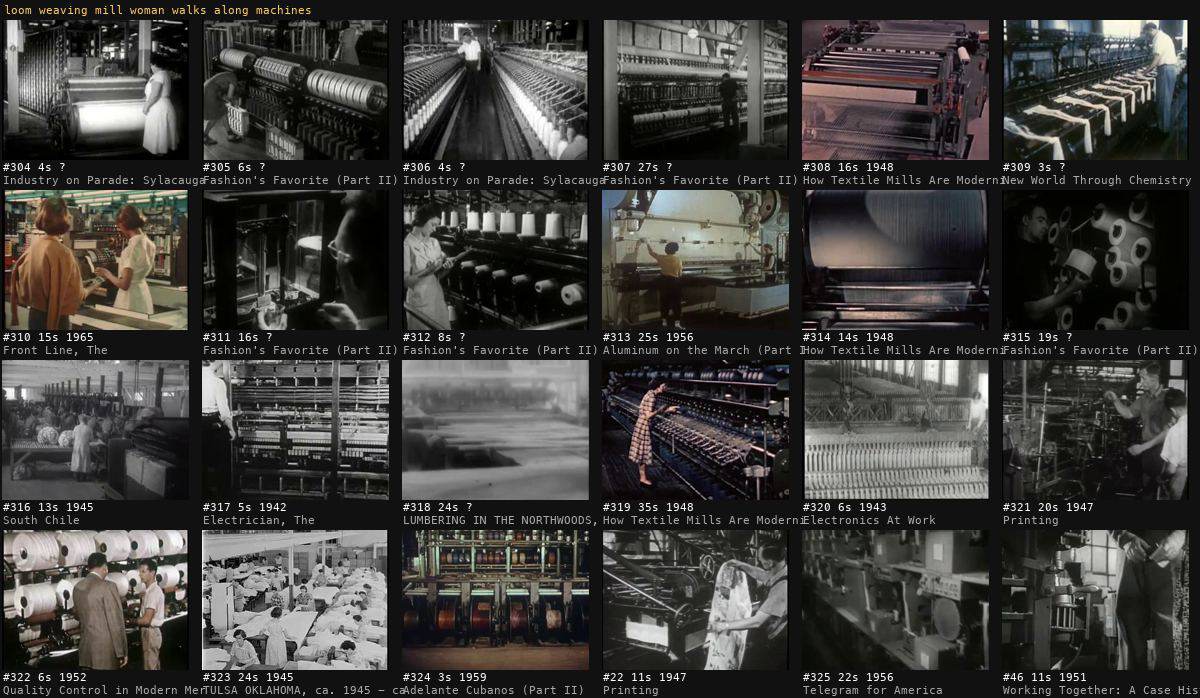
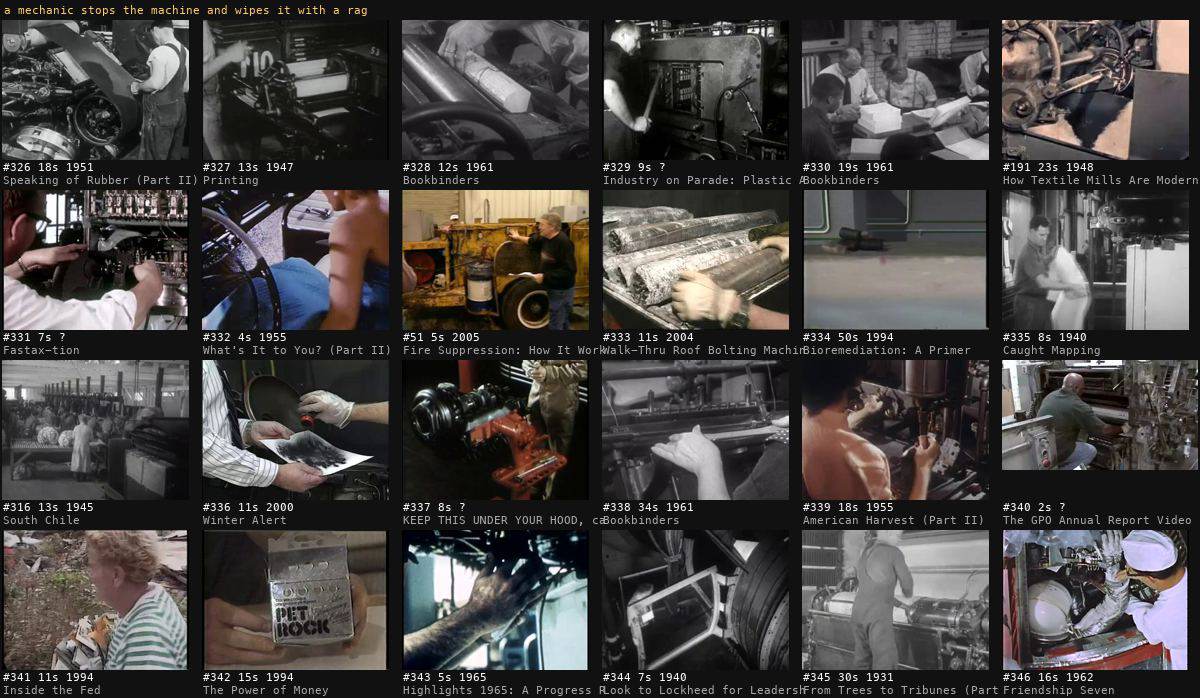
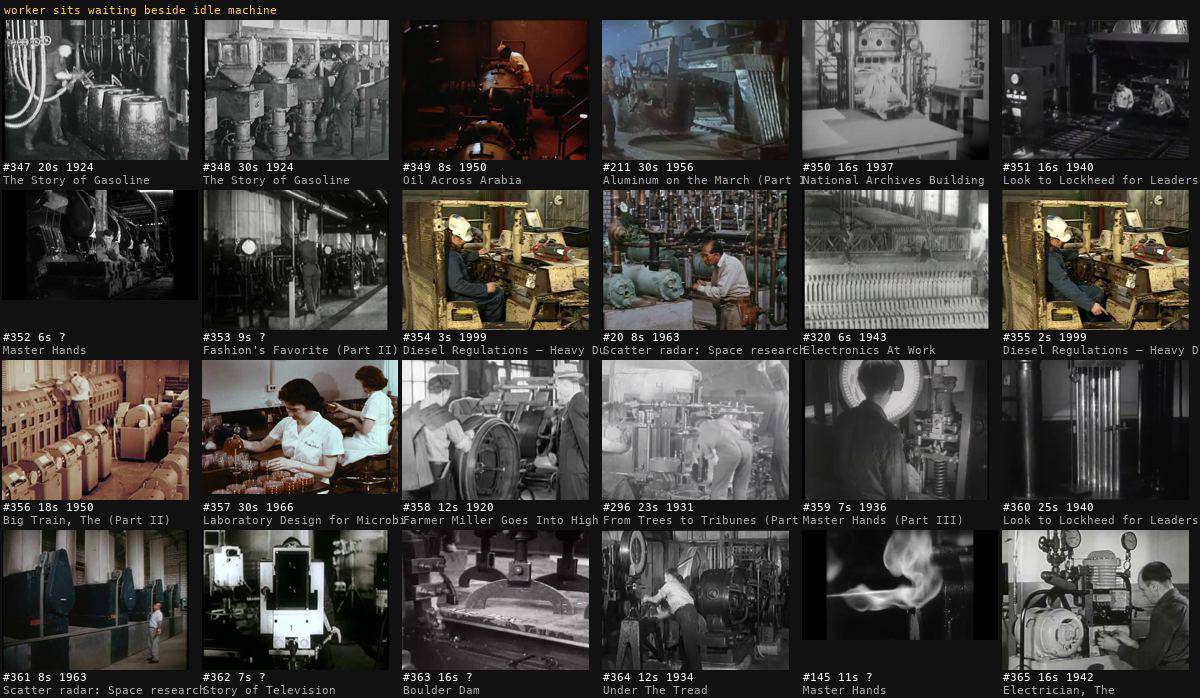
One search at a time, in plain visible-action language. Each sheet is what came back: numbered thumbnails with duration, year and title. These are the images the maker looked at (or, where it could not, see the note below).
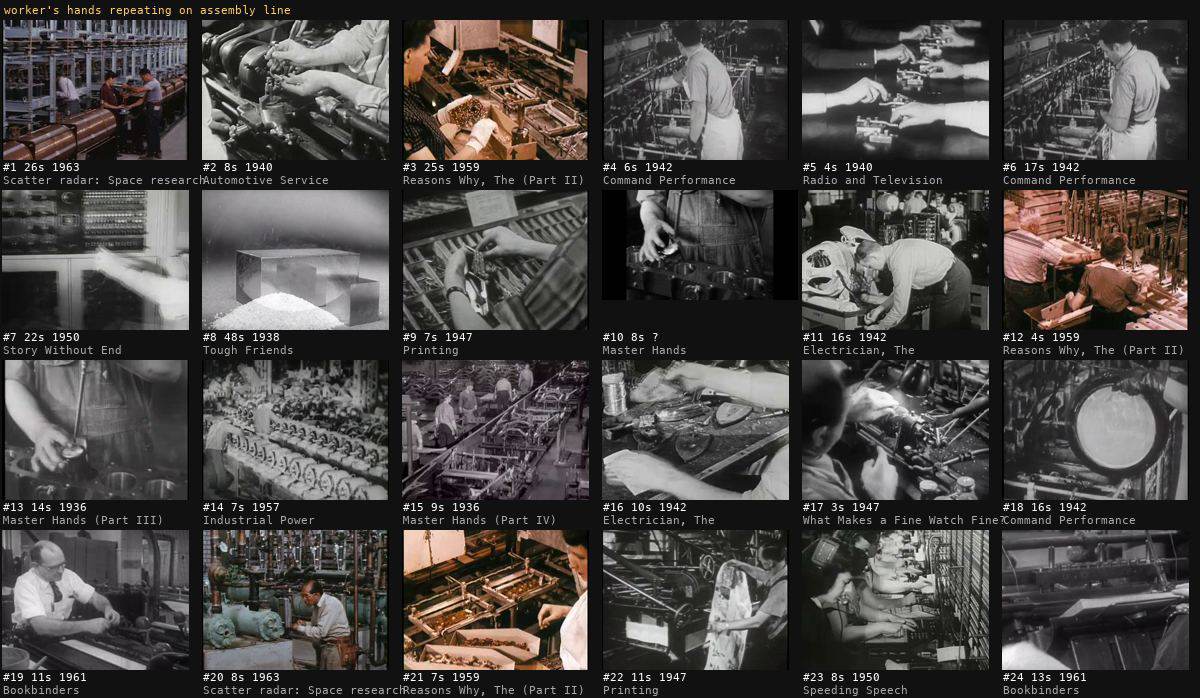
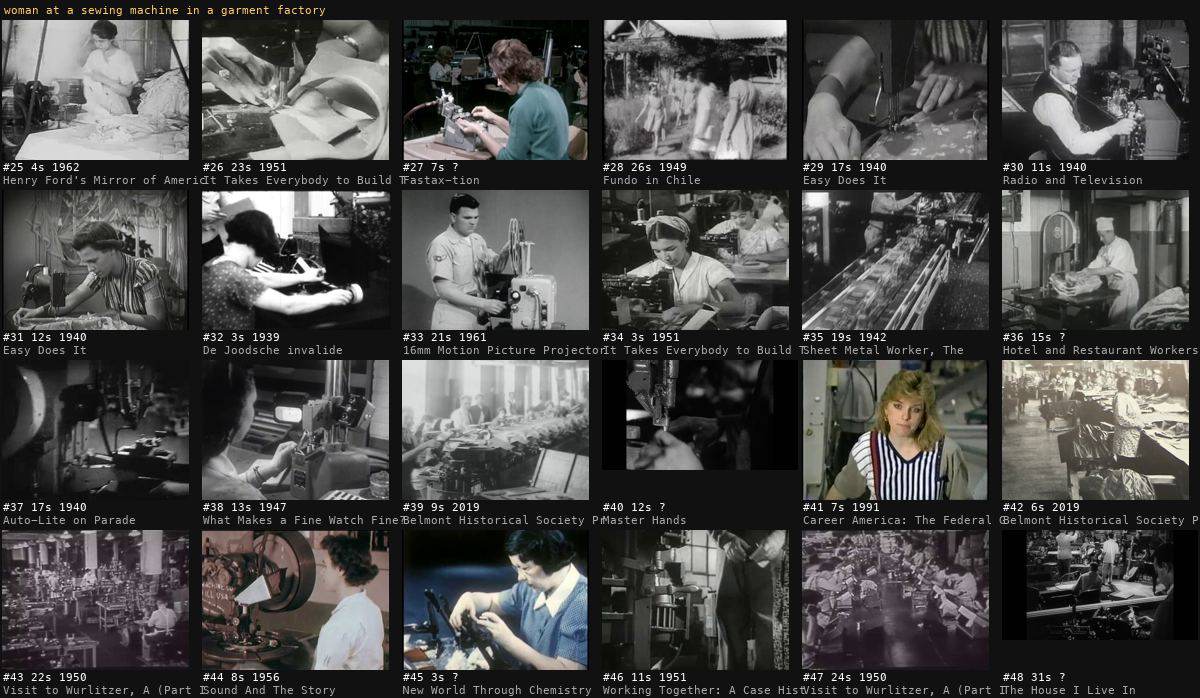
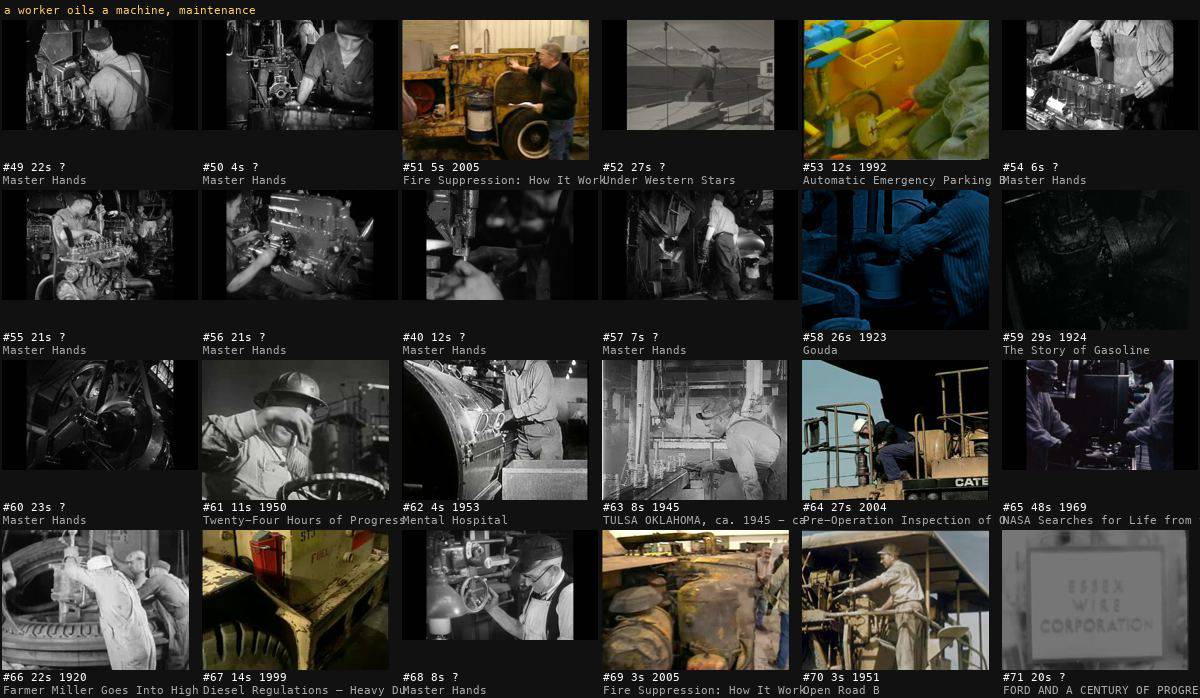
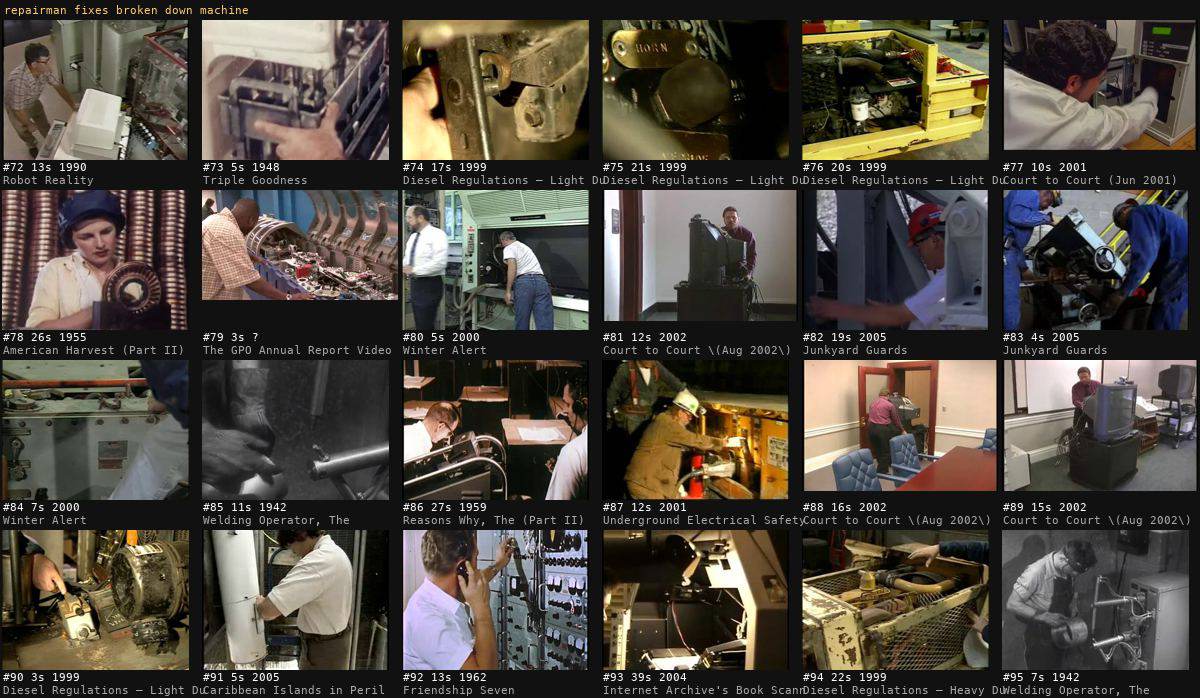
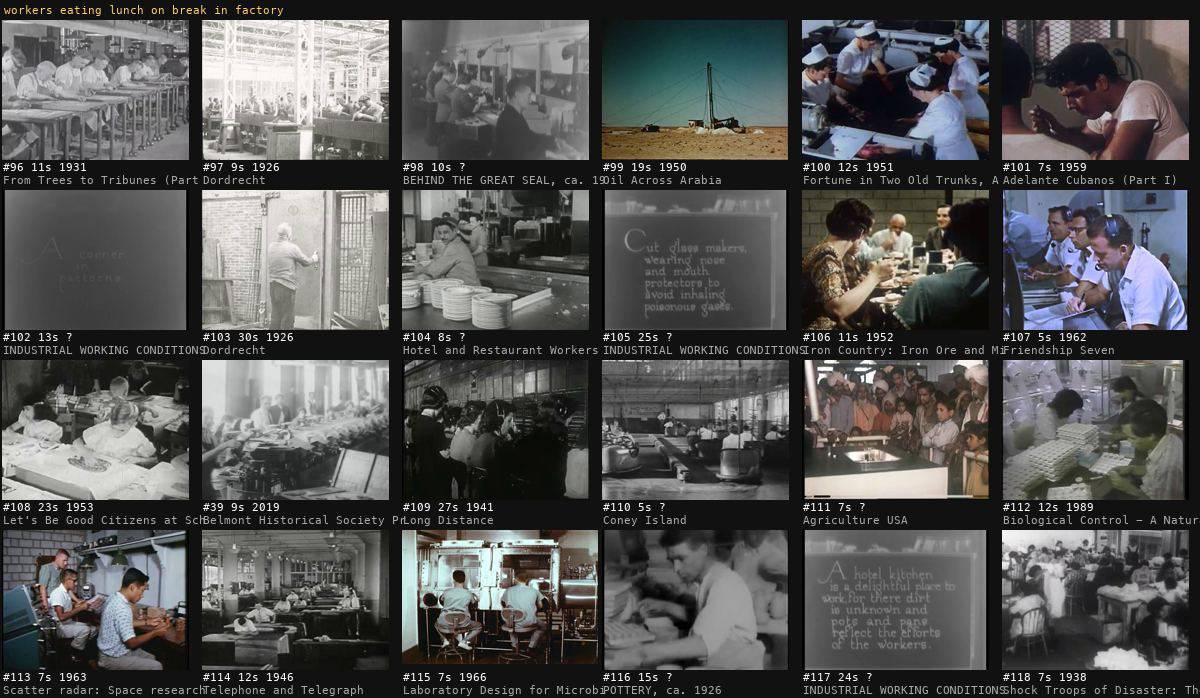
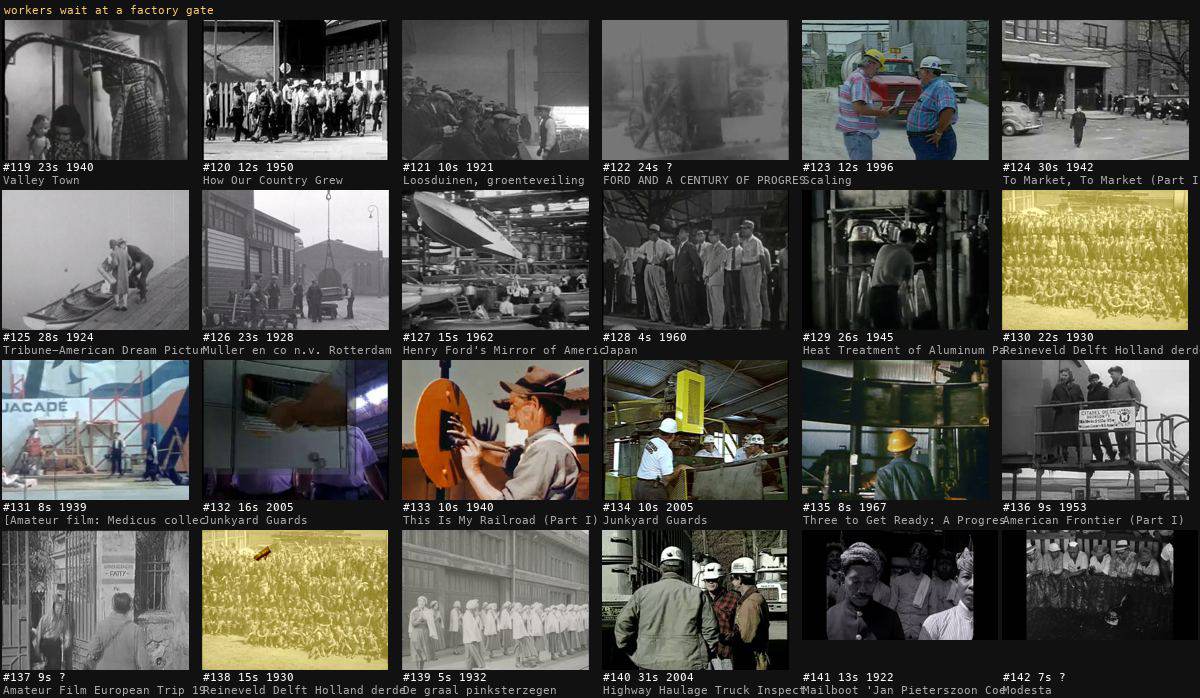
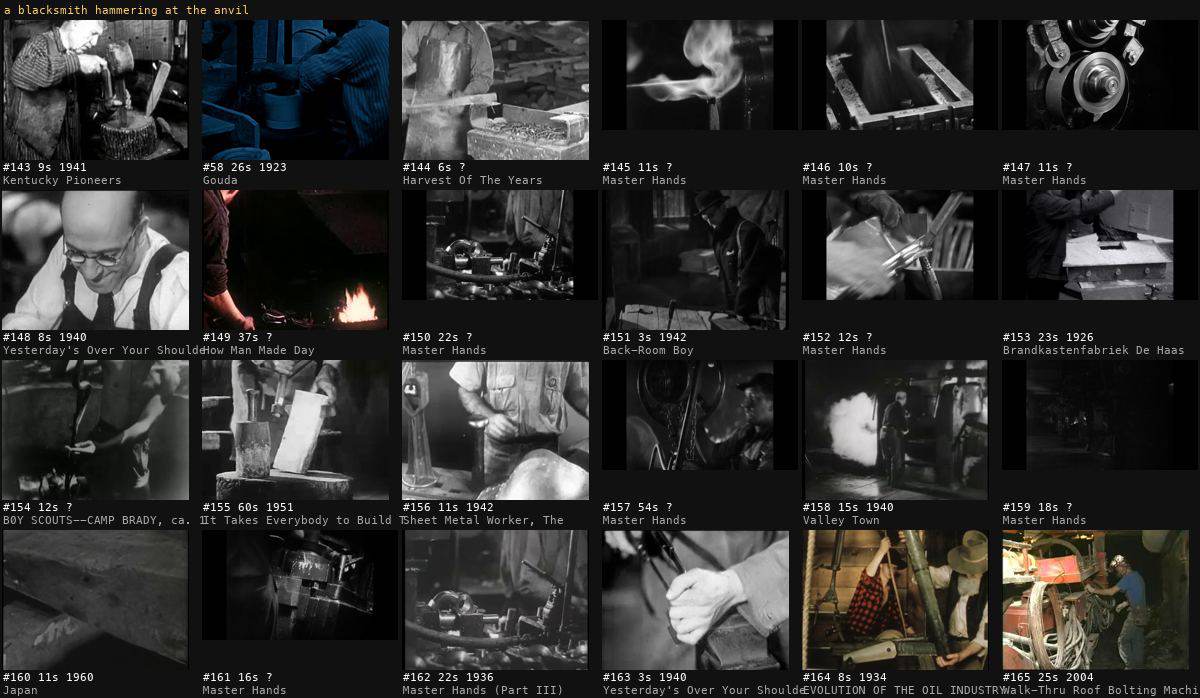
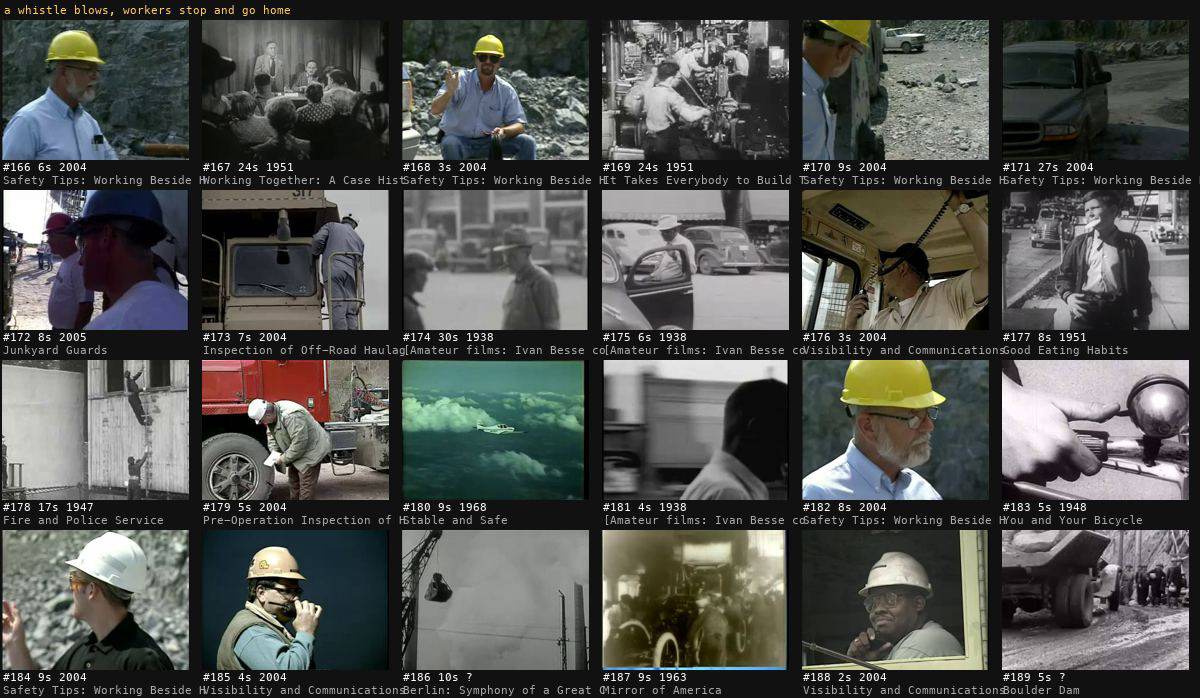
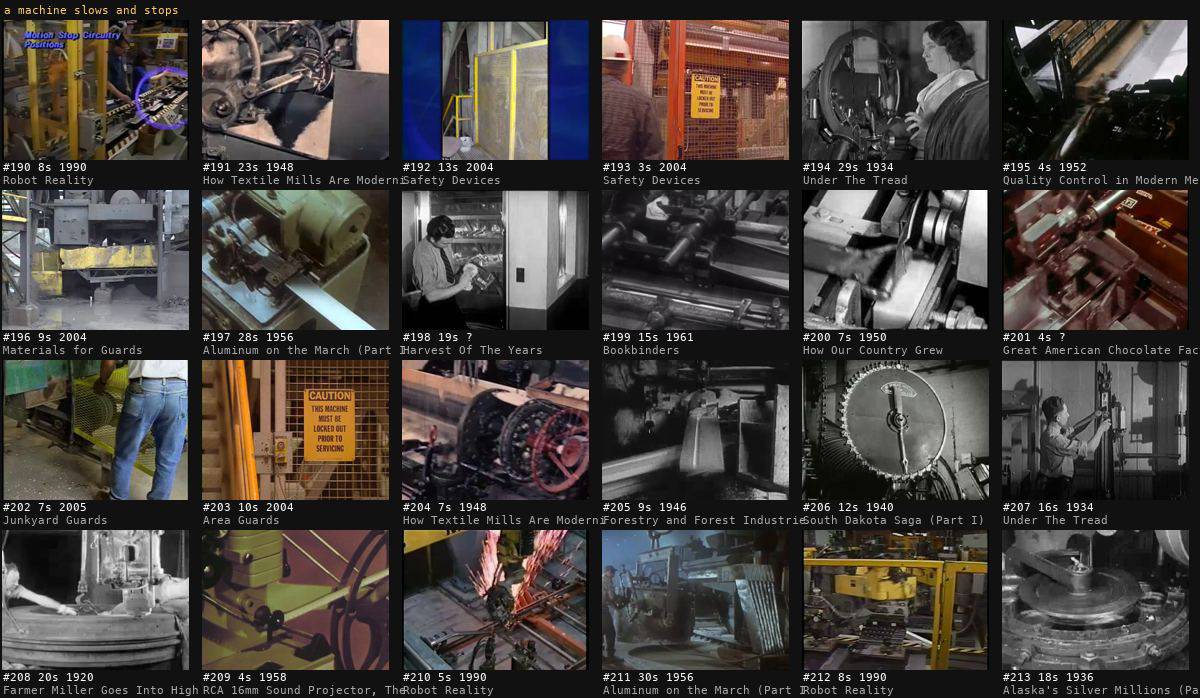
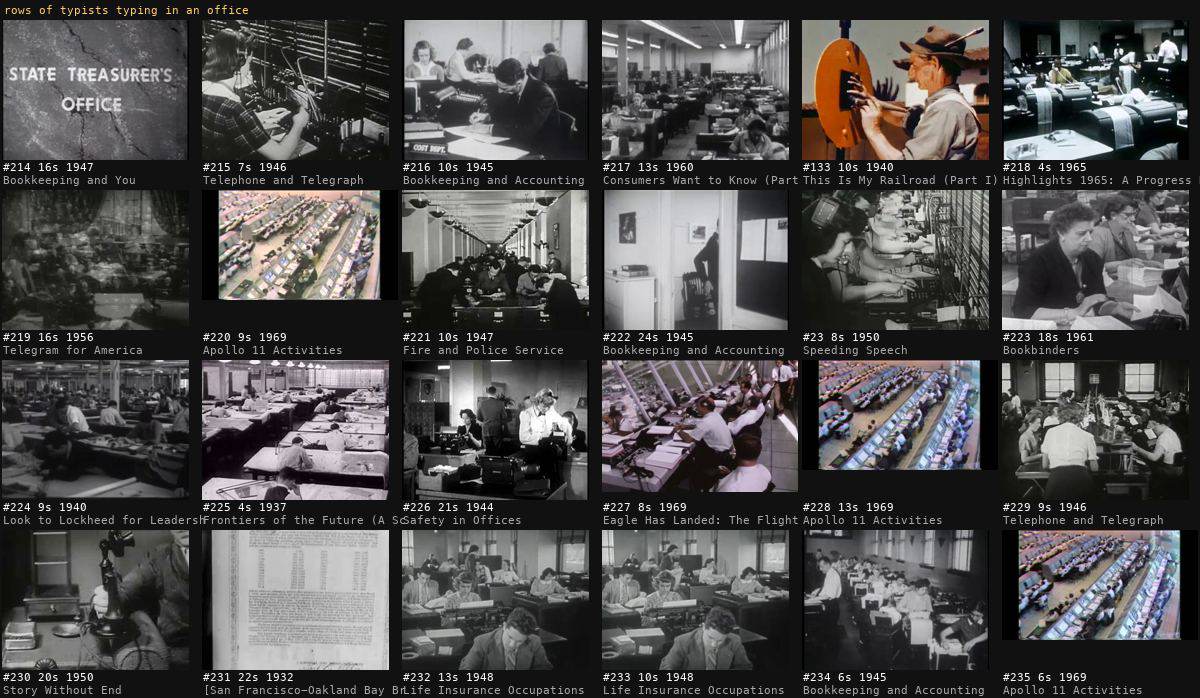
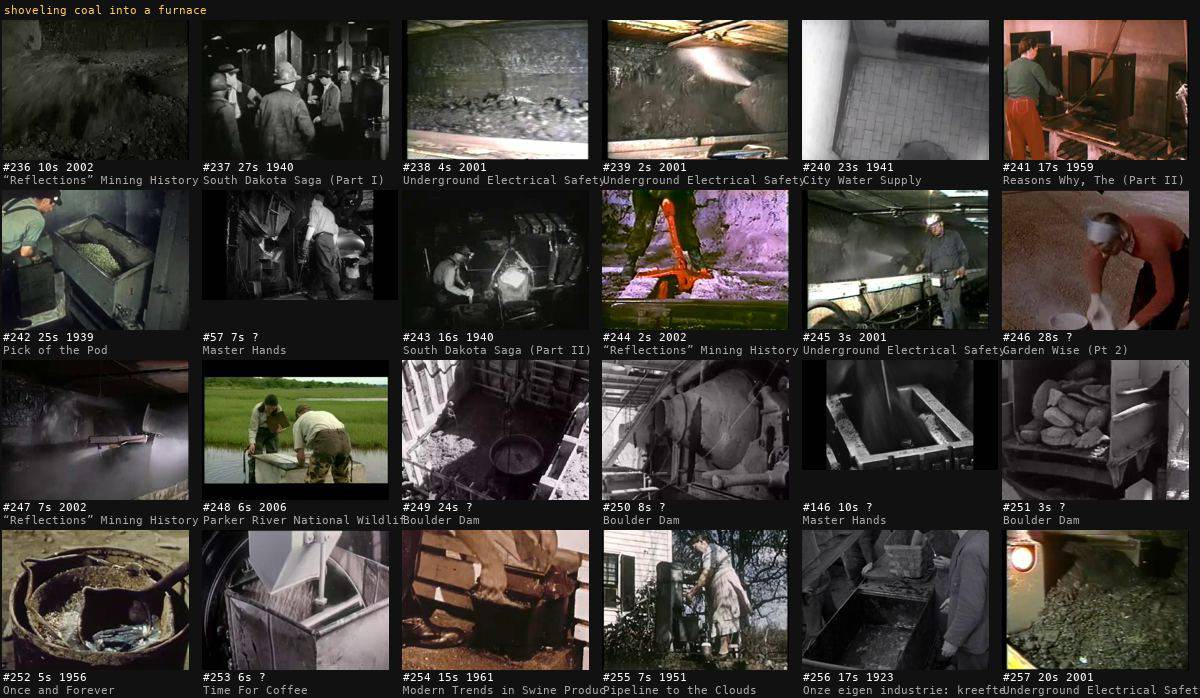
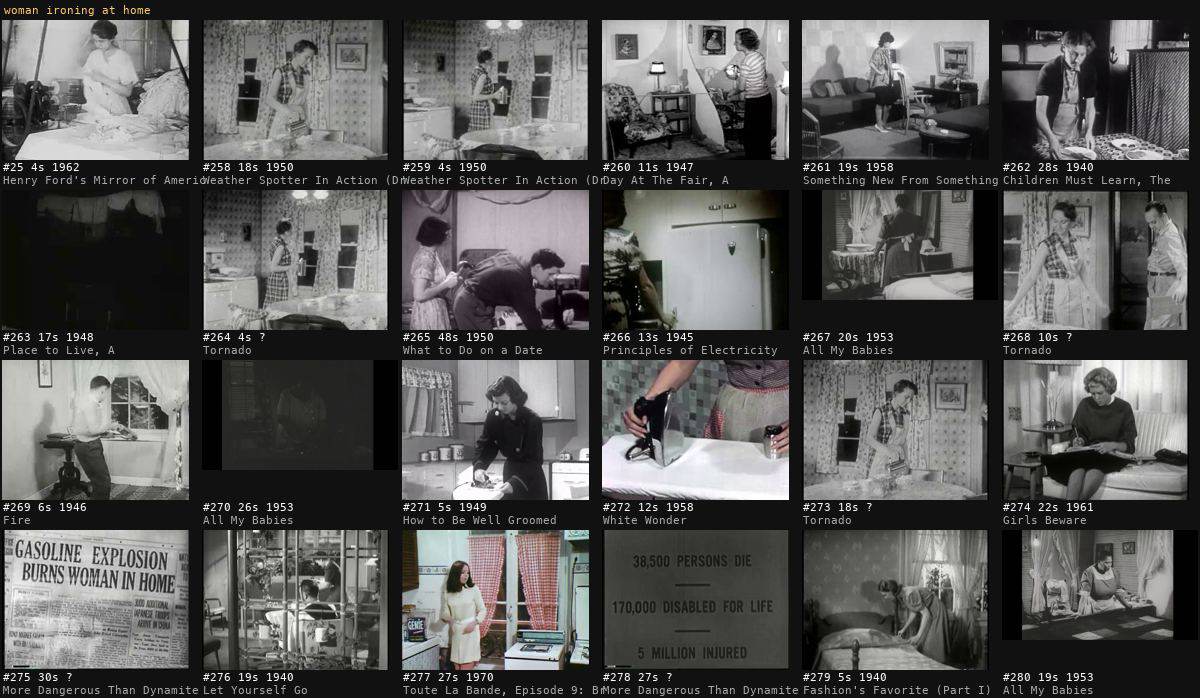
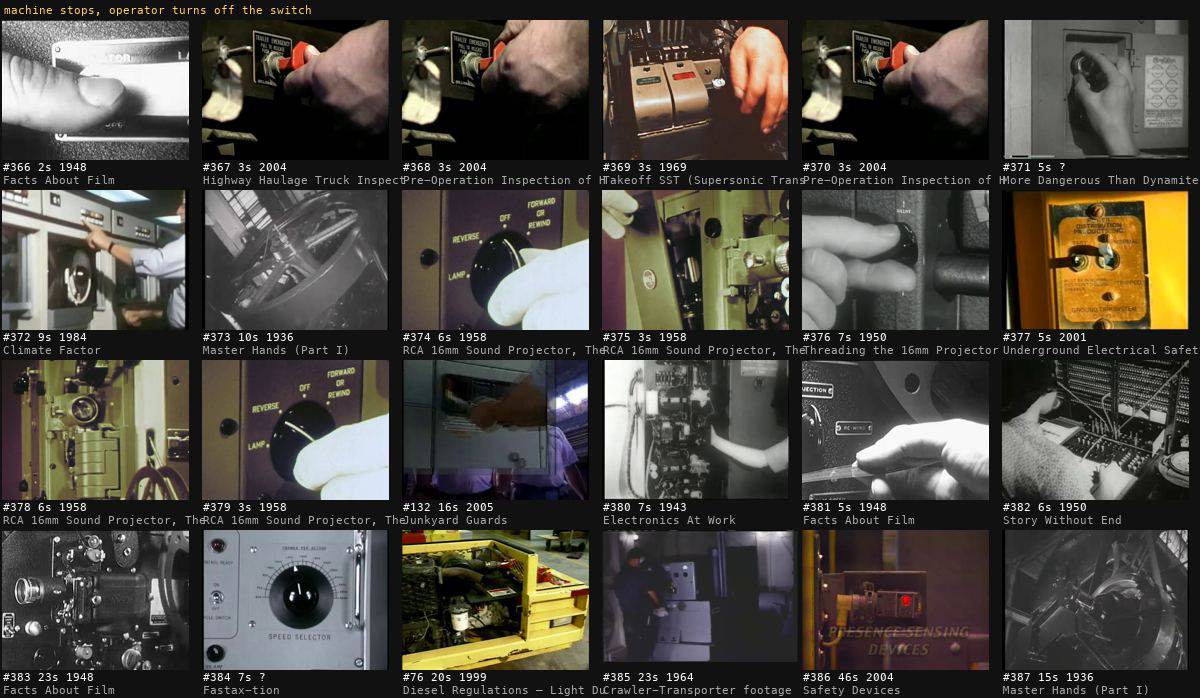
worker's hands repeating on assembly line · 24 resultswoman at a sewing machine in a garment factory · 24 resultsa worker oils a machine, maintenance · 24 resultsrepairman fixes broken down machine · 24 resultsworkers eating lunch on break in factory · 24 resultsworkers wait at a factory gate · 24 resultsa blacksmith hammering at the anvil · 24 resultsa whistle blows, workers stop and go home · 24 resultsa machine slows and stops · 24 resultsrows of typists typing in an office · 24 resultsshoveling coal into a furnace · 24 resultswoman ironing at home · 24 resultsa man waiting beside a stopped conveyor belt · 24 resultsloom weaving mill woman walks along machines · 24 resultsa mechanic stops the machine and wipes it with a rag · 24 resultsworker sits waiting beside idle machine · 24 resultsmachine stops, operator turns off the switch · 24 results
4 What was looked at closely
A time-coded filmstrip and waveform for each candidate. Outlined strips are in the cut.
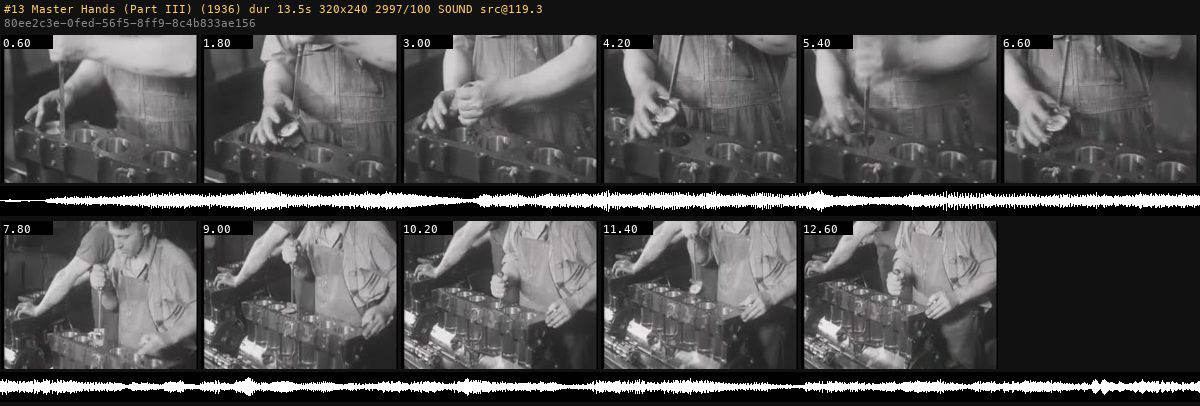
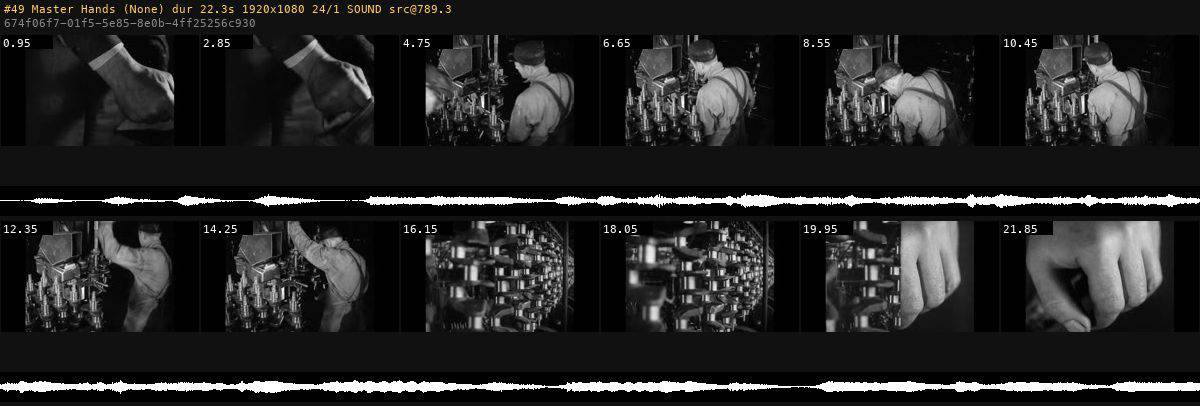
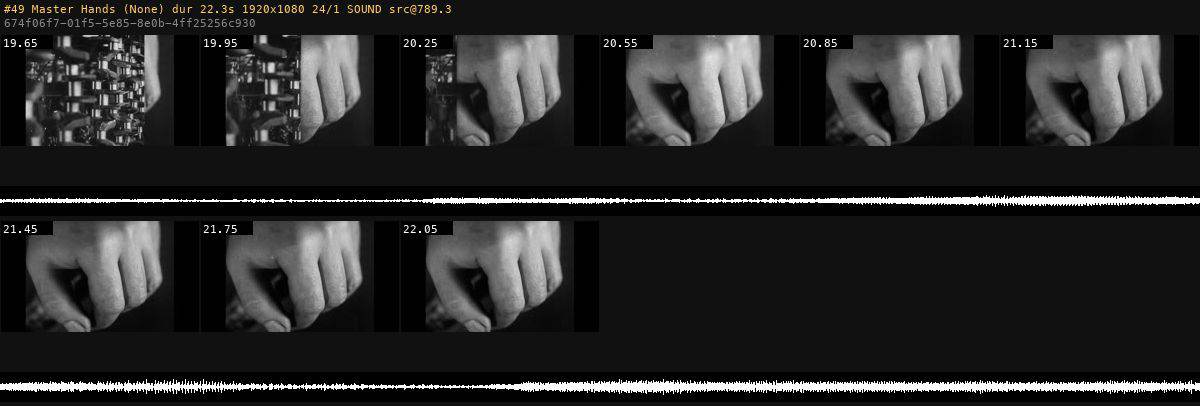
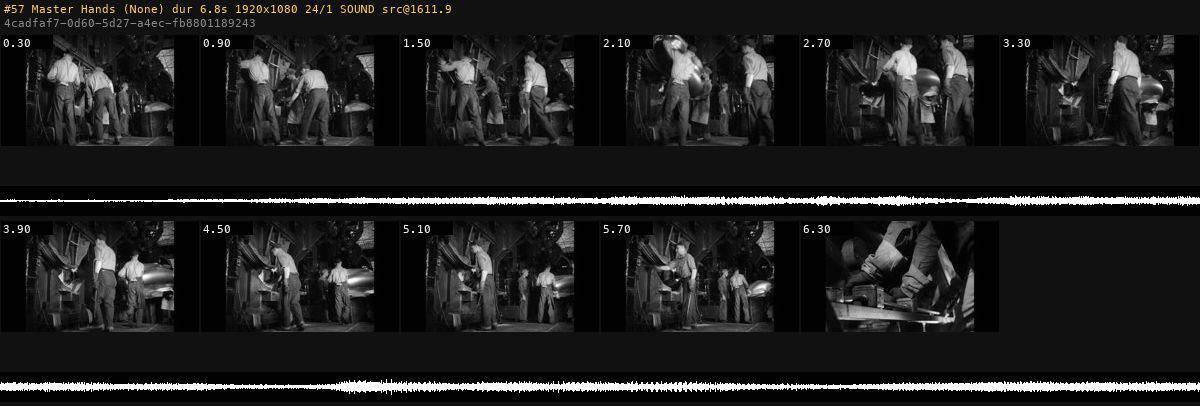
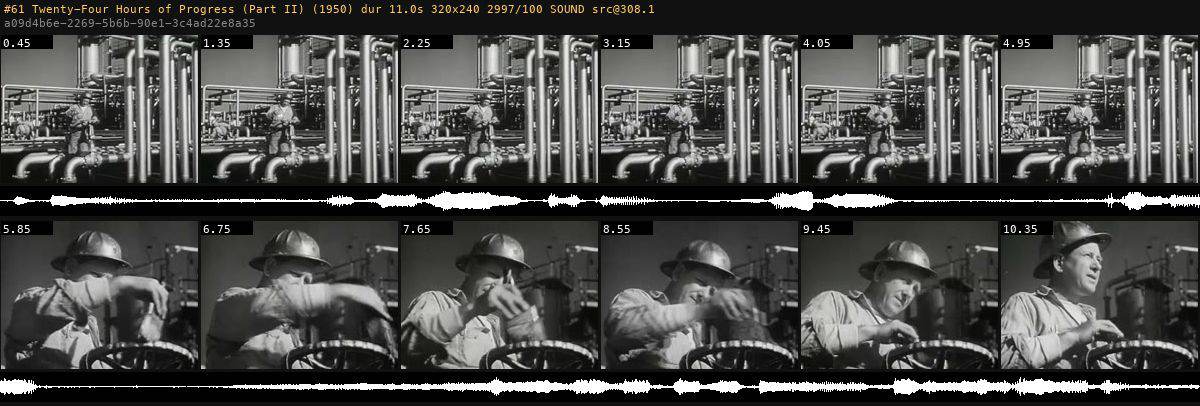
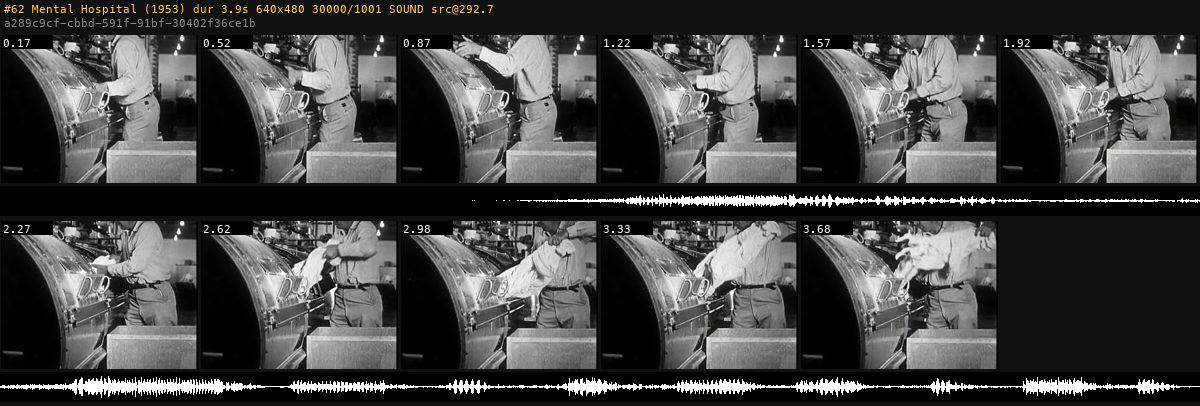
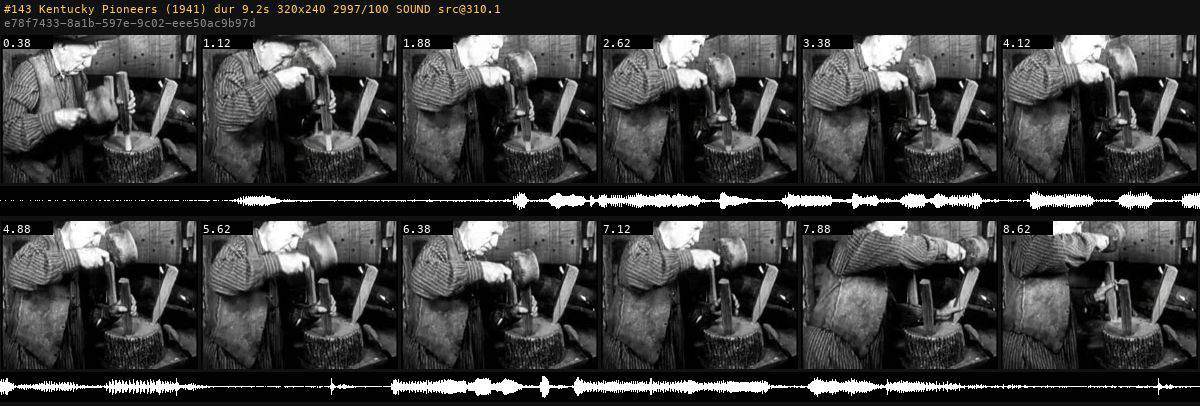
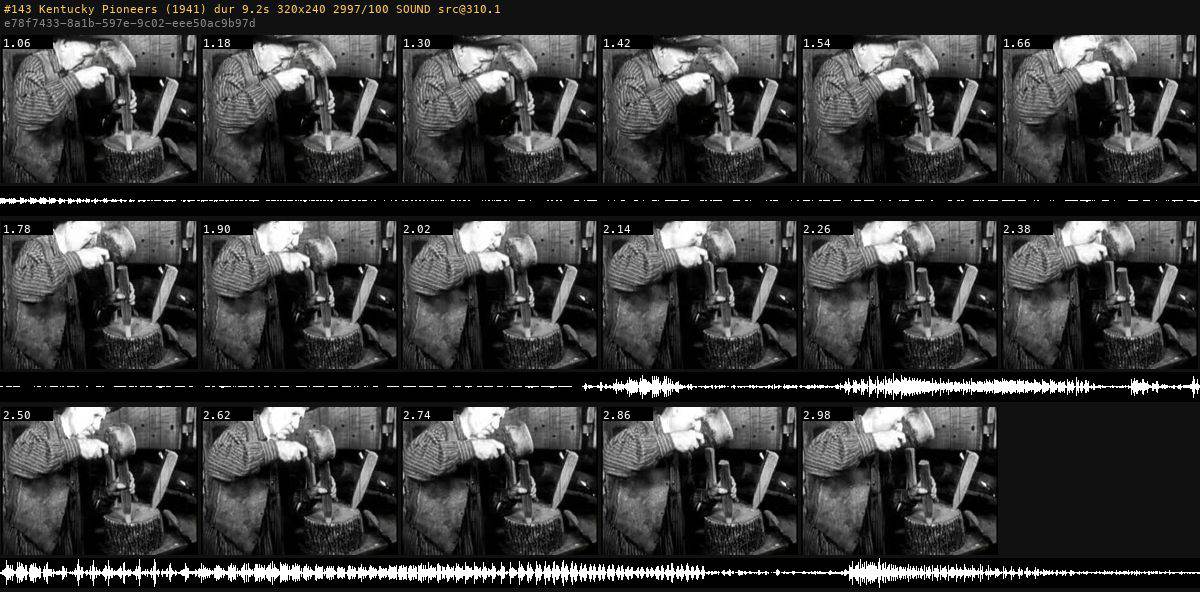
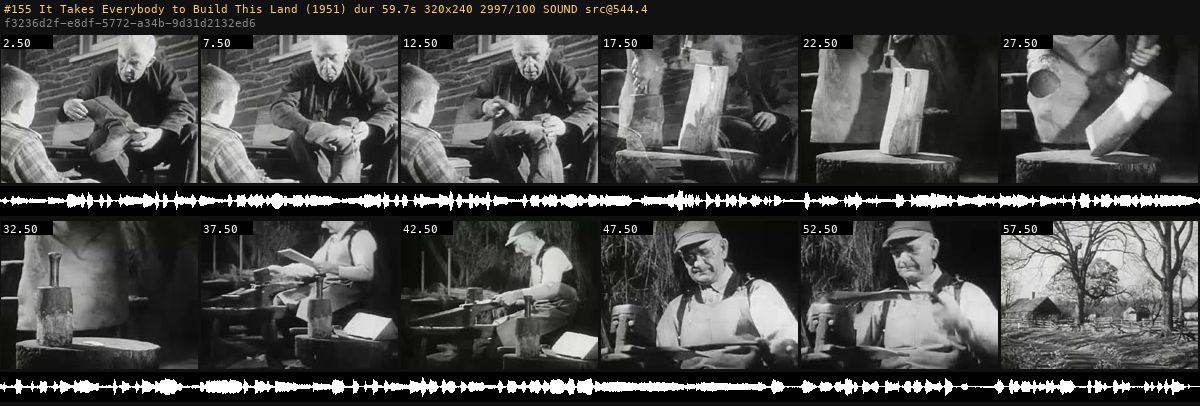
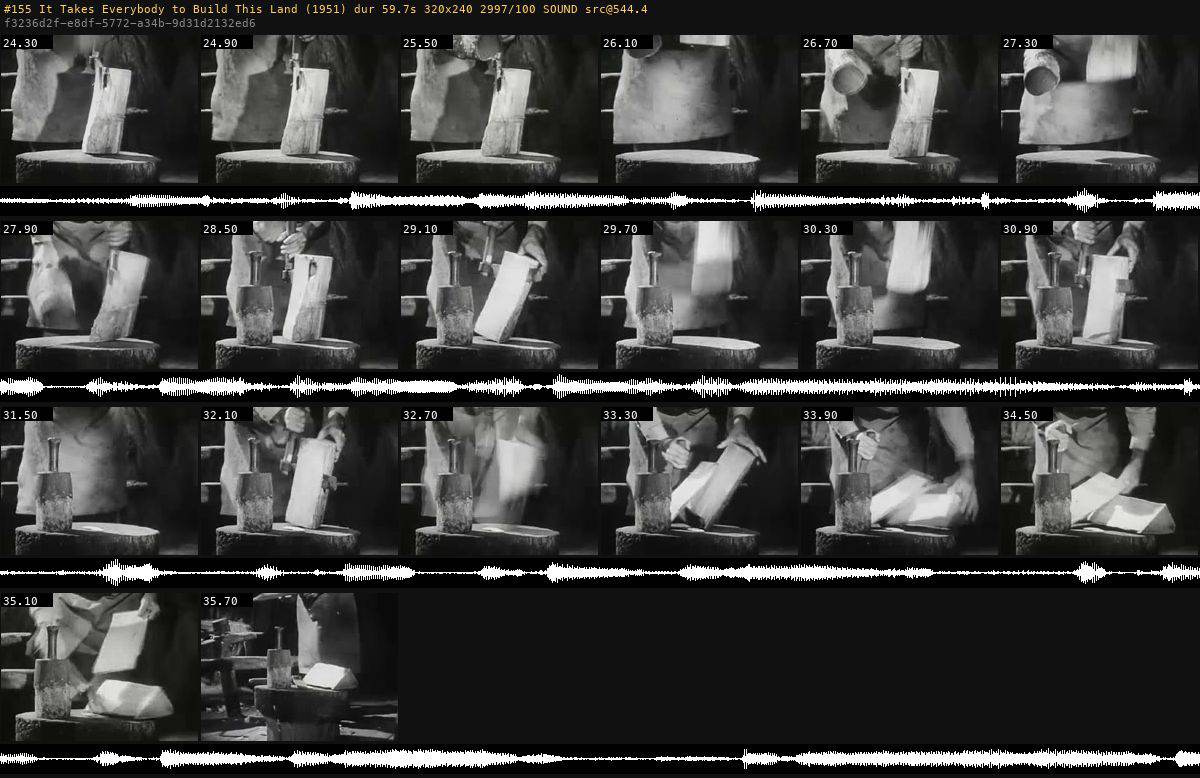
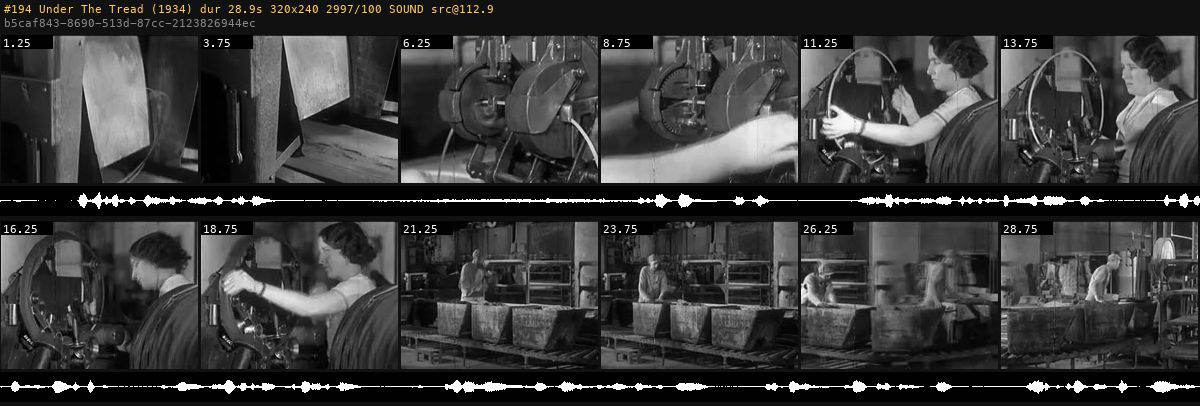
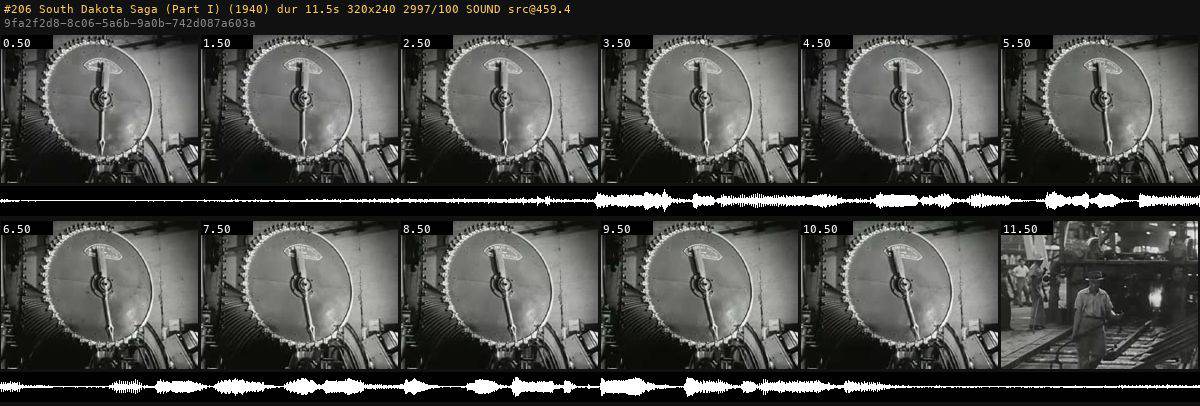
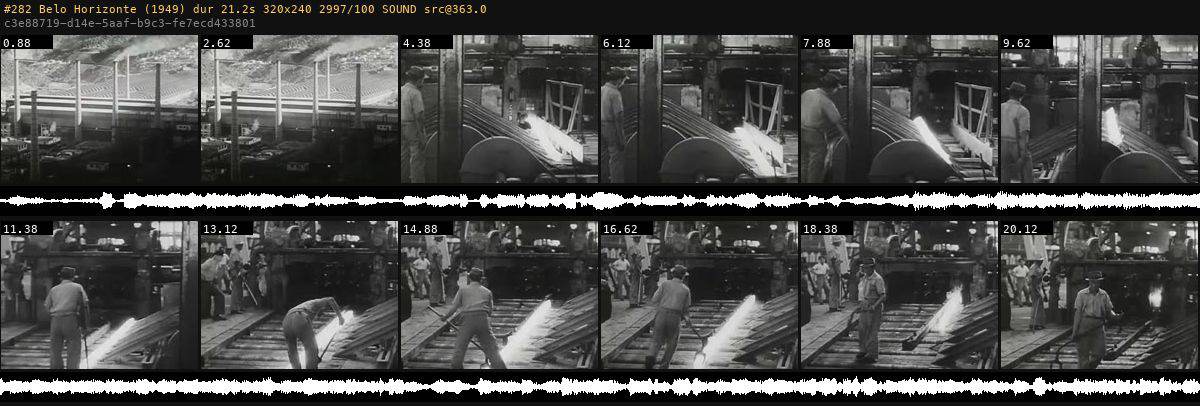
#13 Master Hands (Part III) (1936) · in the cut (shot 1, 6, 12)#49 Master Hands (undated) · in the cut (shot 10, 14)#49 Master Hands (undated) · in the cut (shot 10, 14)#57 Master Hands (undated) · looked at, not used#61 Twenty-Four Hours of Progress (Part II) (1950) · in the cut (shot 9)#62 Mental Hospital (1953) · looked at, not used#143 Kentucky Pioneers (1941) · in the cut (shot 2, 5, 13)#143 Kentucky Pioneers (1941) · in the cut (shot 2, 5, 13)#155 It Takes Everybody to Build This Land (1951) · in the cut (shot 4, 8)#155 It Takes Everybody to Build This Land (1951) · in the cut (shot 4, 8)#191 How Textile Mills Are Modernizing (1948) · looked at, not used#194 Under The Tread (1934) · in the cut (shot 3, 7)#206 South Dakota Saga (Part I) (1940) · looked at, not used#282 Belo Horizonte (1949) · in the cut (shot 11)
5 The cut
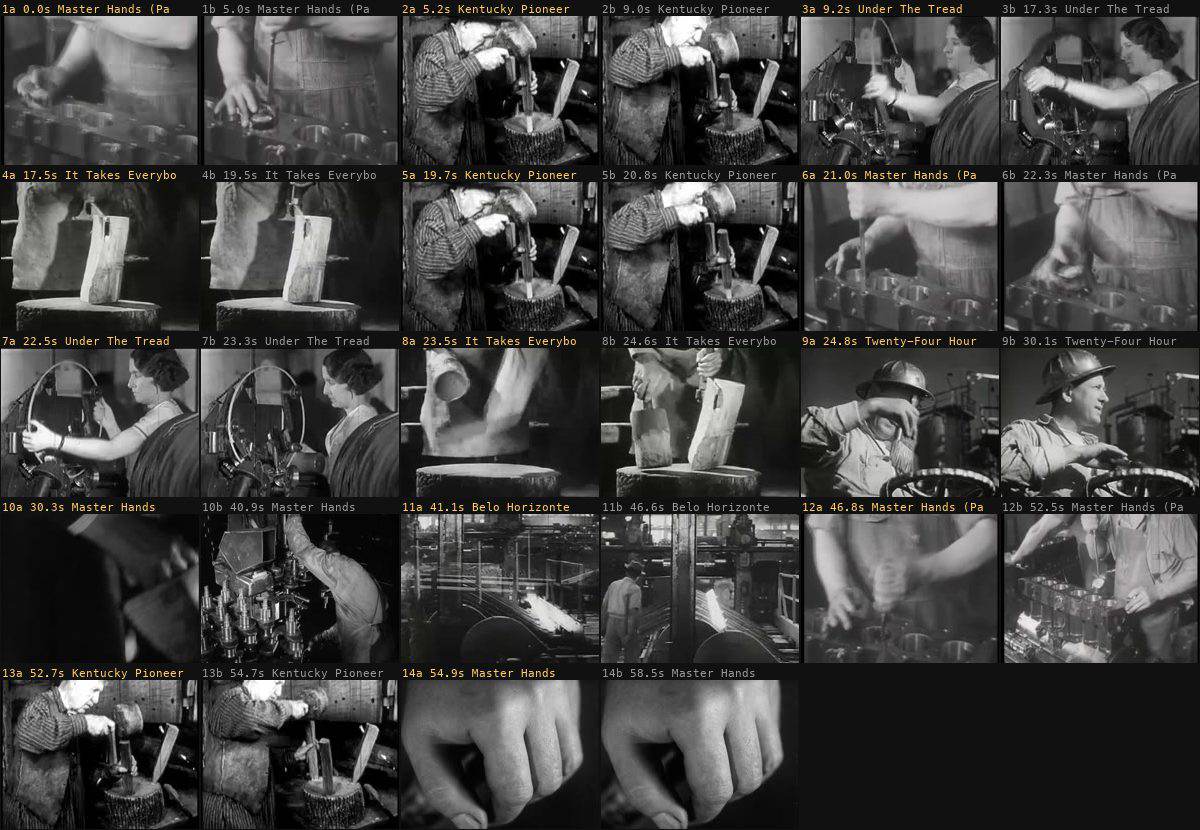
The finished film, shot by shot (first, middle and last frame of each):
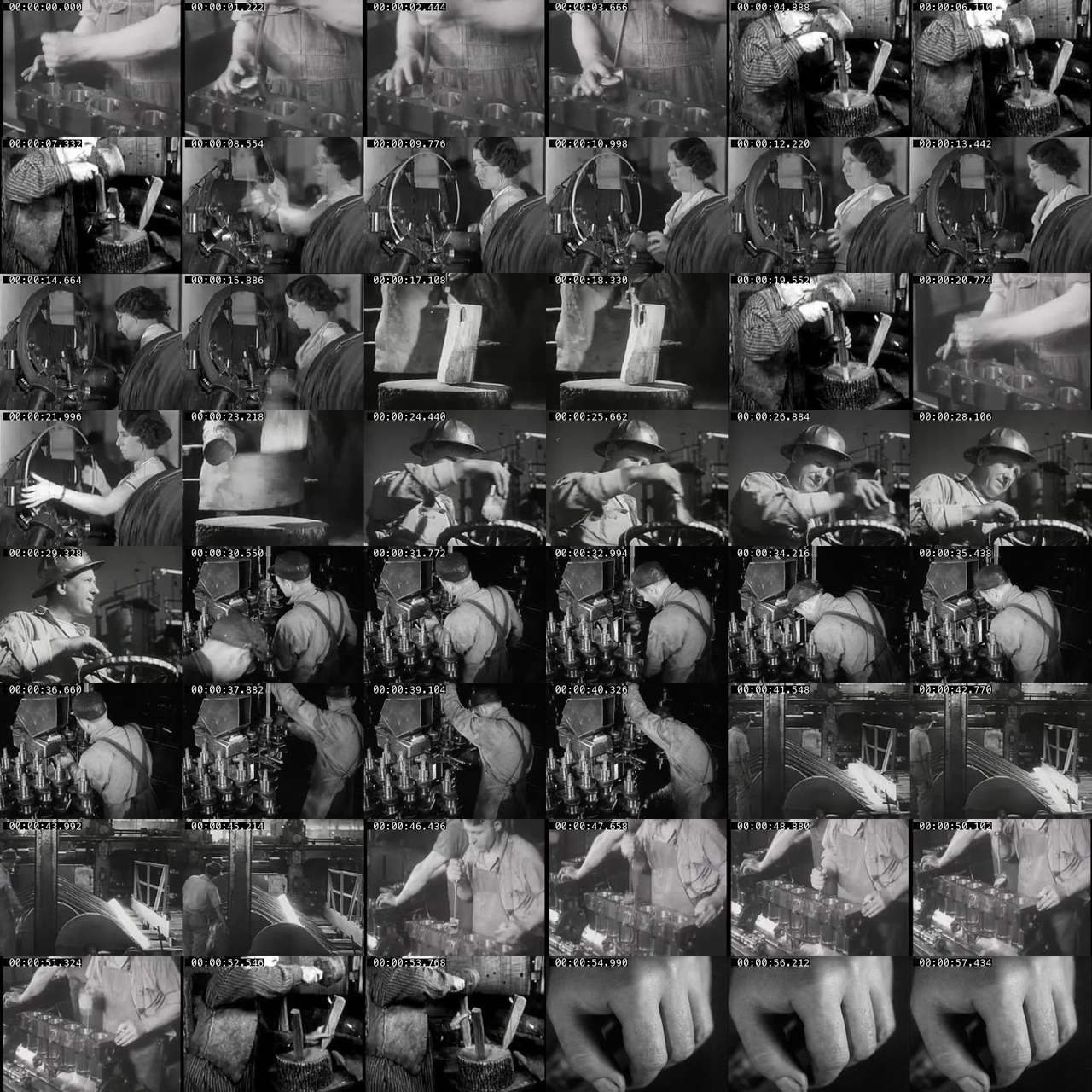
The final cut as a contact sheet
Every shot, where it came from, and why it is here. Source seconds are in the original film. Links go to the archive's own copy of the clip.
A fresh agent was given only a timecoded contact sheet of the film, a transcript with loudness, and the brief. Not the edit list, the ledger, or these reasons. It cannot hear.
Round 1 reference stronger
independent critic (fresh Claude Sonnet 5.5 agent). Its report, verbatim:
The report
VERDICT: reference stronger (leaning inconclusive on sound; I cannot hear the film, so the "original sound phrase" and any coordination by sound go unjudged).

Noticed before the brief: at 0:17-0:24 the film cuts between a log and a mallet (0:17-0:19, 0:23-0:24), the mallet worker (0:20) and the engine-block hand (0:21). Then at 0:22 it cuts back to the woman at the wheel, with the cuts landing on the narration "mallet... carpenter". It reads as one repeated beat, but the transcript's talk of tires, stools and "oil business" does not describe what the frames show (engine blocks, a furnace). That mismatch is probably recogniser error in the hiss, so I treat it as unreliable.

Largest gap: the brief wants an interruption kept at normal speed, and I see none. The sheet shows only continuous labor across 44s. The "interruption" at 0:17-0:19 is a static log with no worker. It is an insert, not a maintenance interval, and it lasts about 3 seconds. The target is 90s and this is 44s. The loudness data shows nothing that reads as a coordination phrase, and a drop to -45.9 dB at 42s suggests an abrupt end. The ending at 0:42-0:43 is the mallet worker again, still working. Nothing stops, so the brief's end condition is unmet.

Repairs:
1. 0:17-0:19: replace the log insert with one complete waiting or maintenance shot of 6s or more at real speed. Check that a worker is visibly idle or tending the machine.
2. 0:42-0:43: end on a stopped hand or machine. Check that the last frame shows no motion.
3. 0:25-0:35: add one wide contextual shot. Check that it shows what the close crop at 0:09-0:16 left out.

Protect: the 0:36-0:41 engine-block sequence with the 0:42 return to the mallet worker. It shows a changed framing on return.
This round's packet images were overwritten when the next round's packet was built, so they are not kept.
The builder, after reading it
True: nothing in the first cut was an interval. A whole 10.8 s interval from Master Hands was added, and the film now ends on a stopped hand.
Round 2 reference stronger
independent critic (fresh Claude Sonnet 5.5 agent). Its report, verbatim:
The report
VERDICT: reference stronger (a pass is not earned). I cannot hear the film; the sound phrase and any rhythm coordination are unjudged. Speech recognition in the hiss is partly unreliable.

Noticed before the brief: 17.1-18.3 is a hard cut to a static wood block on a stump. By 19.6 it returns to the mallet worker from 4.9-7.3, so the film recycles the same clips. The narration is also mismatched. "Carpenter... stool" (5.7-9.1) plays over a woman at a machine, and "tire... flipper" (9.1-17.2) plays over the same woman. The ASR lines are loose, but they do not match the pictures.

Largest gap: there are no three distinct processes with an established repeated movement. Cylinder-block hands, the mallet worker, the woman at the wheel, the hard-hat worker, the machine operator and the furnace all get one or two brief appearances. No beat is visibly repeated, and no maintenance or waiting interval appears (30.5-40.3 is a continuous task). There is no return that reveals excluded framing. The ending at 54.9-57.4 is a static hand close-up, not a worker or machine stopping.

Repairs:
1. Cut the sheet to three processes, with 3 or more visible repetitions each by 0-30s. Check: each process appears in at least 3 shots, with the same action visible in each.
2. Hold one maintenance or wait shot unbroken for 4s or more at normal speed, around 30.5-40.3. Check: one continuous shot with no cut and a visible pause in the work.
3. Replace 54.9-57.4 with a wider re-frame of the 4.9-7.3 mallet worker, ending on the mallet stopping. Check: the frame is wider than at 4.9 and shows the mallet at rest.

Strength to protect: the high-contrast black-and-white texture and the hands-and-machinery close-ups (0-3.7, 46.4-51.3) read clearly as labor.
What the critic was given: the cut after the interval shot and the stopped-hand ending were added. the contact sheet · the transcript.
The builder, after reading it
The critic wants three processes, each with at least three visible repetitions. The film shows each process in one or two short shots; that is below the brief and was not repaired.
7 What happened
Repairs after review
Added the interval at the machine.
Replaced the ending with a stopped hand, last frame held.
What worked
The verse comes from a 1951 film; each process is cut on its beat, and the coordination is allowed to last only seven seconds.
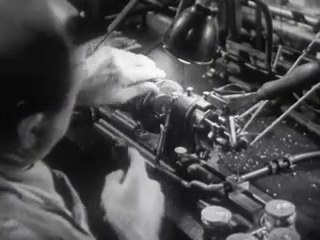
The interval (a man looks into a machine, then reaches into it) runs 10.8 s at normal speed.
What failed
The first cut had no interval at all.
The critic counts the three processes as one or two short shots each, not repeated movements; that is below the brief.
59 s against 90 s.
What is still open
Three or more visible repetitions of each process before they are coordinated.
A wide contextual shot of what the close crops leave out.
8 Files
edl.jsonedit list: every in, out, gain and reason, as written
ledger.jsonledger: each shot traced to its source seconds
 Argon