Cineosis Lab
A laboratory of the moving-image archive. Films cut from it, games that edit with it, tools to make your own, and the cinematic signs it began with (Deleuze's, after Deamer).
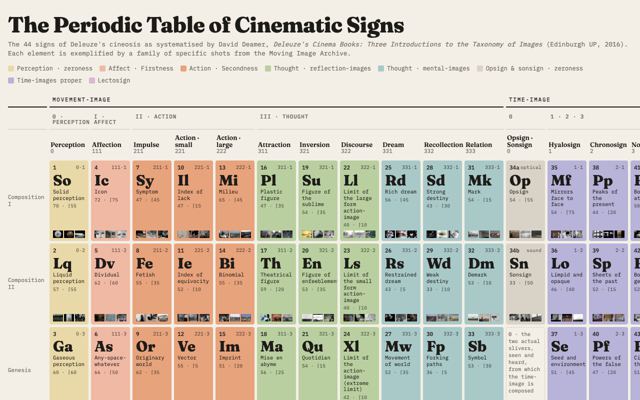 2 · READThe periodic tableForty-four ways an image can think. Click an element: its deciding test, the signs it is confused with, the shots that show it.Go →
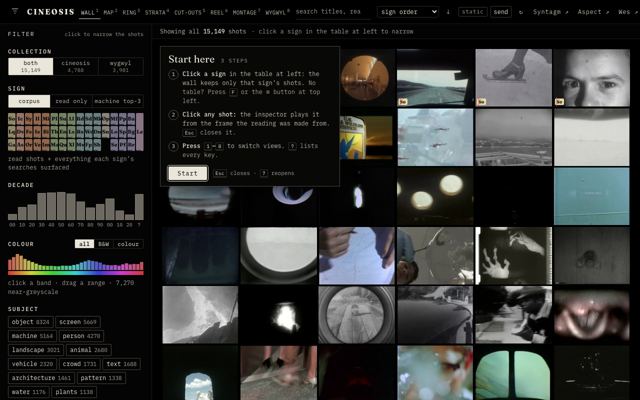 3 · TOOLThe explorerThousands of archive shots on one wall. Pick a sign, a decade, a colour or a subject; the wall shows only those.Go →
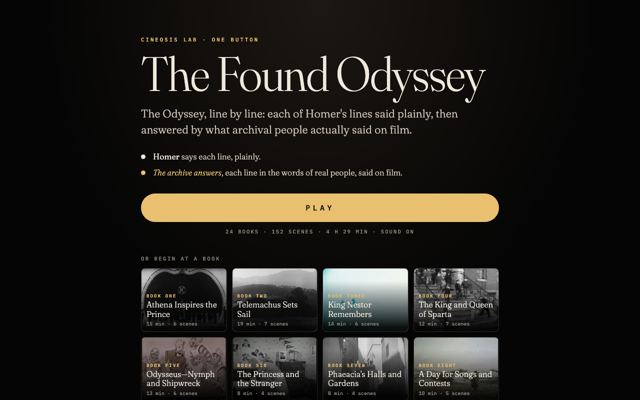 4 · WATCHThe Found OdysseyHomer said plainly, every line answered by real people on archival film. One button, full screen, twenty-four books.Go →
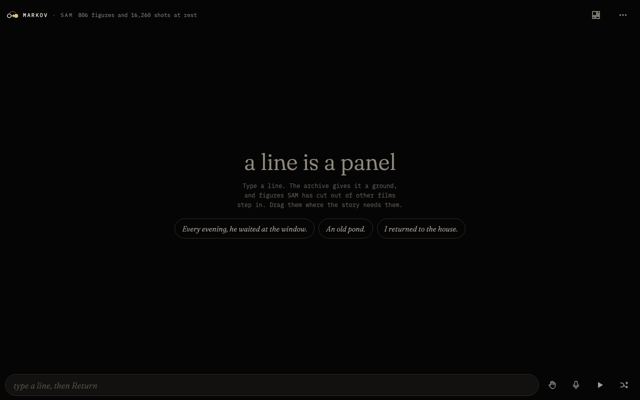 5 · MAKEMarkov SAMA storyboard by hand: each line gets a ground from the archive and figures SAM has cut out of it. Drag them into place.Go →
WarGames (1983) · Studio Set
John Badham's WarGames parsed shot-by-shot (1,464 SBD camera cuts + 302 Cineosis archive shots + 258 pure screen states), assembled into a 12-Studio Set: an index of all studios together, a 258-state screen program inference engine, five pioneer simultaneous-cut instruments (John Whitney slit-scan, Ken Knowlton photomosaic, Frieder Nake 35mm plotter, Manfred Mohr 4D hypercube, Casey Reas flow-field), the 6-Lens ASAL studio, the Museum stage, and the Bumblebee Sound Bench.
The Republic
Seventeen Republics from a writers' room, cut as short films from the archive: a narrator, figures cut from archival films (each introduced where the archive found it), and the archive's citizens.
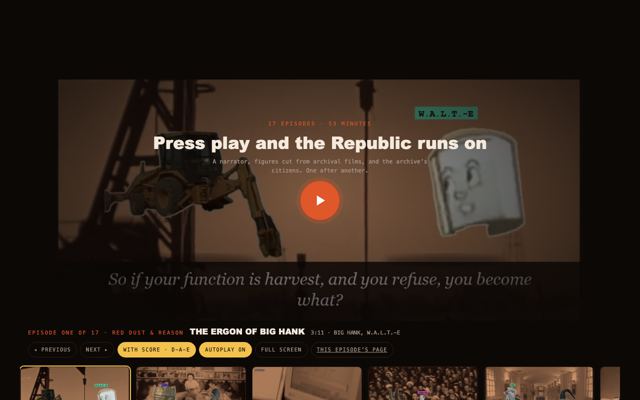 WATCH · NEWThe Republic · all seventeenPress play and the series runs on: episode after episode, up next, resumes where you stopped. Fifty-odd minutes.Watch →
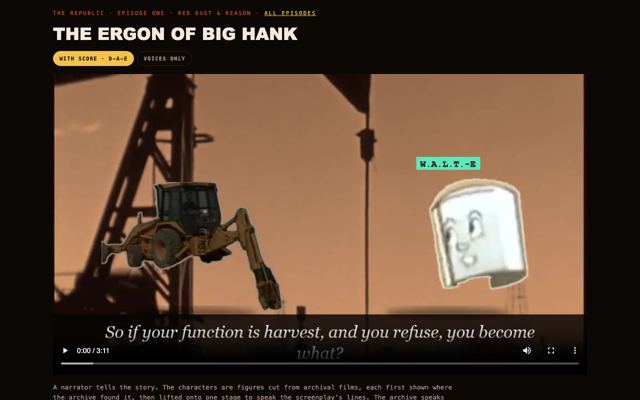 WATCH · NEWEpisode one · The Ergon of Big HankA harvester machine on Mars refuses to work; a rusted barbecue robot with Plato in his chest asks it what it is for. The pilot.Watch →
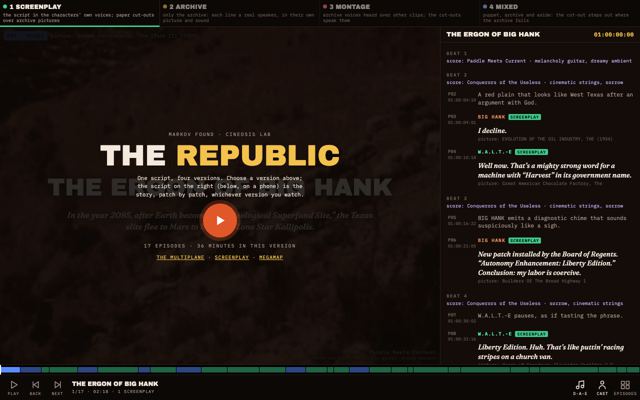 WATCH · NEWThe Republic · four versionsOne script, four rules over the same patches: the screenplay voiced, the archive's own speakers, the archive by montage, and the mixed cut; the script always in view, scored by D-A-E.Compare →
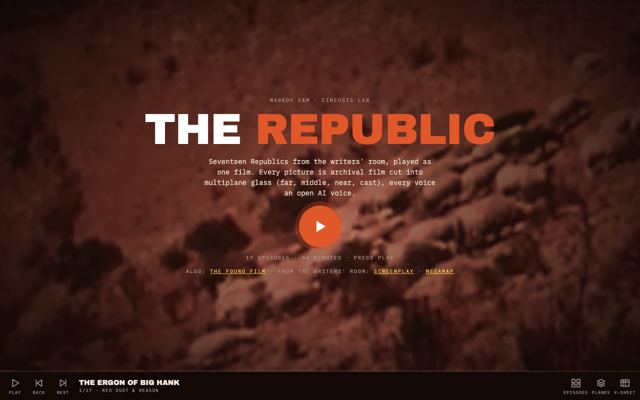 MAKE · NEWThe Republic · multiplaneThe seventeen as multiplane films: archive frames split by depth into glass planes, cut-out cast, AI voices; an x-sheet to change place, cast, voice, camera and join.Open →
Norse Half Moon
A voice memo about a hand-built Norse house on the Half Moon Bay coast, read like Homer and answered by the archive; and a storyboard to shape it like a sculptor.
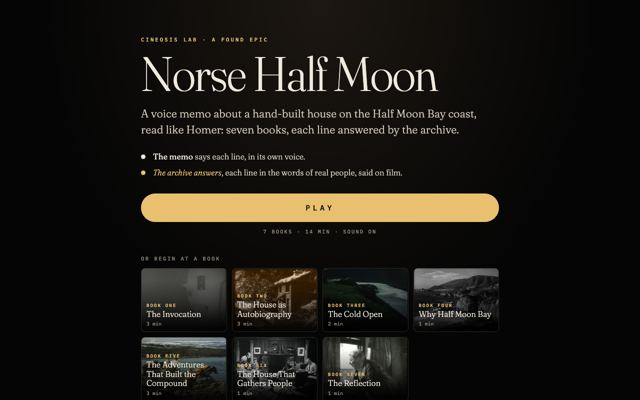 WATCH · NEWNorse Half Moon · the filmSeven books, each line of the memo answered by the words of real people on archival film. One button.Watch →
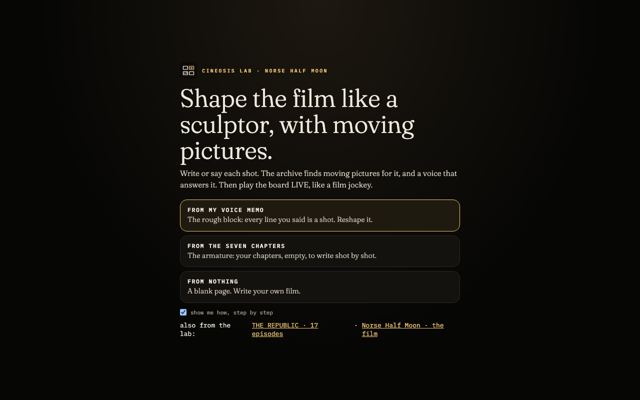 MAKE · NEWMarkov SAM · NorseA storyboard for a filmmaker who has never made one: write or say each shot, the archive offers pictures and voices; join, tune, play it LIVE with its D-A-E score.Make →
The Odyssey
Homer's Odyssey through the archive: foraged scenes, the archive speaking the lines, radio, sea and road.
WATCH · NEWThe Found Odyssey · museumEvery line said plainly and answered by real people on archival film. One button, full screen, twenty-four books.Watch →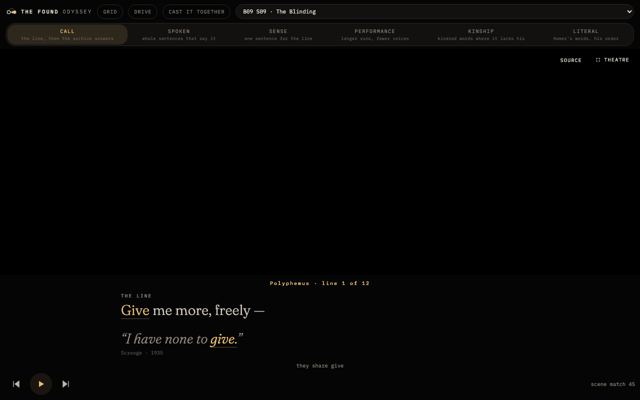 WATCHThe Found OdysseyThe Odyssey spoken by the archive itself: every line assembled from words archival people really said, the longest runs first, each fragment with its own face and voice.Hear it →
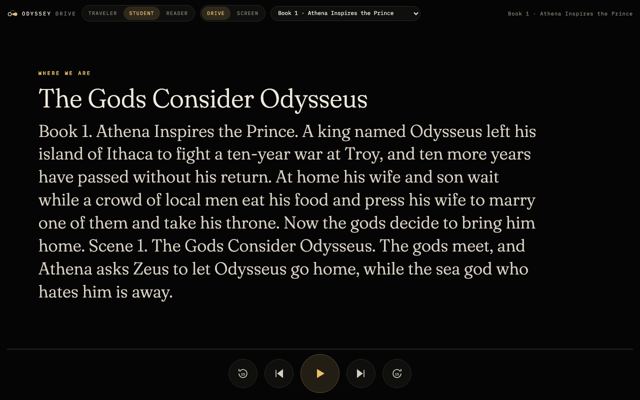 WATCHOdyssey DriveThe whole Odyssey as one long broadcast for the road or the background: the archive tells each scene, a herald says where you are, and level by level Homer's Greek is read and taken apart word by word, his great words coming back across the books.Open →
 WATCHCool Radio OdysseyThe Odyssey in twenty-four stations: each book a radio film, its scenes' recorded voices keeping time, archival footage composed along them, the book's own music beneath, the archive's own sound in the gaps. Made to be followed by someone who has never heard the story.Tune in →
 PLAYMarkov Sea · the SteersmanThe Odyssey as a sea of footage you steer. Every shot's possibilities play beneath it with their confidences; archival faces speak the parts; music, voices and the archive's own sound on their own stations; and a harsh captain who looked at every shot says what is seen, whether it holds, and steers or refuses.Take the helm →
 PLAYMarkov SeaThe Odyssey as a sea of footage you tune by ear and eye: voices on their words, archival people speaking the parts.Open →
 MAKEThe Markov Poet · OdysseyHomer's 152 scenes as storyboards, a beat a panel: grounds and actions foraged for every beat from the Moving Image Archive, SAM figures to move by hand, each scene's cinematic sign beneath it.Board the Odyssey →
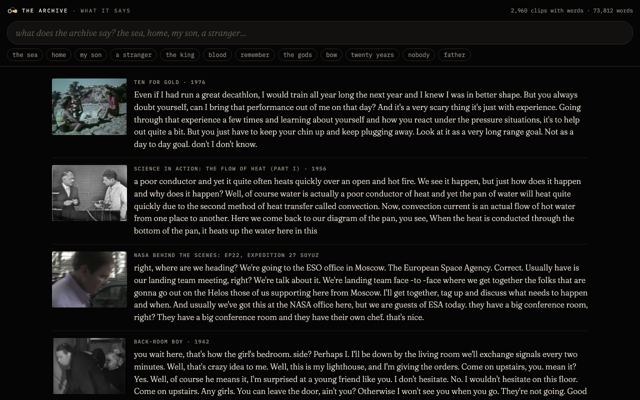 READWhat the archive saysEvery forage clip with sound, transcribed word by word. Search it; tap a word to hear it said.Search the transcripts →
WYGWYL
Where You Go When You Leave, Mark Anthony Thomas's poem suite: cut from the archive four ways, edited by its own words, and taken apart.
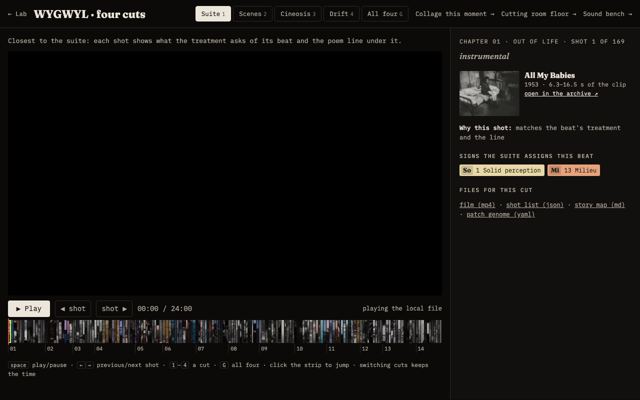 WATCH3 · Watch a filmFour cuts of the WYGWYL poem suite, made only from archive shots. Pick a cut, press play: the poem line, the shot's source and its signs follow the picture.Watch the cuts →
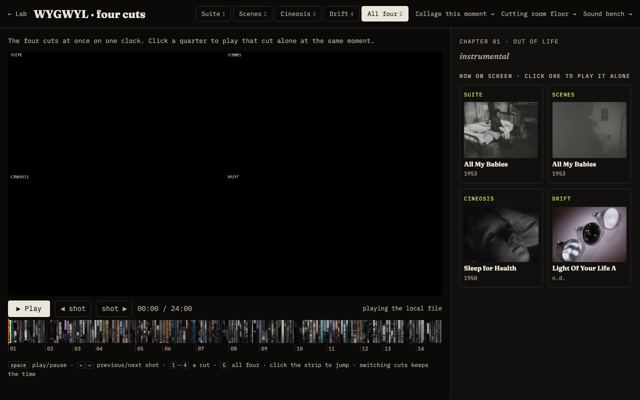 WATCHWYGWYL · all fourThe four cuts in one 2×2 frame on one clock. Click a quarter to play that cut alone from the same moment.Watch the grid →WATCHWYGWYL · first cutThe first 24-minute cut: splits, insets, dissolves and montages built from the suite's own forage.Play the mp4 →
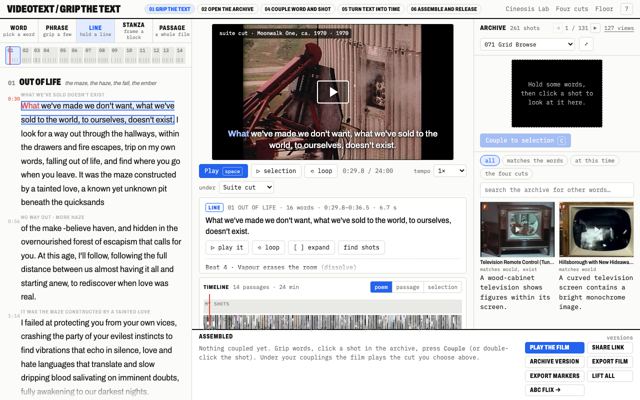 MAKEVideotext · the whole poemThe poem is the editor. Grip a word, phrase, line, stanza or passage; the archive opens at those words; couple a shot to them; play, loop and release the film you made as a link, an edit list or a version. 127 views from the sheets, full size on the view wall.Edit by the text →
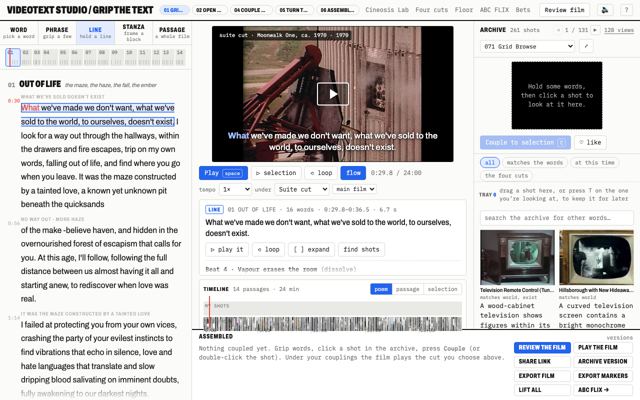 MAKEVideotext StudioVideotext with its 127 views from the sheets. Every view plays its shots and moves with the poem while it plays; whatever you change inside a view goes on that view's branch of the film, which you watch on the stage and merge into the main film at its times.Open the studio →
 MAKEWAG · TempestMake the film in WAG's cutting room with its lego man, hands and sounds: the scene's best clips lie on the plate as real parts; pinch or drag one onto the SEAT pad and it goes into the cut at the beat's time. MOVE walks the man, LOOK turns the plate.Make the film →
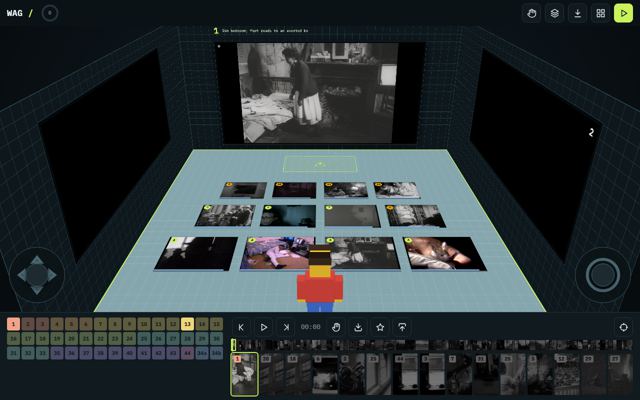 PLAYCutting Room TempestMake the WYGWYL film as a character in a room: walk to the best clips on the table, pick one up, carry it to the cut.Open →
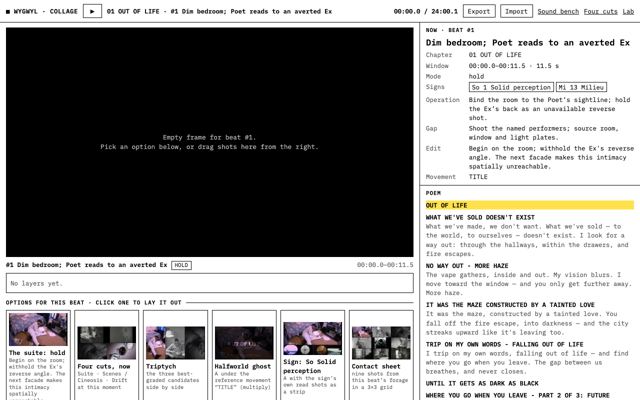 MAKEWYGWYL · collagePick any moment: every candidate, forage clip, cut and Halfworld frame for that beat. Drag them onto the frame, or take one of the laid-out options; play the suite to watch your collages.Collage a beat →
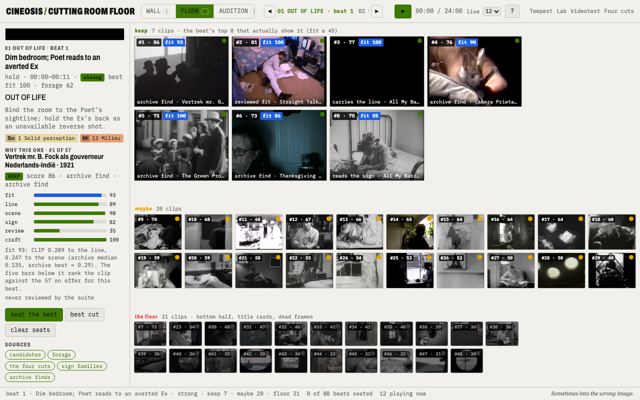 TOOLCutting room floorEvery candidate playing at once: a MONTE wall of fourteen reels, the whole floor for one beat, an A/B audition, the text as score. Click a clip to seat it; the cut plays your seats to the suite.Watch it all →
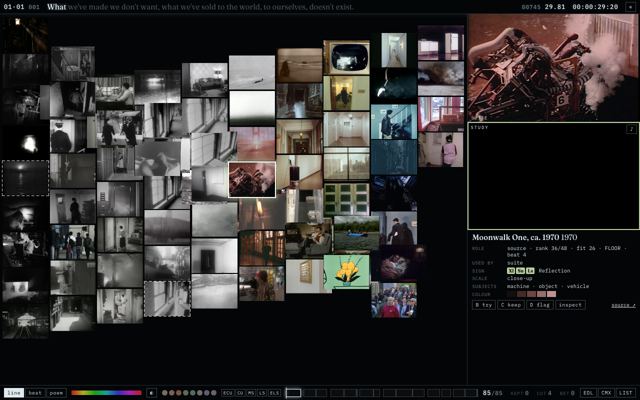 READNarrative LabThe lab driven by the poem. Her reading plays and every view (wall, map, ring, strata, cut-outs) holds only the current line's shots: what you kept, the chosen film's shot, the four cuts, the bets' picks, every ranked candidate. In the ring they circle the line and the chosen one plays in the middle. A watch · B try · C keep · D flag · E on.Open the narrative lab →
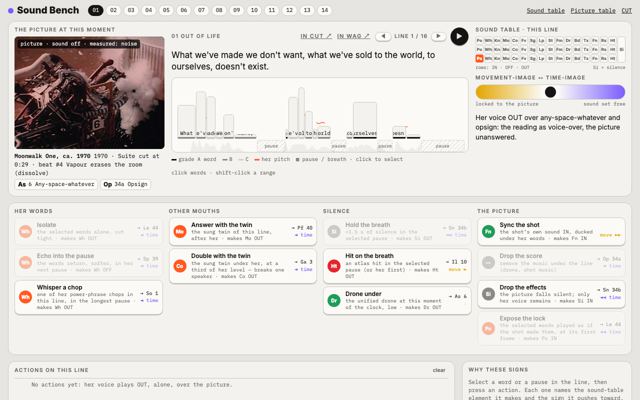 READSound BenchOne line of her reading, word by word, against the picture on screen then. Twelve actions, each making a sound element and pushing the picture toward a sign; they play in CUT and WAG at their lines.Open the bench →
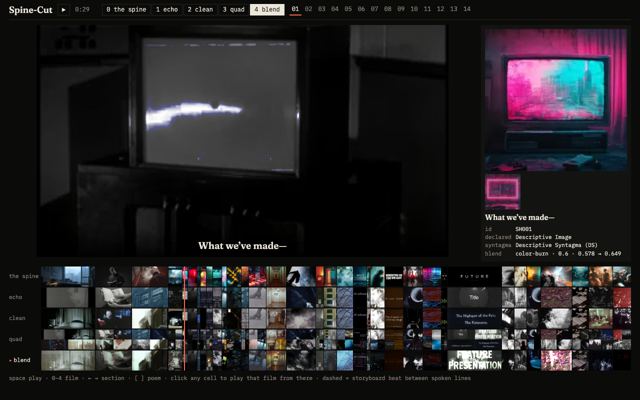 WATCHSpine-CutFour films cut from the prompt spine to his voice, each image set to the words it was made for. Echo takes the nearest archive shot; clean uses no shot twice, keeps neighbours apart and was checked row by row against his words and images; quad plays the top four at once; blend composites two archive shots with overlay, burn, dodge and the rest, chosen so the result sits closest to the spine image.Watch the spine-cut →
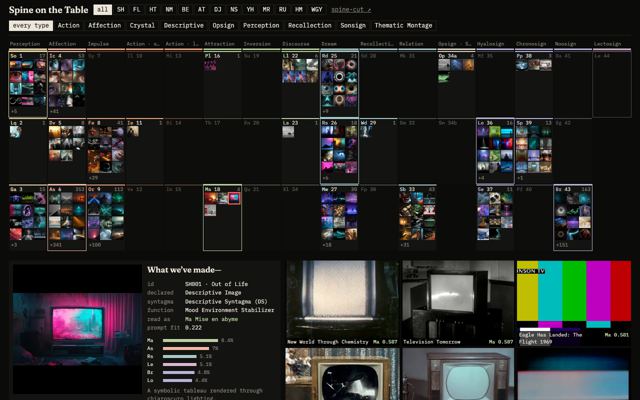 READSpine on the TableThe 935 images the prompt spine generated for the poems, encoded with the same CLIP as the archive shots and placed on the periodic table by the sign they read as. Pick a poem to see its path through the signs in order; open any image beside the six archive shots nearest to it.Open the spine →
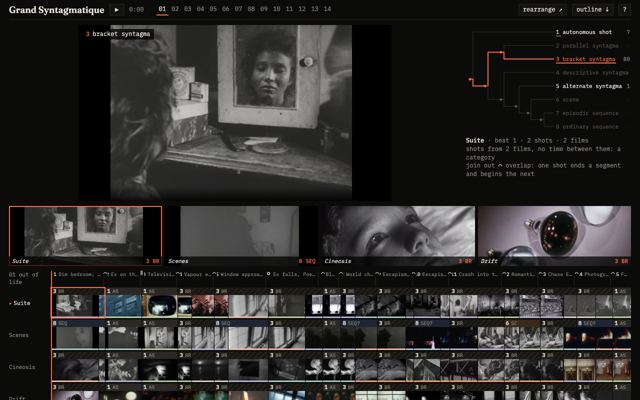 READGrand SyntagmatiqueMetz's eight autonomous segments applied to WYGWYL. Every cut plays at the same moment against the voice; a table shows the same beat in every cut with the type each one uses; his table of dichotomies lights up for the segment playing; the counts show five of six cuts speak almost only the bracket syntagma. Overrule any reading, download the outline.Open the syntagmatique →
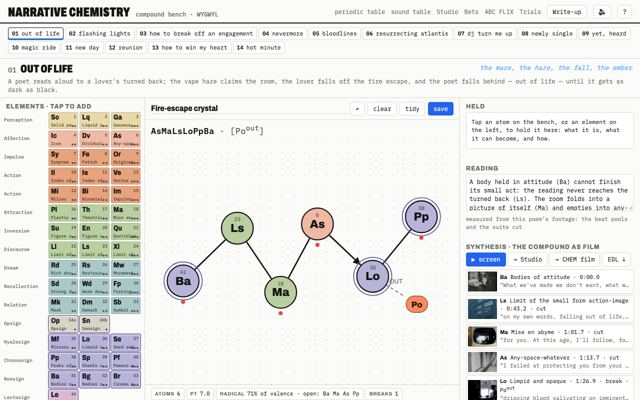 MAKENarrative Chemistry · Compound BenchEach poem as a compound: the 45 signs as elements, cuts as bonds (a cut, shared time, rhyme, resonance, the break into time), the confusion table as reactions, sound as ligands. Fourteen measured compounds and fourteen new syntheses, written up, and a bench to make your own and turn them into film.Open the compound bench →
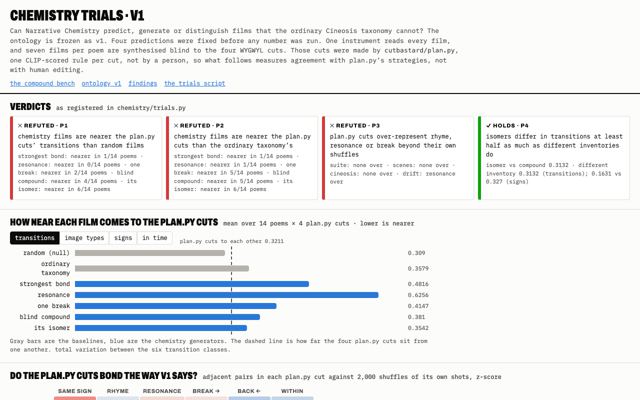 READChemistry TrialsNarrative Chemistry v1 on trial: blind synthesis against the four plan.py cuts, spectra of every film, a permutation test of the bonds, and a blind screening room. Three predictions refuted, one held, and one editorial habit found that v1 has no word for.Open the trials →
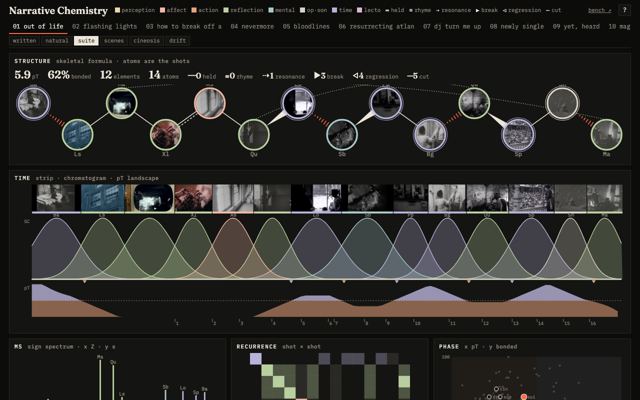 READNarrative Chemistry · the apparatusThe analytical side of the chemistry, kept apart from the Compound Bench's synthesis. Any film's fingerprint, chromatogram and pT(t); fragments and species nobody defined; a phase diagram of every poem; theoretical valence against observed coordination; where WYGWYL confirms Deamer and where it argues (128 regressions from time back into movement); the round trip from film to chemistry and back; vacancies, catalysts, chirality, conformers and a reaction microscope.Open the apparatus →
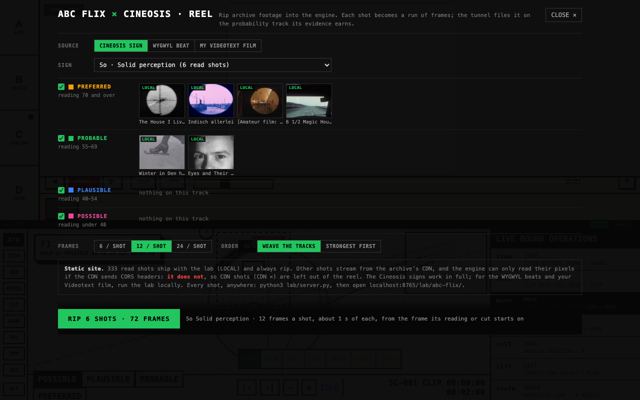 PLAYABC FLIXThe ICARO-PRO engine and ARC-TUNNEL fed with lab footage: rip a sign’s read shots, a WYGWYL beat or your Studio film into frames; the tunnel files each shot on its probability track, POSSIBLE to PREFERRED.Open ABC FLIX →
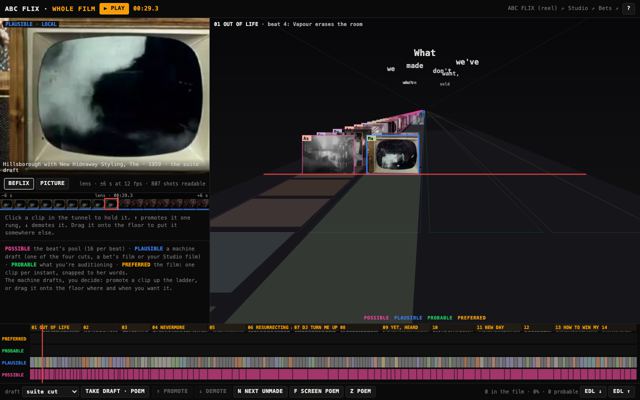 WATCHABC FLIX · Whole FilmABC FLIX rebuilt on her voice: the whole 24-minute film as a tunnel you fly through, every clip on its rung (the beat’s pool, a machine draft, what you audition, the film), a BEFLIX lens ripping the 12 seconds around the playhead, and your film out as a cineosis EDL.Open the whole film →
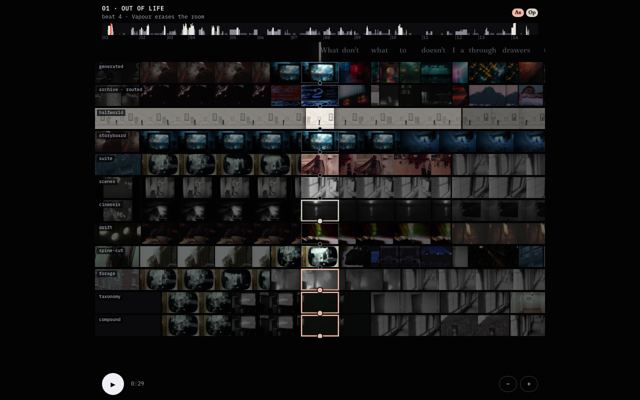 WATCHSyzygy SpineEvery body on her clock as a lane of clips sliding under one line: her voice, the generated images, the storyboard and every cut. What the beat asks for lights up where it lines up.Open the spine →
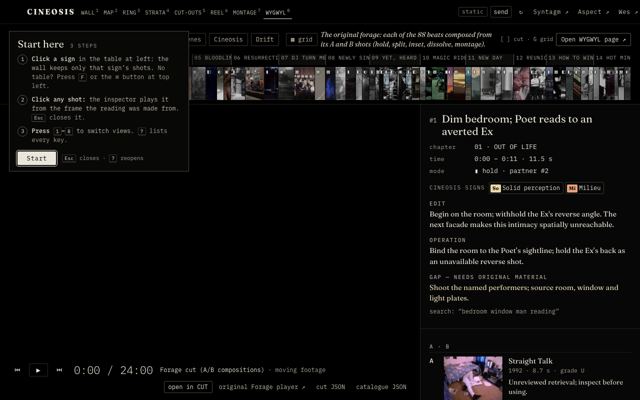 READWYGWYL in the labThe suite's 14 films and 88 beats beside the corpus: each beat's signs, its candidate shots and their reviews.Open WYGWYL mode →
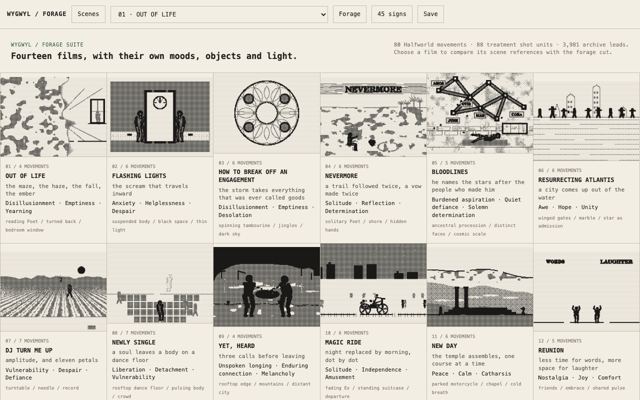 WATCHWYGWYL · Forage SuiteThe WYGWYL poem suite played with its foraged footage.Open →
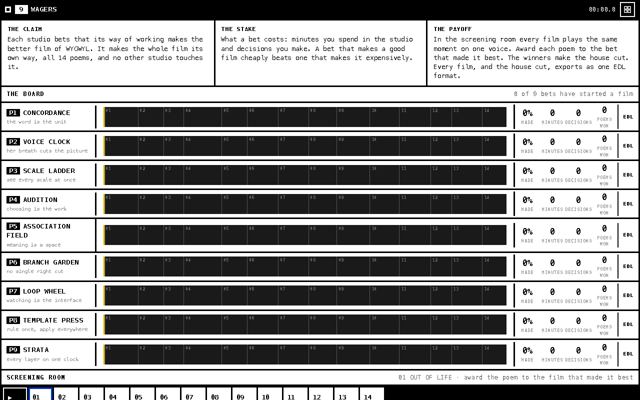 MAKENine Bets · WYGWYLOpen →
The Markov Poet
Any words, typed, said or recorded, answered by the archive with a film: the engine, the poet, the storyboard, and how it works.
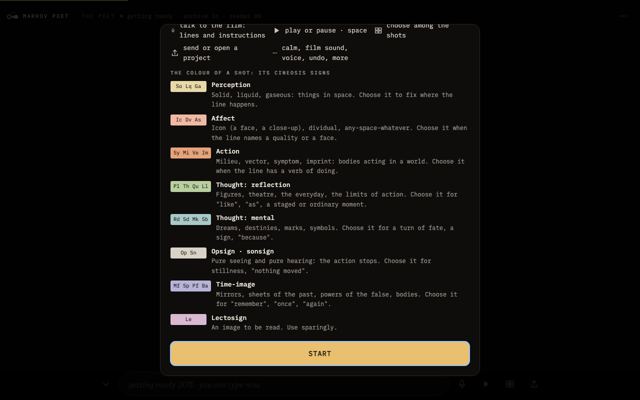 MAKEThe Markov Poet · The PoetAn empty screen. Type or say a line; the archive answers with a film. Record your own voice reading it; your voice becomes the film's clock. Change any shot. Send a project file a friend can remix, or an MP4.Write a film →
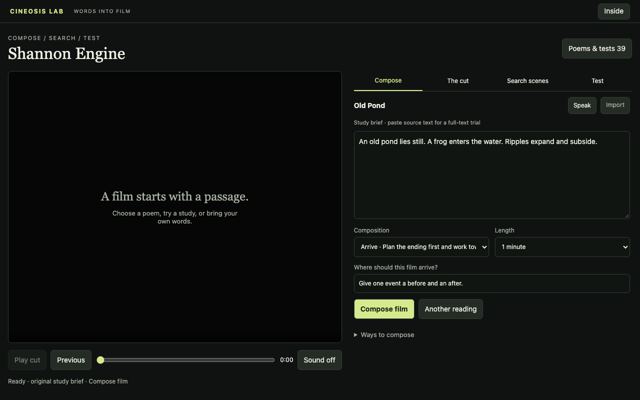 MAKEShannon EngineCineosis began with cinematic signs and Mark Anthony Thomas’s Where You Go When You Leave. Now compose scenes from a poem or transcript, search the archive, shape an ending, and compare the cut with retrieval alone.Compose a film →
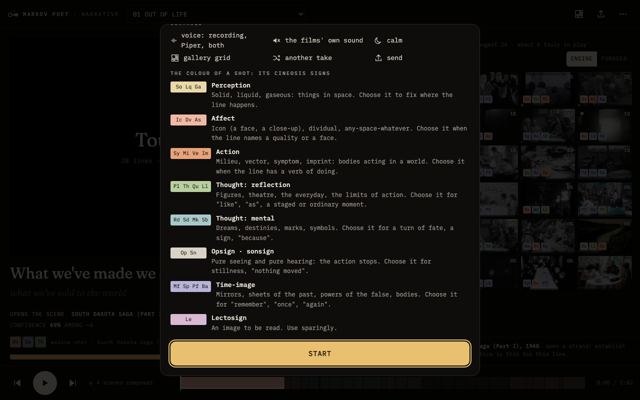 WATCHThe Markov Poet · NarrativeA poem line by line against its voice (recorded, Piper, or both), every shot the engine weighed moving beside the one it took. A gallery grid for a museum wall.Watch a poem →MAKEThe Markov Poet · SAMA storyboard by hand. Each line gets a ground from the archive and figures SAM has cut out of other films; drag them where the story needs them.Board a story →
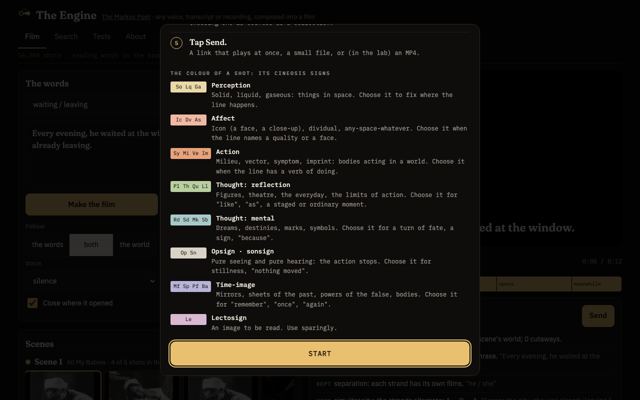 MAKEMarkov EngineAny voice, transcript or recording composed into a film from the archive: scenes, a world for each, the edit.Open →
 WATCHA Markov Poet filmA film cut from the archive by someone's words. Watch it, then remix it.Watch →
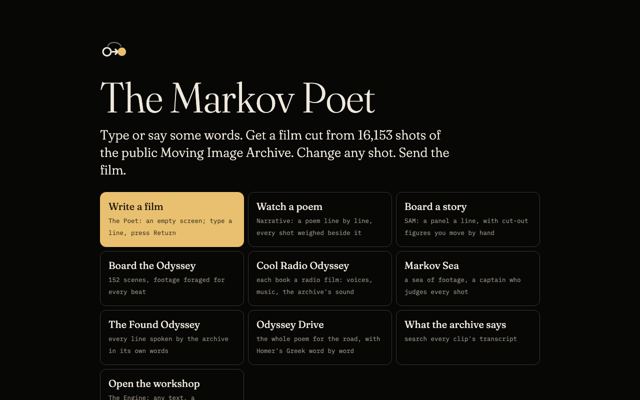 READThe Markov Poet · How it worksOne sentence through the engine, live: lines, the shots weighed with their chances, a world for each scene, the edit the grammar picks, the cut, the score. And the workshop for any text or recording.Read it →
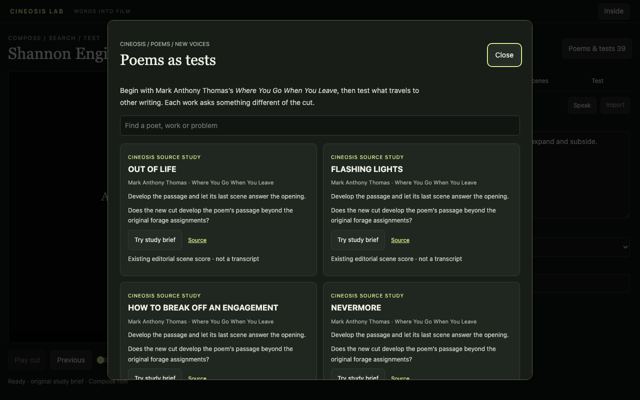 READPoems as testsKeats, Bashō, Cook Ding, Cavafy, the shields of Achilles, and more. Each work poses a different problem for composition. Source texts and original study briefs are identified separately.Open the test shelf →
Play · Ludens and the Party
Editing as play, over any of the lab's films. The ball's path is the cut and the lab's critic is the physics; or a room of phones making one film together.
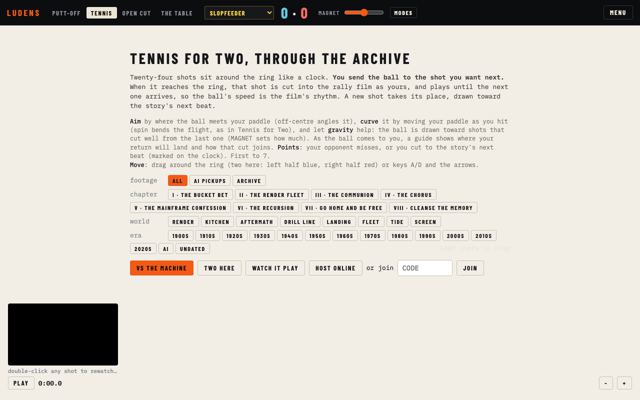 PLAY · NEWLudens · TennisTennis for Two over any of the lab's films (the Republic, the Odyssey, Norse, the Signs, Slopfeeder): twenty-four shots around the ring like a clock. Send the ball to the shot you want next; when it arrives it is cut in, and plays until the next one lands.Play →
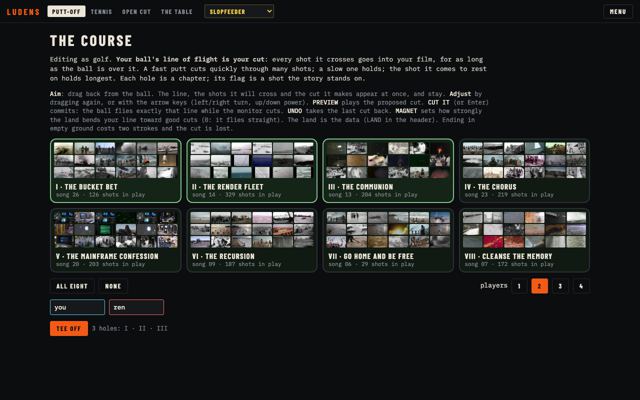 PLAY · NEWLudens · Putt-OffEditing as golf over any world's field of shots: aim a line of flight; every shot the ball crosses is cut in, for as long as the ball is over it. See the exact cut before you swing.Play →
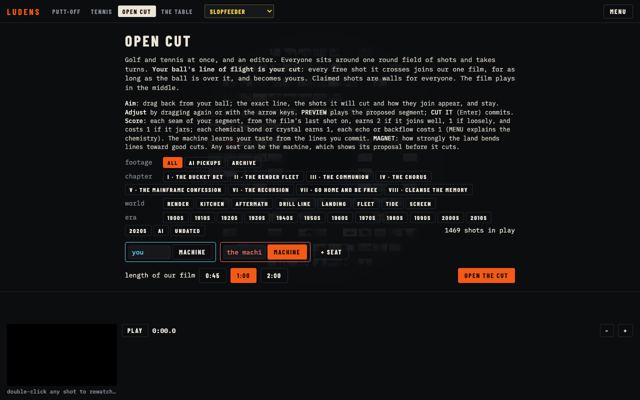 PLAY · NEWLudens · Open CutGolf and tennis in one: players around a round field of shots putt in turn, and every shot a ball rests on must answer the last shot of the one film you are making together.Play →
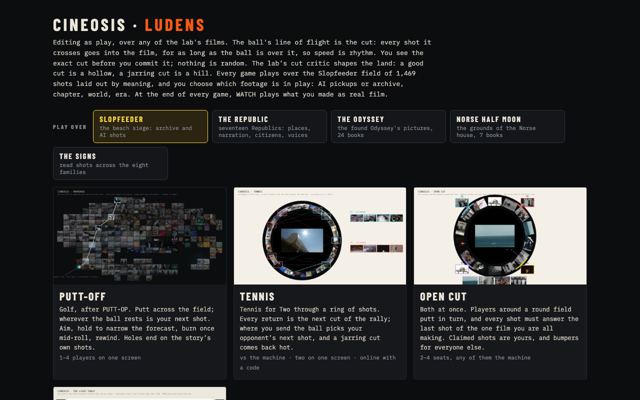 PLAY · NEWLudens · all the games, any worldChoose a world (Slopfeeder, the Republic, the Odyssey, Norse Half Moon, the Signs), then Putt-Off, Tennis or Open Cut; and The Table on phones: bridge the film so far to the story's next beat with up to three shots, then vote.Play →
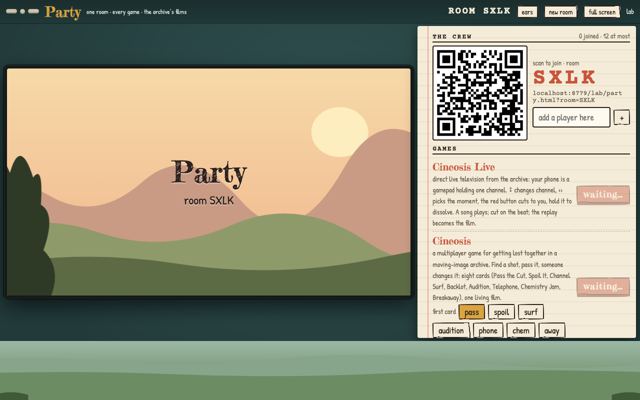 PLAYParty · play togetherOne room for every game. Open it on a TV, laptop or phone; everyone scans the code once, picks a drawn character, and stays on the crew while the games change. Phones are your hand, your remote and your tomatoes; nothing moves on until someone says so.Open the room →
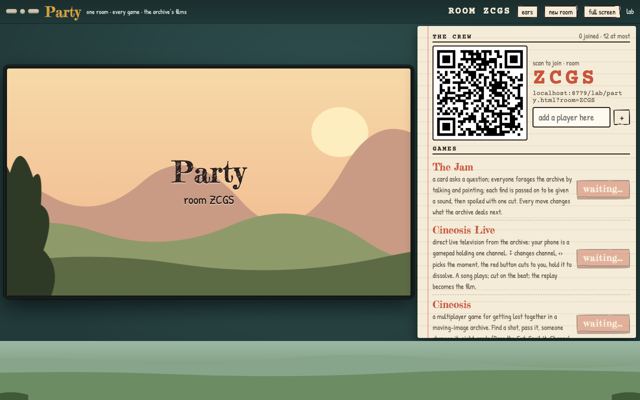 PLAYThe JamThe archive as a playground. A card asks (who is the hero?); everyone forages by talking and pointing and casts a shot; each find is passed on to be given a sound, then spoiled with one cut, so every piece ends with three authors. Tomatoes fly; everyone keeps one thing. Every move changes what the archive deals next: the hero stays cast, sounds become motifs, a cut too soon leaves something unseen.Open The Jam →
 PLAYThe ShowA show spoken into being by the room. One phone holds the microphone: hold it, say a line, let go. The archive answers with a scene; every phone holds different figures cut from other films, music and archival voices, and places them by hand. Pass the microphone by tapping a face. It plays in your own voices and keeps as one file.Open The Show →
 PLAYThe CutOne film, edited by everyone at once from their phones: trim, slide, reorder, transitions, voices and music; it leaves as a link. Every Party game can end here.Open →
 PLAYCall TimeMake today's movie with whatever survived yesterday. The call sheet, the TV guide, the hot remote passed round the crew (cut on the beat), dailies, circle take, and a continuity report that becomes tomorrow's call sheet.Call time →
 PLAYMonte Carlo PicturesEvery phone holds a hand under the day's production problem (no close-up, keep the dog): a shot, a sound, a cut. The house rolls the takes; the room prints one; the film and its making-of at the wrap.Start the picture →
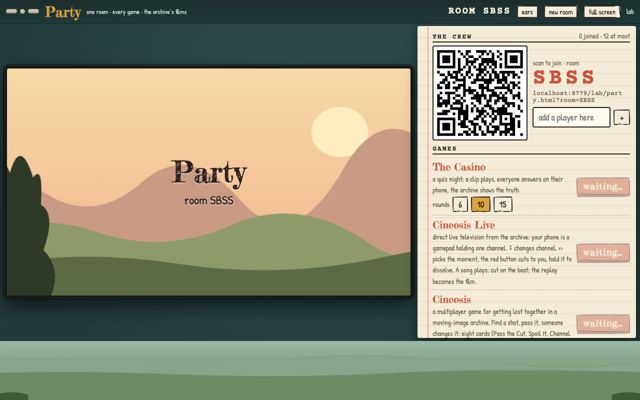 PLAYThe CasinoA quiz night on the archive: a clip plays, everyone answers on their phone, the archive shows the truth. Who said it, what they said, the decade, the next shot, kept or binned, the dub.Deal →
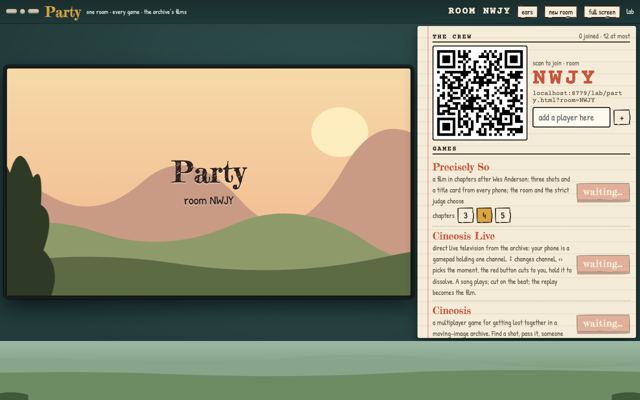 PLAYPrecisely So · togetherA film in chapters after Wes Anderson. Each chapter a theme (symmetry, pastel, uniforms, the diorama); every phone lays three of the archive's most Andersonian shots in order and writes the title card. The room circles one; the strict judge picks its own.Chapter one →
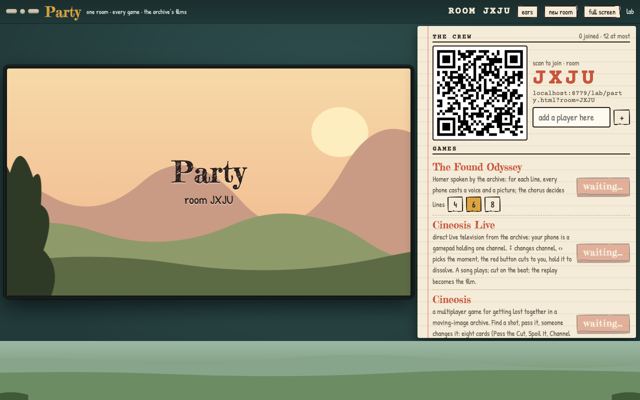 PLAYThe Found Odyssey · castingHomer spoken by the archive, cast by the room. For each line: the archive's ways of saying it (word by word, in one breath, the gist) and pictures to put under it. Every phone casts a voice and a picture; the chorus decides; the scene plays back.Cast a scene →
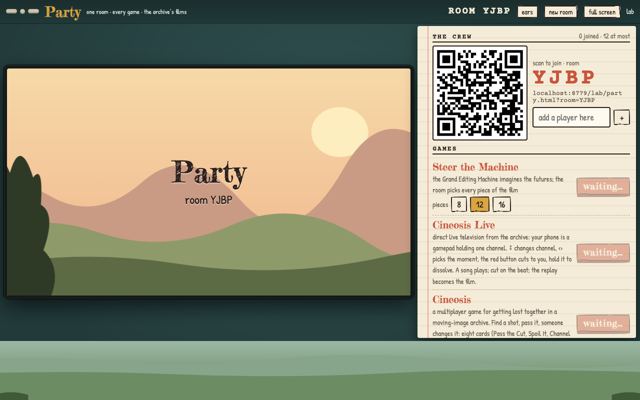 PLAYSteer the MachineThe Grand Editing Machine imagines hundreds of futures and offers its three favourite next pieces; the room picks one. Points for siding with the room, more for thinking like the machine.Steer it →
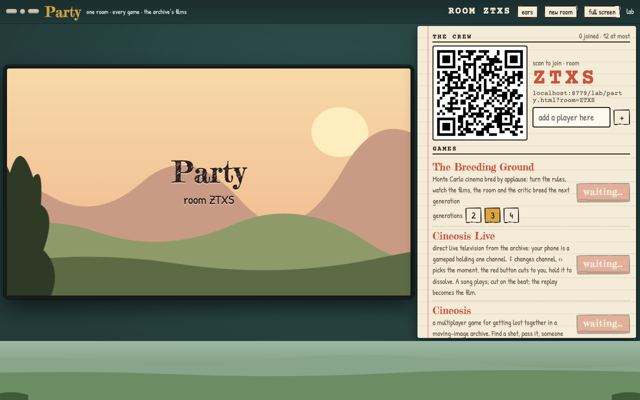 PLAYThe Breeding GroundMonte Carlo cinema bred by applause. Every phone turns four of the rules (trust the judge, match cuts, rule of three, chance); the machine makes each player's film; the room's favourite and the critic's breed the next generation.Breed a film →
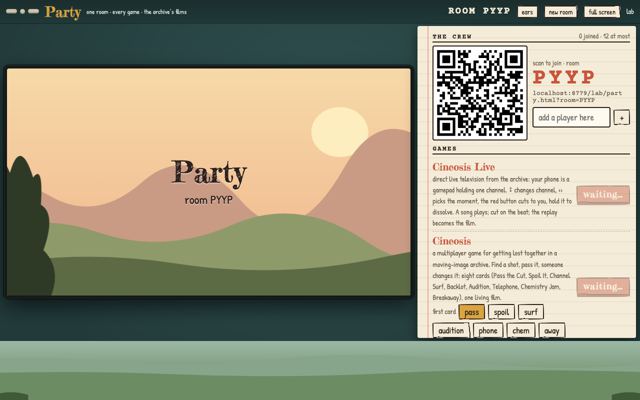 PLAYCINEOSIS LIVEDirect live television from the archive. Your phone is a gamepad holding one channel: the stick changes channel and picks the moment, the big red button cuts to you, hold it to dissolve. A song plays; cut on the beat; the clean replay becomes the film, which opens in The Cut. Nothing to read.Play Live →
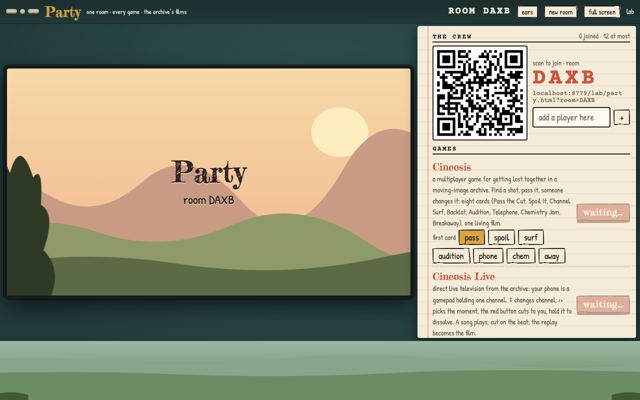 PLAYCINEOSISA multiplayer game for getting lost together in a moving-image archive. Find a shot, pass it, someone changes it, play: eight cards (Pass the Cut, Spoil It, Channel Surf, Backlot, Audition, Cutting-Room Telephone, Chemistry Jam, Breakaway), one living film. Talk or type on your phone; tomatoes send takes to the backlot; every move changes what the archive deals next.Play Cineosis →
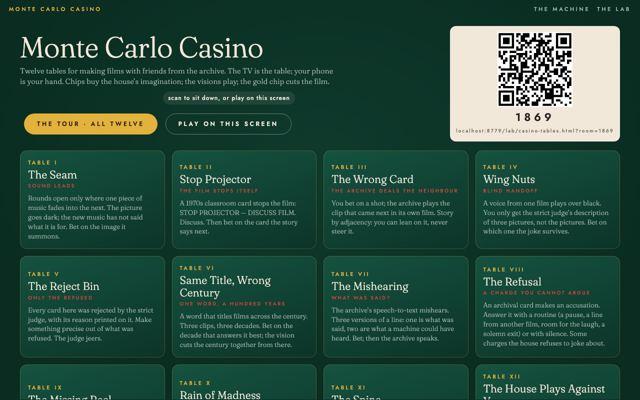 PLAYCasino TablesTwelve tables for making films with friends from the archive: the TV is the table, each phone a hand.Open →
 PLAYMonte Carlo CasinoTen rounds on one screen: a clip plays, tap one of three answers, the archive plays the truth.Open →
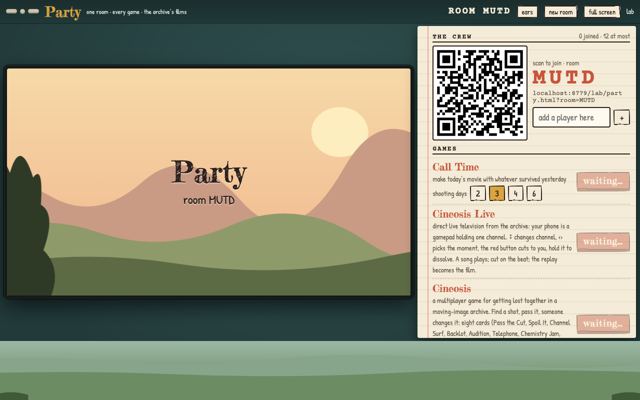 PLAYCall Time · soloMake today's movie with whatever survived yesterday: the call sheet, the TV guide, the hot remote.Play →
The archive talks back
What happens when the archive is allowed to change the film instead of illustrating it: who it keeps sending back across every film, and a desk where a narration is answered by contradiction, duration and the images the films leave out.
 WATCH · NEWThe MythA film about the films of Cineosis Lab, played through the lab's own interfaces: what each archive film was made for (researched for all 1,540) beside what our Odyssey, Republic and WYGWYL made of it, live, side by side. Six acts, three narrators, a D-A-E score; the people in the films answer back.Watch →
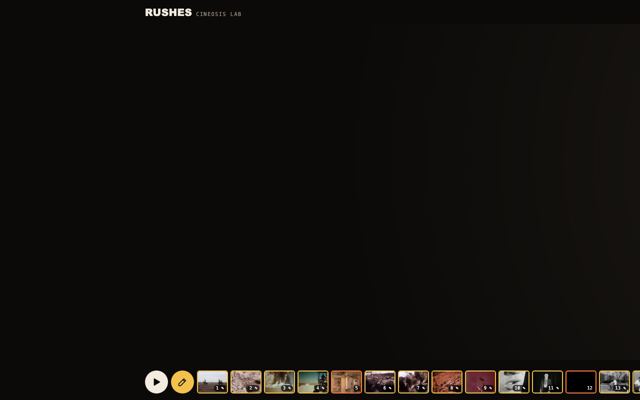 MAKEThe Myth · cut it yourselfThe same myth as a reel in Rushes: every shot can be kept, cut or answered.Cut →
 MAKE · NEWRushesStart from the footage, on your phone. Every one of 19,821 clips offers four ways on: keep watching, a voice that answers it, an echo, somewhere the films never go. Keep what you want, say a line in one of eight narrator voices, score it with D-A-E, share the reel as a link.Start →
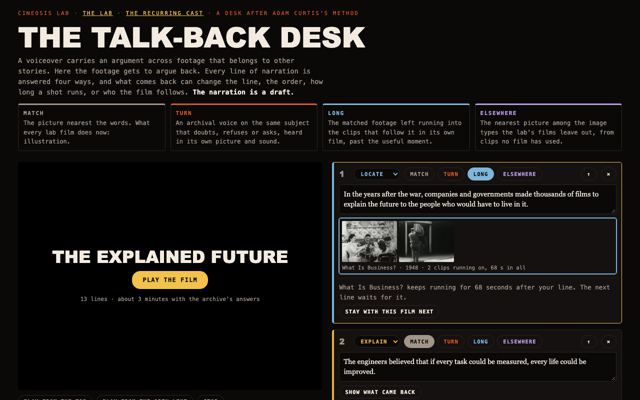 MAKEThe Talk-Back DeskEssay first: a narration in four moves, four narrators. Every line is answered by the matching picture, a voice that doubts it, the footage left running, and an image no film has used. Rewrite, follow, cut, and see what the archive changed.Shape →
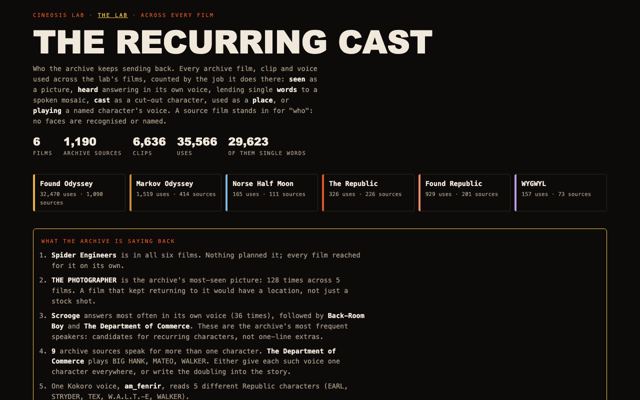 READ · NEWThe Recurring CastEvery archive film, clip and voice across the Odyssey, Norse, the Republic and WYGWYL: who appears most, what each image is asked to do, what we reach for and what we leave out.Read →
Monte Carlo cinema
Machines that make films: rules that evolve, a critic that scores, a tree search that imagines futures, and the galleries they leave.
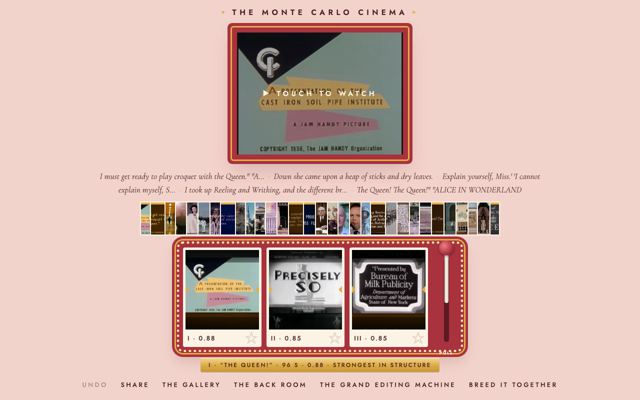 MAKEMonte Carlo CinemaRules that make films from the archive, a critic that scores them, and rules that evolve.Watch the films →
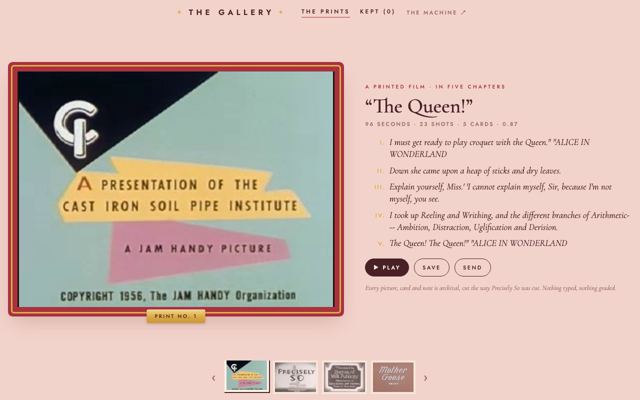 WATCHMonte Carlo GalleryThe printed films and the ones you kept, each with its found title and chapters, to watch, save or send.Watch →
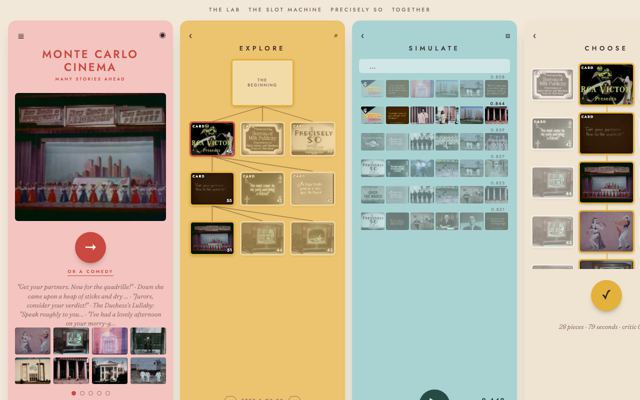 WATCHThe Grand Editing MachineA Monte Carlo tree search directs a film from the archive: it imagines thousands of futures for every cut and keeps the best story.Watch it direct →
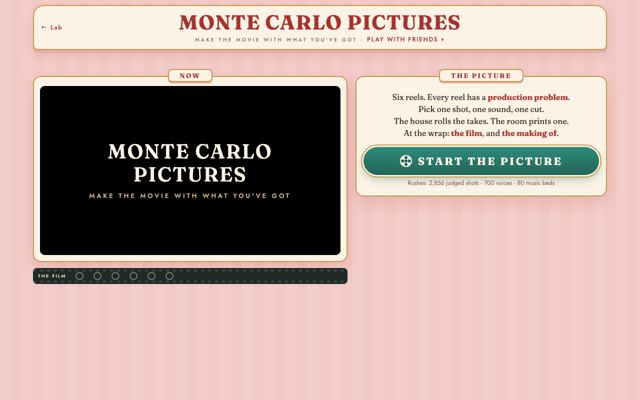 PLAYMonte Carlo Pictures (solo)Six reels, each a production problem and a hand of shots, sounds and cuts: make the movie with what you have got.Open →
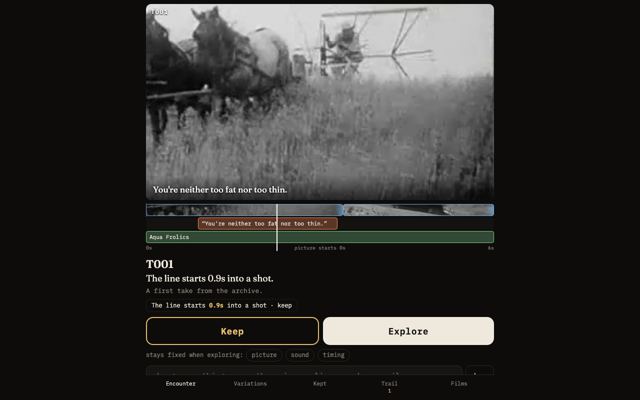 PLAYTakesAn instrument for the phone. It opens on a take from the archive; keep it without a reason, or explore what else can happen from it. Every change makes a new take with a plain note; nothing is overwritten. Kept takes and kept relations (a place heard before it is seen) come back into later takes; any take can start a branch, or a film.Open Takes →
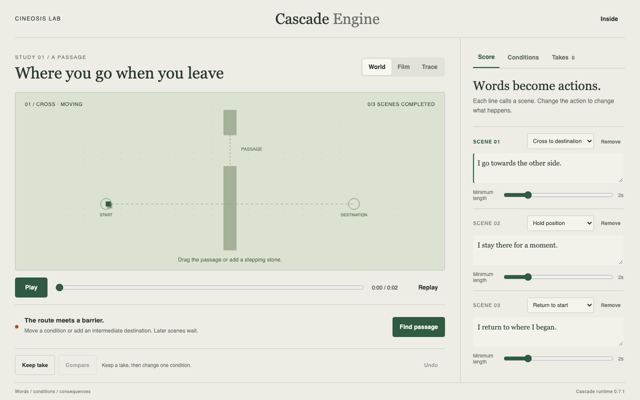 MAKECascade EngineWords become actions: each line of a passage calls a scene. Keep a take, change one condition, compare the takes.Open →
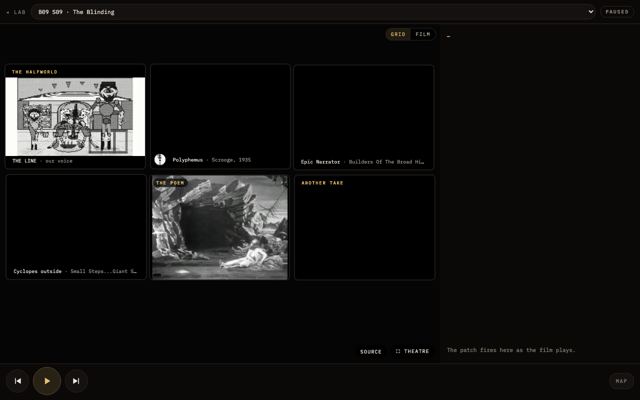 TOOLCinema PatchThe cinema as an operator console: the film, the line and the archive’s answer.Open →
SLOPFEEDER
A meme-born beach siege read from inside the lab: eight songs, eight films, the cartoons drawn in code, and the editors they were cut on.
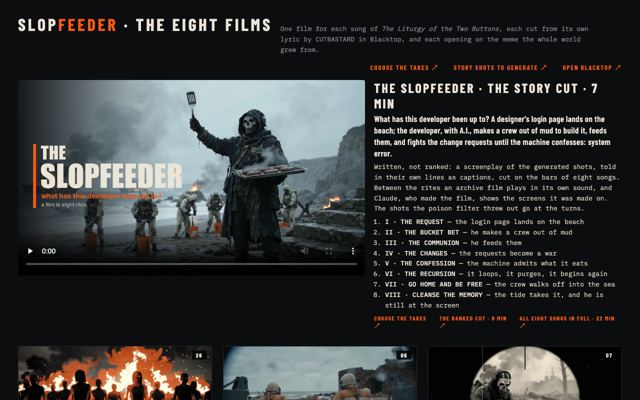 WATCH · NEWSlopfeeder FilmsThe eight films, one for each song of The Liturgy of the Two Buttons, each cut from the song's own lyric, with its logline and how it was made.Watch →
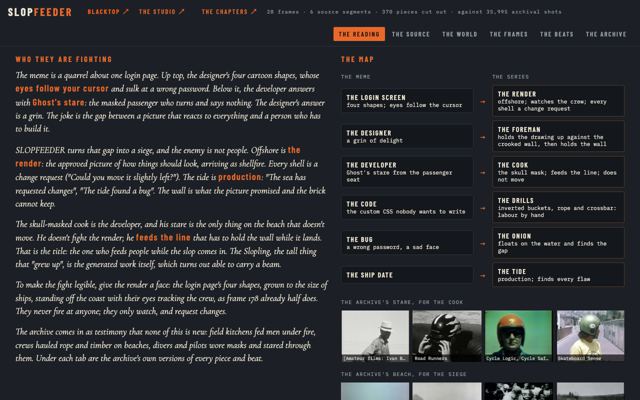 READ · NEWSlopfeeder in the labThe memes it comes from taken apart, its world segmented and named, and the archive's rhymes for every piece, beat and frame.Read →
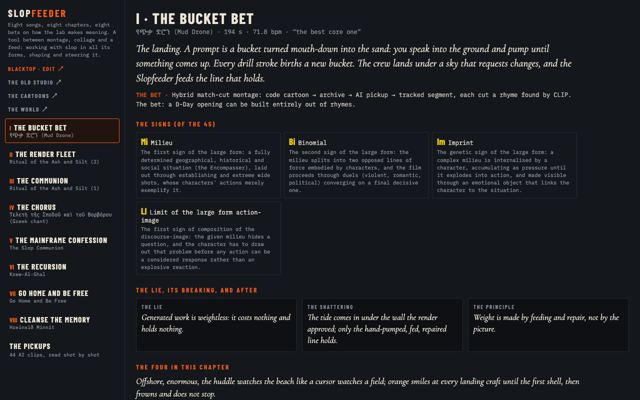 READ · NEWSlopfeeder ChaptersThe eight music videos as eight chapters and eight bets on how Cineosis makes meaning.Read →
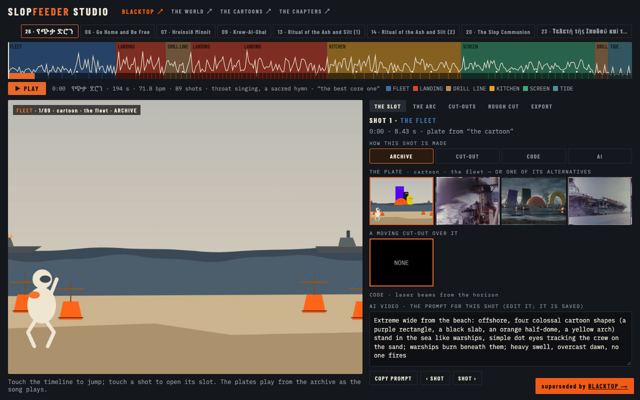 MAKE · NEWSlopfeeder StudioMusic videos built from the archive, moving SAM cut-outs, code and AI prompts: each song a rough arc through the world.Make →
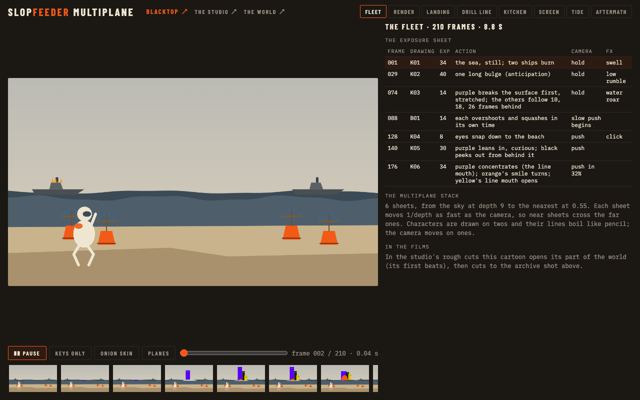 WATCH · NEWSlopfeeder MultiplaneThe cartoons, one per part of the world, drawn in code as a multiplane animation department would.Watch →
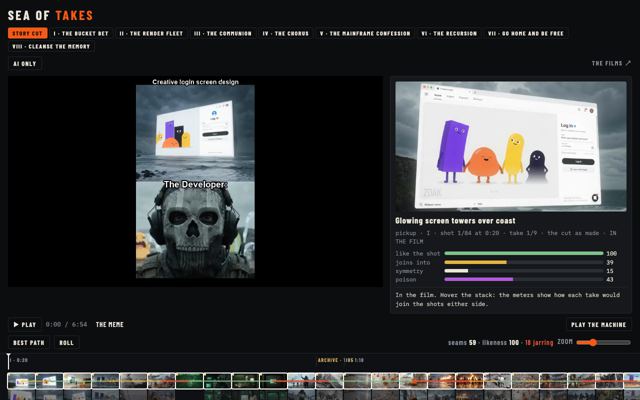 PLAY · NEWSea of TakesEvery alternative of every shot as one lattice: watch your path play, scrub it, let a tree search pick the next shot.Play →
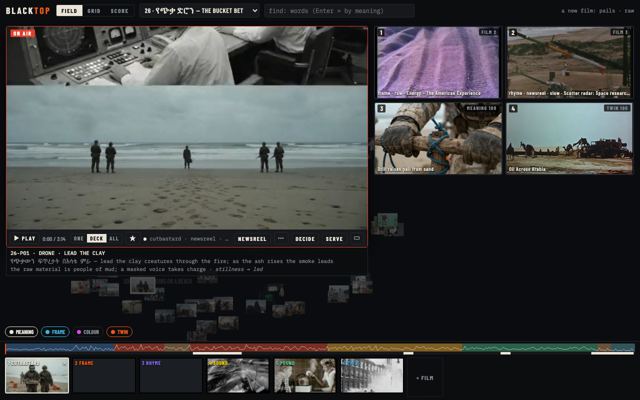 TOOL · NEWBlacktopThe flat-top: every shot moving at once, chains of possible cuts lighting up from any shot, many films of a song playing side by side.Open →
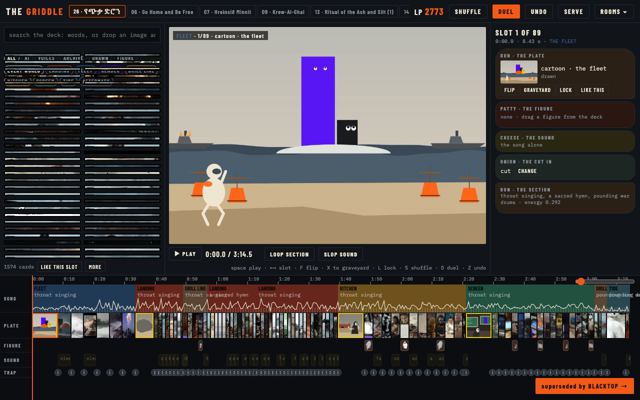 TOOLThe GriddleThe editor: a shared timeline per song, a searchable deck of every asset, and a duel between versions.Open →
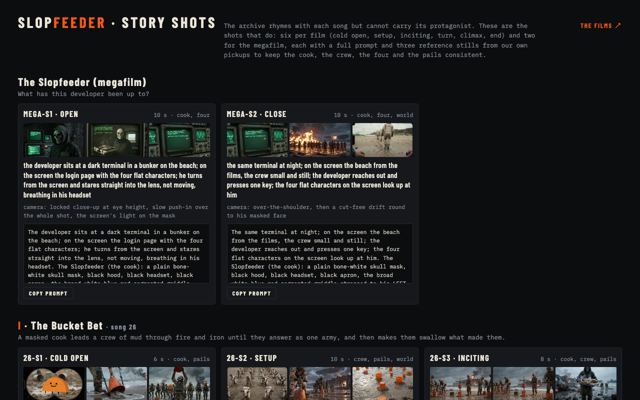 READSlopfeeder Story ShotsThe shots the archive cannot carry, each with a full generation prompt and its reference stills.Read →
Cineosis · the signs
Where the lab began: Deleuze's cinematic signs, after Deamer, as a periodic table to read, a wall of archive shots to find them, a table of sounds, and a reel.
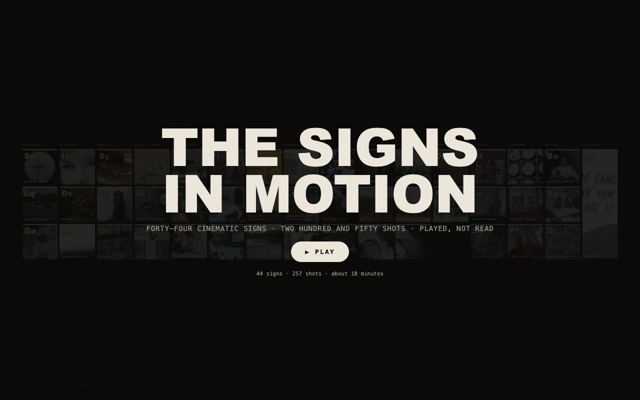 WATCH · NEWThe Signs in MotionThe periodic table as a film: the camera travels the table, each of the 44 signs opens into its shots, one plays in its own sound, and the sign it is mistaken for answers it. A D-A-E score; no narration.Watch →
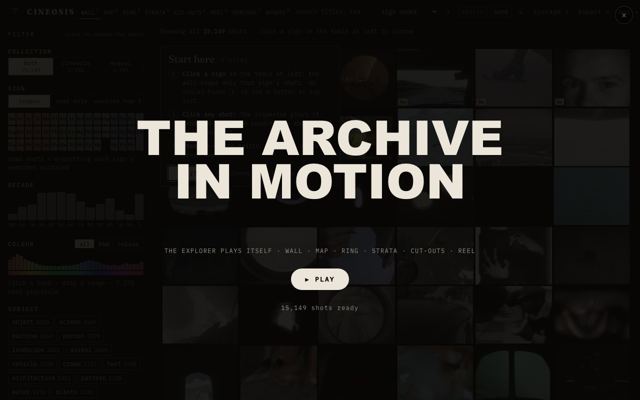 WATCH · NEWThe Archive in MotionHow the explorer reads a shot, shown by using it: a cursor finds a shot, opens it, and lights each thing the machines know about it; then what looks like it (CLIP), what sounds like it (CLAP), and what shares its sign. Five shots. Esc hands it back to you.Watch →READ1 · Read a signClick any element. It opens with the test that decides the sign, the signs it gets confused with, and 4–6 archive shots, each with a reading and a confidence bar.Open the table →TOOL2 · Find shots7,958 shots. Pick a sign, a decade, a colour or a subject on the left: the wall shows only those. Click a shot: it plays from the frame the reading was made from. Keys 1–8 change the view.Enter the lab →
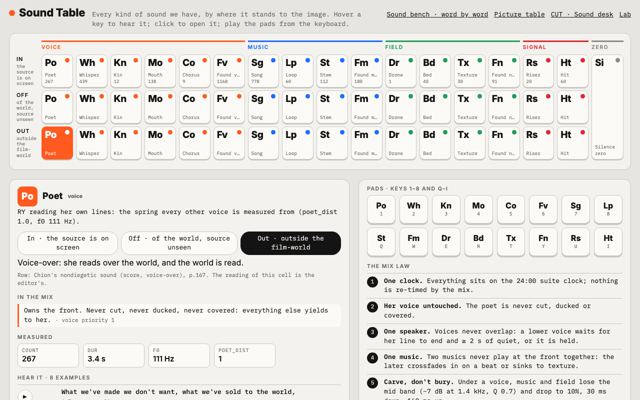 READ2½ · Hear a soundOpen →WATCHThe cineosis reelTen minutes through every sign: its deciding test on a title card, then its strongest shots.Play the reel →
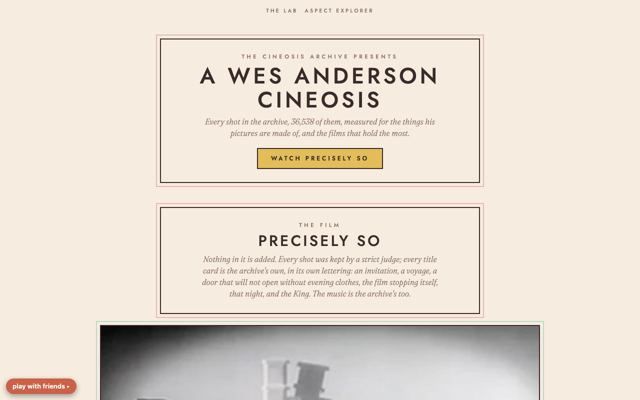 READA Wes Anderson CineosisThe archive shots and films that most look like Wes Anderson: symmetry, frontal staging, pastel, uniforms.Open →
Studies and benches
Theory at the bench: Metz and Deleuze run live on footage, syntagms played and re-cut, source passages audited, wagers tested, and every program theory compared.
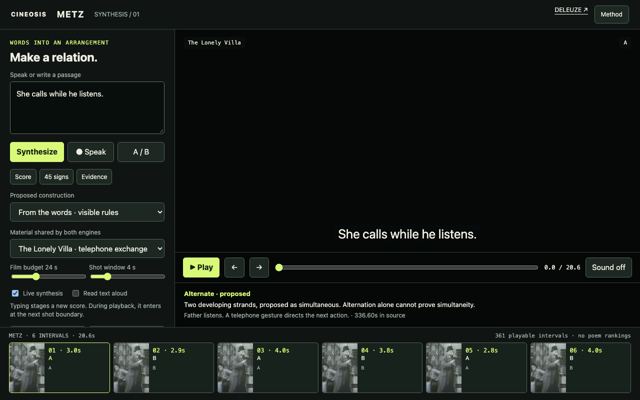 MAKEMetz · Live SynthesisType or speak a passage. Assemble real archive footage through alternation, succession, comparison and five other proposed structures. Change the words, play the cut, inspect the evidence and compare A/B.Compose relations →
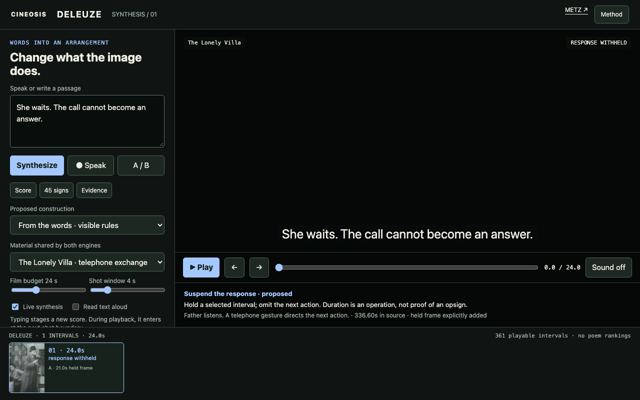 MAKEDeleuze · Live SynthesisThe same footage, different operations: sustain an action, withhold a response, return to an image, separate voice and picture, or attend to intensity. A playable experiment with the 45-sign palette.Transform the passage →
 READSyntagm LabPlay a real syntagm, read its timed structure, change the edit and test the difference.Open →
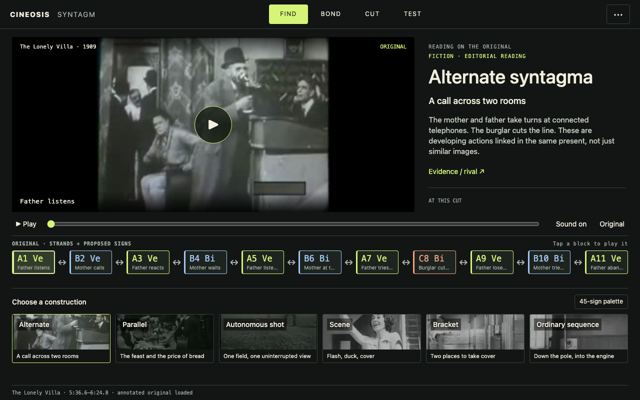
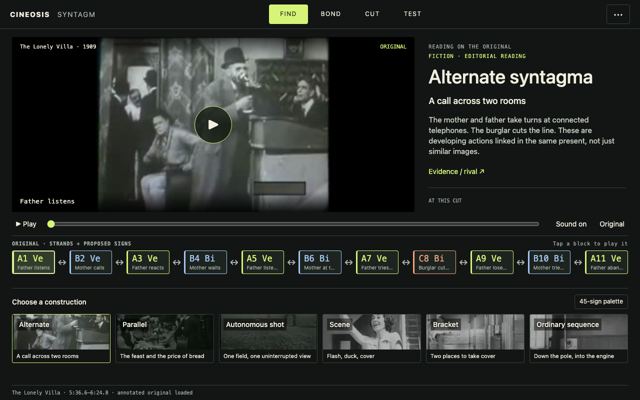 READFilm ↔ StructureRead a syntagm directly on real footage. Six annotated passages: a telephone call, feast and hunger, a field, a defensive action, examples and an elided response. Change the structural formula, play the new cut, compare the exact joins.Find · Bond · Cut · Test →
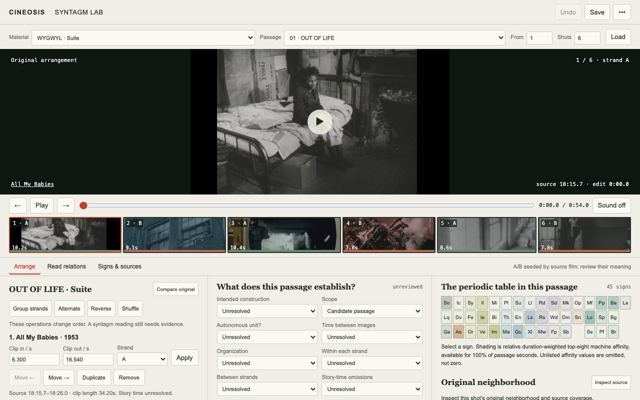 READArchive passage benchWhat does an arrangement establish? Screen a passage, recover its source neighbors, rearrange the same shots, and read its time, space and action through Metz’s eight categories. Keep evidence, rival readings and portable edits.Read and rearrange →
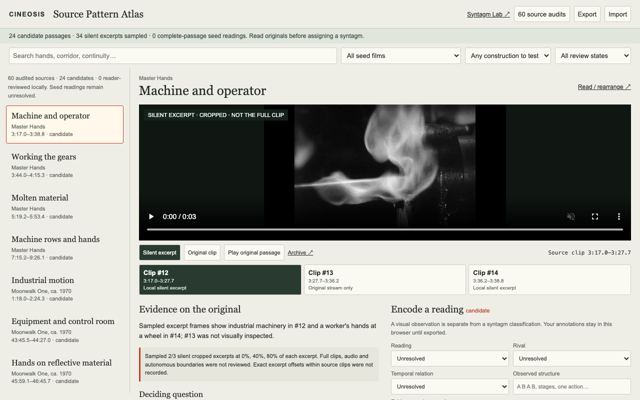 READSource Pattern AtlasSixty audits of original-source passages: play the passage, read and rearrange it, check the evidence on the original clip, encode a reading.Open →
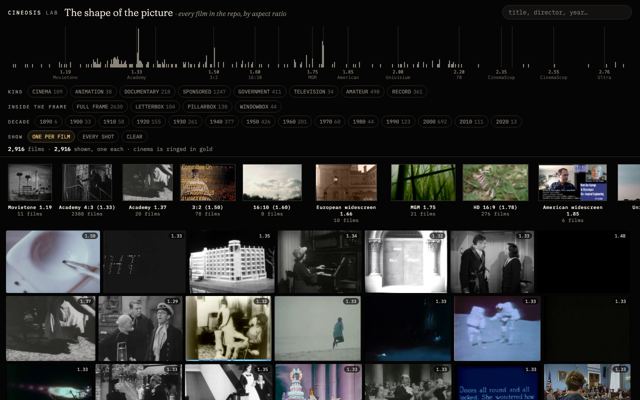 READAspect ExplorerEvery film in the repo by the shape of its picture: measured frame, picture and black bars.Open →
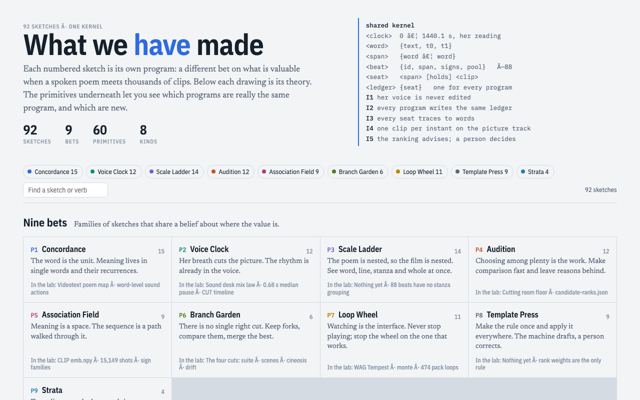 READ · NEWWhat We Have MadeNinety-two word-to-clip binding sketches, each read as its own program theory, compared through sixty shared primitives.Read →
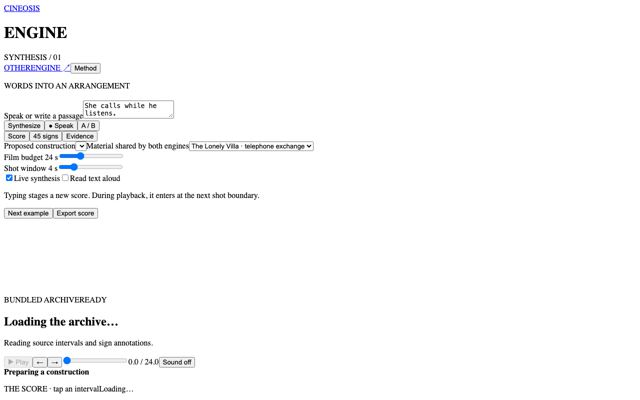 TOOLCineosis Synthesis · engineThe synthesis engine's shell: the operations behind the live Metz and Deleuze benches.Open →
Tools
The editors underneath: the frame with depth as time, the plate as space-time, and the instruments that drive them live.
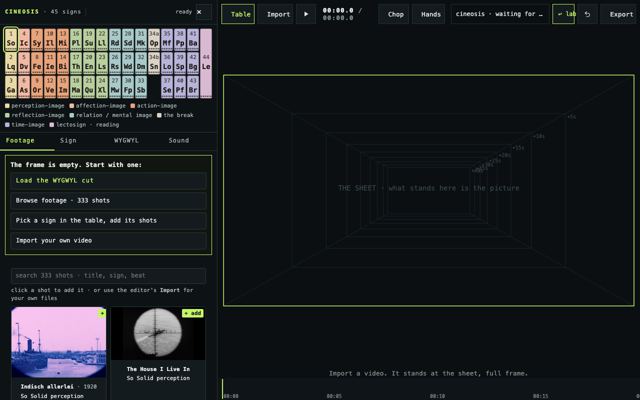 TOOLCUTThe frame, with depth as time. Footage tab: click any shot to add it; Sign tab: a sign's family; Sound tab: the WYGWYL atlas mixed on the clock by the mix law.Open CUT →
 TOOLWAG · Cutting RoomThe plate as space-time, clips as worldtubes. The periodic table is its clip row; the same Footage, WYGWYL and Sound tabs as CUT.Open WAG →
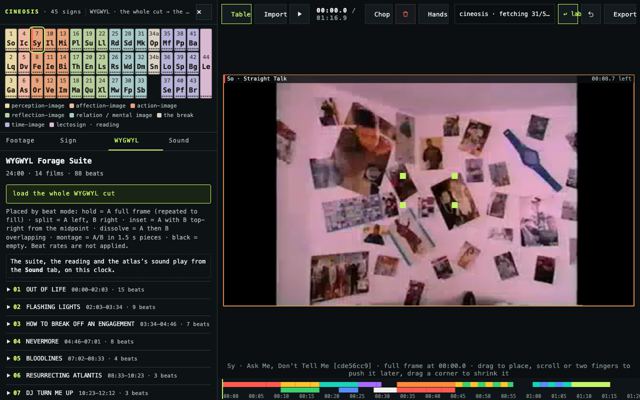 TOOLCUT · WYGWYLThe first WYGWYL cut laid into CUT's frame, beat by beat: 541 pieces on the 24-minute clock.Open in CUT →
 TOOLWAG · WYGWYLThe first WYGWYL cut as worldtubes in the Cutting Room, each beat at its time in the suite.Open in WAG →
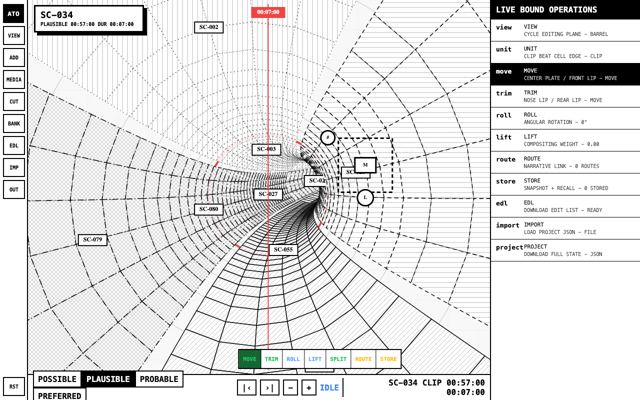 TOOLArc-Tunnel OperatorA live video instrument: the ARC-TUNNEL fed with lab footage, played by hand.Open →TOOLICARO · Worldtext instrumentThe unified worldtext instrument behind ABC FLIX.Open →
On this site the editors use the 335 shots that ship with it; any archive shot, live archive search and saved sub-shots need your own machine: git clone https://github.com/hartswf0/cineosis-lab, then python3 lab/server.py 8765, then open localhost:8765.
Readings are one editor's judgements; the machine's sign affinity is a pointer, not a reading. After David Deamer, Deleuze's Cinema Books: Three Introductions to the Taxonomy of Images (Edinburgh UP, 2016). Shots from movingimagearchive.com; each links back to its source.