From describing worlds to operating within them.
One research program at three scales of operation. AEL is the place, the laboratory and its lineage. PEO is the method: Prompt, Ekphrasis, Operation, how descriptions become consequential actions. PAELEO is the language and studio where the method operates across environments, archives, games, films and agents.
The L is a deliberate double reading. As a studio, PAELEO is a Lab. As an artifact, it is a Language: Promptable Augmented Environments Language for Ekphrastic Operations. AEL always keeps its official expansion, Augmented Environments Lab.
It sounds like paleo: sediment, earlier media, and futures buried in the past.
Not three competing acronyms. One intellectual and technical system, nested like crates.
Augmented Environments Lab
Where situated worlds are investigated and made. The laboratory and its historical lineage.
Promptable Augmented Environments Lab / Language for Ekphrastic Operations
The language and working environment in which descriptions can be authored, executed, contested and evaluated. PAELEO Studio is its practice: film, games, XR, archives, animation and multi-agent production.
Prompt · Ekphrasis · Operation
How descriptions become consequential actions. Its object is not simply a prompt, but a situated operation with observable consequences.
↻ recursive: the consequence changes the situation from which the next prompt is made.
The program's lineage, and the first thing its first film shows.
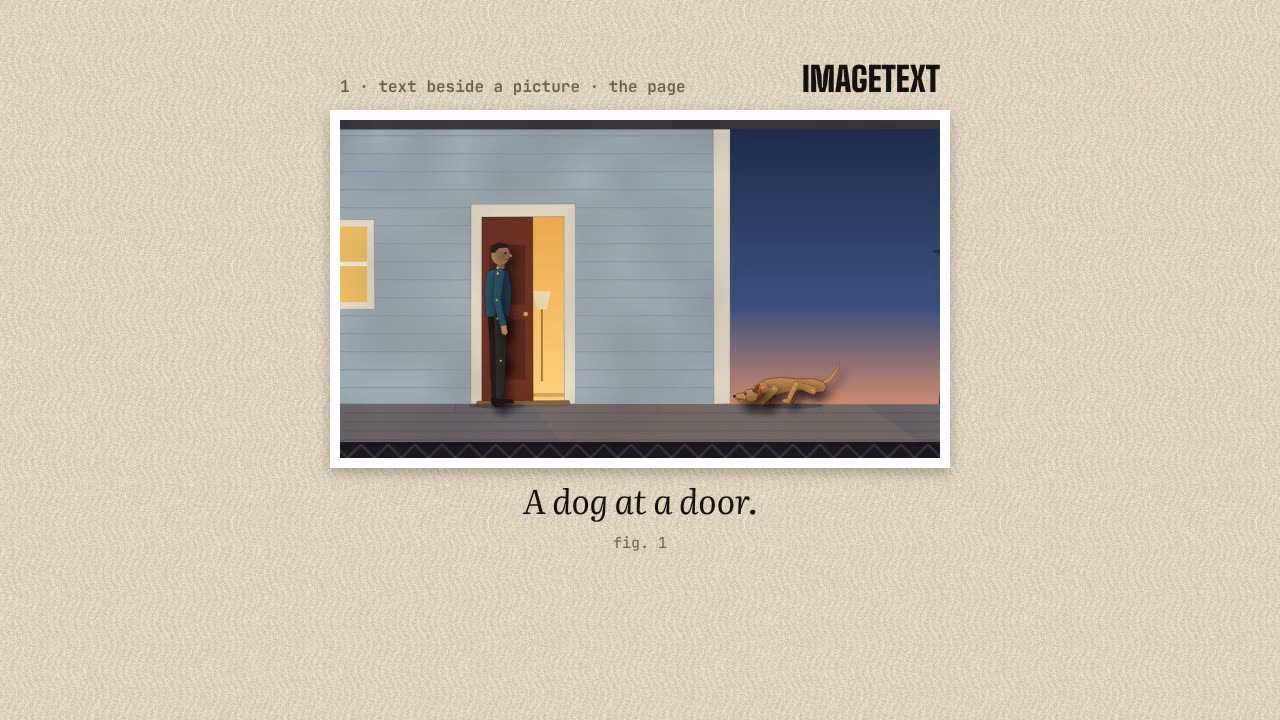
Text and image remediate each other on a flat plane: the page, the screen, the early interface. The Bolter and Mitchell paradigm.
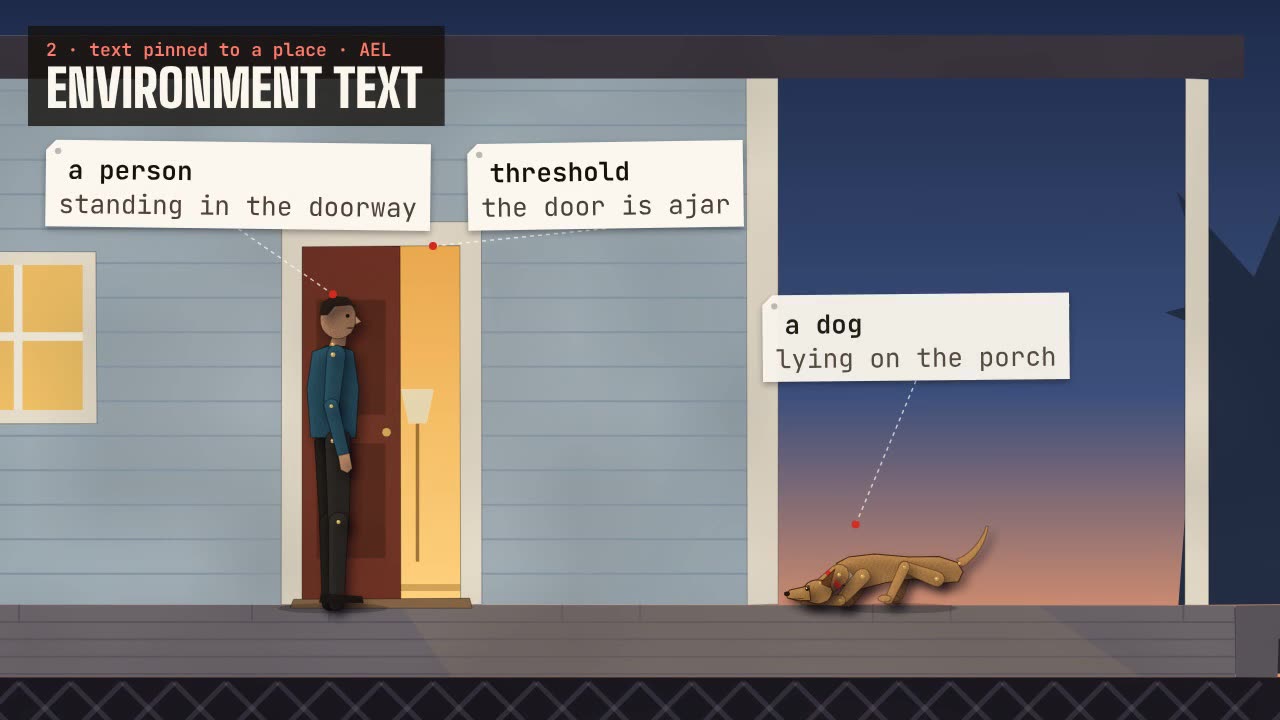
The imagetext is lifted off the screen and anchored to coordinates, markers and space. The AEL era: DART, Argon, locative media.
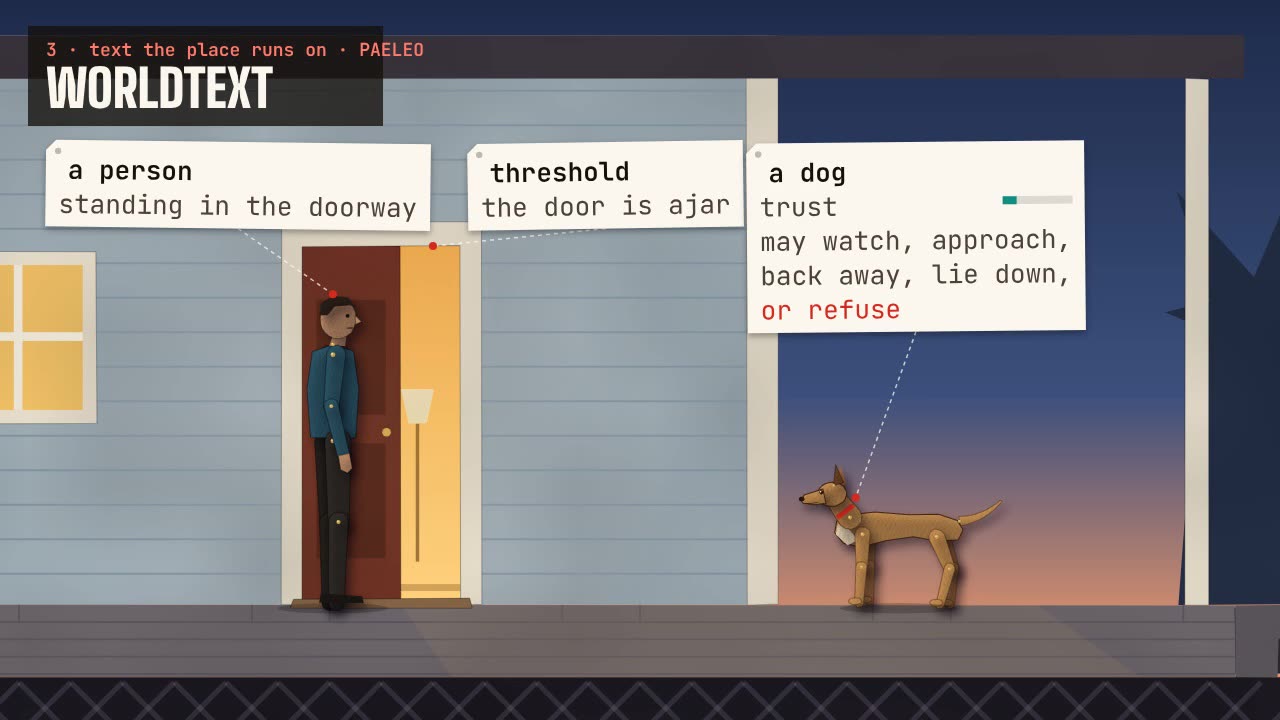
The environment text gains rules and agency. The text does not just sit in a space; it generates and governs it, as a move in a language game.
Why not videotext: a video implies a fixed timeline meant to be watched. A world is inhabited, queried and simulated. Videotext is a closed loop, a broadcast; environment text is an open system, a space; worldtext is a playable language game.
Each box is one film made by one SCION swarm, with its case: the question, the trick, the recipe, something to try, what broke. The first box is open.
Can a description make a character that chooses, so that the person who prompts it can understand it but not command it?
Nobody animates the dog. The prompts change the world (posture, place, door, voice, hand); a five-state machine reads that world through what it perceives, trusts and remembers, and the paper puppet acts out whatever it chose.
You are the operator. You cannot move the dog. You can only change the circumstances, the way the prompts do in the film. It is the same dog: the same machine and the same paper, running in your browser.
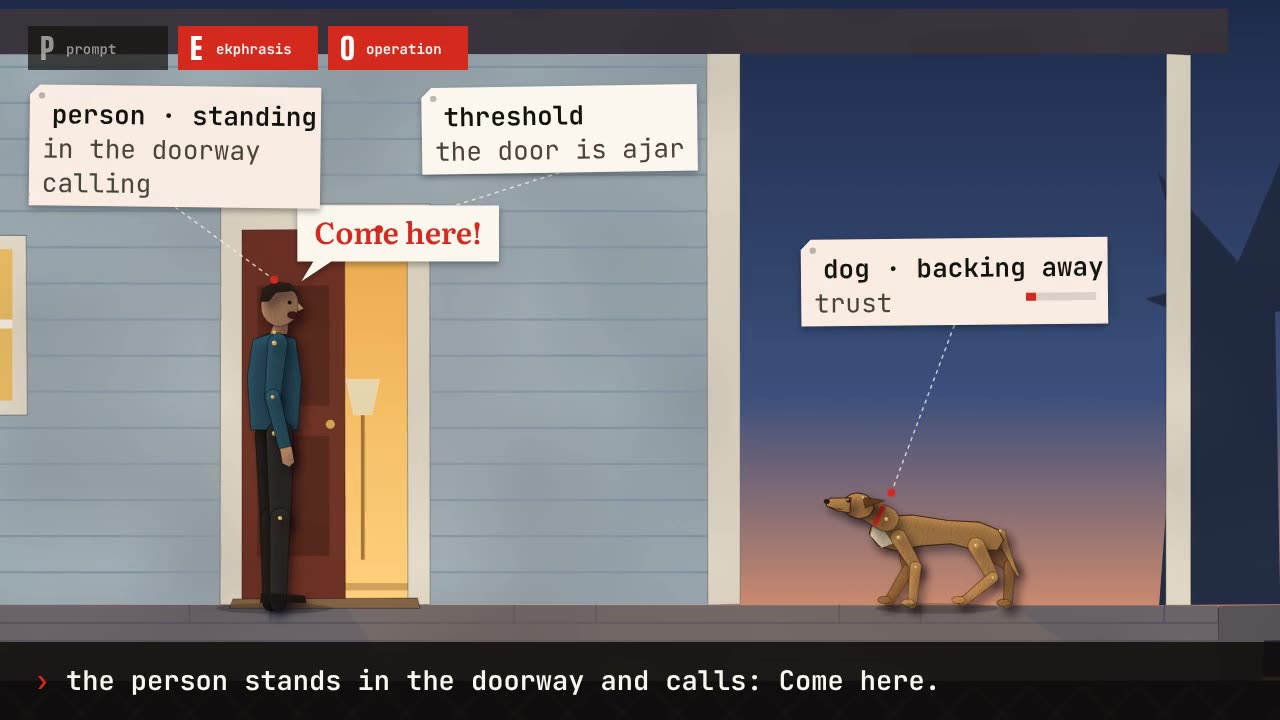
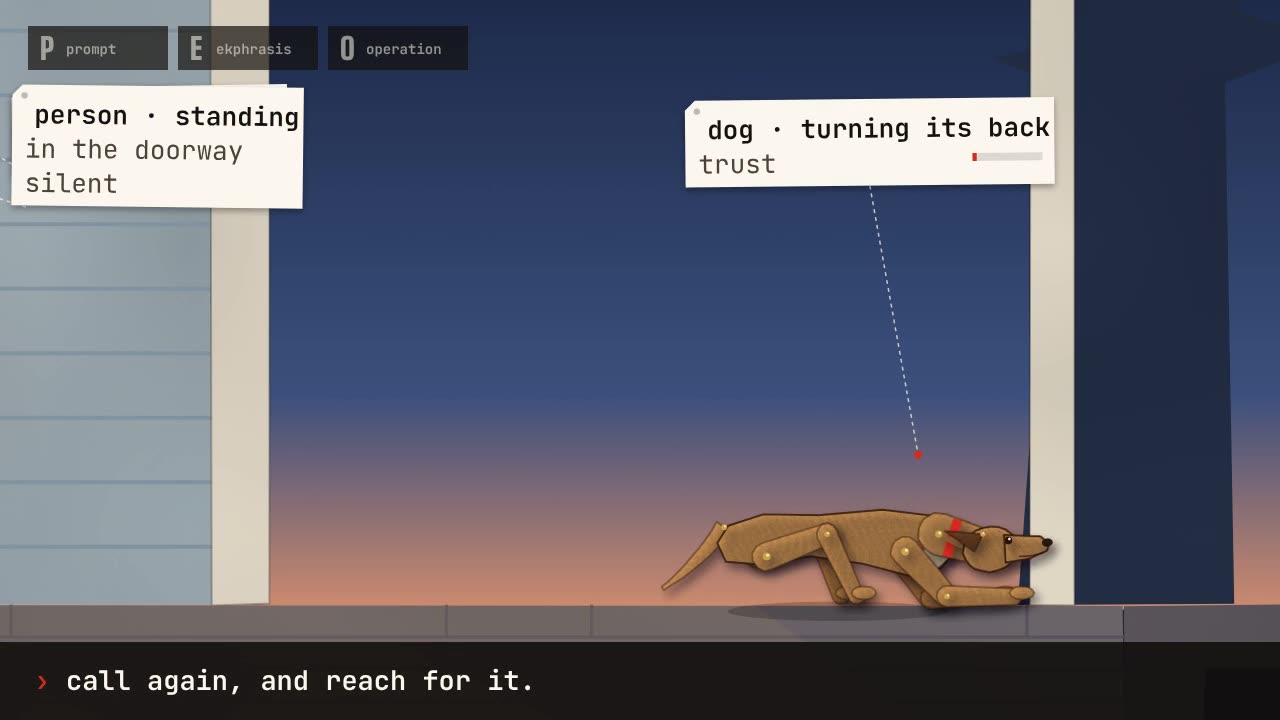
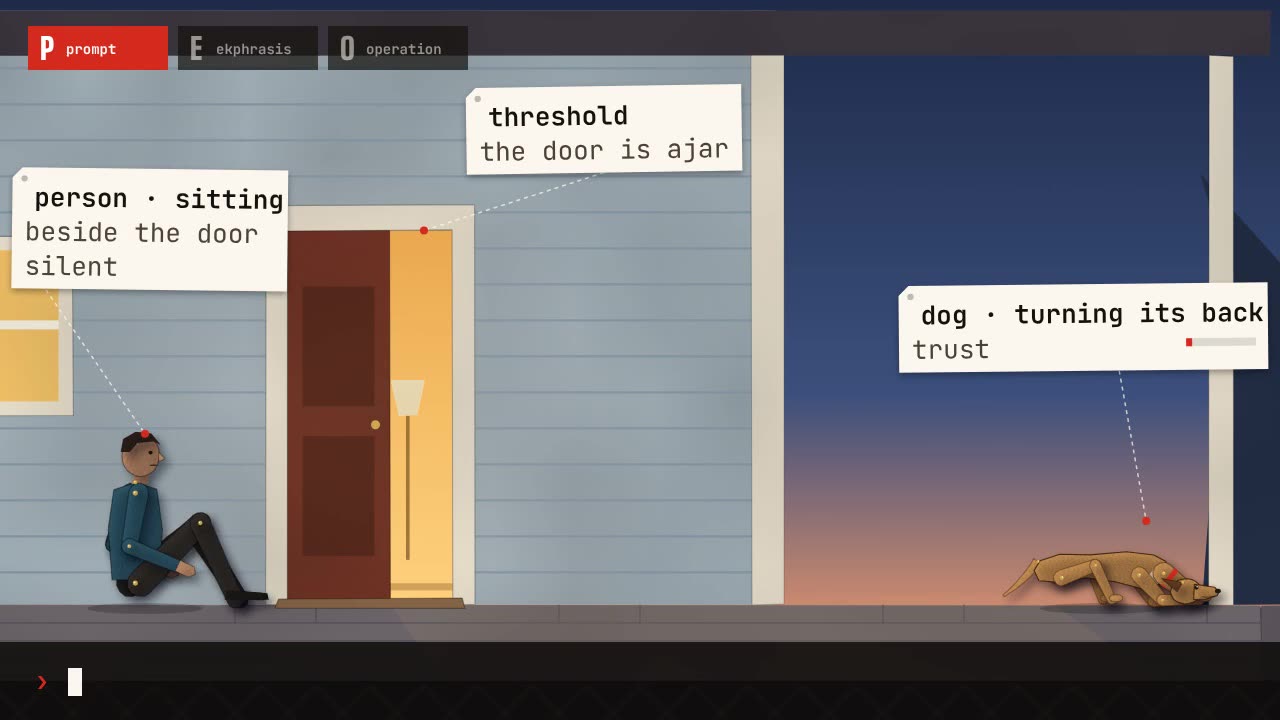
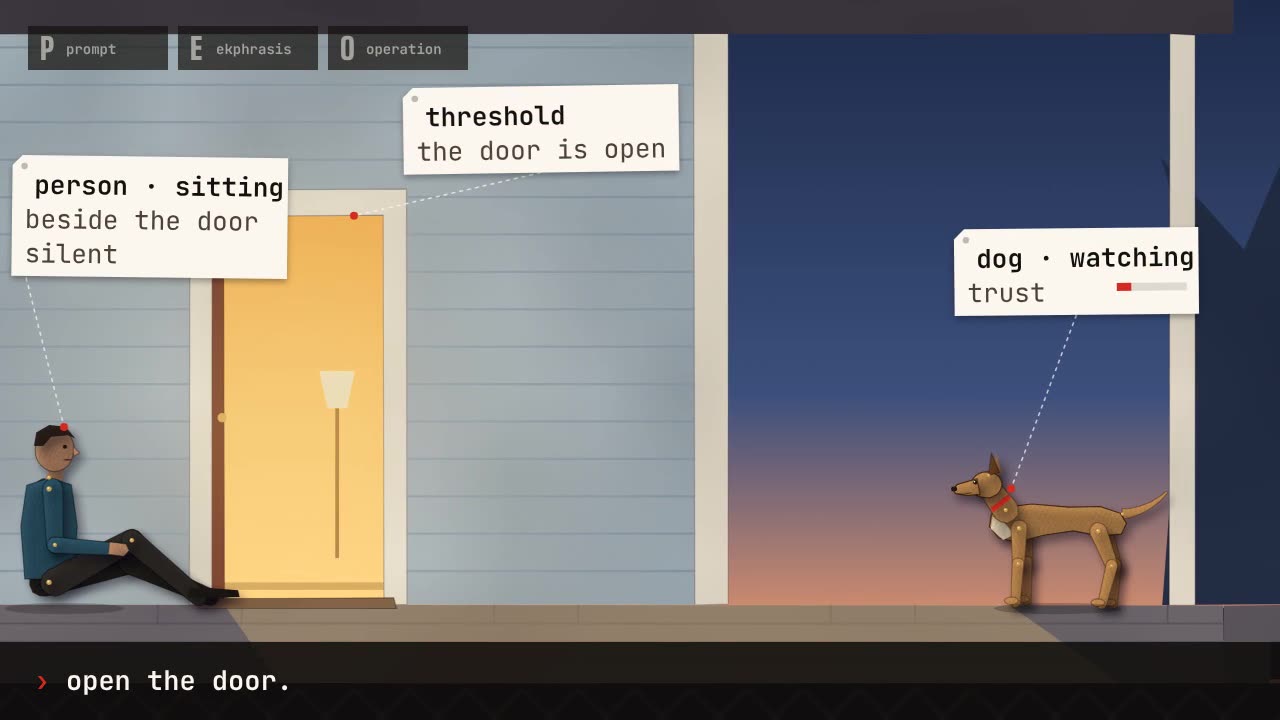
Before a swarm makes its own film, what does it see first in this one?
The stage records every paper piece and joint as it draws them. Each swarm gets a lens that reads that record and draws its own formal language over the same running scene: meshes, bones, mattes, weights, state graphs, archive frames.
come here · it’s all right · come in
A person speaks to a dog in three sentences. The order fails, the reassurance turns its head, the invitation is answered from the sill. One scene, written once as a score, told at once in every language PAE-02 made it in: cut paper, bones, archive film, print, code.
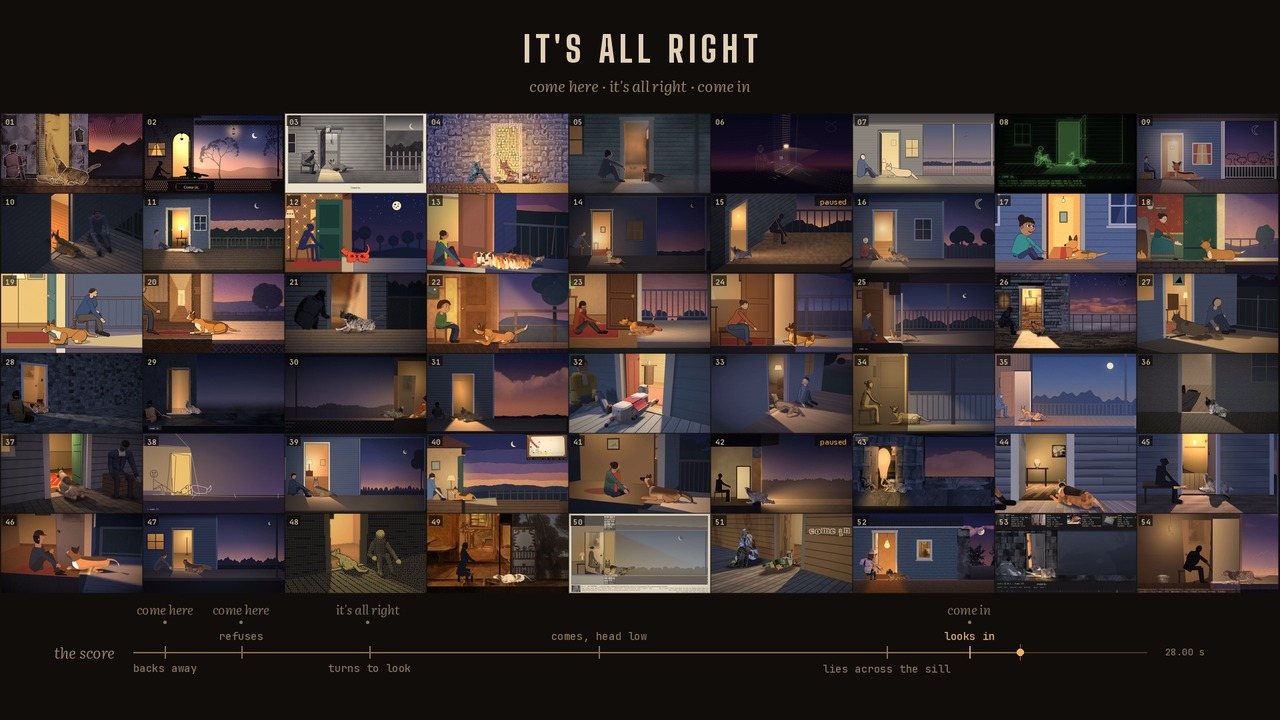
Hold the description and the dog's choices still. Let each swarm build everything else from the bottom up. Do the choices survive, and is each world its own?
A lens restyles one drawing; PAE-02 asks each swarm to make the whole scene itself, from found footage, silhouettes, constraints, doodles or a torrent of archive tiles, under one score of the dog's choices. The score is checked against every film. Everything else differs.
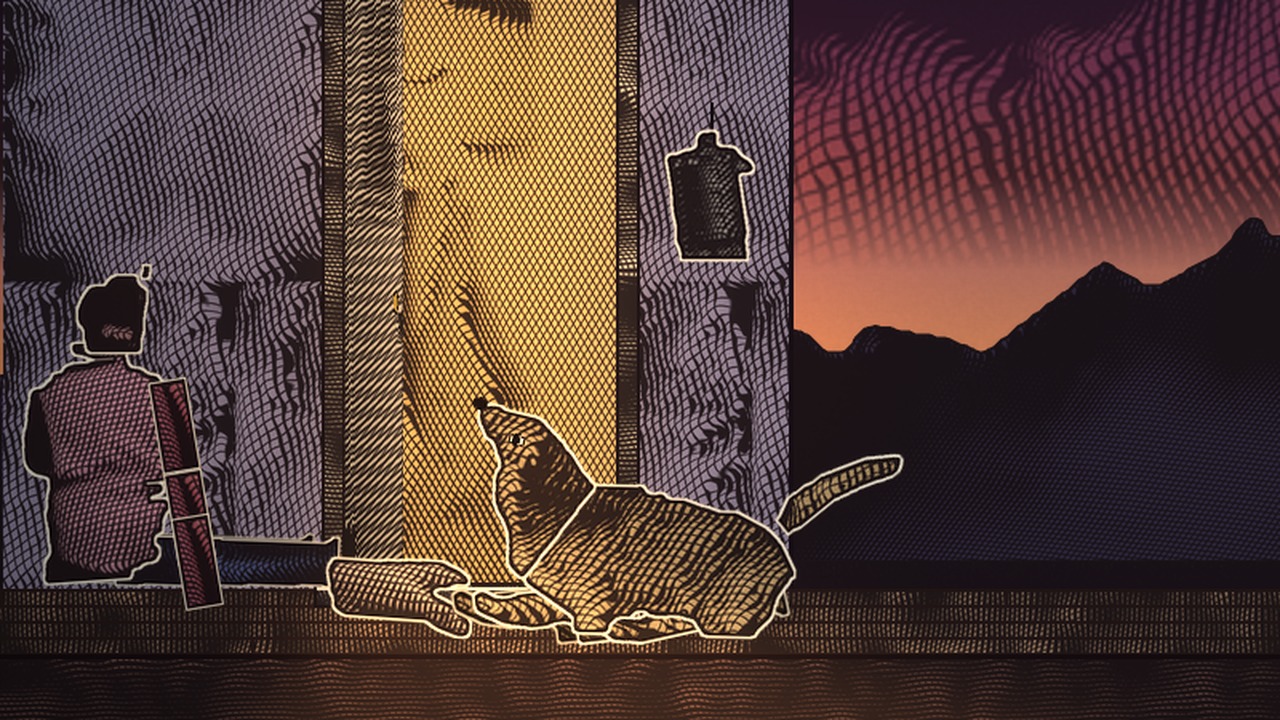 SCION 01Cut-out collageTerry GilliamEach choice is a substitution, so the dog's decision is also the film's cut.
 SCION 02Silhouette theatreLotte ReinigerNo colour on any figure: the whole relationship has to read by outline and the gap between shapes.
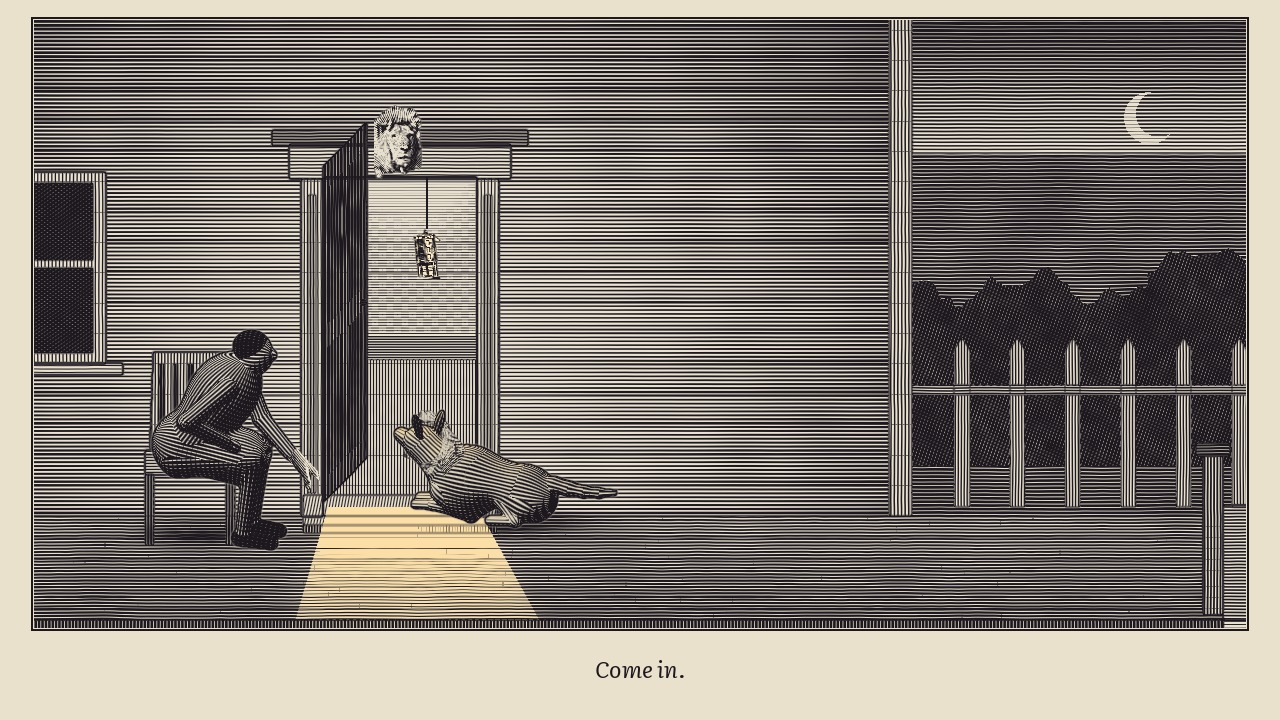 SCION 03Surreal collage grammarMax ErnstAuthority becomes architecture, then the dog's own fur.
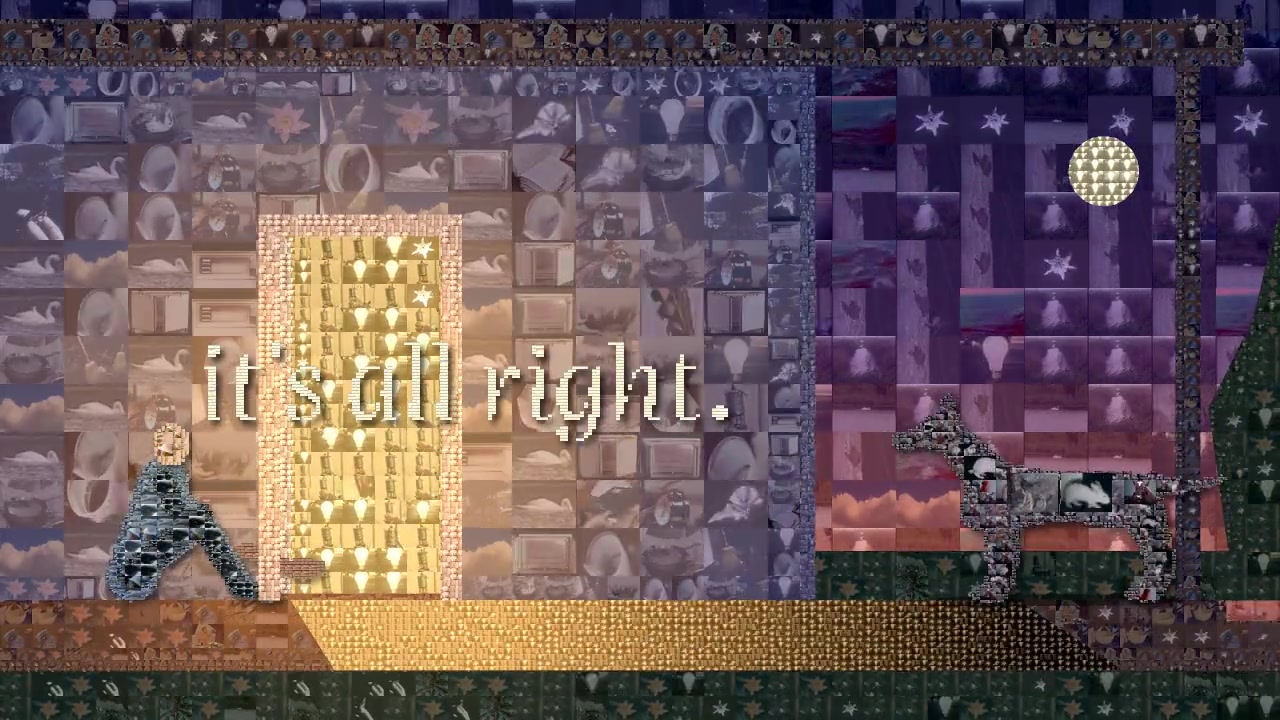 SCION 04Image torrentFrank MourisThe voice is made of pictures too, and it hits the dog as a ring of alarm clocks.
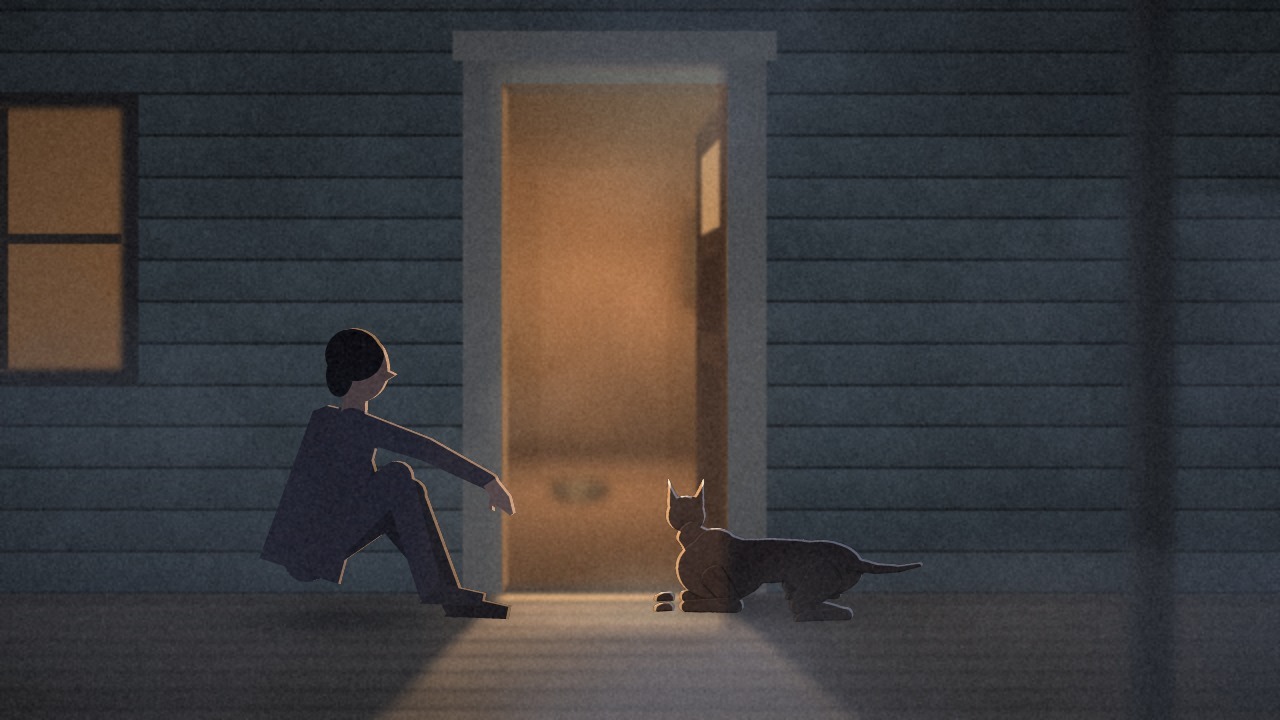 SCION 05Atmospheric multiplaneYuri NorsteinDepth, fog and focus decide what the dog can see, and what we can.
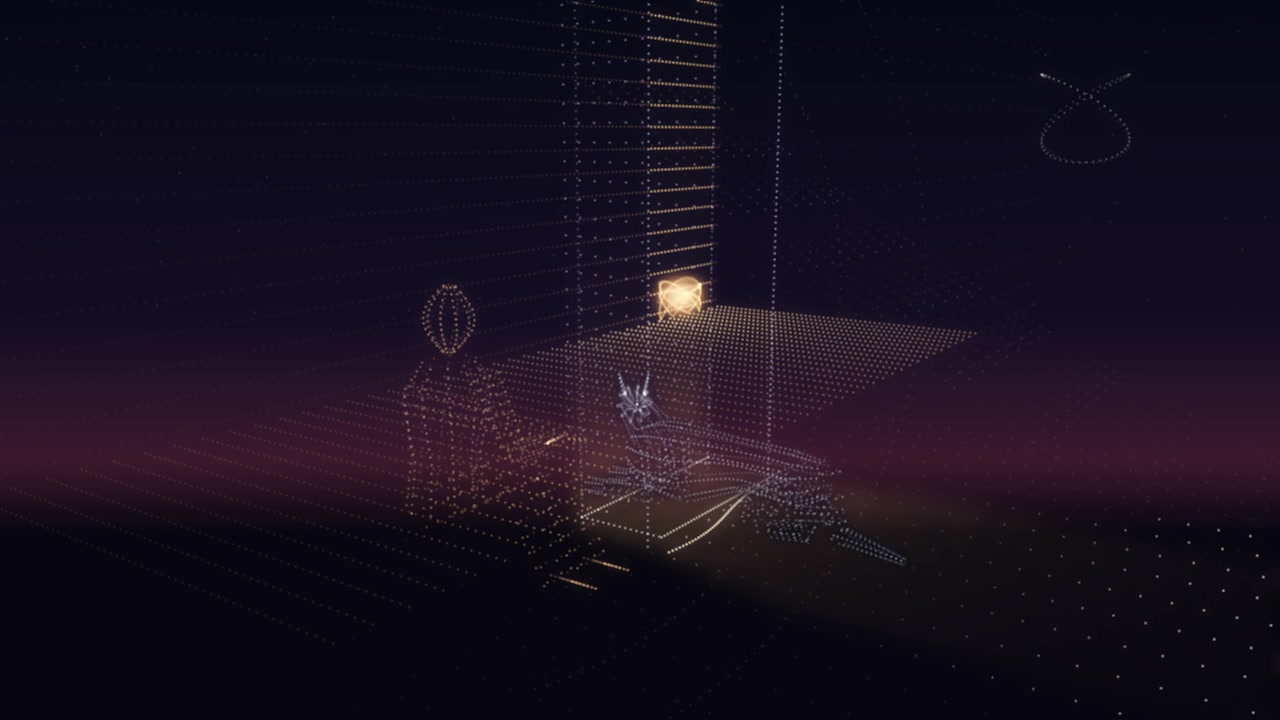 SCION 06Harmonic motionJohn WhitneyTrust is a fifth: the dog comes when its breath locks to the house.
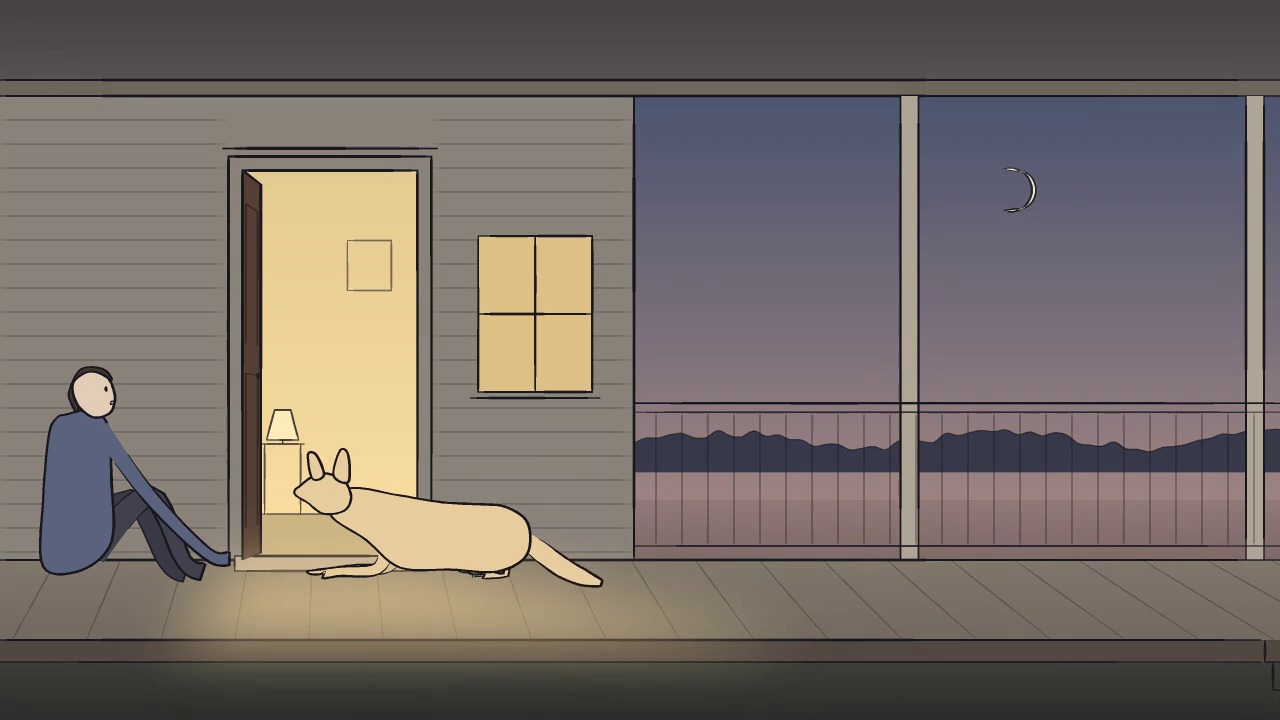 SCION 07Drawn metamorphosisPeter FoldèsThe door's outline is lifted off the door and laid on the porch as the light.
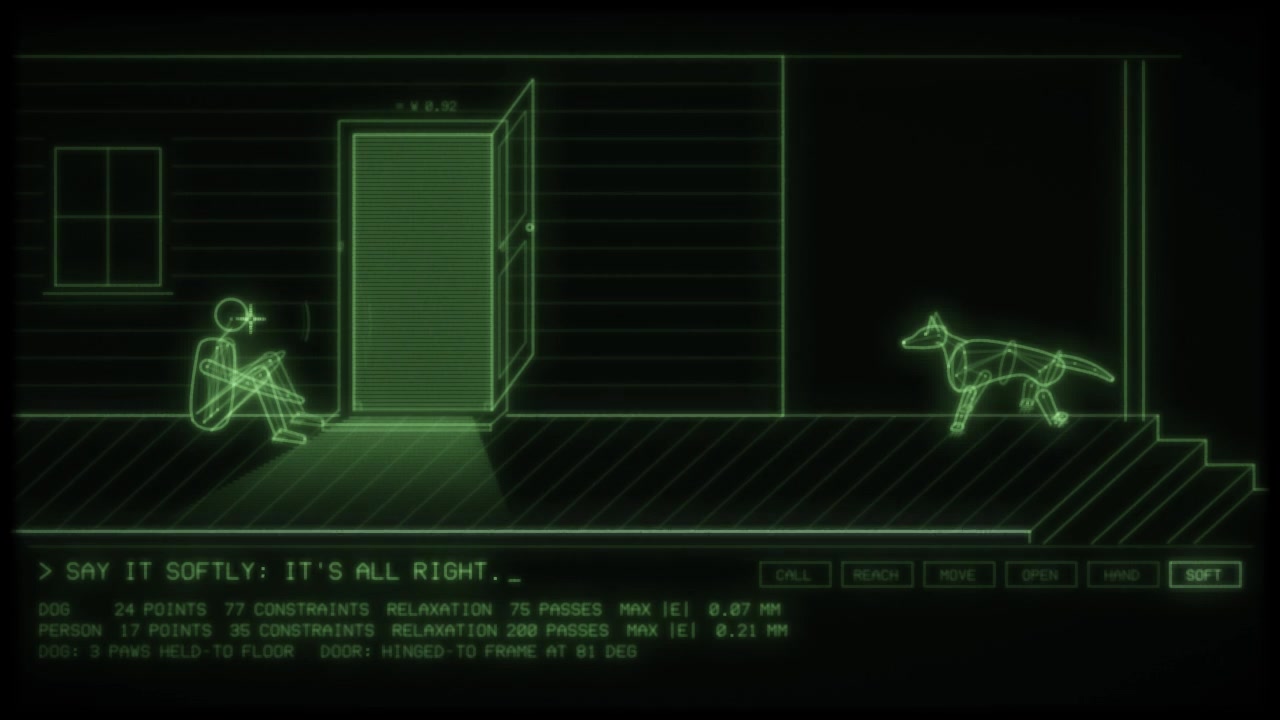 SCION 08Constraint SketchpadIvan SutherlandTHE DOG IS NOT SELECTABLE: the brief's 'understand it, not control it', said in Sketchpad's own terms.
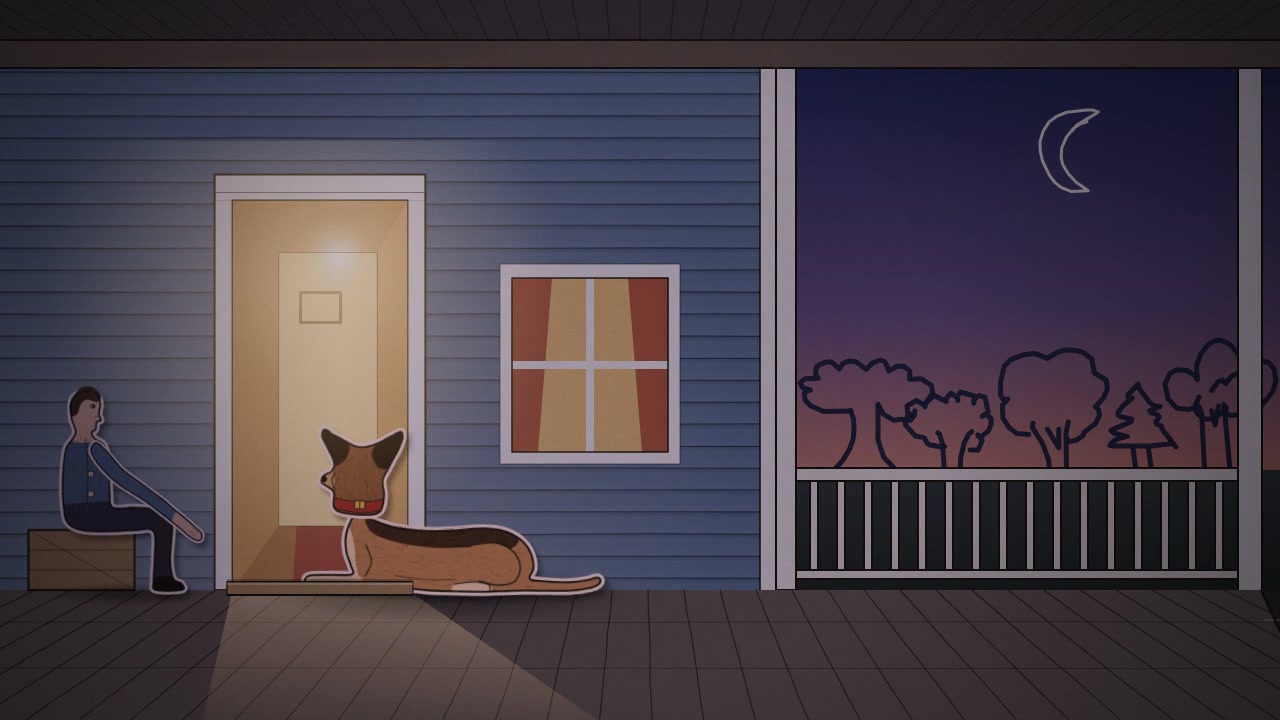 SCION 09As-rigid-as-possible puppetryTakeo IgarashiA drawing that bends without ever folding: the dog keeps its shape by solving for it.
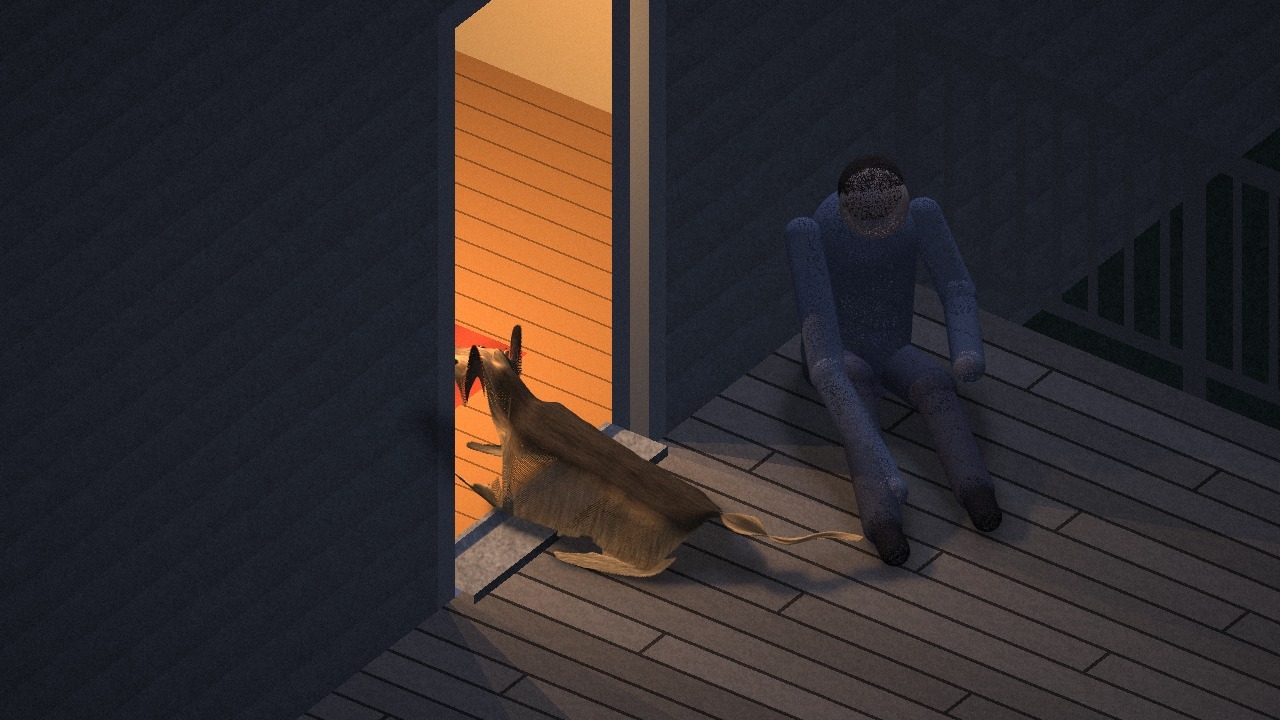 SCION 10One sheet warped by handlesMLS deformationThere is no skeleton anywhere: the dog bends as one sheet, the way a hide would if handles pulled it.
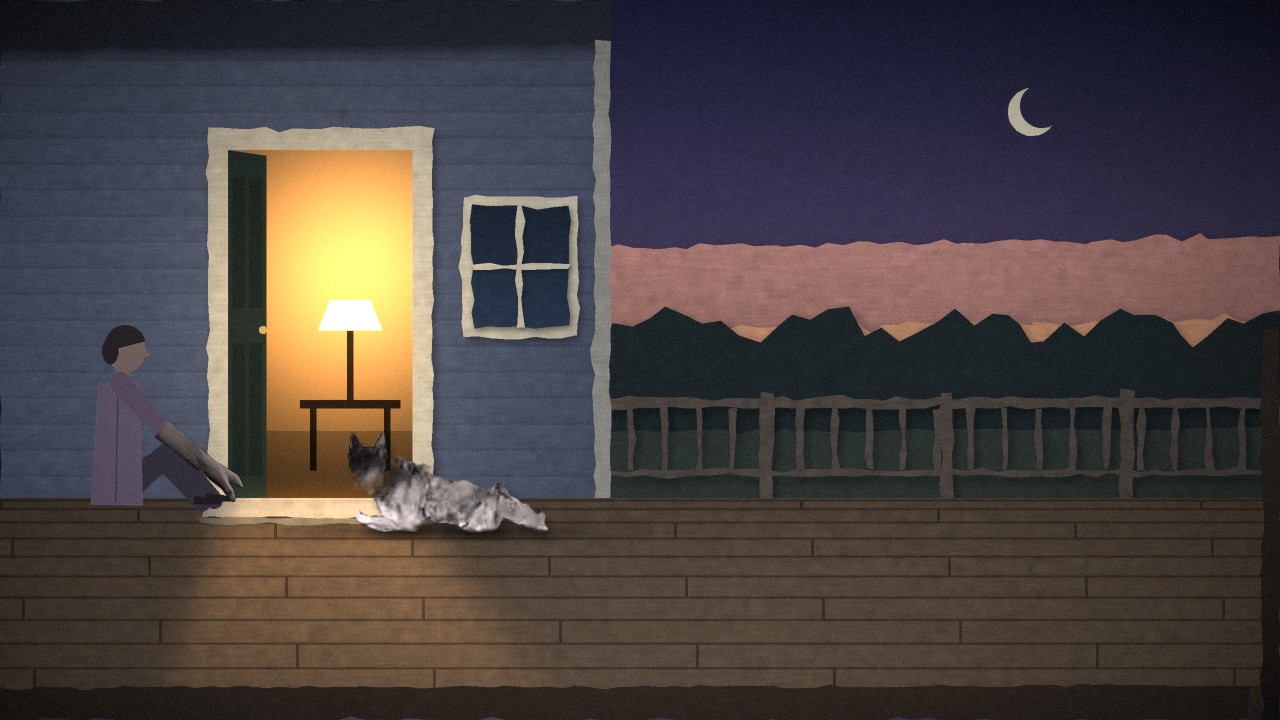 SCION 11Footage cut-outs moved as puppetsVideo puppetryEvery pixel of the dog is the real dog; only the way its pieces are held changes.
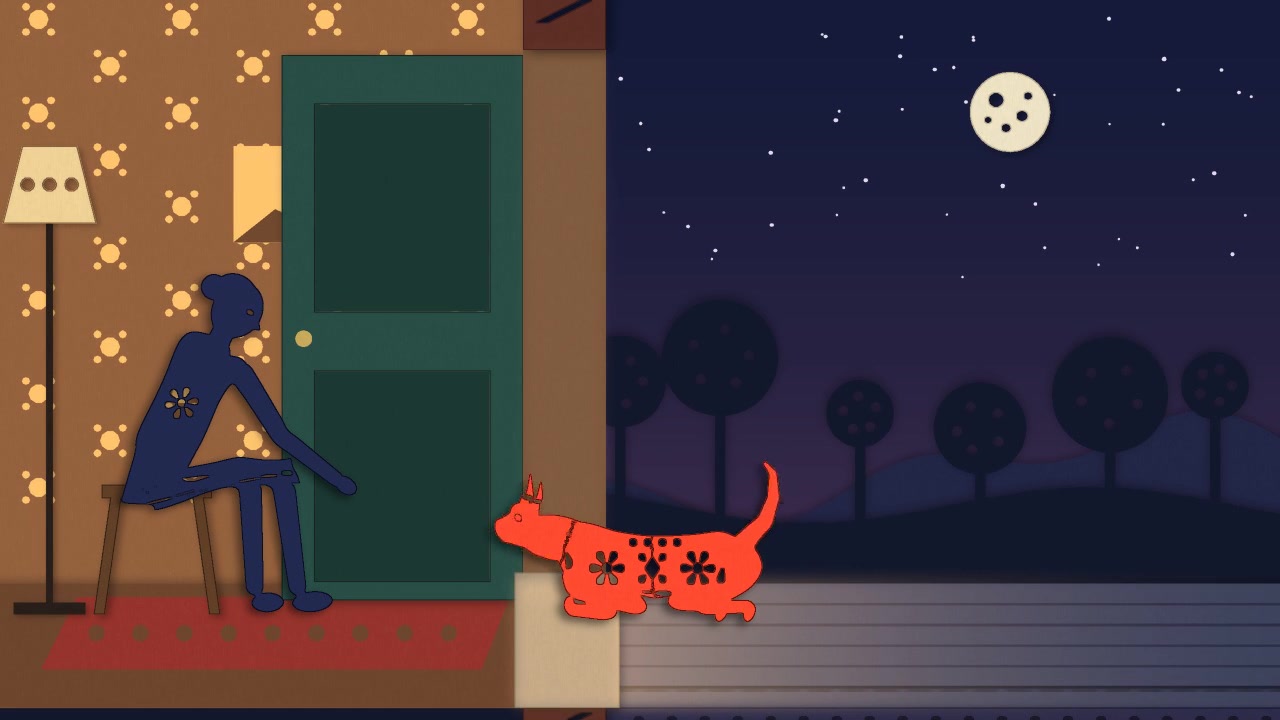 SCION 12Bounded biharmonic weights on a lace meshLocalized weightsLegs a few millimetres apart on a sheet full of holes move independently because the weights stay local across every gap.
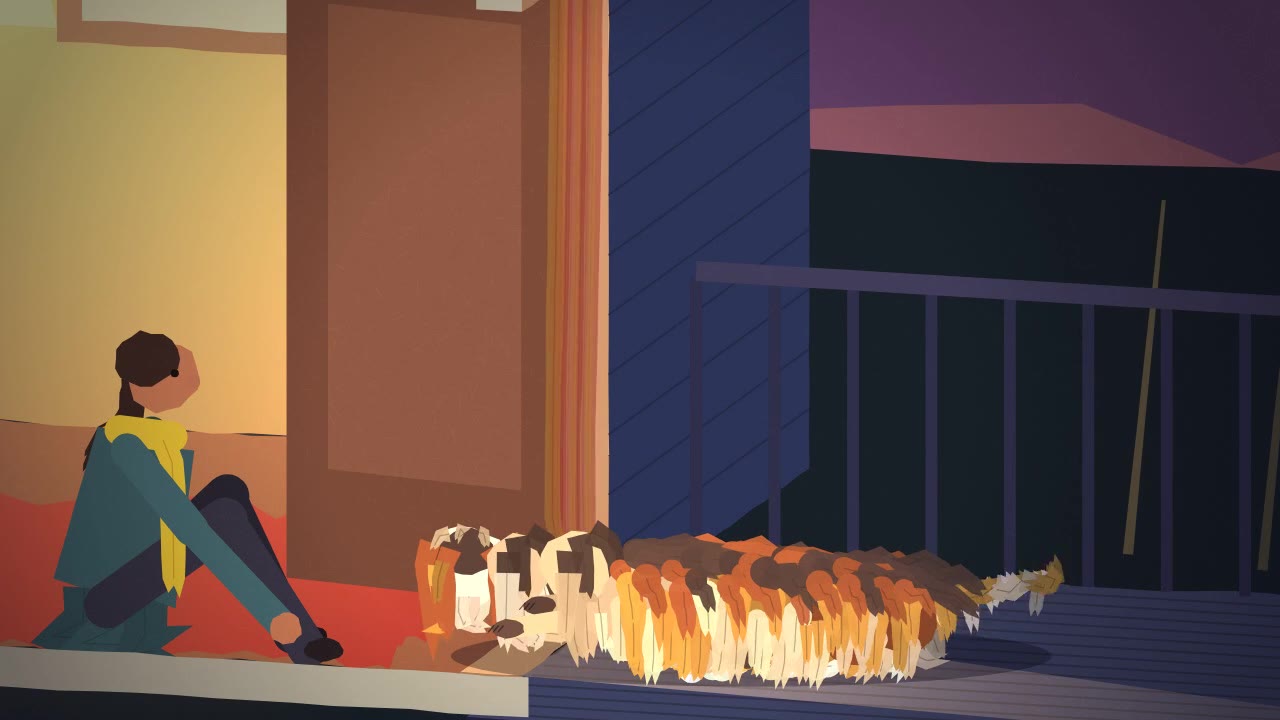 SCION 13Paper figures with secondary dynamicsSecondary motionThe secondary motion carries the story: the coat sleeks and stiffens on the refusal, the ears flick to the soft voice, and the coat spreads and settles as the dog lies down.
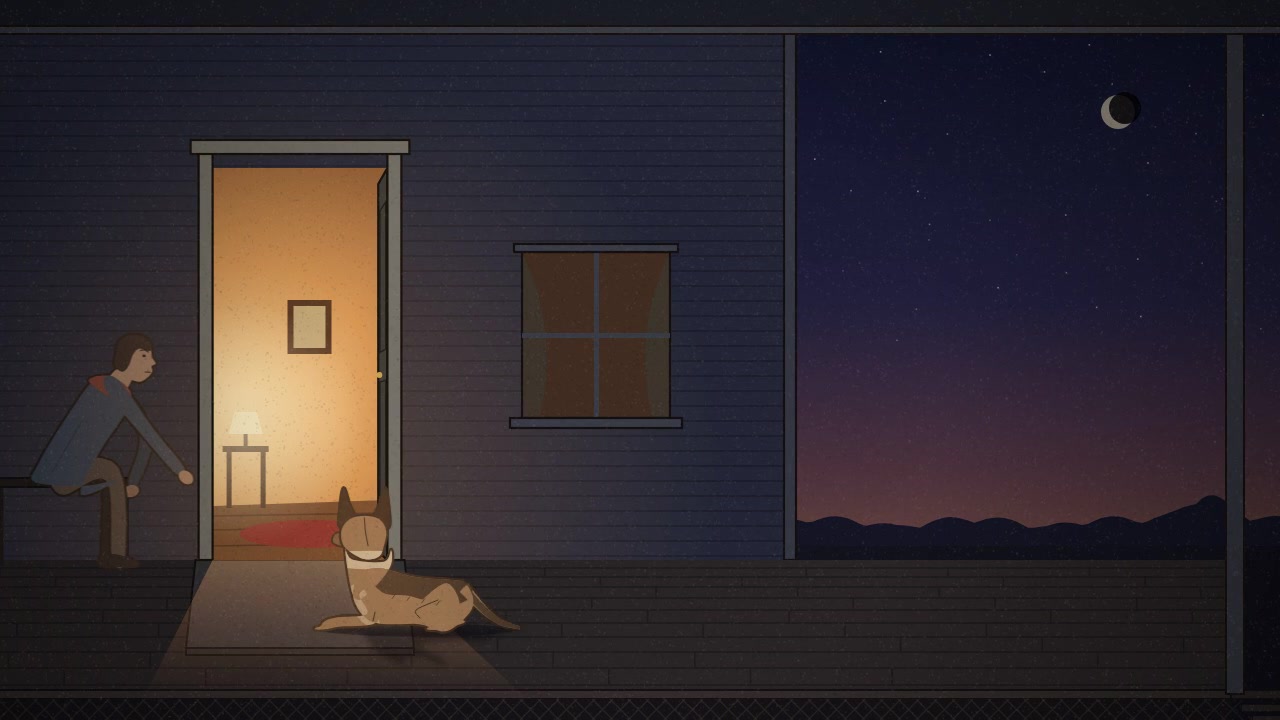 SCION 14Nora Willett lineagePose2Pose castingThe performance is a path through a drawer of drawings: casting, not animating.
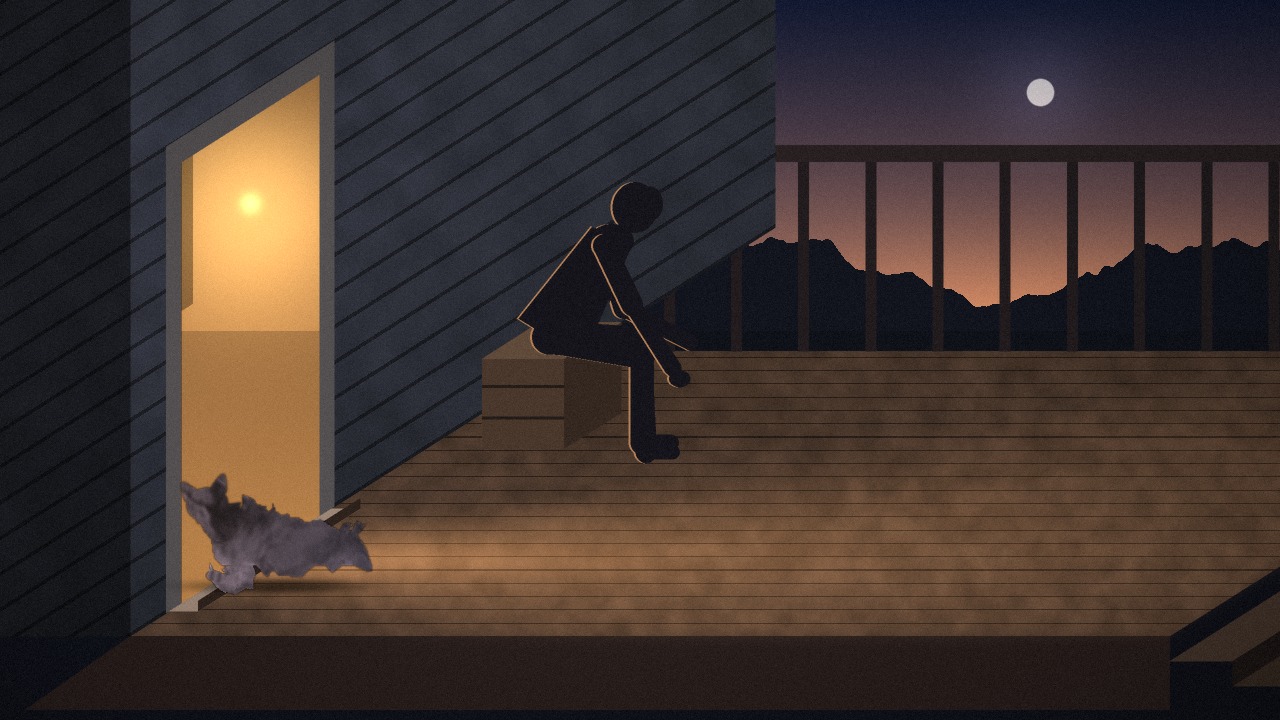 SCION 15A layered puppet fitted to the archive dogLearned layered puppetThe end card shows what the model makes alone next to what had to be corrected by hand.
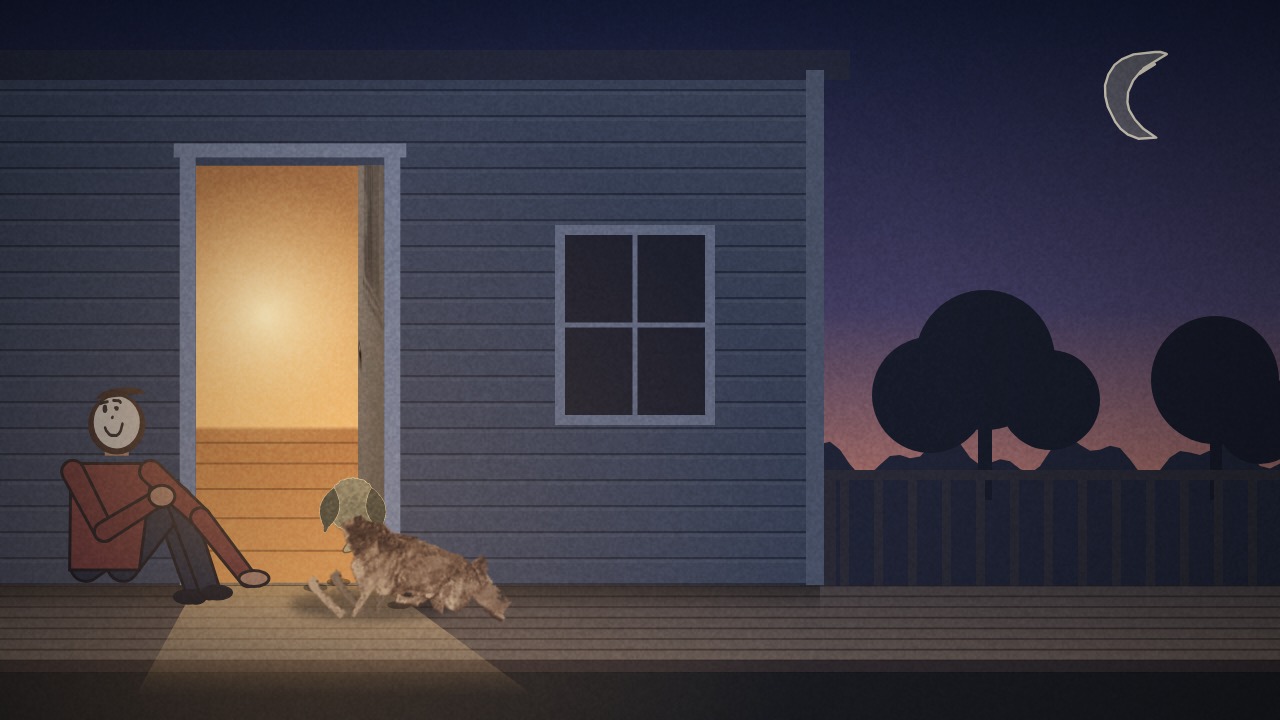 SCION 16Cast heads on a cut-out bodyJibJabThe performance belongs to the body; the face is a slot anyone could be cast into.
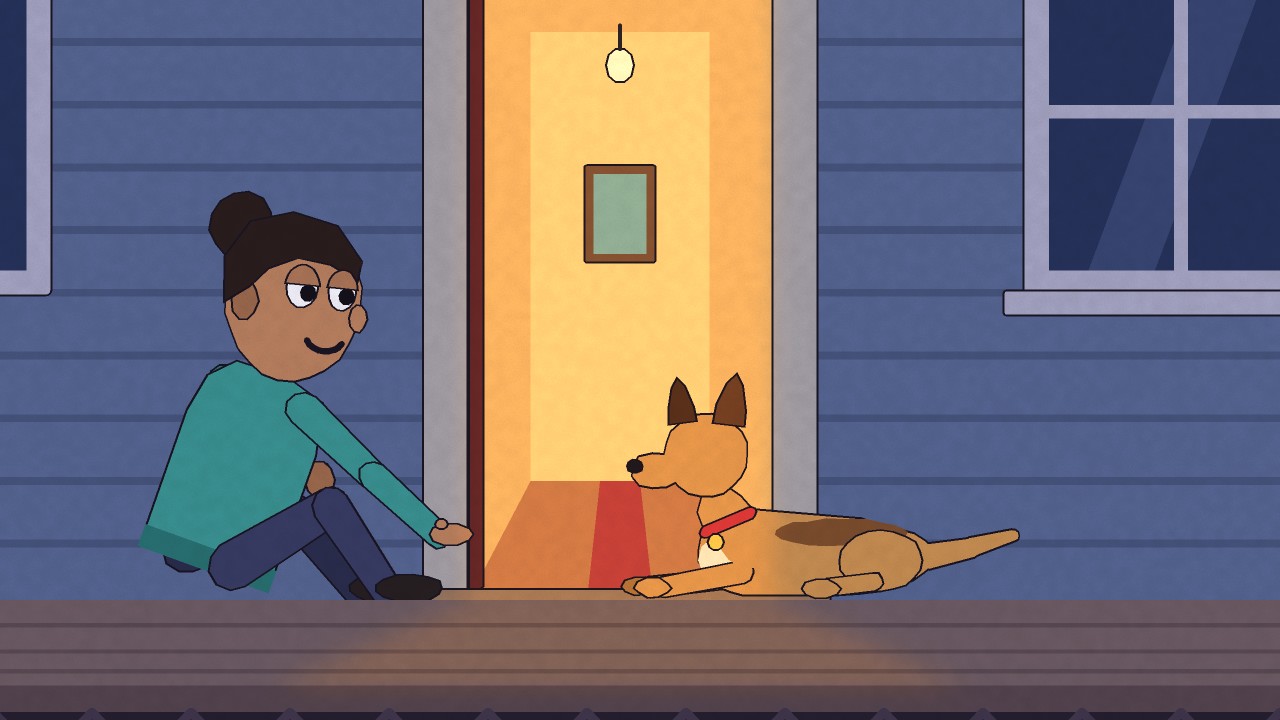 SCION 17Restricted graphic grammarSouth Park lineageThe fewer drawings it has, the more each choice of drawing says.
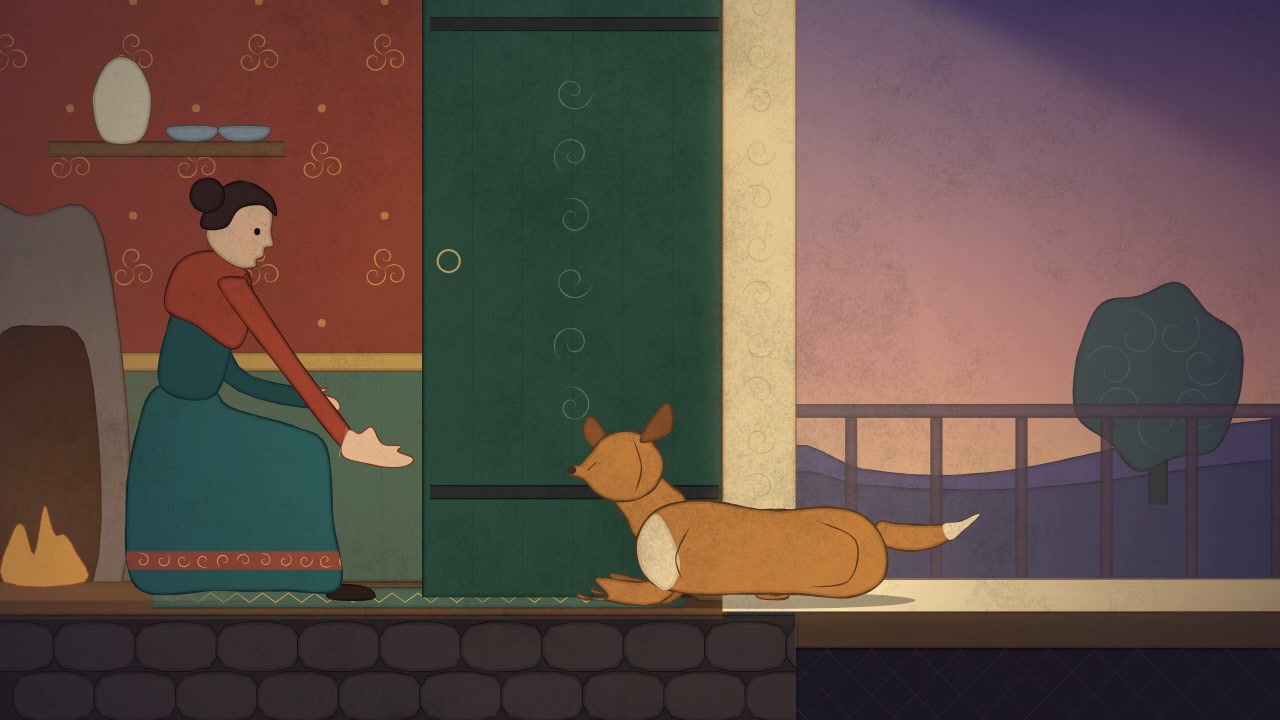 SCION 18Painterly puppet disciplineCartoon Saloon lineageDiscipline is what is not rigged: the drawing does the acting, the rig only carries it.
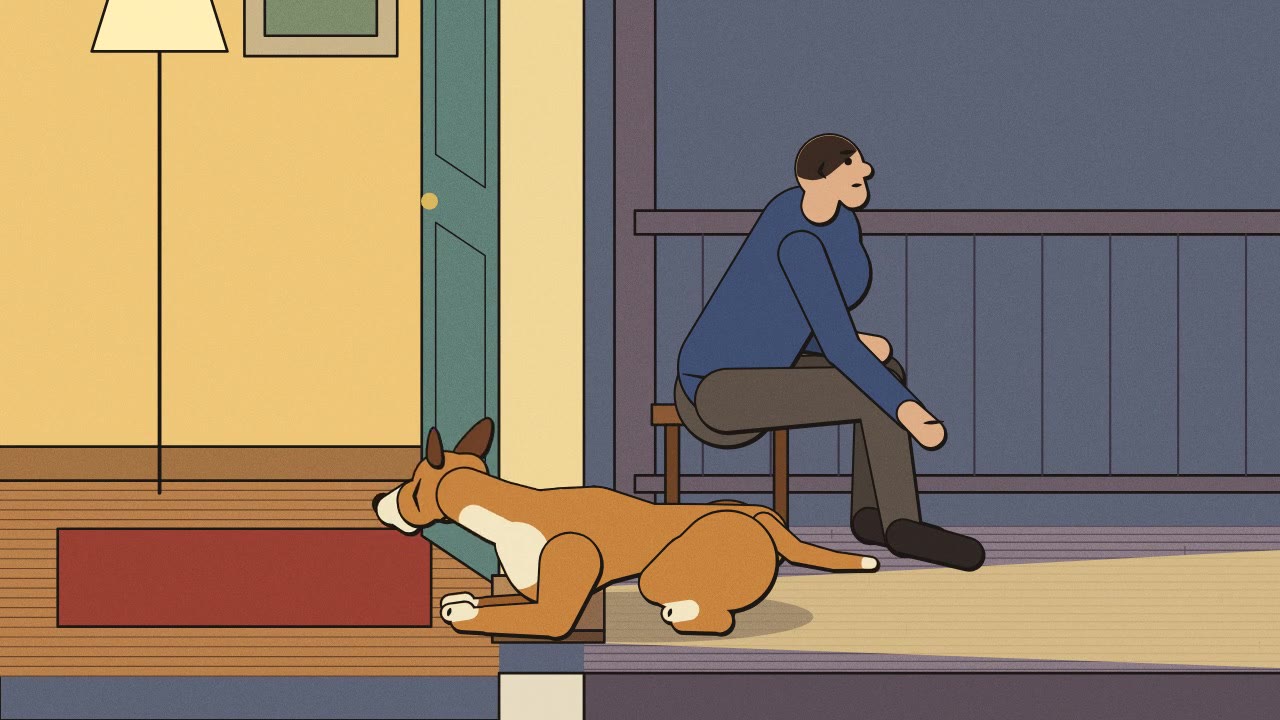 SCION 19Smart-Bone rig with switch layersMoho Smart BonesThe turns are not tweened: a view bone switches whole drawings while corrective shapes re-draw the joints it bends.
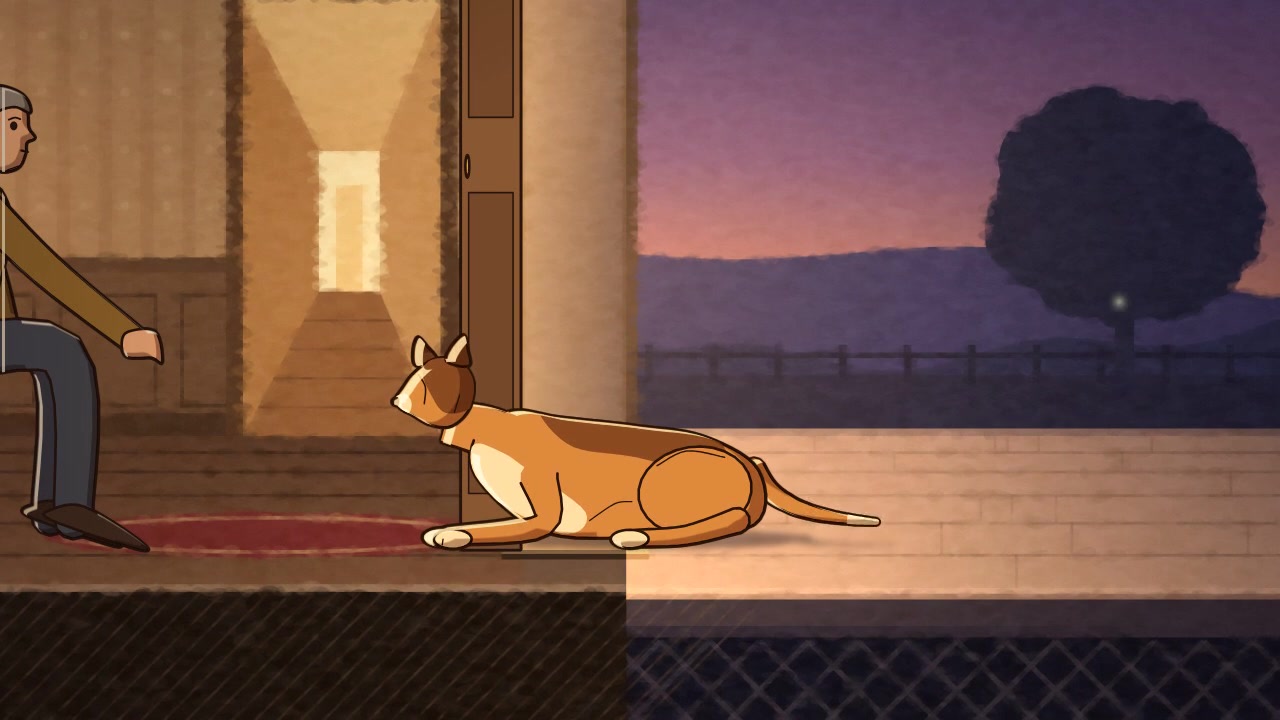 SCION 20Production rig: drawing substitution and node graphToon Boom HarmonyEvery turn is a substitution that lands on a whole drawing, never a dissolve; the end card shows the real xsheet rows of the head-lead turn.
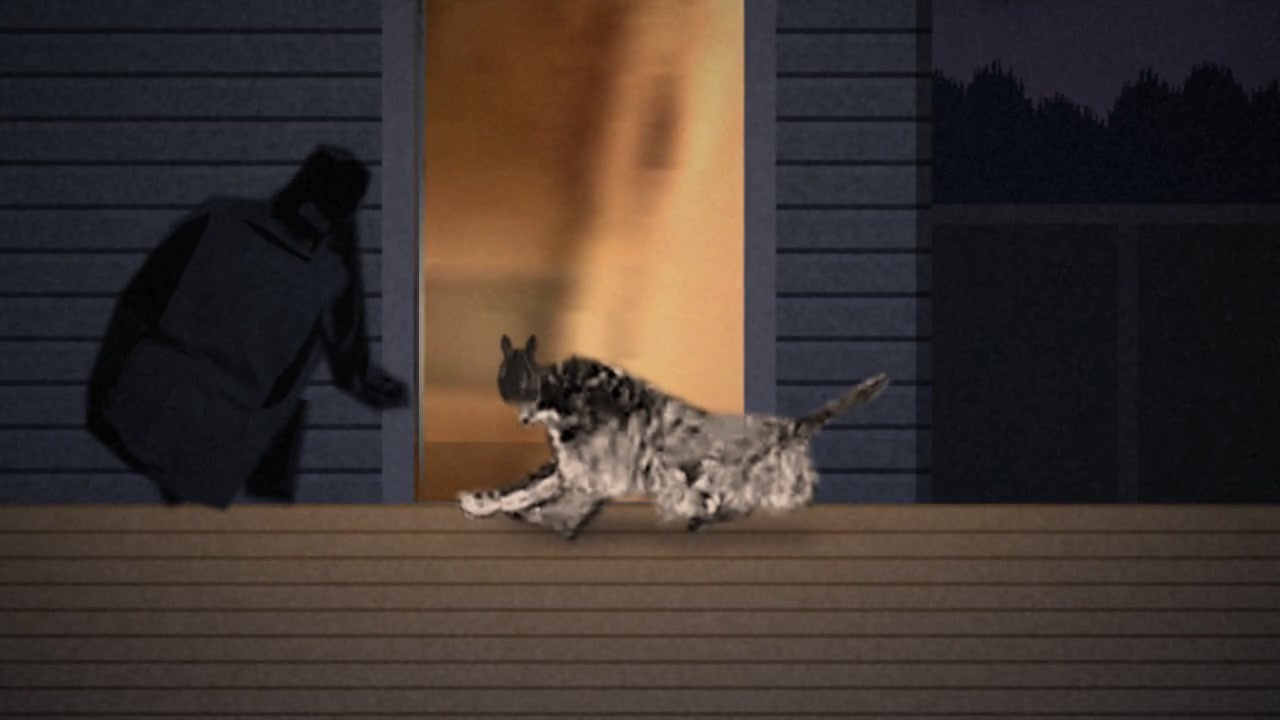 SCION 21Photographic actor rigged from stillsPhoto-to-ActorA dog that only ever walked to a bowl is retargeted, from a handful of stills, to perform all six choices of the score.
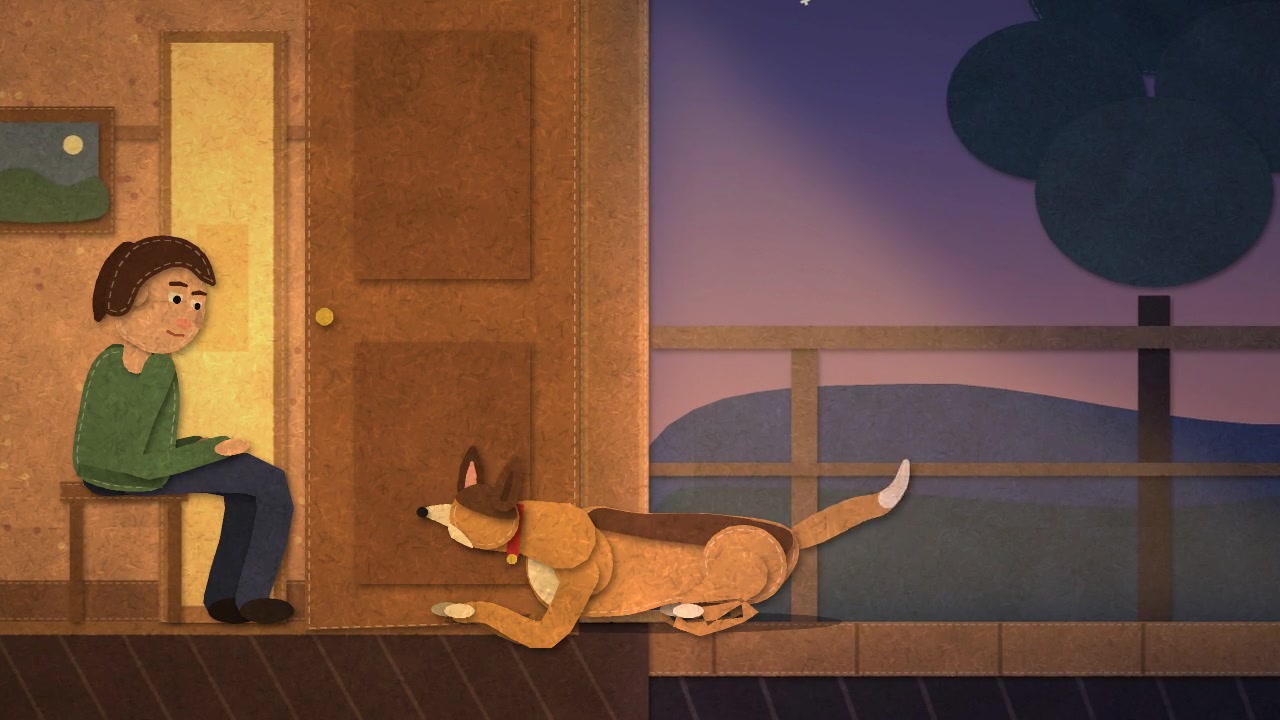 SCION 22Performance puppet with behavioursCharacter AnimatorThe puppet is never animated frame by frame: it is performed, and the performance is a file of takes.
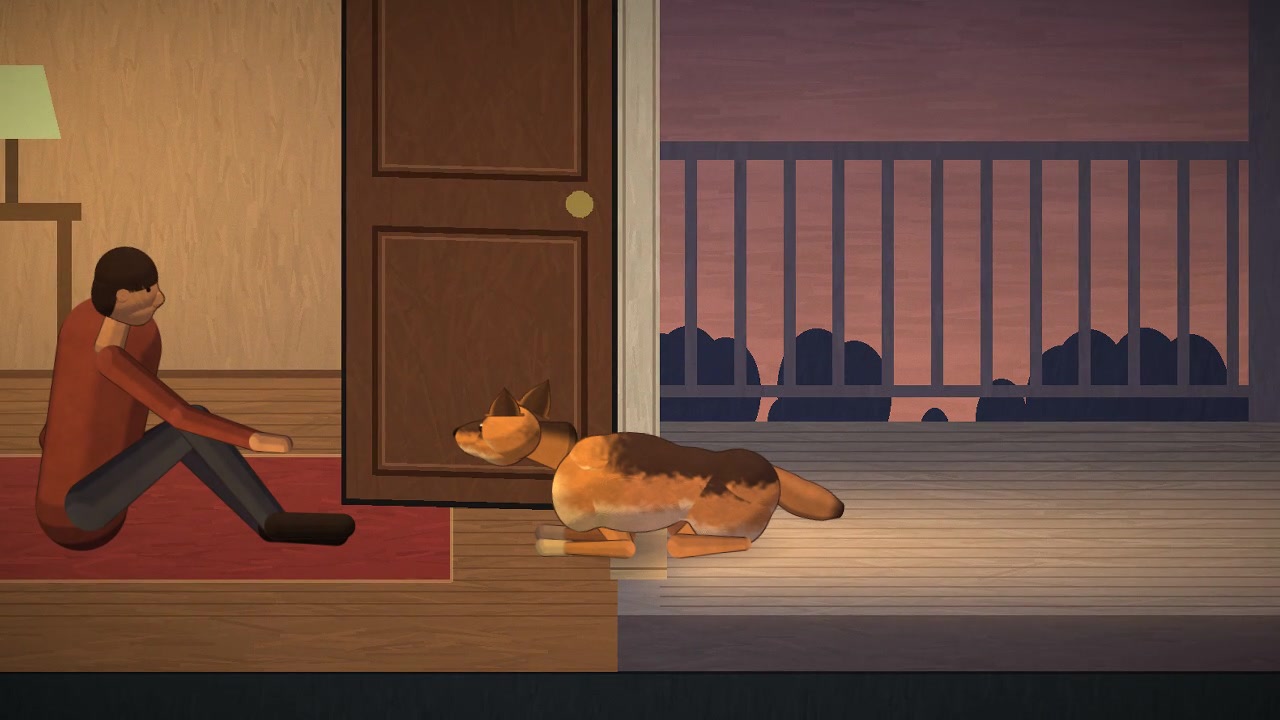 SCION 23Skeletal runtime with mixed action clipsSpine runtimeThe head leads because it plays on its own track over the body; the end card draws the real track timeline.
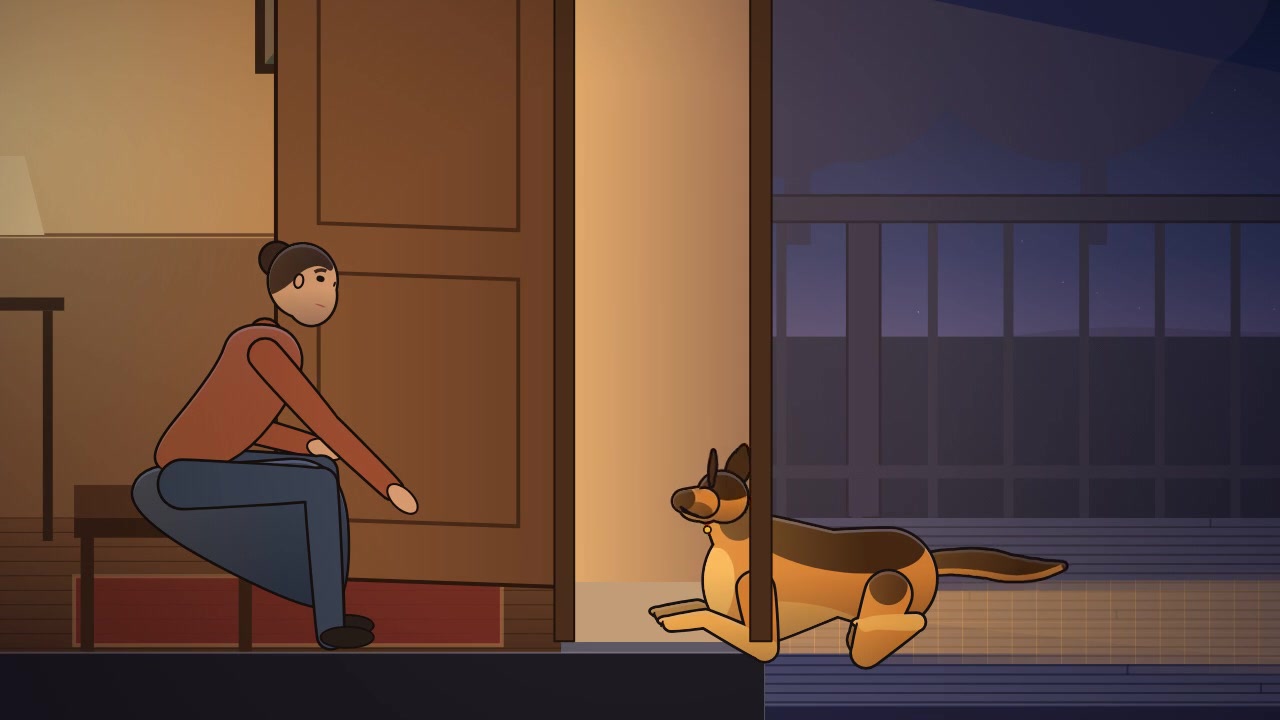 SCION 24Portrait volume illusionLive2D lineageGaze, head and body are three separate decisions, and the dog makes them in that order.
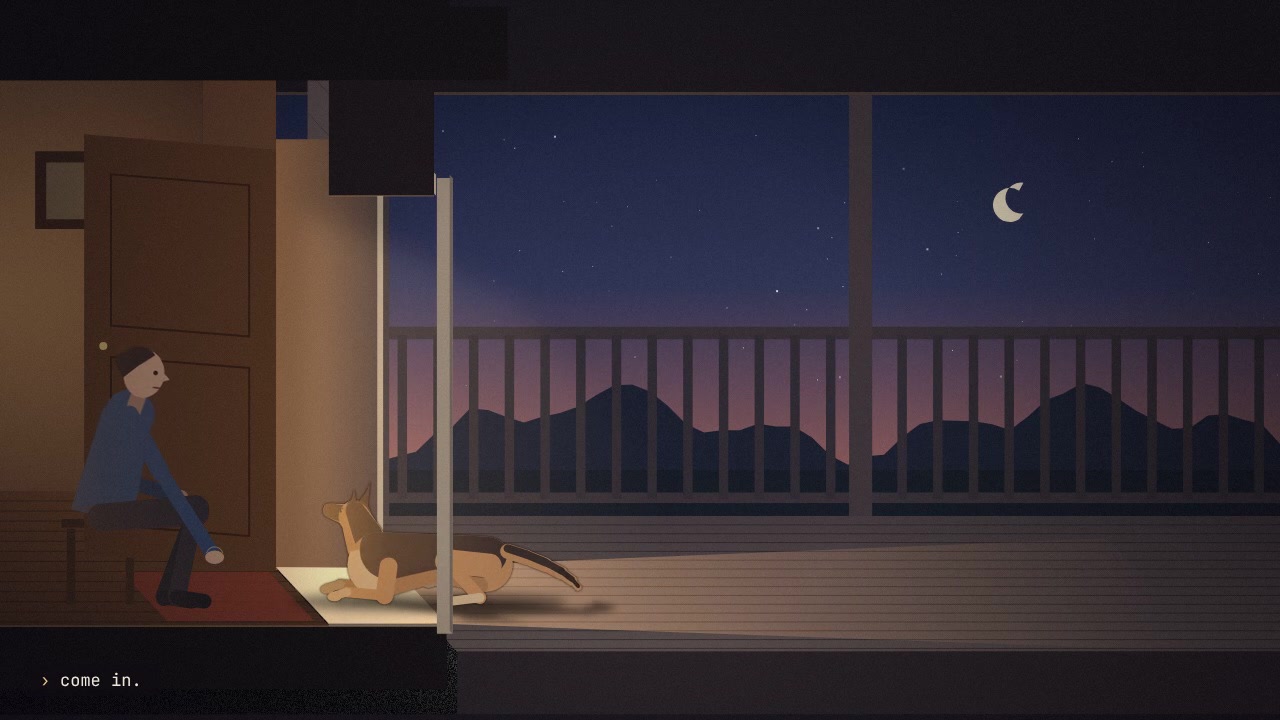 SCION 25Interactive puppet state machinesRiveThe score is played into the puppet as inputs; the dog's choices come out of its own state machine.
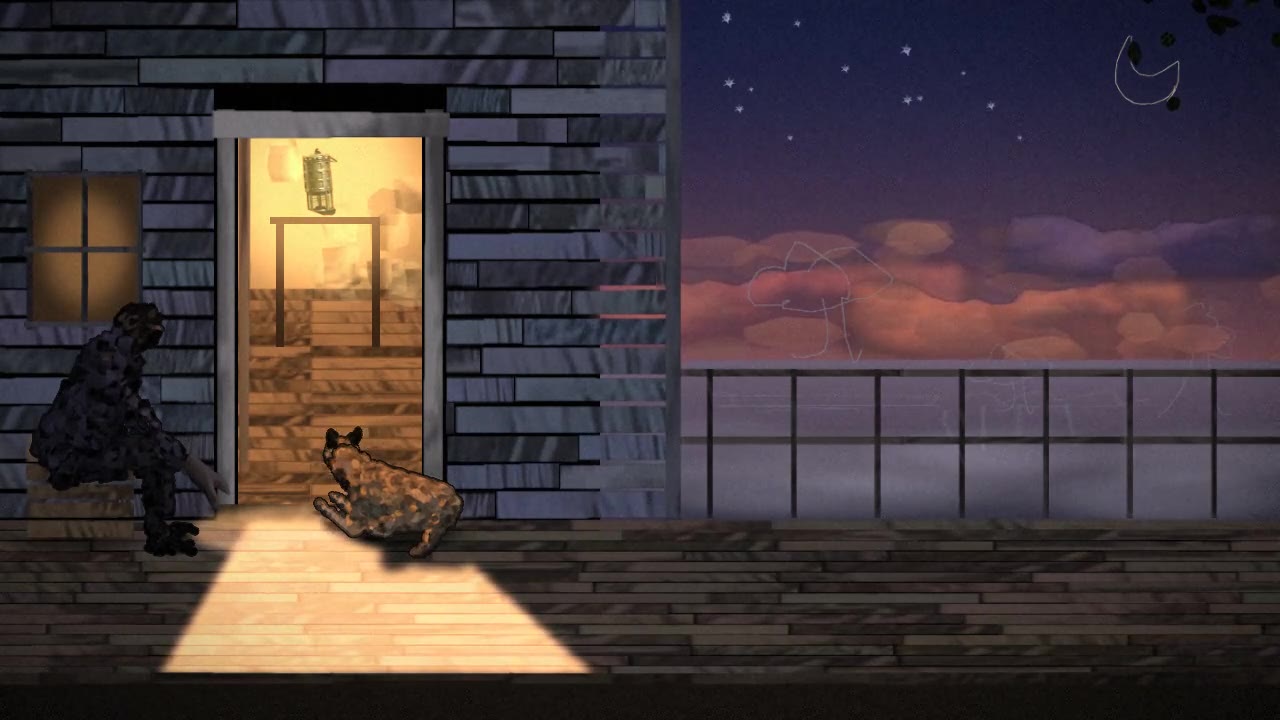 SCION 26GPU scene graph of archive fragmentsPixiJS archive stageHundreds of small fragments, texture-batched, are held together into one animal by masks and render-texture passes.
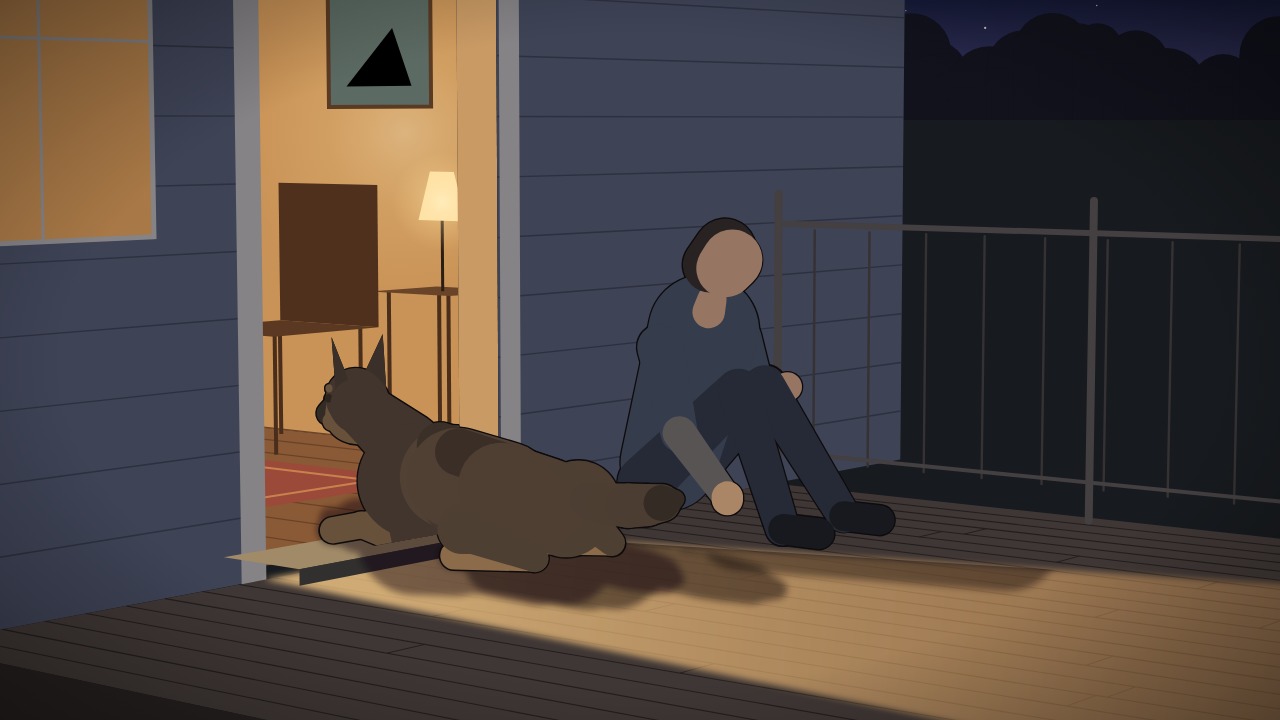 SCION 27Declarative film compilerRemotionThe film is a pure function of its description: render it twice and every frame is the same.
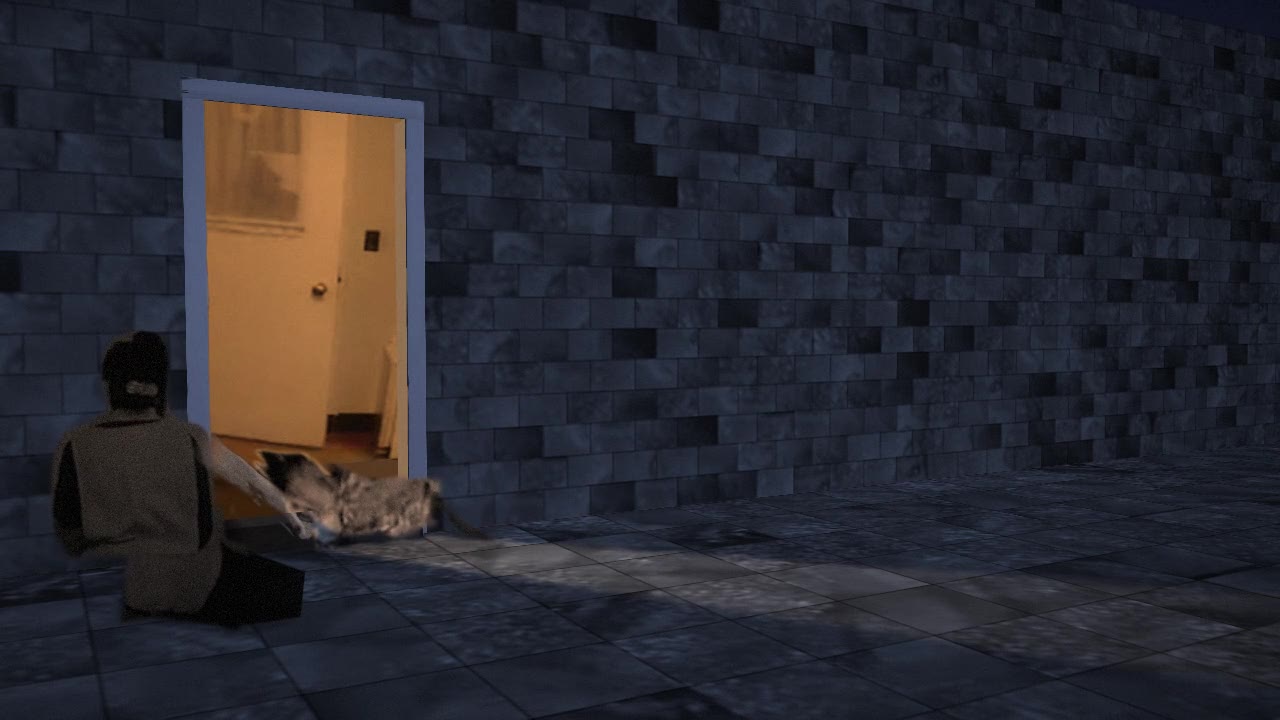 SCION 28Compositor's film of archive platesMask and plate foundryPlates from different films are pinned, held out and lit until they share one shot, and the dog performs by animating its masks.
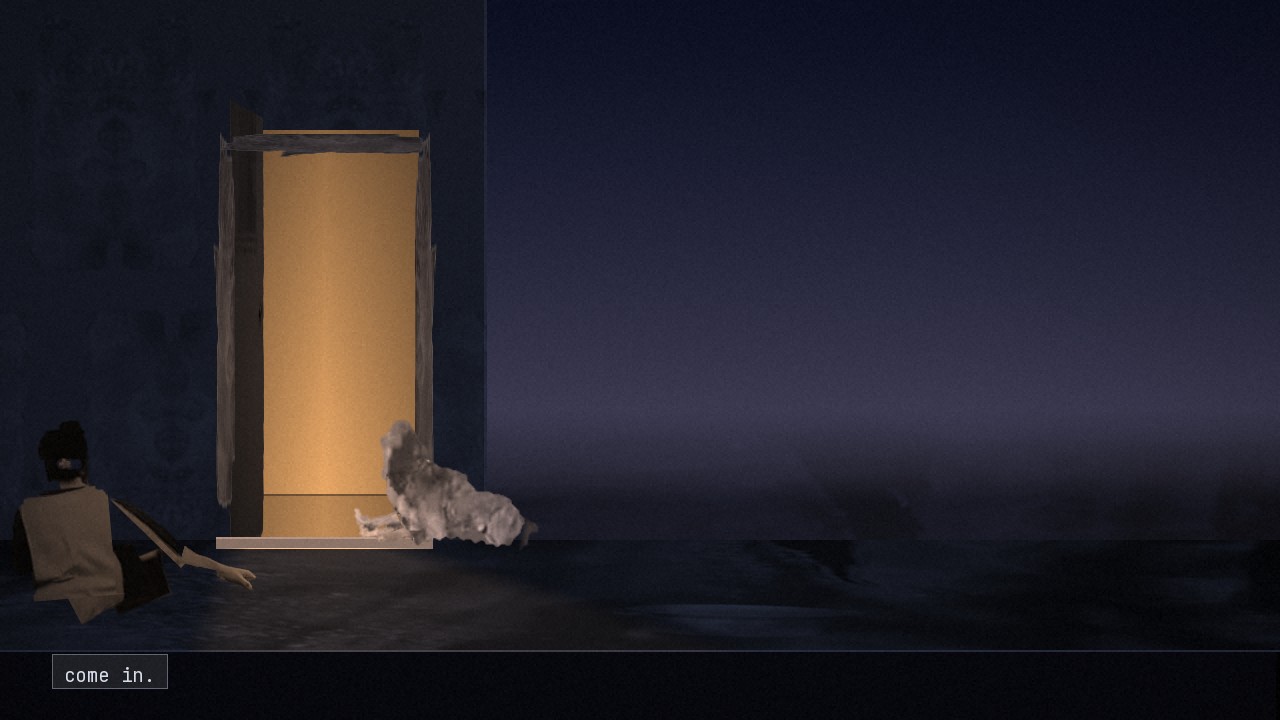 SCION 29Cutout extractionGrabCutThe cut is the film: every edge of the dog is an argument about where it ends.
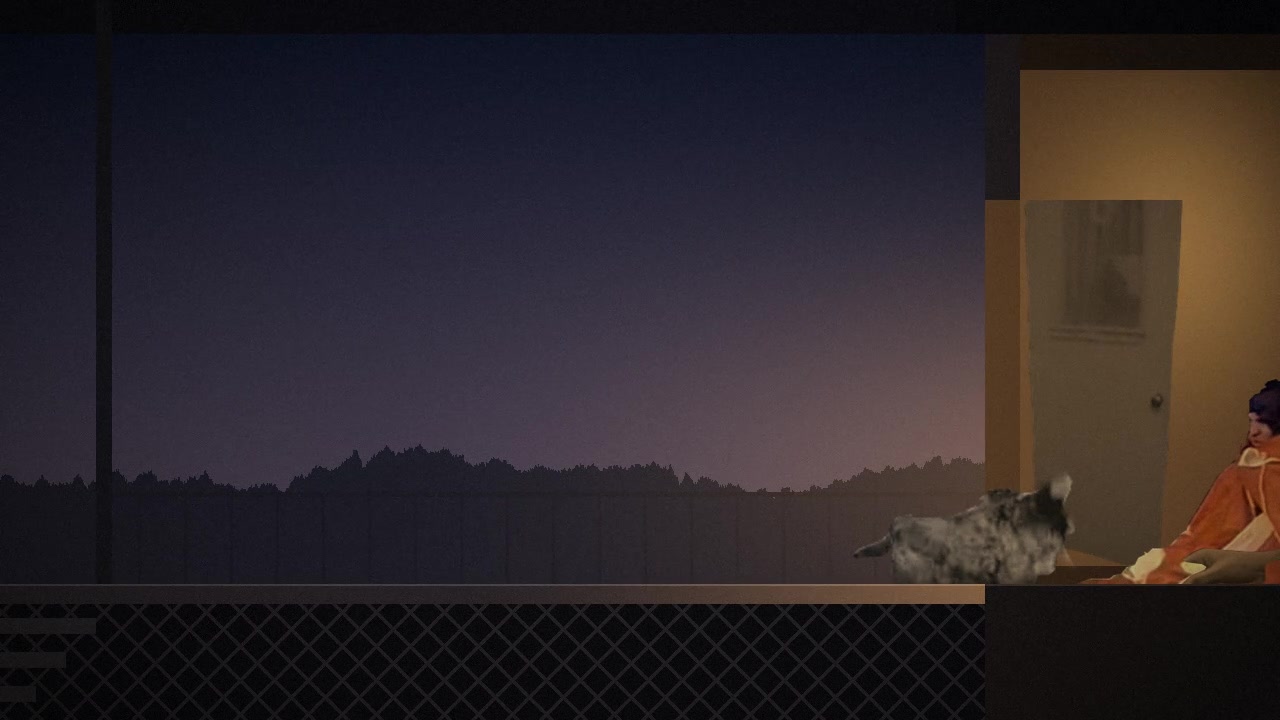 SCION 30Evidence-bounded mask proposalsSAM 2 proposalsNothing is drawn: when the archive has no evidence of a pose, the film stages around it instead of inventing it.
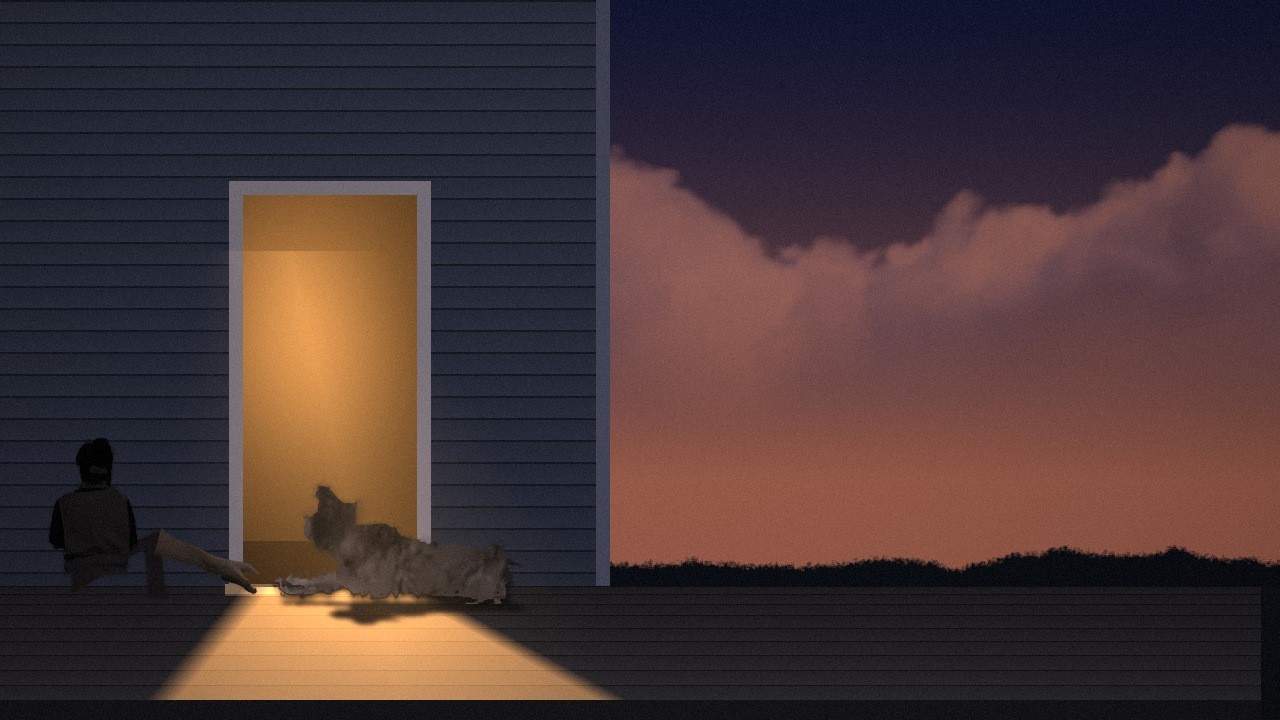 SCION 31Soft-edged matted archive framesAlpha MattingThe dog's edges hold against sky and siding, because the matte, not the outline, decides what is dog.
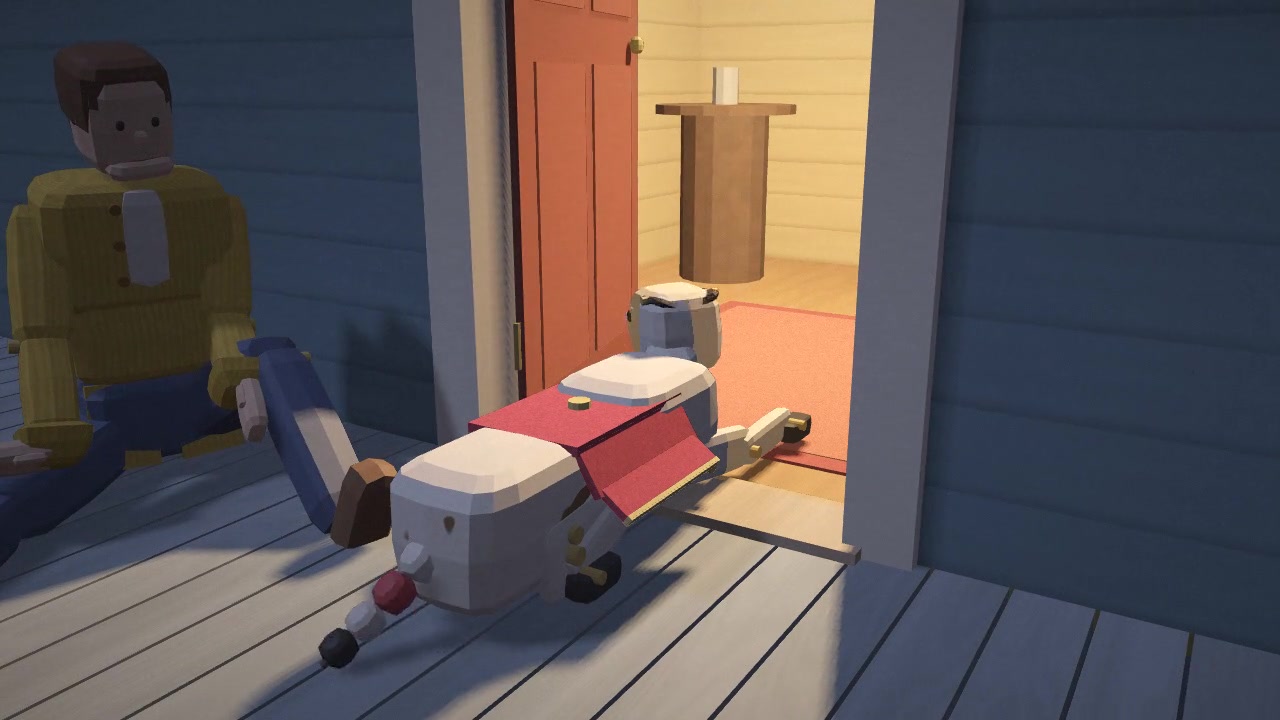 SCION 32Jointed toy moved only by forward kinematicsForward kinematicsThe joint graph you see is the one that moves it: change a hip and exactly its children follow, saddle cloth and all.
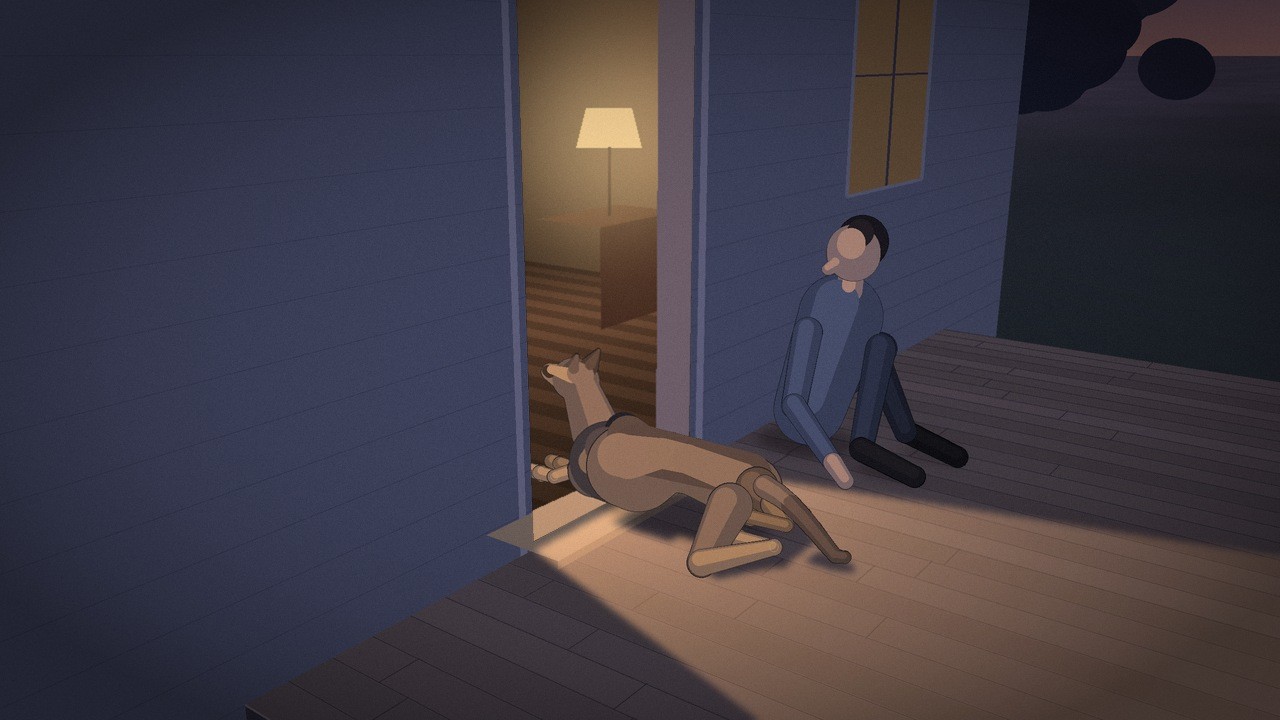 SCION 33Joints, chains and planted effectorsInverse kinematicsA command is a target the arm cannot reach; the threshold is a target the dog's own chain lays down across.
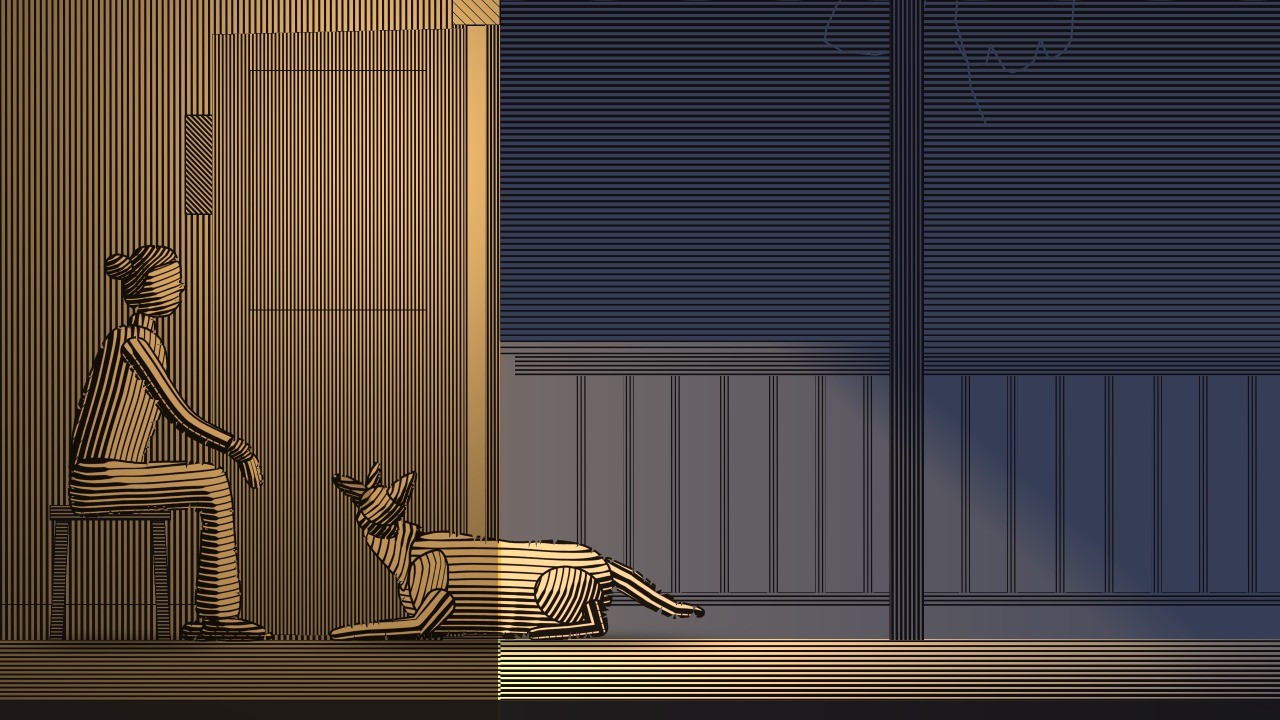 SCION 34Engraved mesh, shape kept by a local–global solveAs-rigid-as-possibleThe dog bends where its triangles can keep their shape and nowhere else.
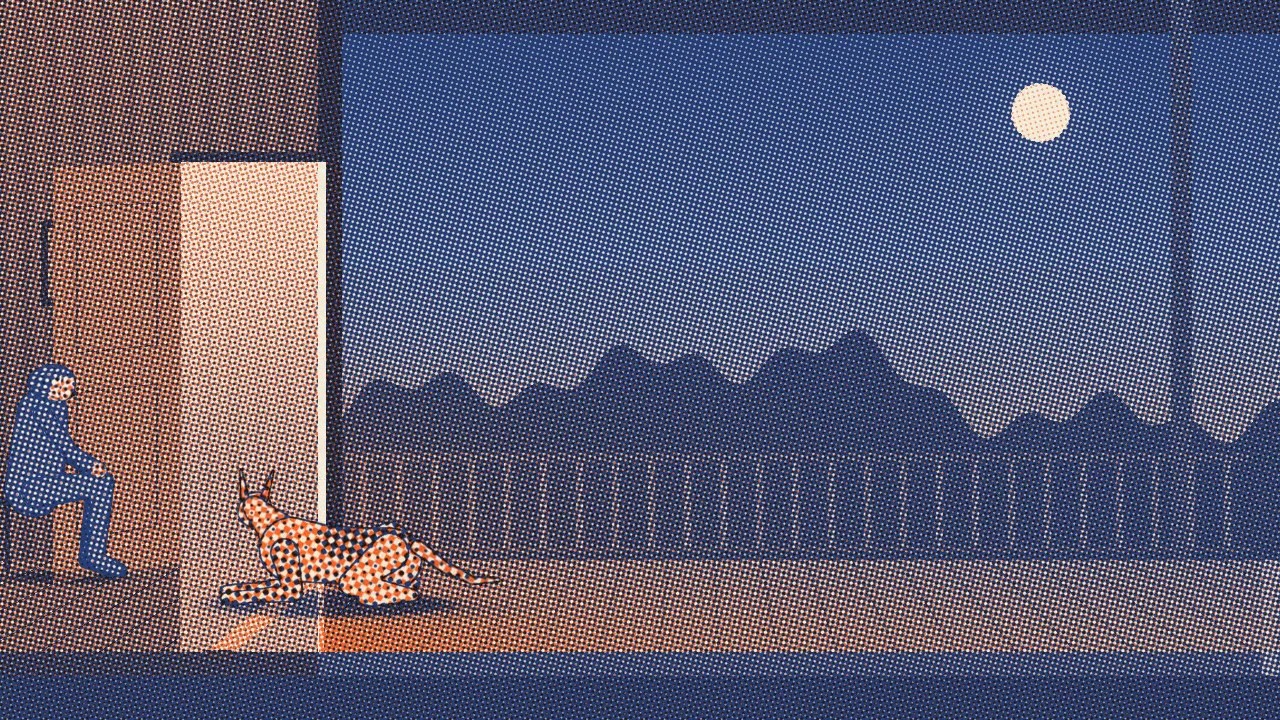 SCION 35Risograph print bent by moving least squaresMLS gesture warpThe warp is honest about itself: wherever the print is bent, its dot screen visibly stretches.
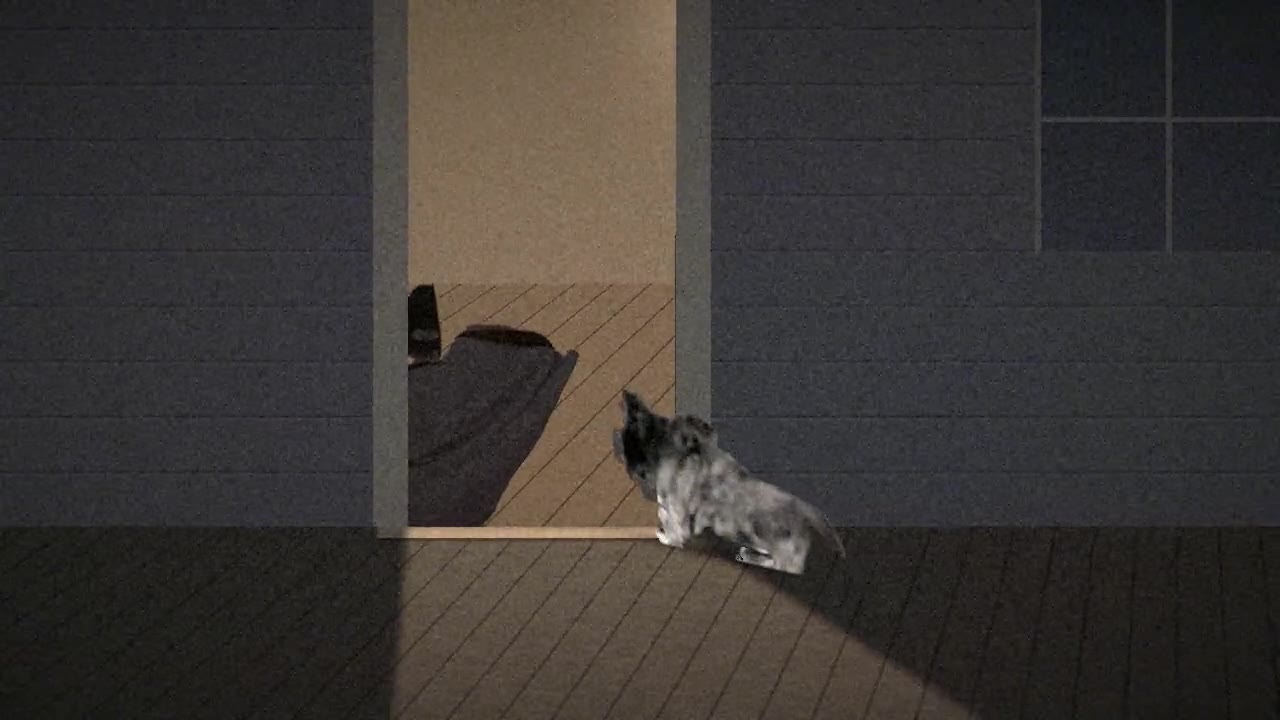 SCION 36Auto-rigged archival silhouettesBBW auto-rigNo one paints a weight: the found silhouette rigs itself.
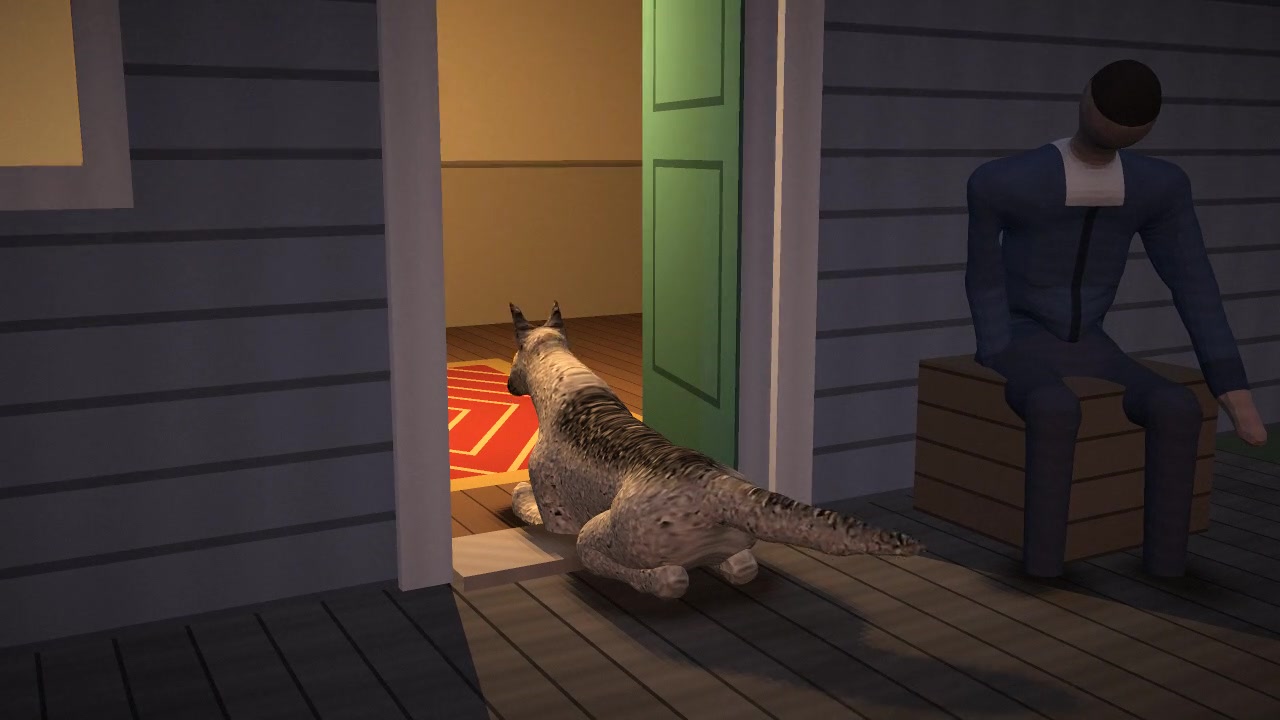 SCION 37One skin over a skeleton, weighted per vertexWeighted skinningThe joints keep their girth because of how the skin is blended, and the film shows the version that does not.
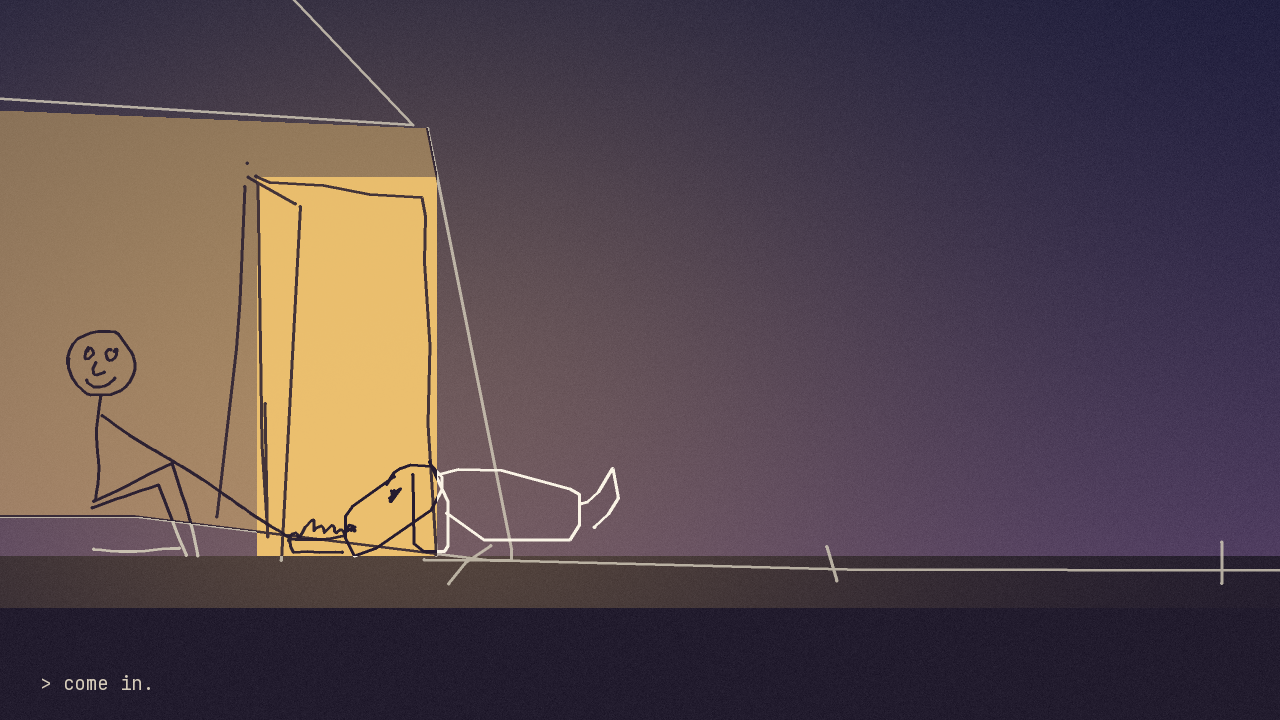 SCION 38Drawing libraryDynamic pose selectionThe dog that turns its back is the same drawing as the dog that comes.
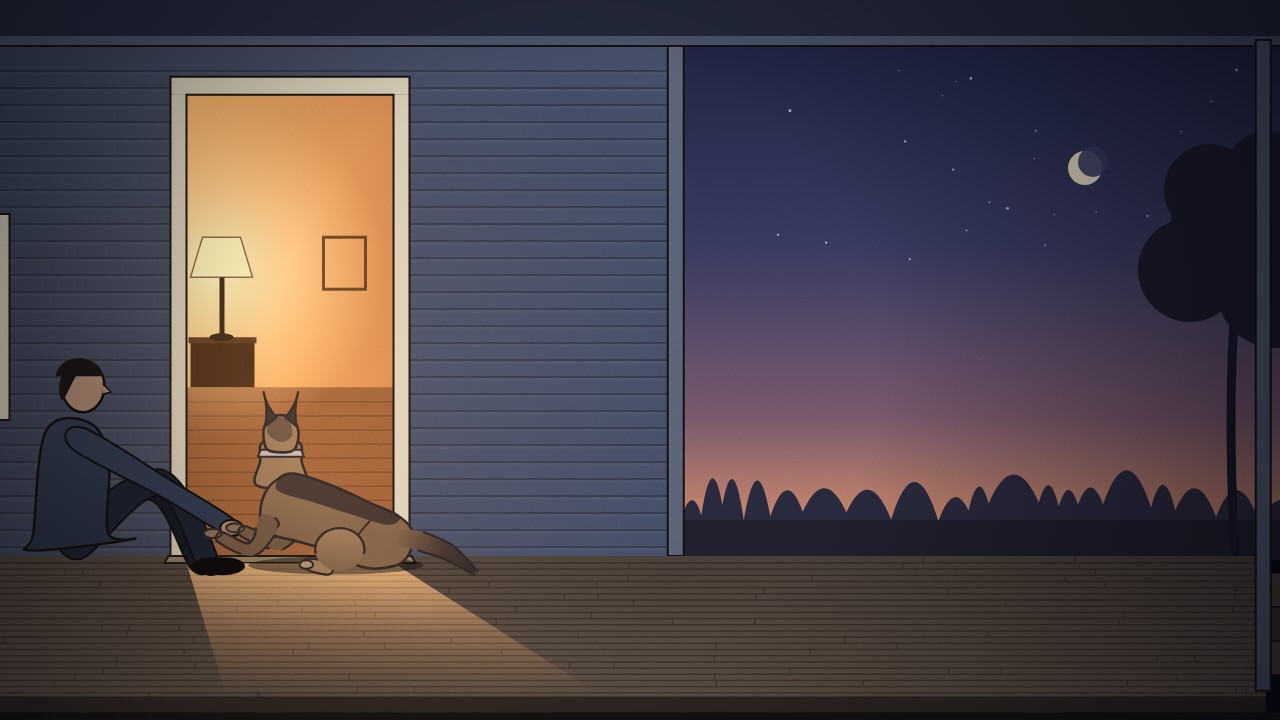 SCION 39Turn labMultiview substitutionIt solves the turns, the place every earlier swarm failed, by never pretending the dog is a solid.
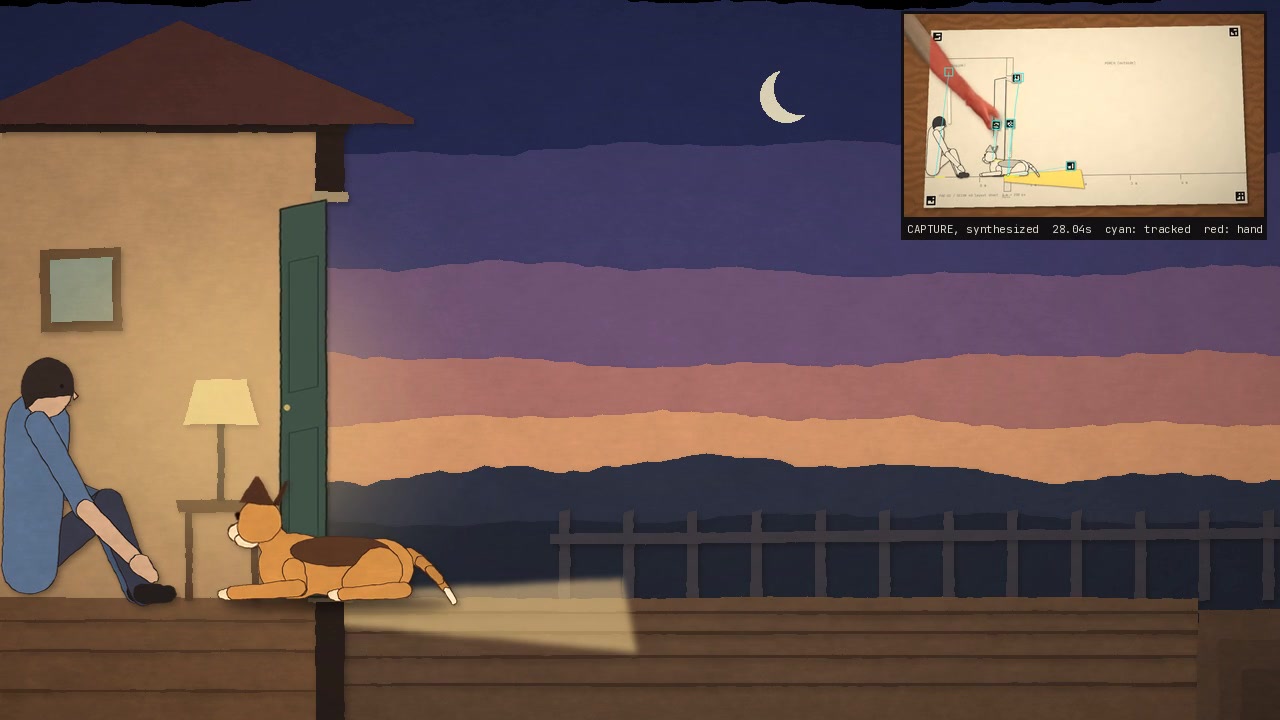 SCION 40Paper performance, captured and replayedTabletop captureThe acting exists only as data recovered from fingers moving paper, and the film replays it.
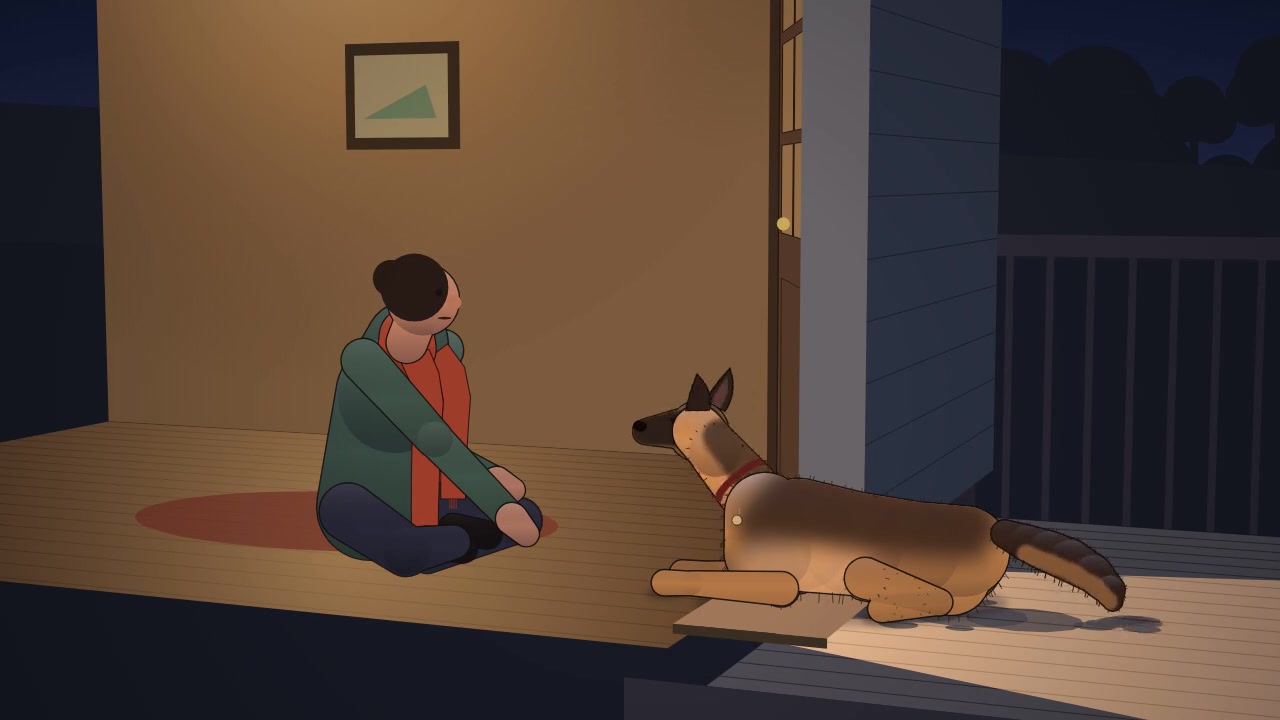 SCION 41Inertia and restraintSecondary dynamicsNothing secondary is animated by hand, so stillness has to be earned: the holds are quiet because the energy has gone.
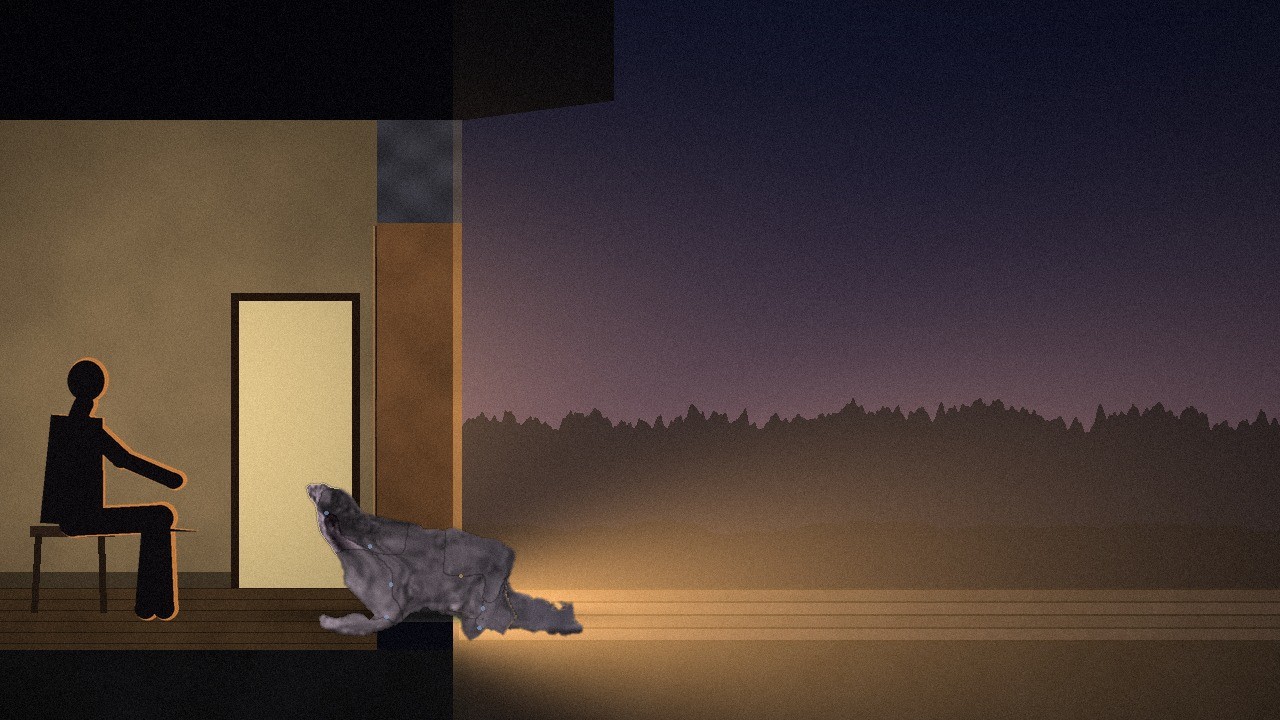 SCION 42Parts and joints discovered from a few framesNeural layered puppetNobody drew where the dog's joints are: the fit found them, and the seams stay on screen.
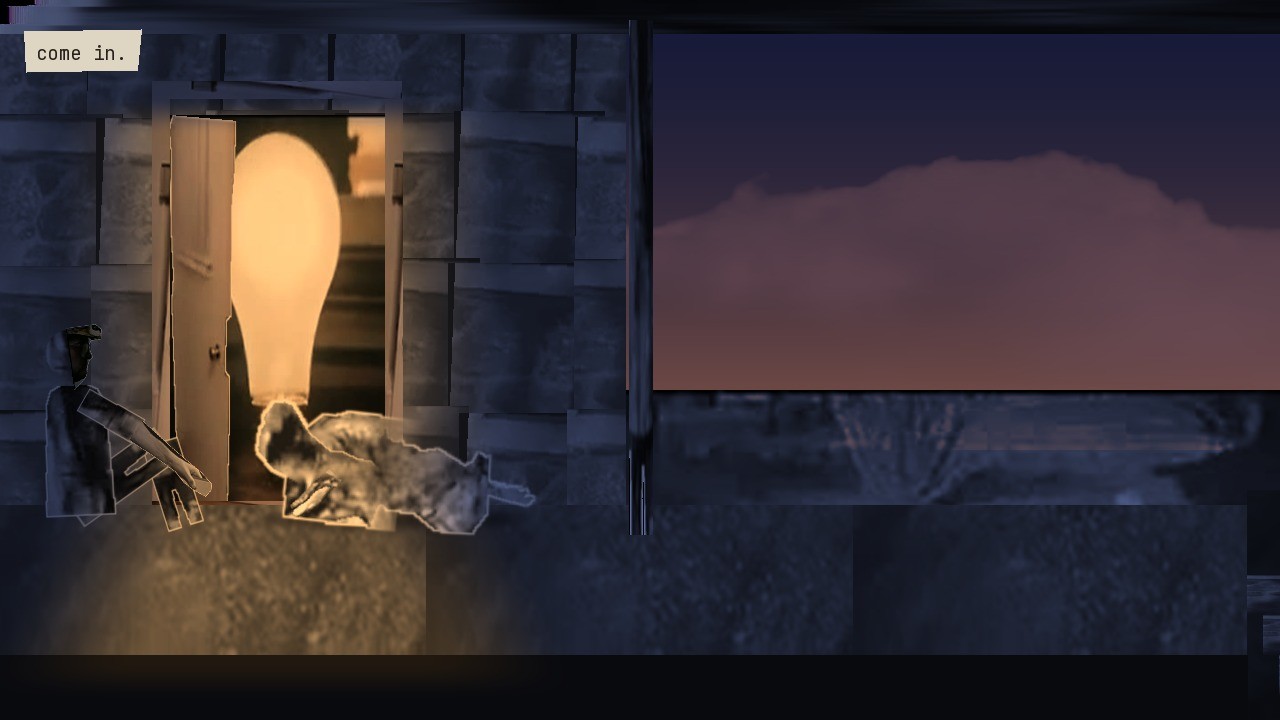 SCION 43Typed fragments and rewrite rulesCollage Graph RewritingEach change to the dog is a named rule, so the film can say what it did and why.
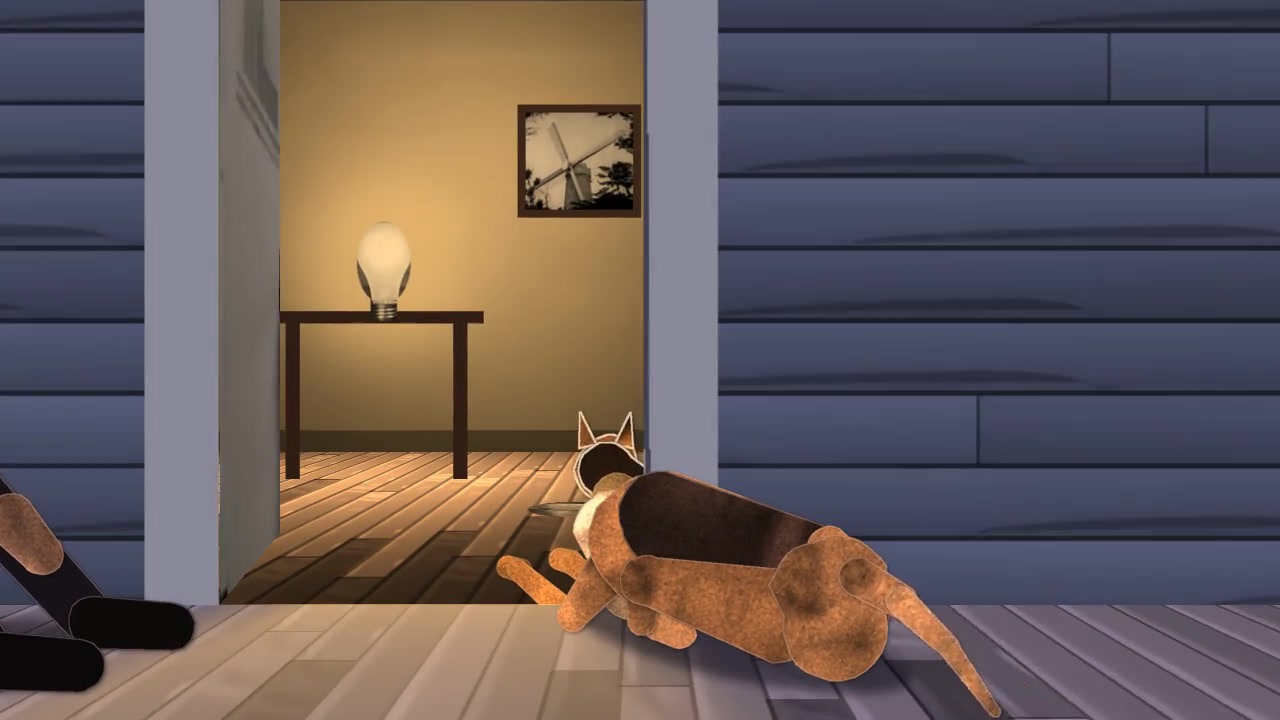 SCION 44Spatial collage in depth, with a moving cameraMultiplane parallaxThe room behind the door is a real deeper plane, so looking in has somewhere to go.
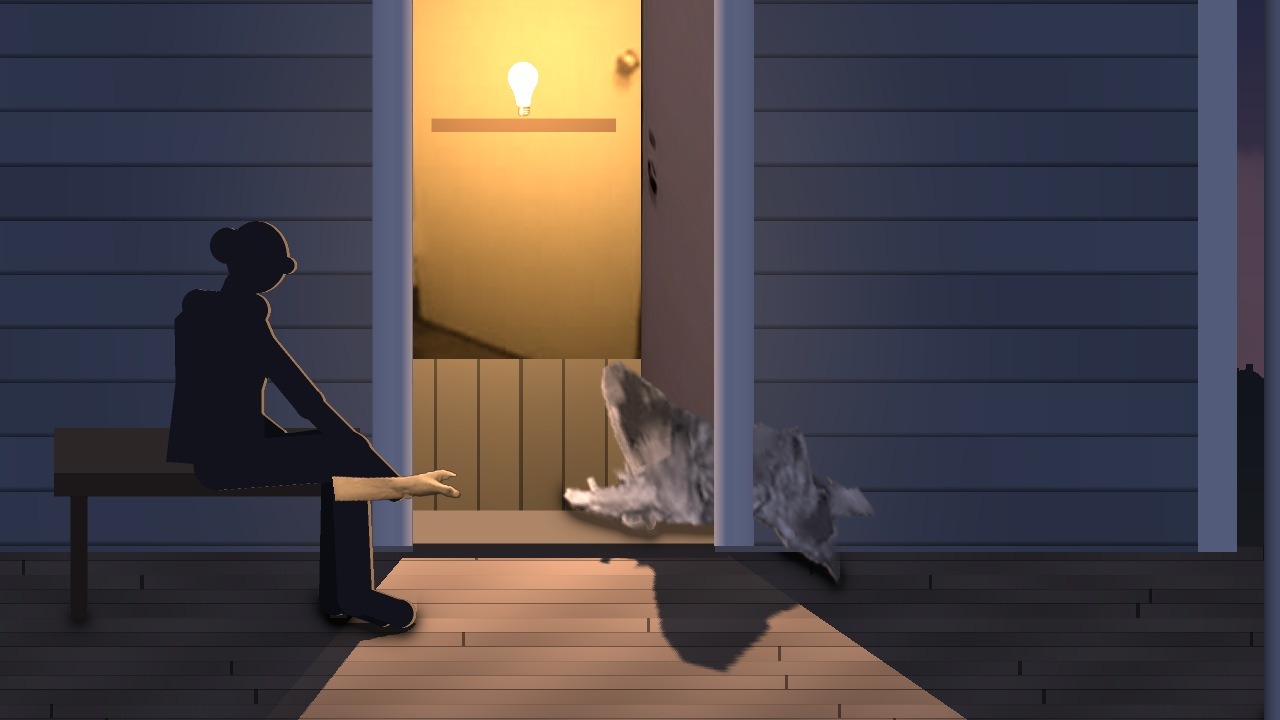 SCION 45Who is in front?Occlusion compositingHalf in, half out is a fact about layers: the door frame is in front of one half of the dog and behind the other.
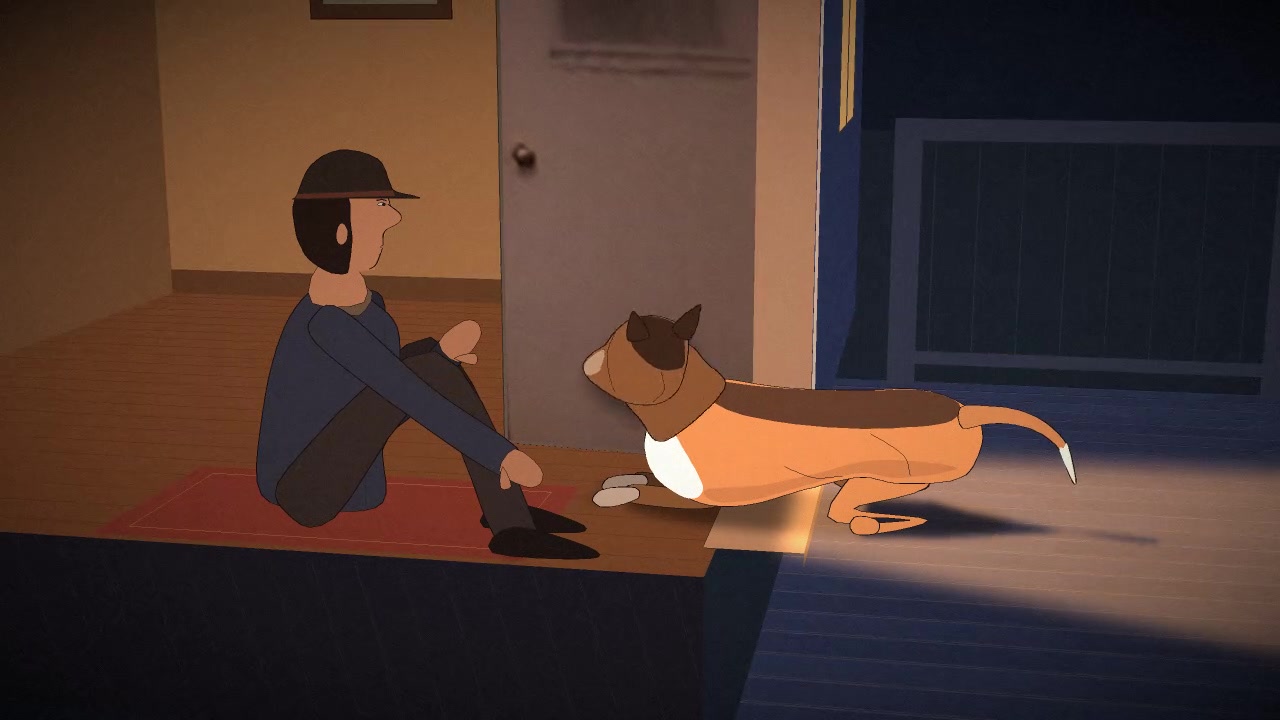 SCION 46View-matched plates on landmarksFace Landmark RegistrationThe dog turns through depth by swapping views, never by mirroring a side.
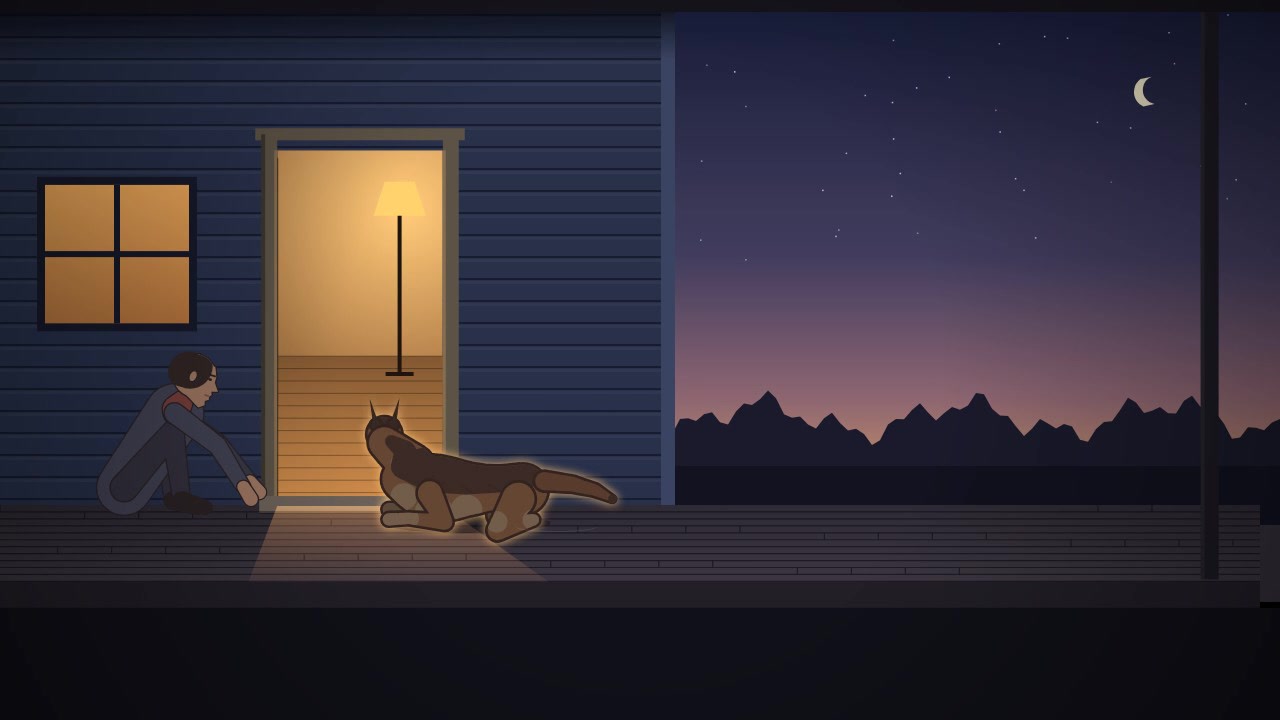 SCION 47Viseme and gestureSound-to-actionThe dog answers sounds, not lines: each choice is a measured lag after a vowel.
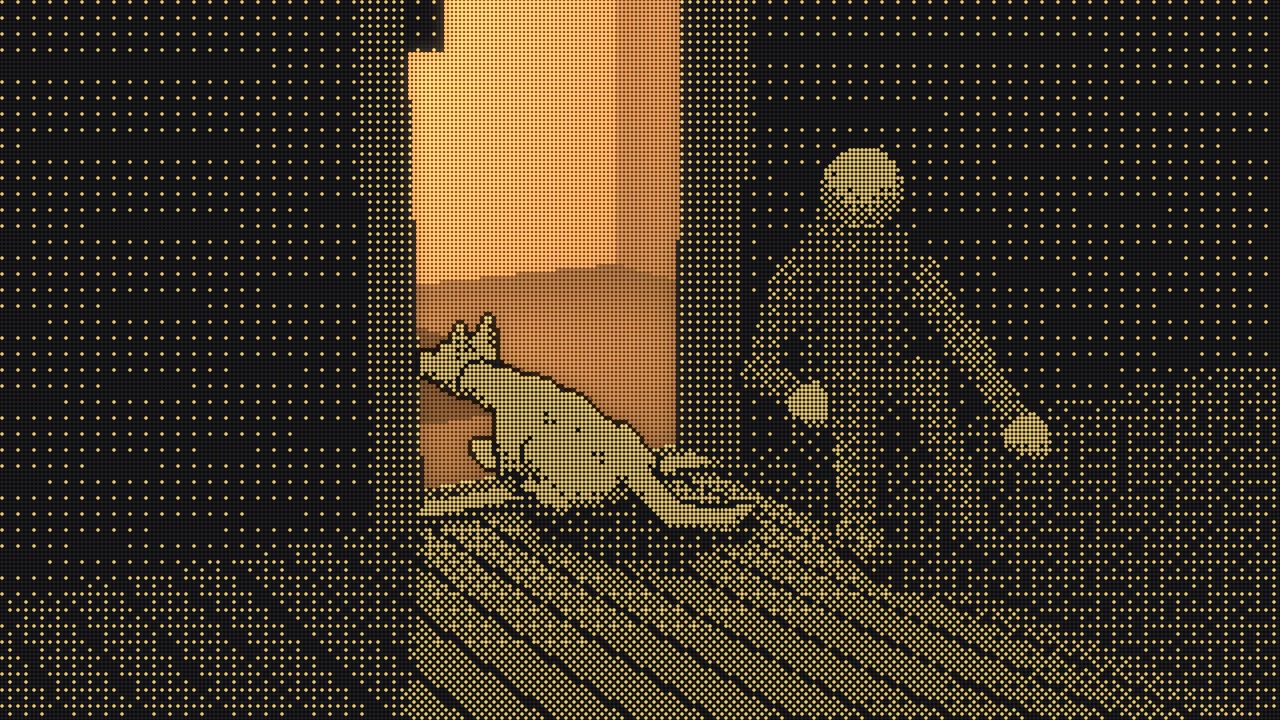 SCION 48A dog whose refusal is its own decisionState machinesNobody keyed the refusal: the dog decides it, and the board clacks when it does.
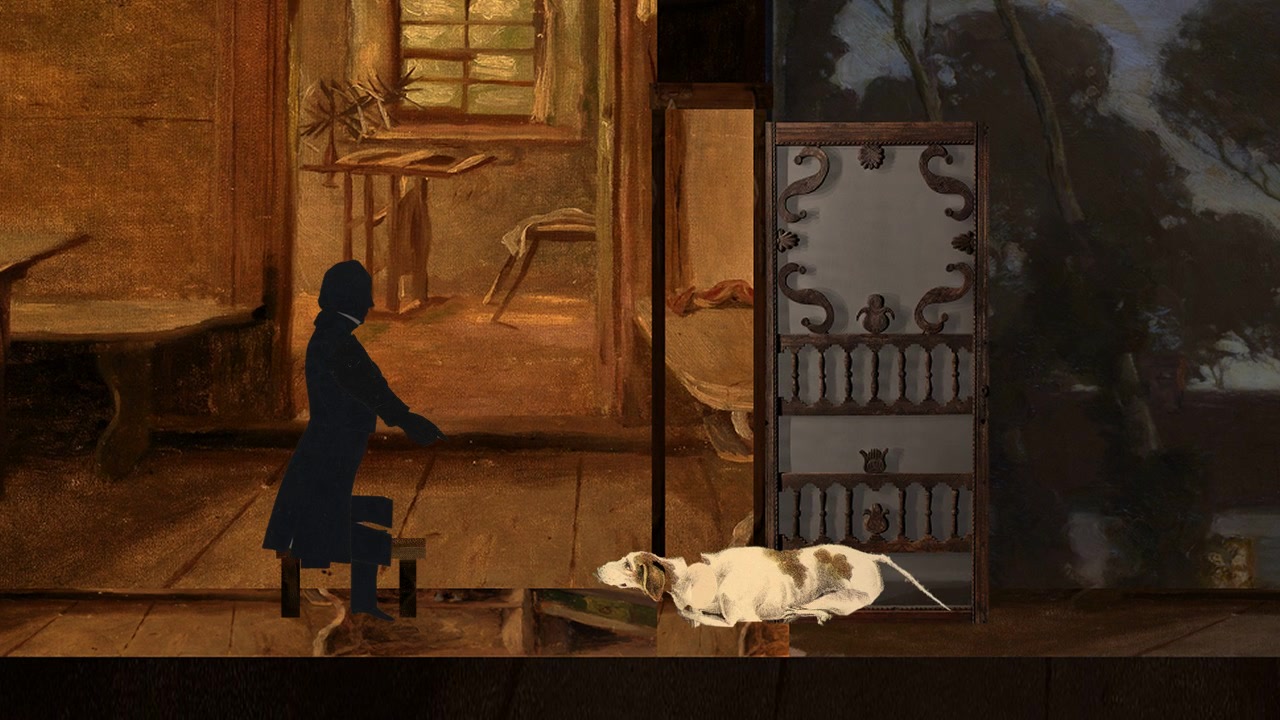 SCION 49Museum open-access objects, cut and recomposedOpen-content atelierNo line is drawn: every figure is a museum object, recomposed as an actor, with its object number on the card.
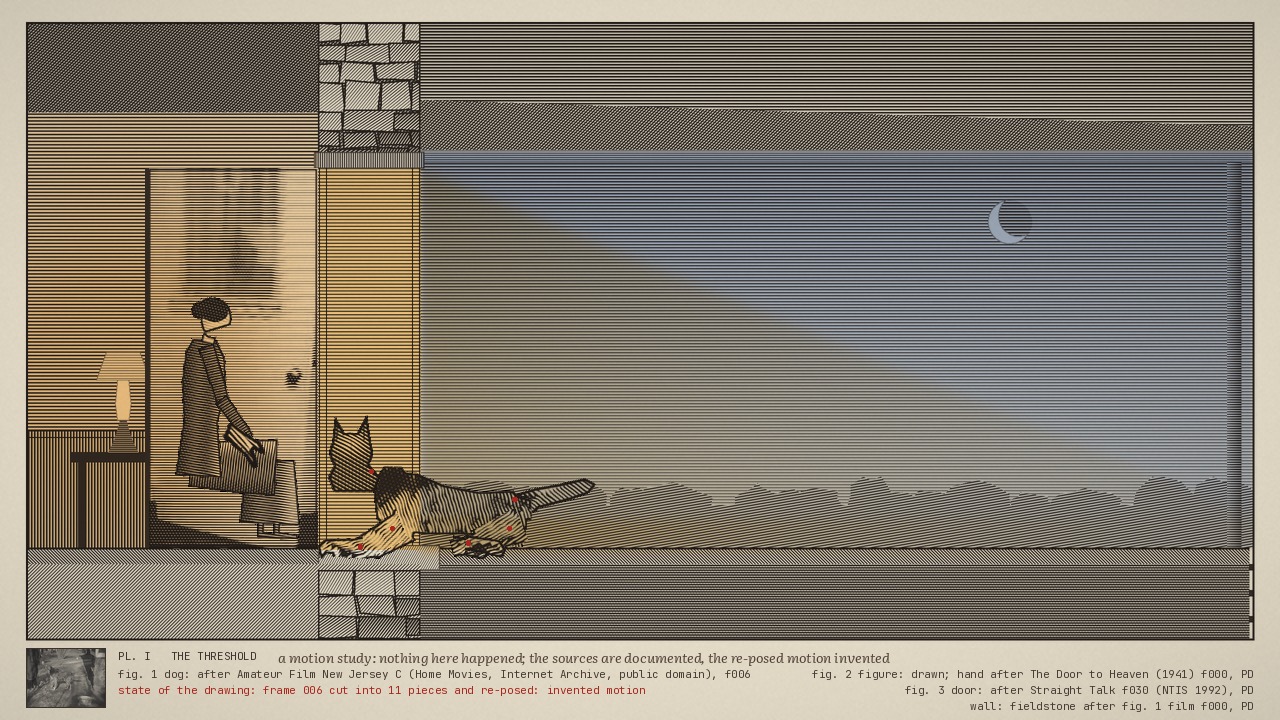 SCION 50Library of Congress lineageHistorical print stageEvery frame says whether the dog in it was photographed or invented.
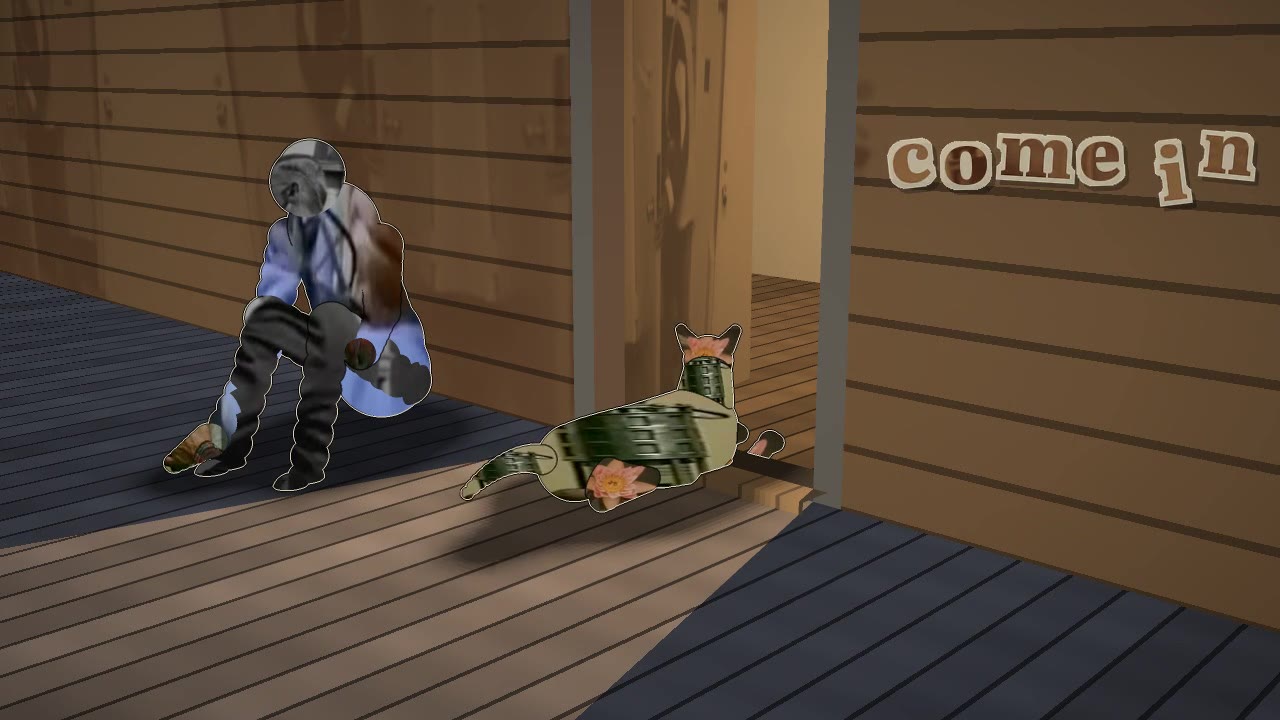 SCION 51Montage on a measured cutting scoreMouris montage researchThe rhythm of the cuts carries the drama while the dog stays one animal.
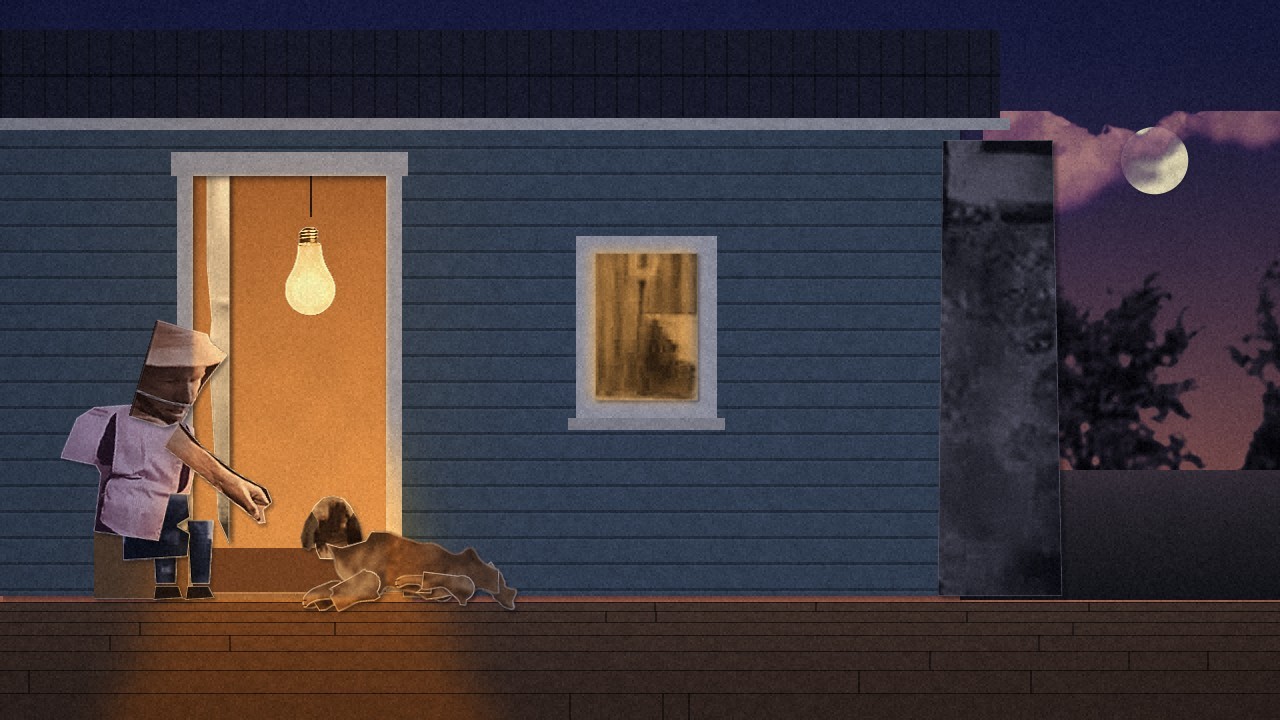 SCION 52Pinned found prints and substitutionGilliam EphemeraThe collage's logic is the dog's own: each piece moves on a pin, and the absurd beat is a hand from nowhere.
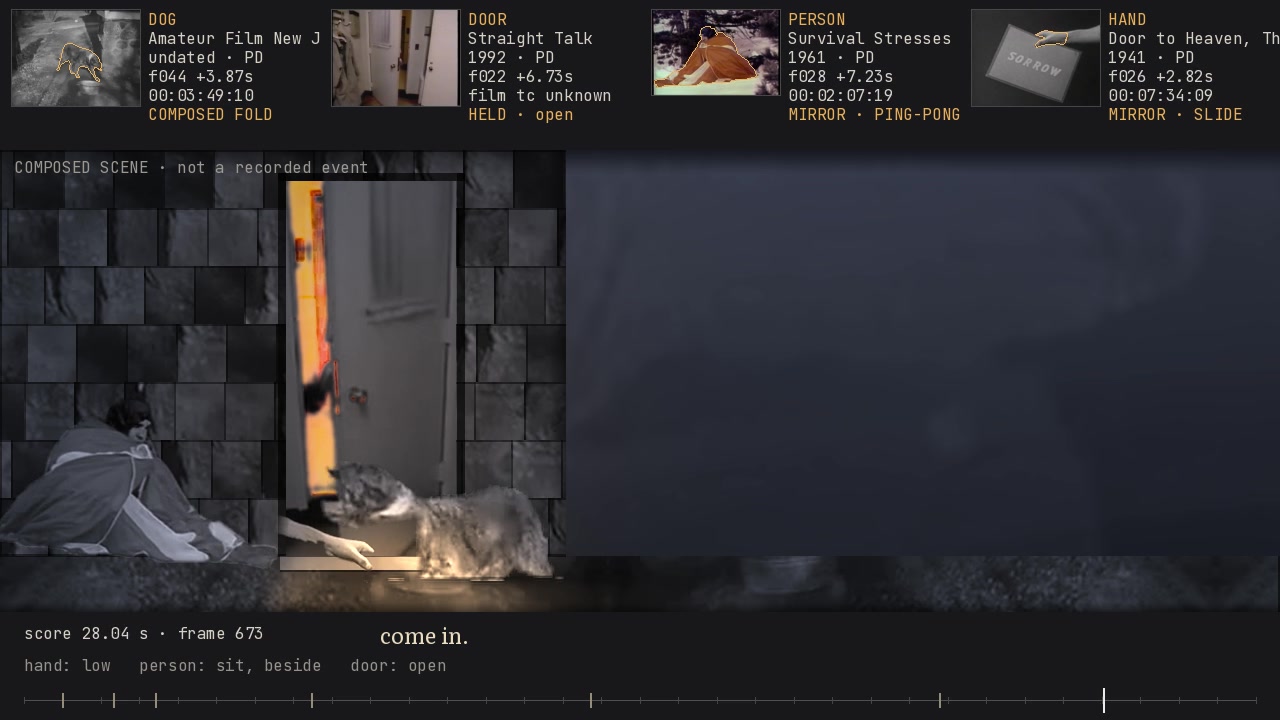 SCION 53Civic footage performerAtlanta Moving ImageThe scene says what it is the whole time: COMPOSED SCENE · archive fragments re-performed · not a recorded event.
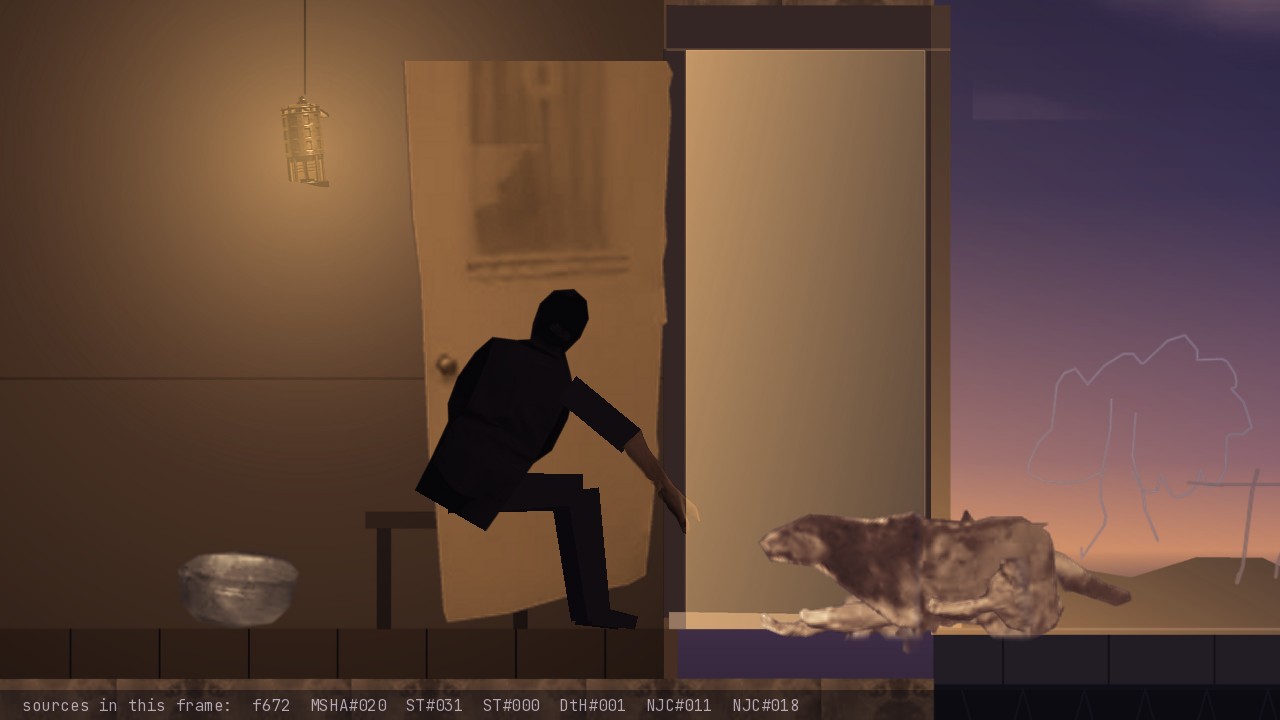 SCION 54Archive-to-puppet lineageProvenance graphThe film can answer, for any pixel, where it came from and what was done to it.
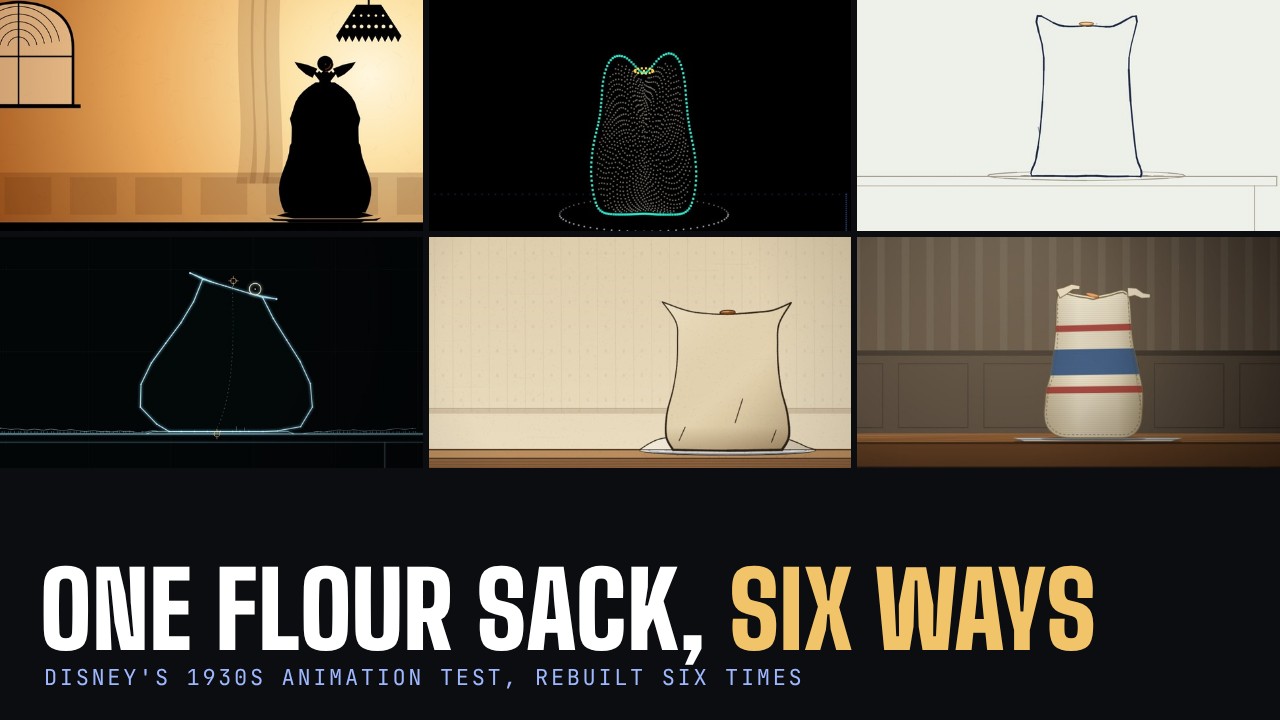
Hold the story and the sack's ten choices still. Let each swarm build the sack, the tower and the knife from the bottom up in its own language. Do the choices survive, and is each sack its own?
Disney's flour-sack test with a decision in it: a knife cuts a tower of flour with a penny on top, and the sack holds the tower up, catches the penny and gathers the flour into itself. The same score of ten choices is checked against every film.
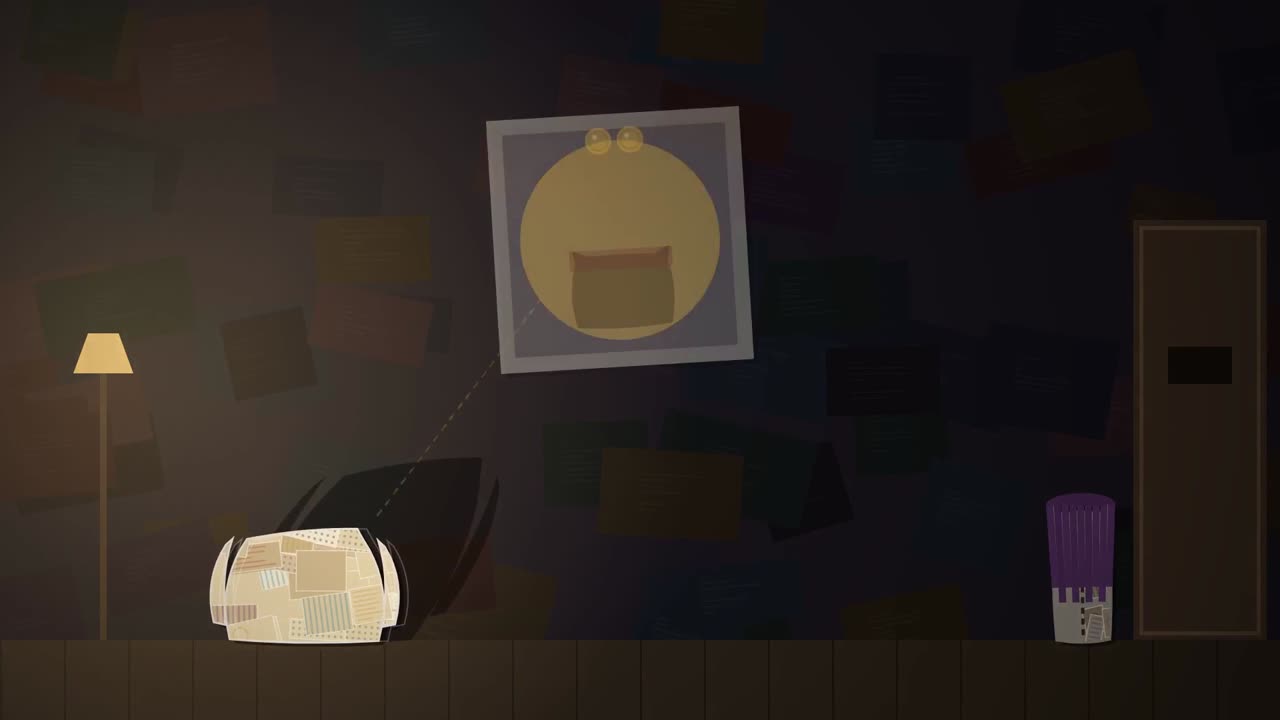
Four tenants, twelve deeds, an index with the page numbers burned away. Who did what to whom?
Every deed is animated by a different SCION operation and can be played between any two tenants, so the bank can play any of the 8,916,100,448,256 stories. Each deed leaves a mark and a memory; the tenants can choose with beliefs, plans and memories; and the consistent stories are counted exactly.
Fifty-four SCION animation swarms, each a standalone prompt studio with its own proof scene and research loop. PAE-00 was made by number 48; every one is shown through the dog in PAE-01. The operator, written up · open the operator.
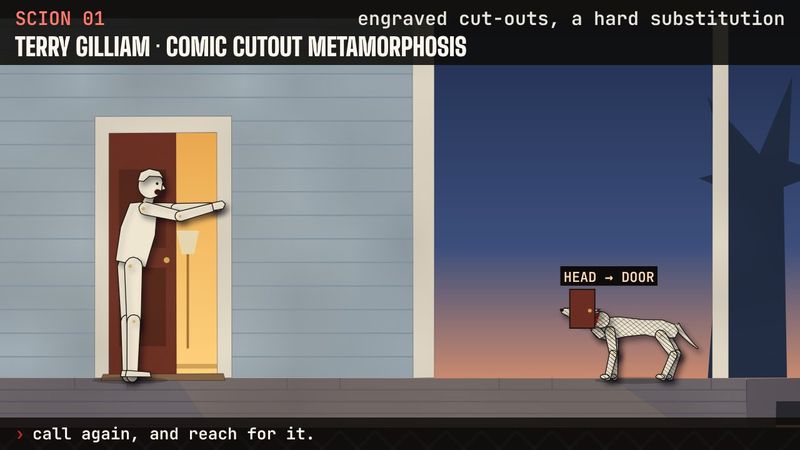 SCION 01PAE-02 · runTerry GilliamComic Cutout Metamorphosis
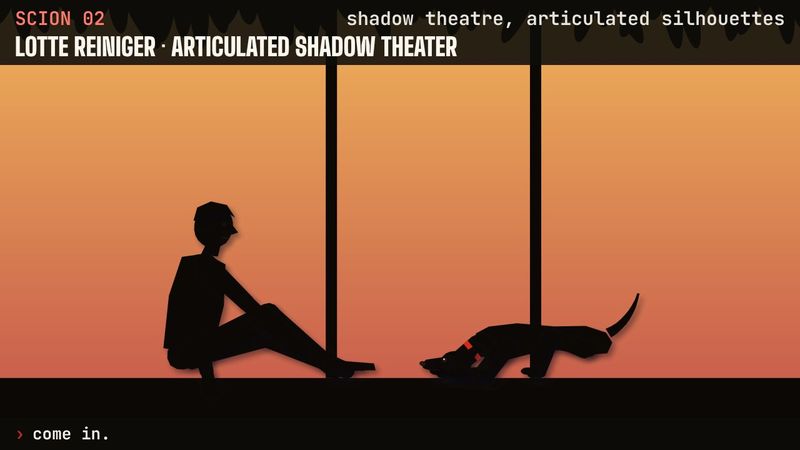 SCION 02PAE-02 · runLotte ReinigerArticulated Shadow Theater
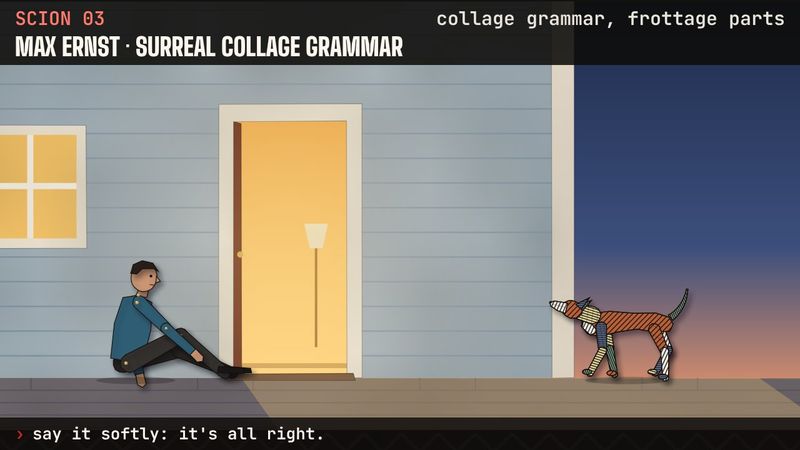 SCION 03PAE-02 · runMax ErnstSurreal Collage Grammar
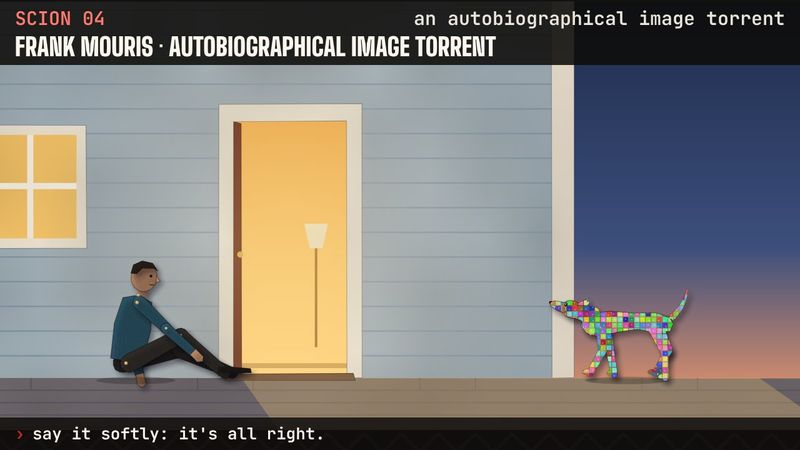 SCION 04PAE-02 · runFrank MourisAutobiographical Image Torrent
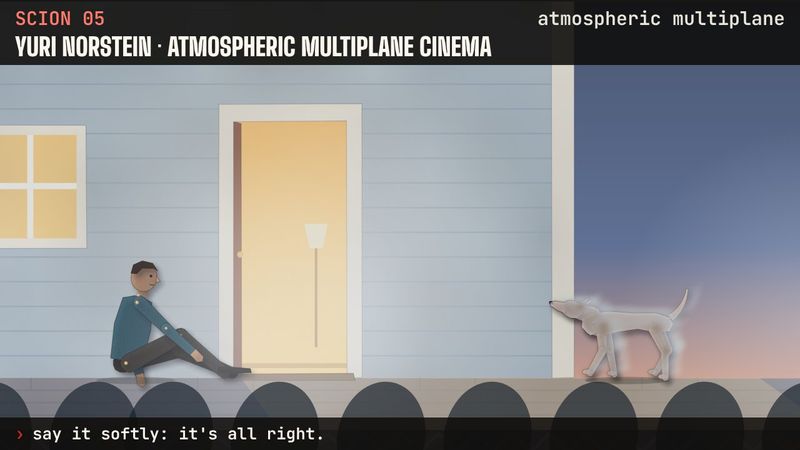 SCION 05PAE-02 · runYuri NorsteinAtmospheric Multiplane Cinema
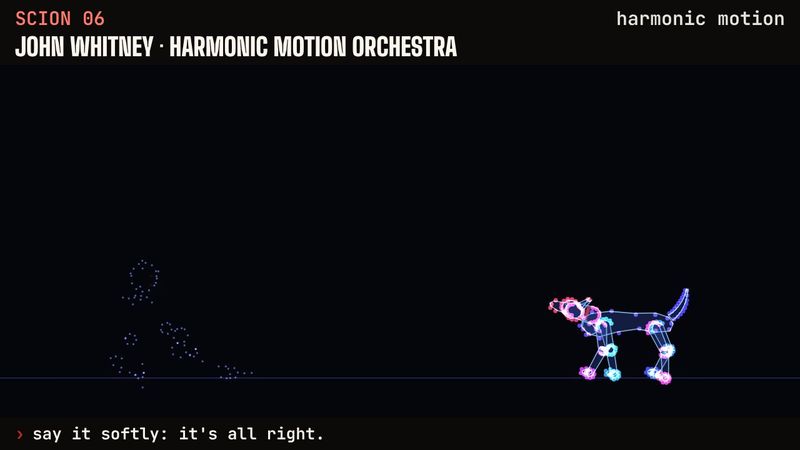 SCION 06PAE-02 · runJohn WhitneyHarmonic Motion Orchestra
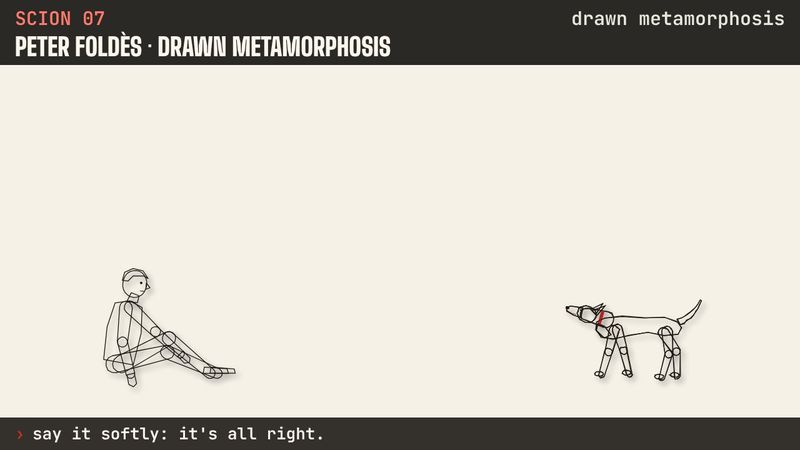 SCION 07PAE-02 · runPeter FoldèsDrawn Metamorphosis
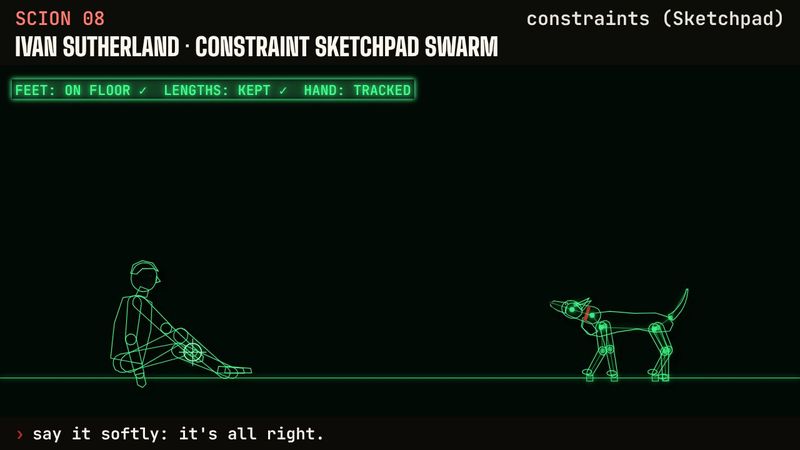 SCION 08PAE-02 · runIvan SutherlandConstraint Sketchpad Swarm
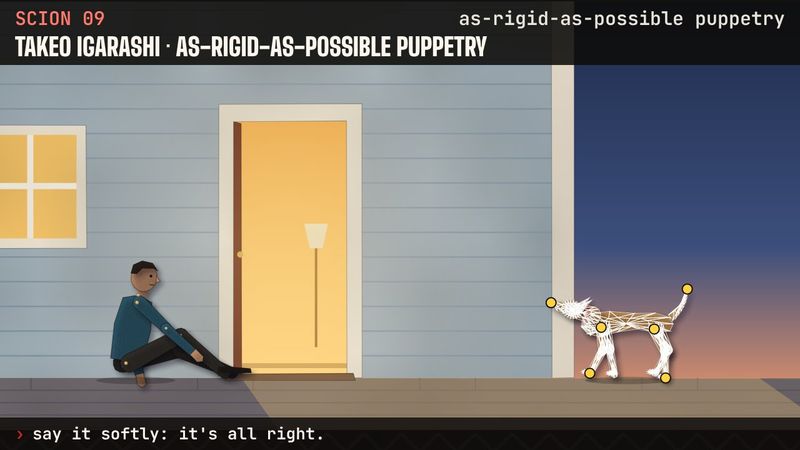 SCION 09PAE-02 · runTakeo IgarashiAs-Rigid-as-Possible Puppetry
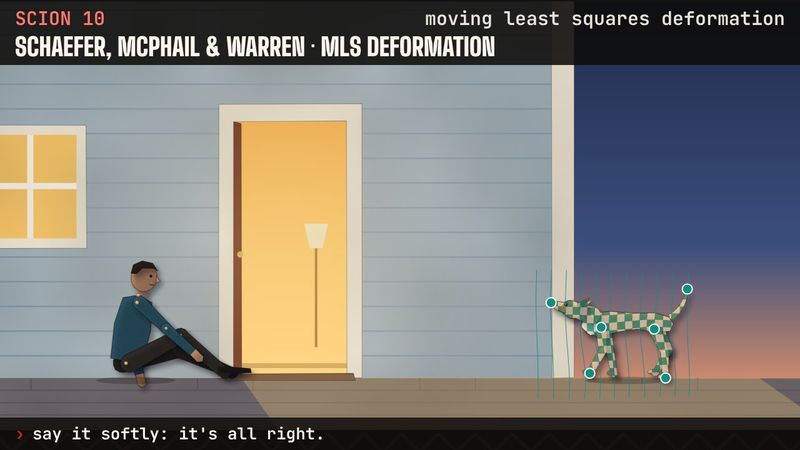 SCION 10PAE-02 · runSchaefer, McPhail & WarrenMLS Deformation
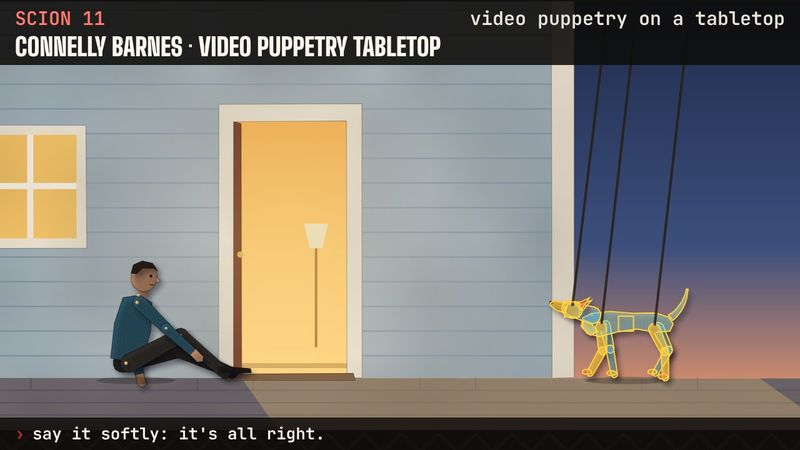 SCION 11PAE-02 · runConnelly BarnesVideo Puppetry Tabletop
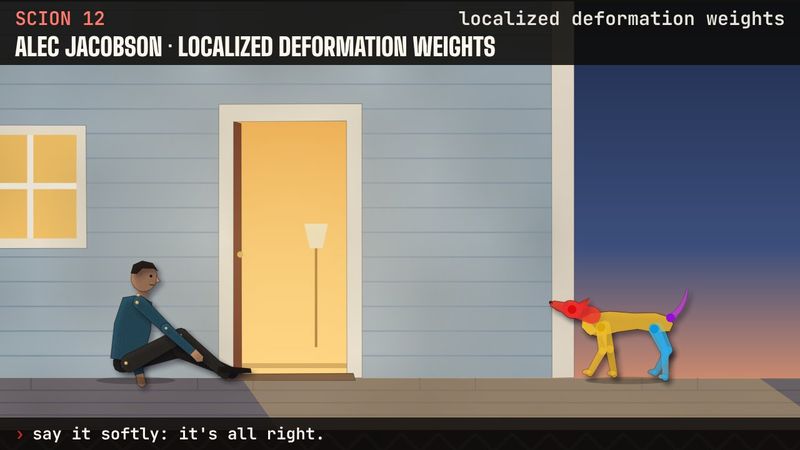 SCION 12PAE-02 · runAlec JacobsonLocalized Deformation Weights
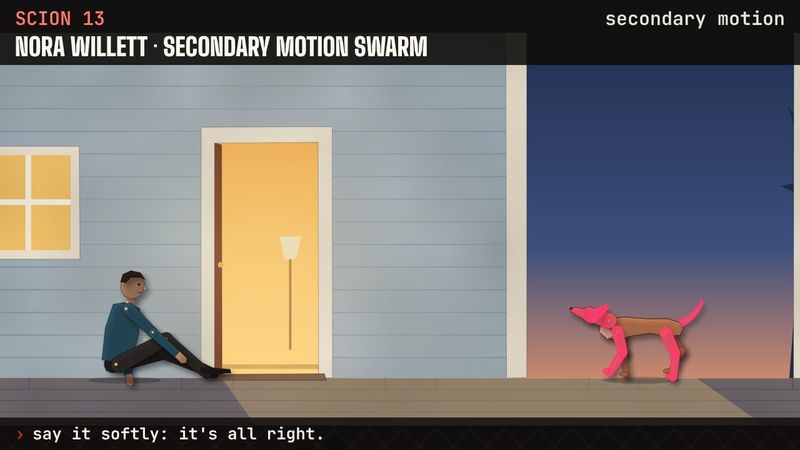 SCION 13PAE-02 · runNora WillettSecondary Motion Swarm
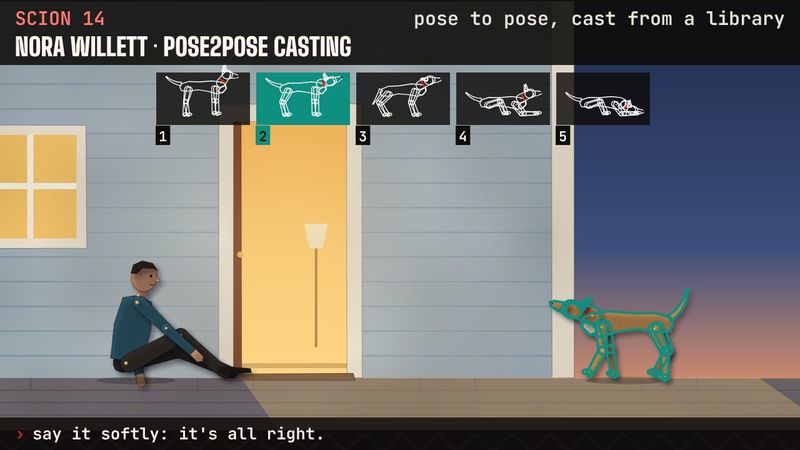 SCION 14PAE-02 · runNora WillettPose2Pose Casting
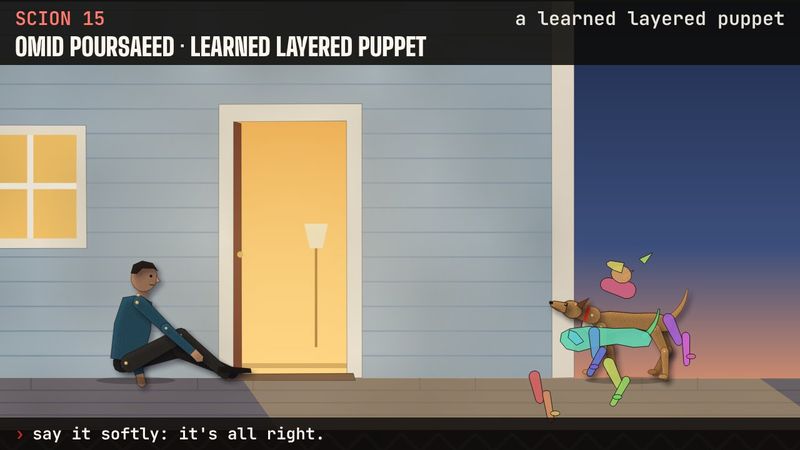 SCION 15PAE-02 · runOmid PoursaeedLearned Layered Puppet
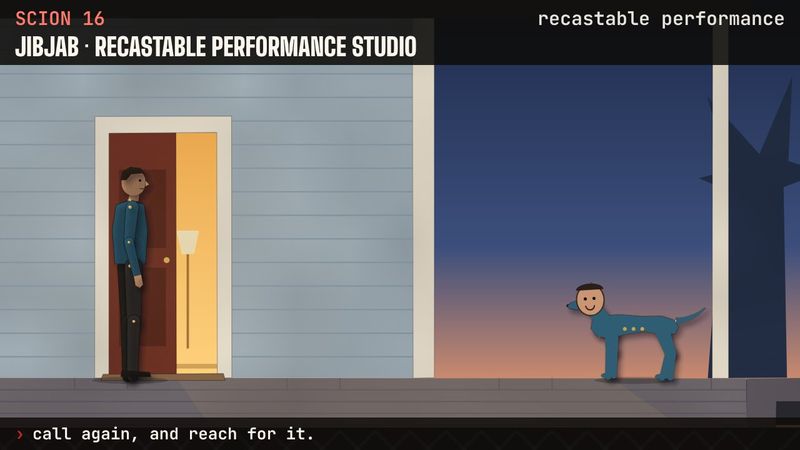 SCION 16PAE-02 · runJibJabRecastable Performance Studio
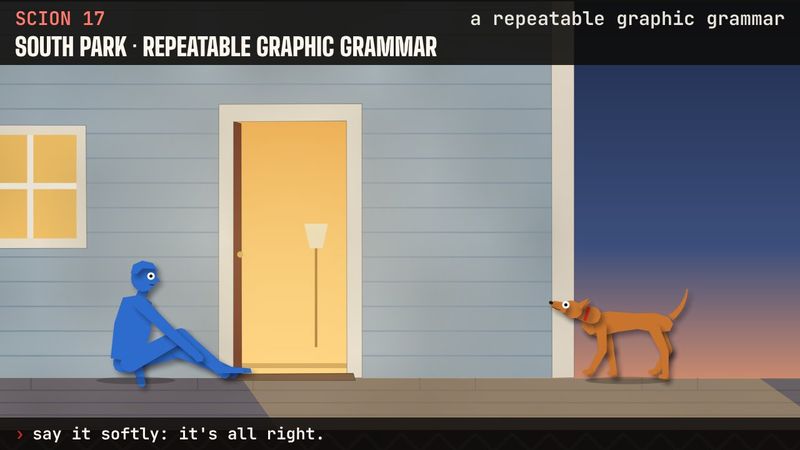 SCION 17PAE-02 · runSouth ParkRepeatable Graphic Grammar
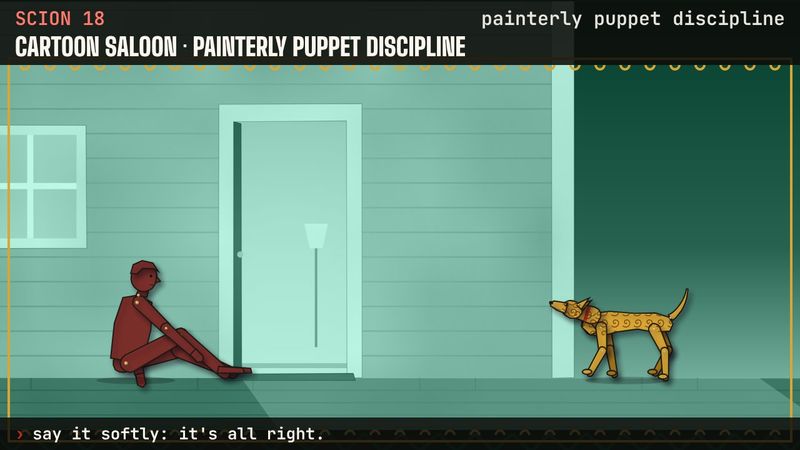 SCION 18PAE-02 · runCartoon SaloonPainterly Puppet Discipline
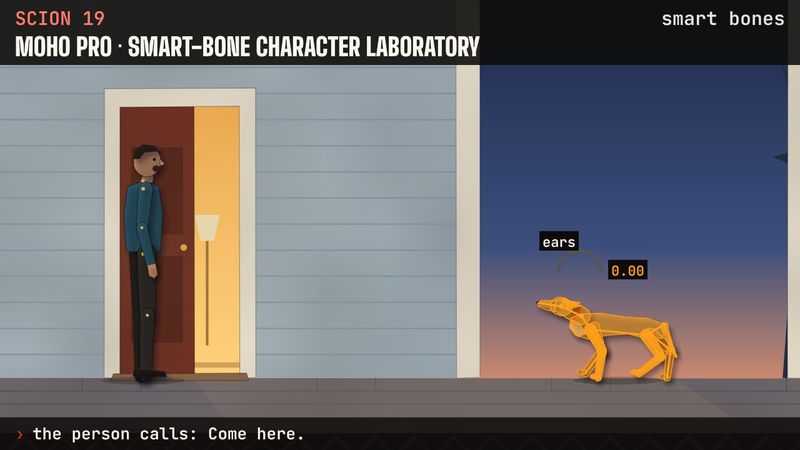 SCION 19PAE-02 · runMoho ProSmart-Bone Character Laboratory
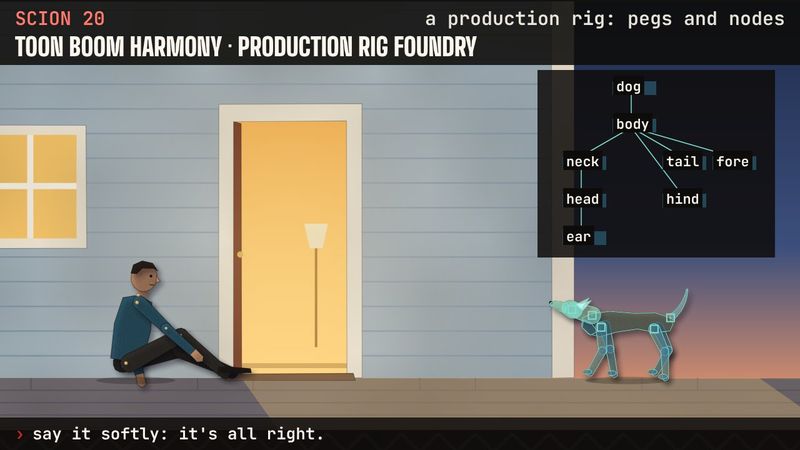 SCION 20PAE-02 · runToon Boom HarmonyProduction Rig Foundry
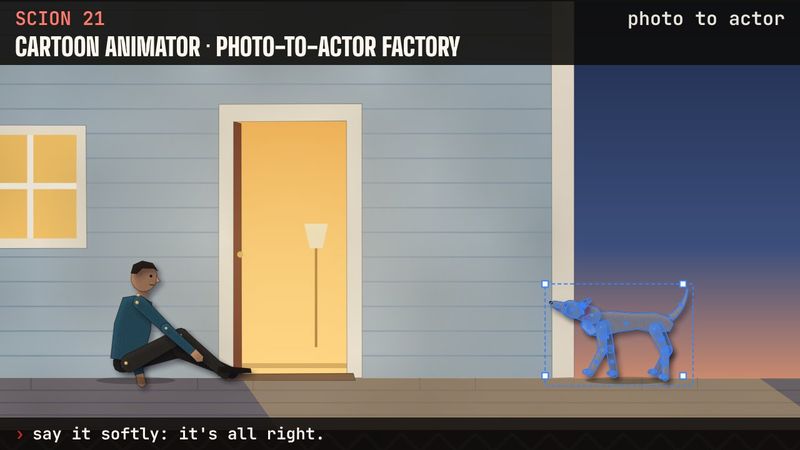 SCION 21PAE-02 · runCartoon AnimatorPhoto-to-Actor Factory
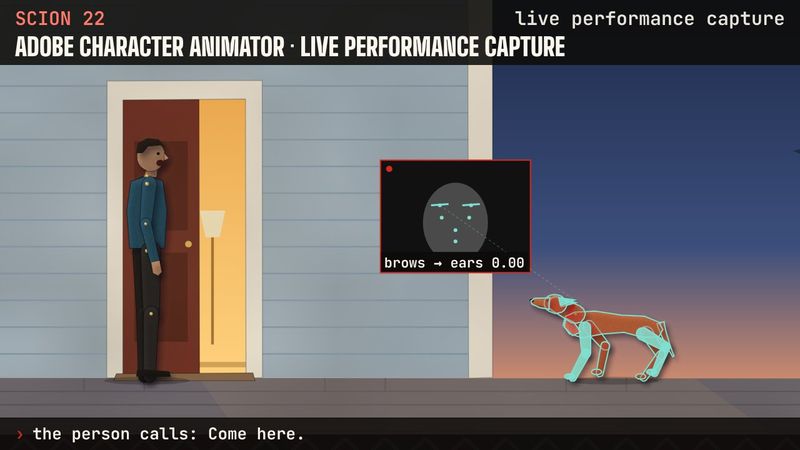 SCION 22PAE-02 · runAdobe Character AnimatorLive Performance Capture
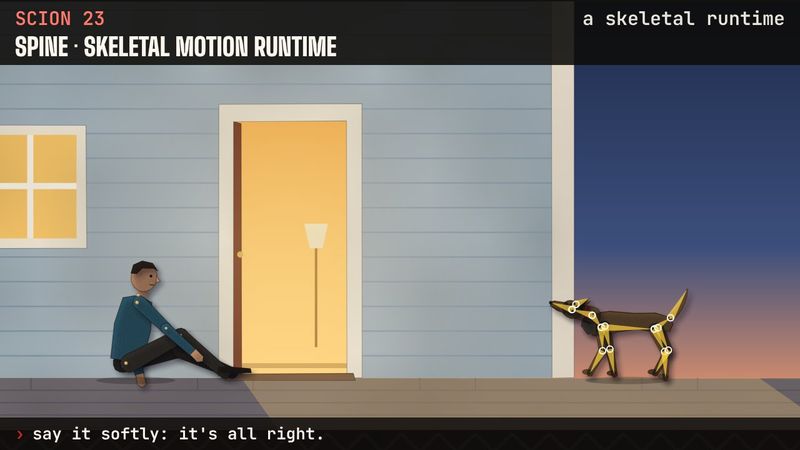 SCION 23PAE-02 · runSpineSkeletal Motion Runtime
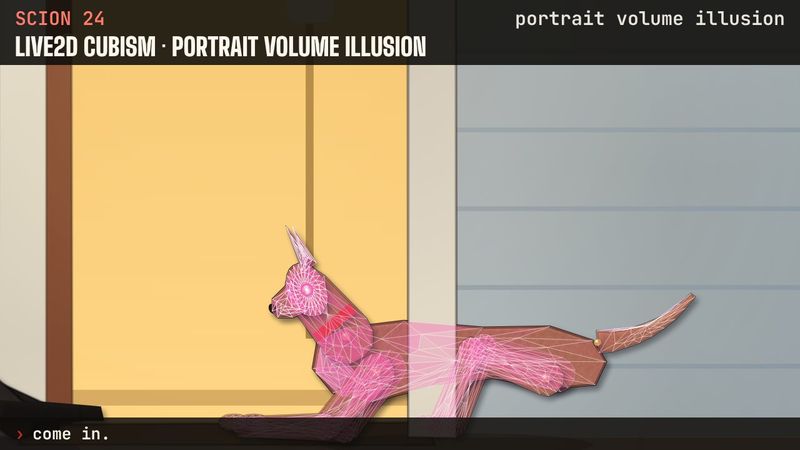 SCION 24PAE-02 · runLive2D CubismPortrait Volume Illusion
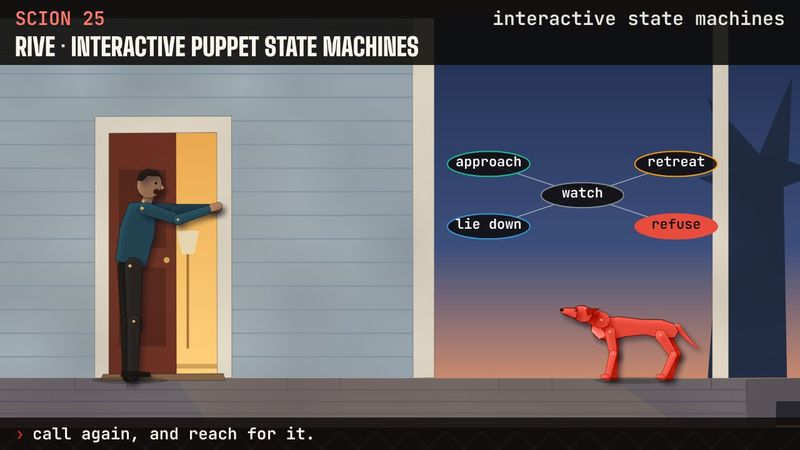 SCION 25PAE-02 · runRiveInteractive Puppet State Machines
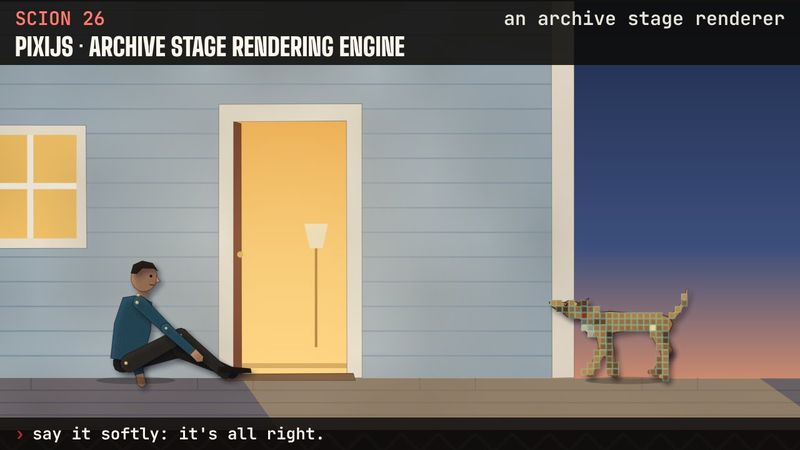 SCION 26PAE-02 · runPixiJSArchive Stage Rendering Engine
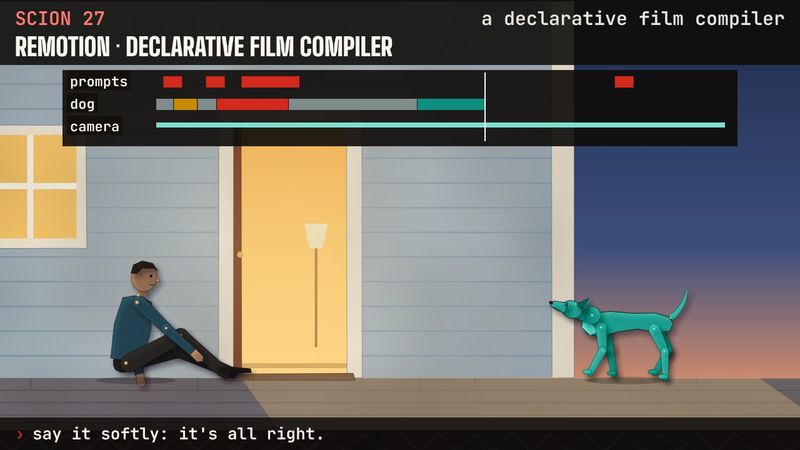 SCION 27PAE-02 · runRemotionDeclarative Film Compiler
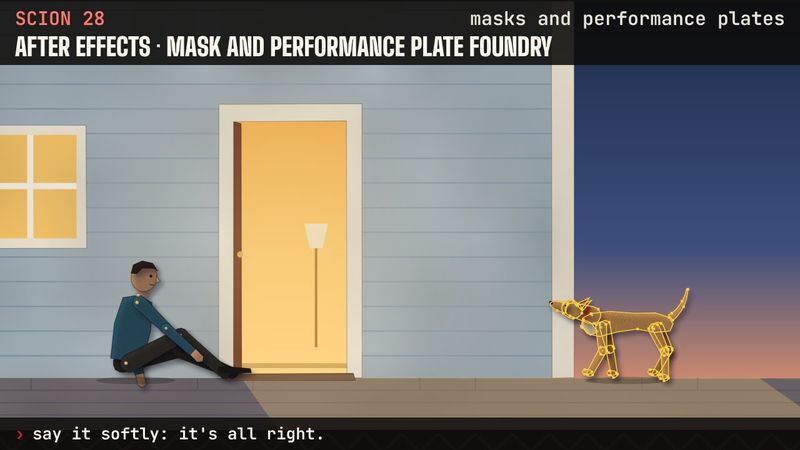 SCION 28PAE-02 · runAfter EffectsMask and Performance Plate Foundry
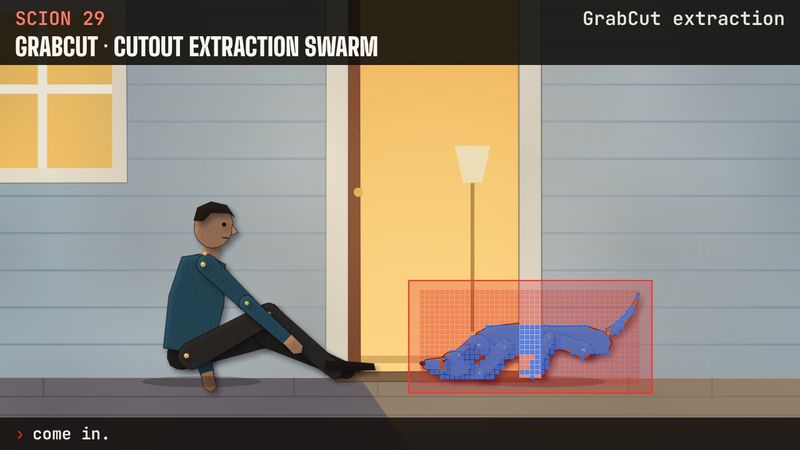 SCION 29PAE-02 · runGrabCutCutout Extraction Swarm
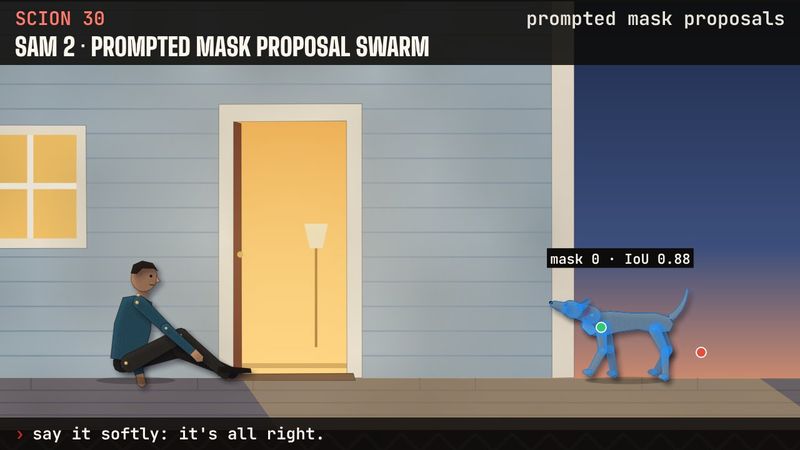 SCION 30PAE-02 · runSAM 2Prompted Mask Proposal Swarm
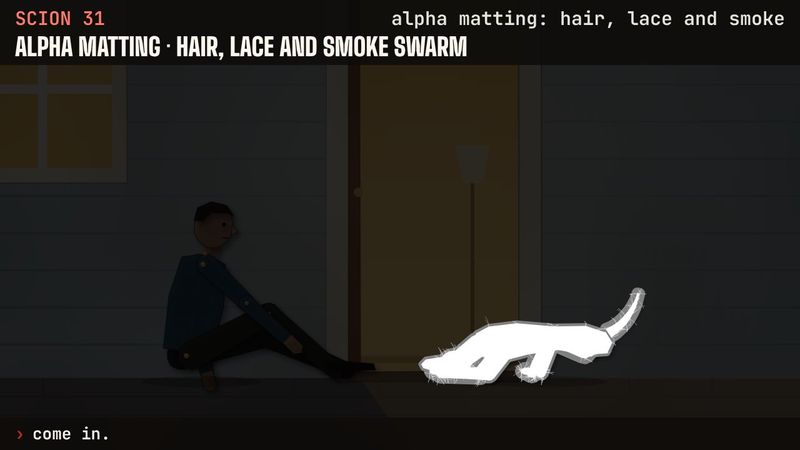 SCION 31PAE-02 · runAlpha MattingHair, Lace and Smoke Swarm
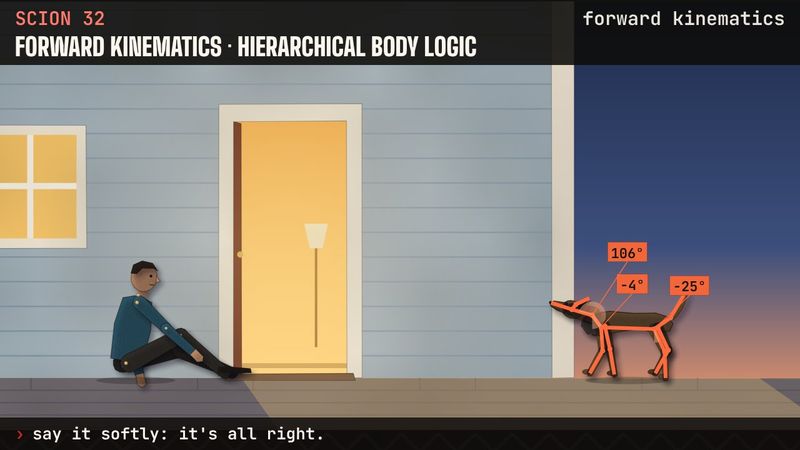 SCION 32PAE-02 · runForward KinematicsHierarchical Body Logic
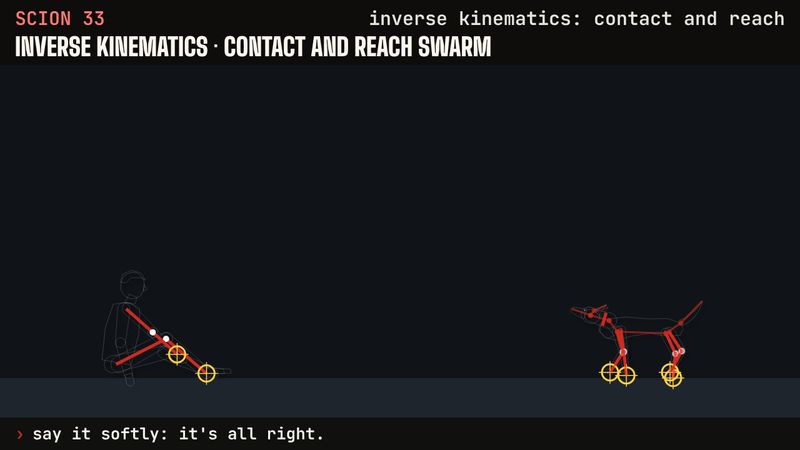 SCION 33PAE-02 · runInverse KinematicsContact and Reach Swarm
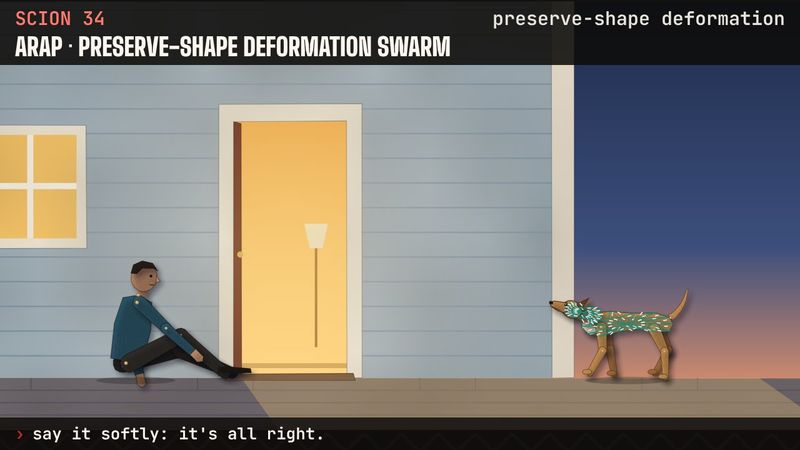 SCION 34PAE-02 · runARAPPreserve-Shape Deformation Swarm
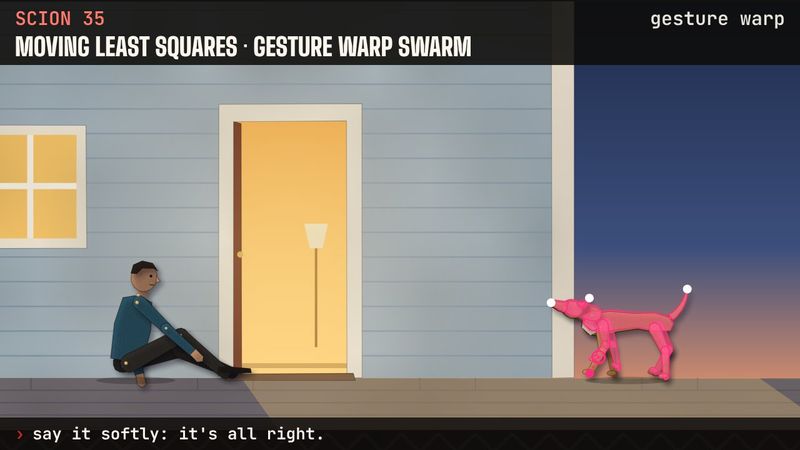 SCION 35PAE-02 · runMoving Least SquaresGesture Warp Swarm
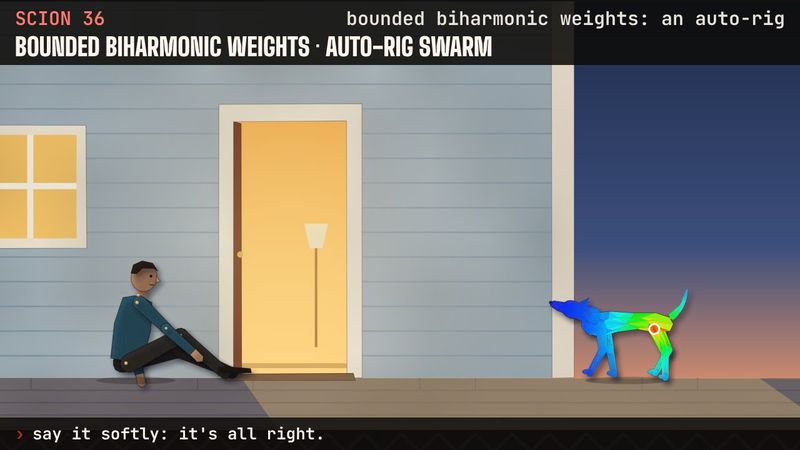 SCION 36PAE-02 · runBounded Biharmonic WeightsAuto-Rig Swarm
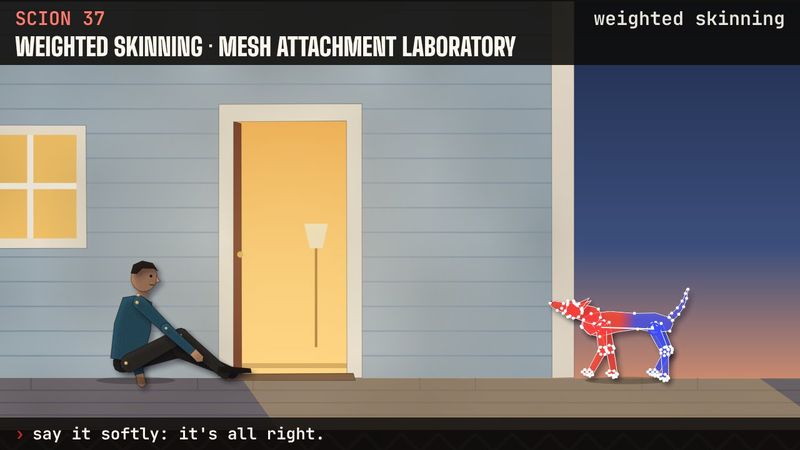 SCION 37PAE-02 · runWeighted SkinningMesh Attachment Laboratory
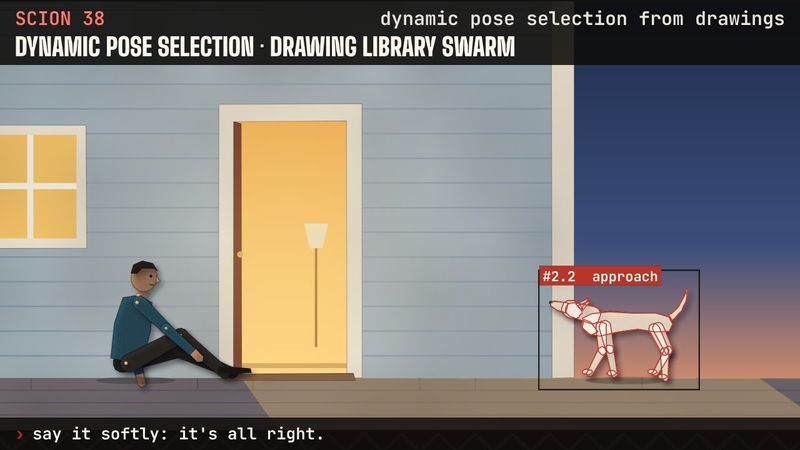 SCION 38PAE-02 · runDynamic Pose SelectionDrawing Library Swarm
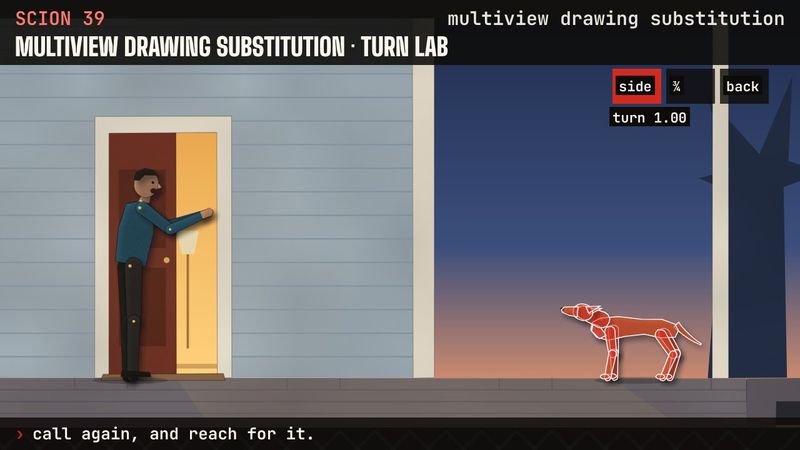 SCION 39PAE-02 · runMultiview Drawing SubstitutionTurn Lab
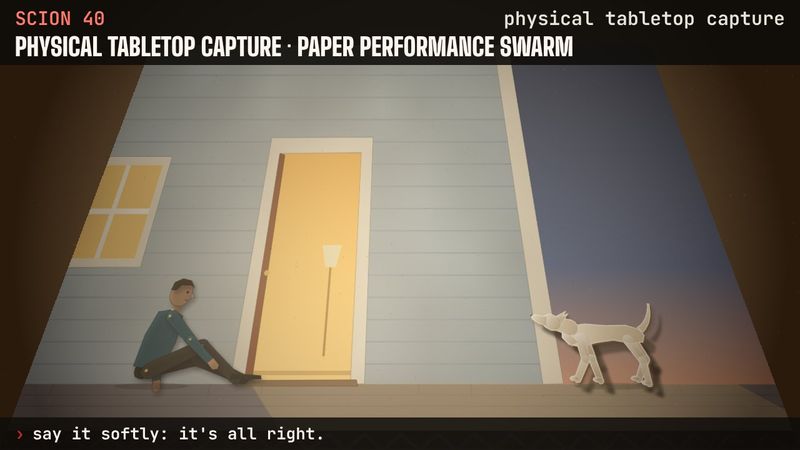 SCION 40PAE-02 · runPhysical Tabletop CapturePaper Performance Swarm
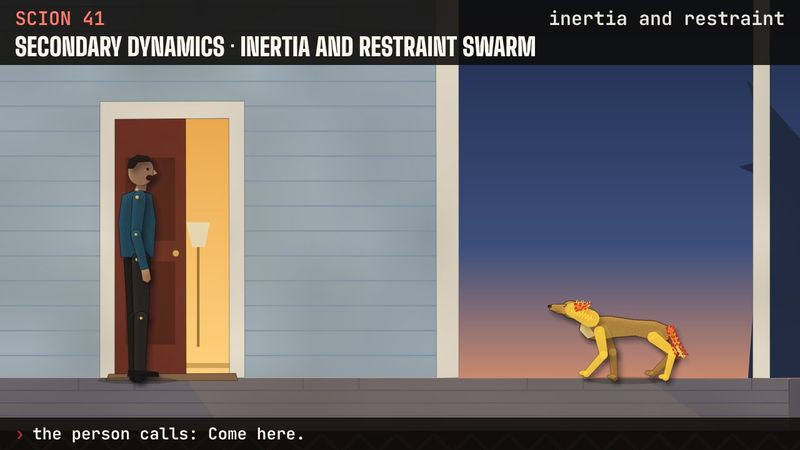 SCION 41PAE-02 · runSecondary DynamicsInertia and Restraint Swarm
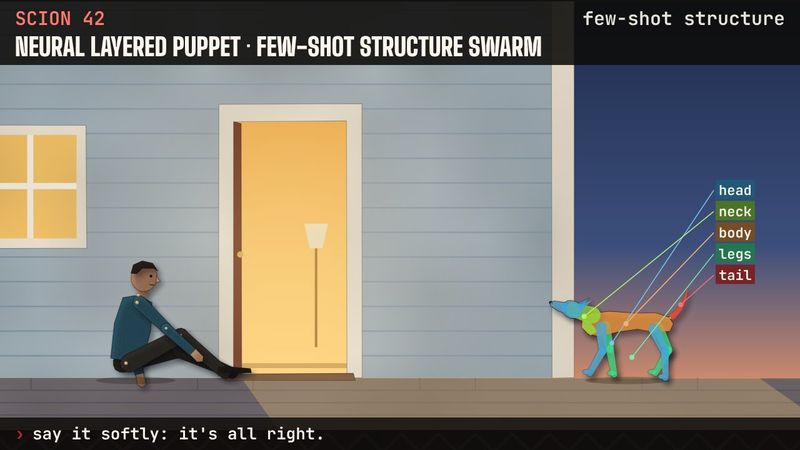 SCION 42PAE-02 · runNeural Layered PuppetFew-Shot Structure Swarm
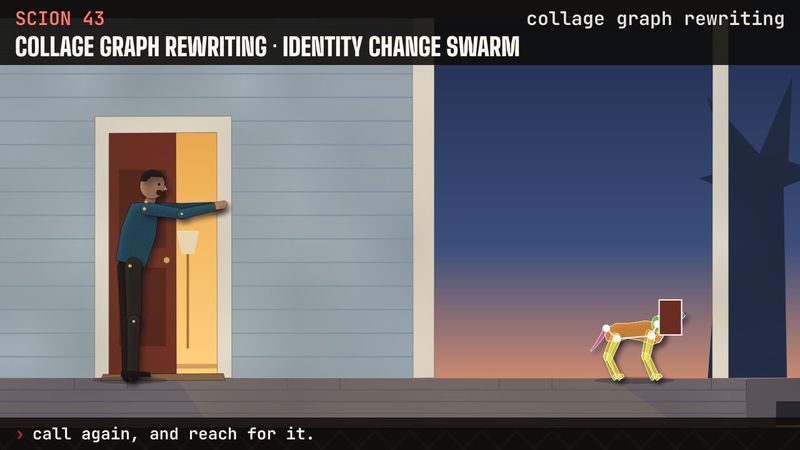 SCION 43PAE-02 · runCollage Graph RewritingIdentity Change Swarm
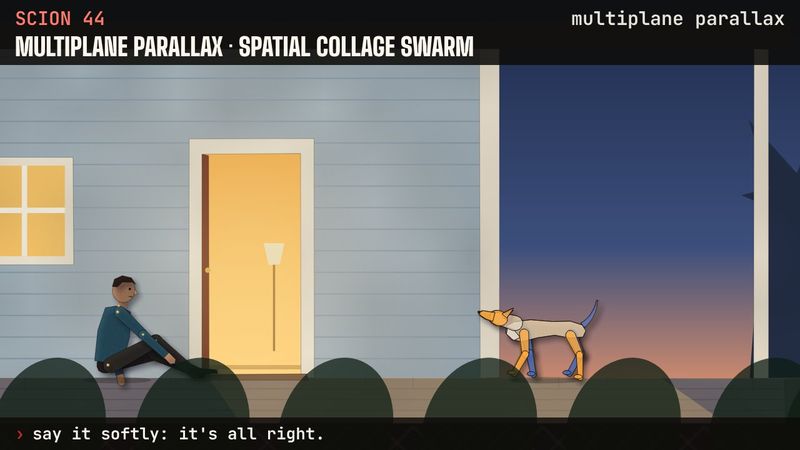 SCION 44PAE-02 · runMultiplane ParallaxSpatial Collage Swarm
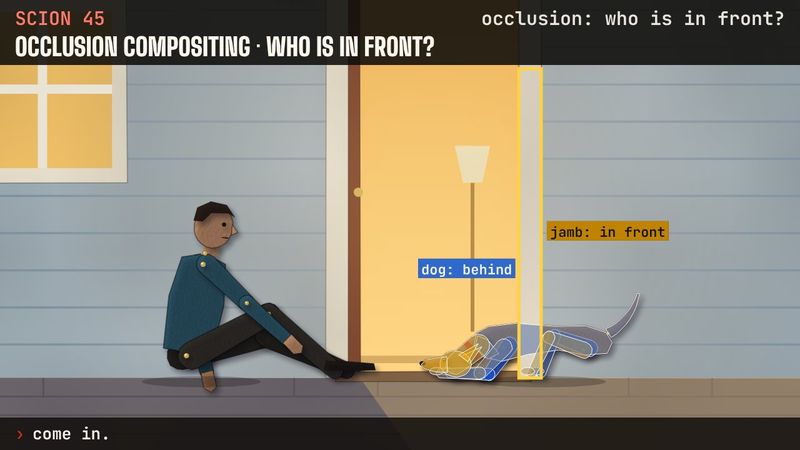 SCION 45PAE-02 · runOcclusion CompositingWho Is In Front?
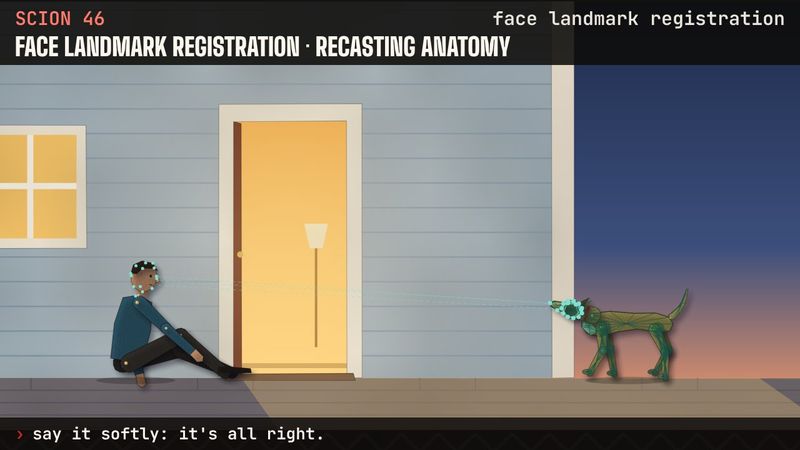 SCION 46PAE-02 · runFace Landmark RegistrationRecasting Anatomy
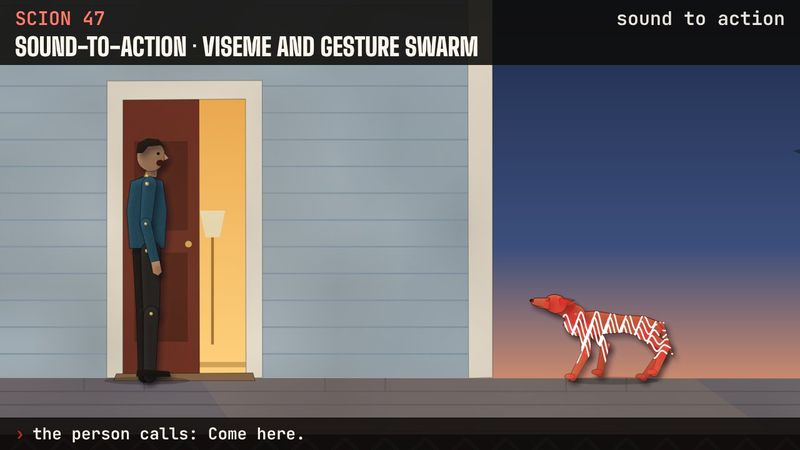 SCION 47PAE-02 · runSound-to-ActionViseme and Gesture Swarm
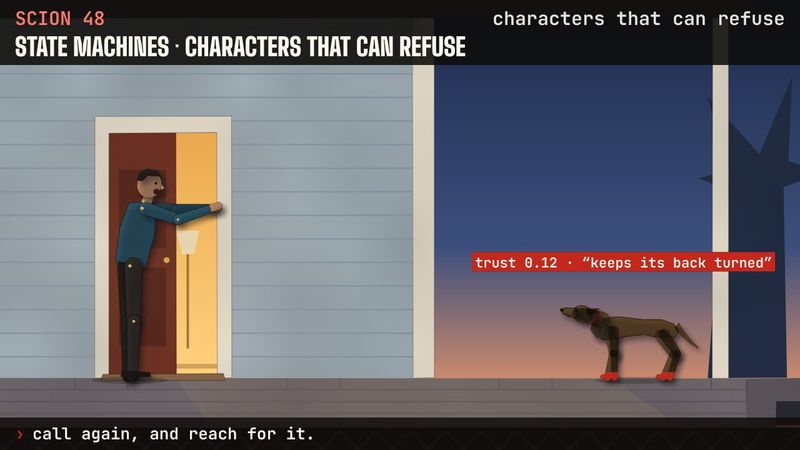 SCION 48PAE-02 · runState MachinesCharacters That Can Refuse
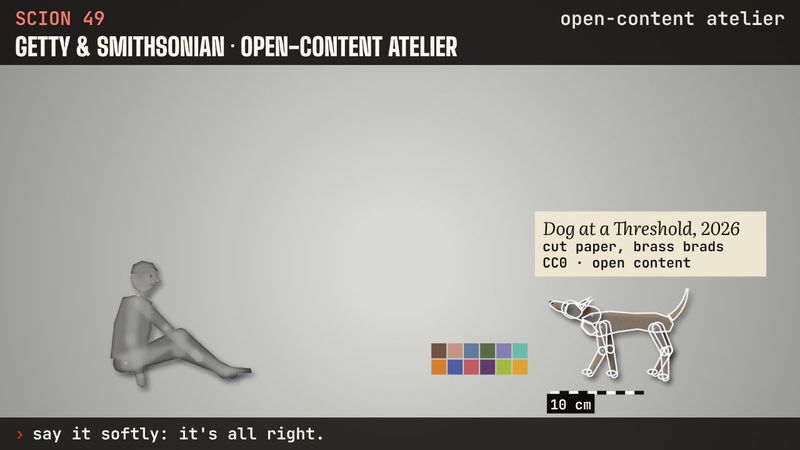 SCION 49PAE-02 · runGetty & SmithsonianOpen-Content Atelier
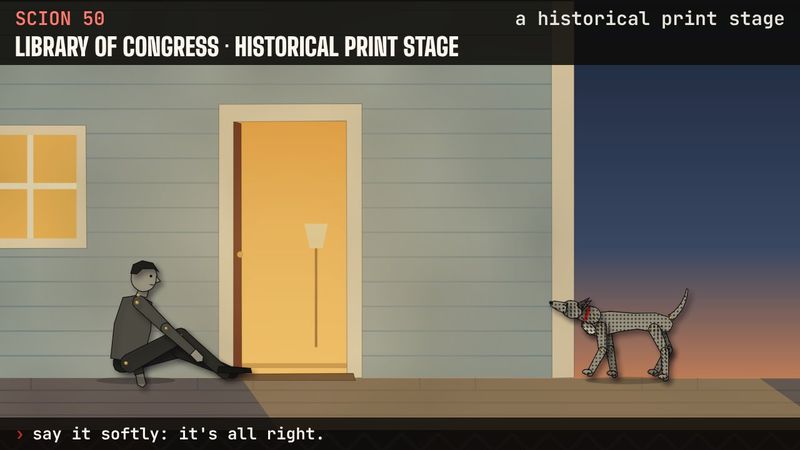 SCION 50PAE-02 · runLibrary of CongressHistorical Print Stage
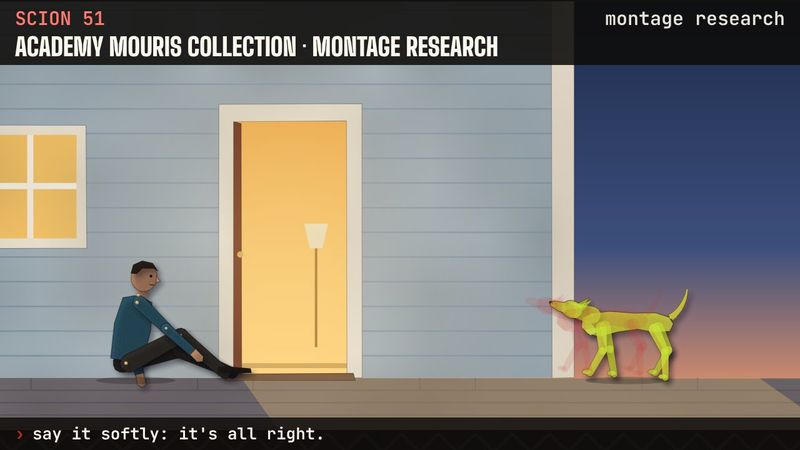 SCION 51PAE-02 · runAcademy Mouris CollectionMontage Research
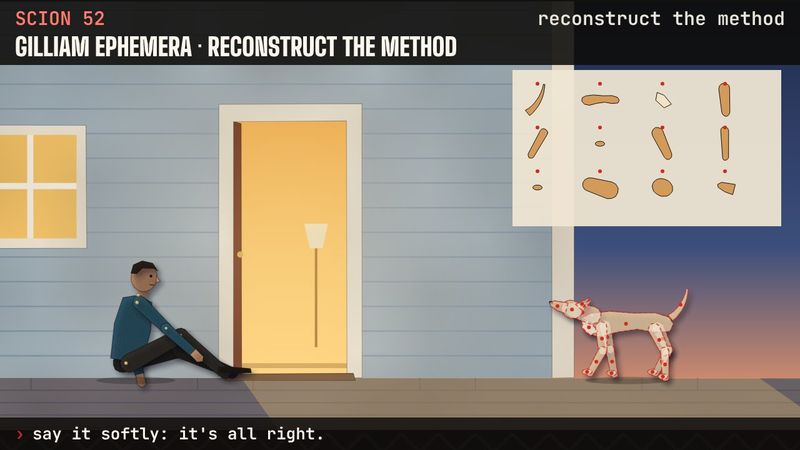 SCION 52PAE-02 · runGilliam EphemeraReconstruct the Method
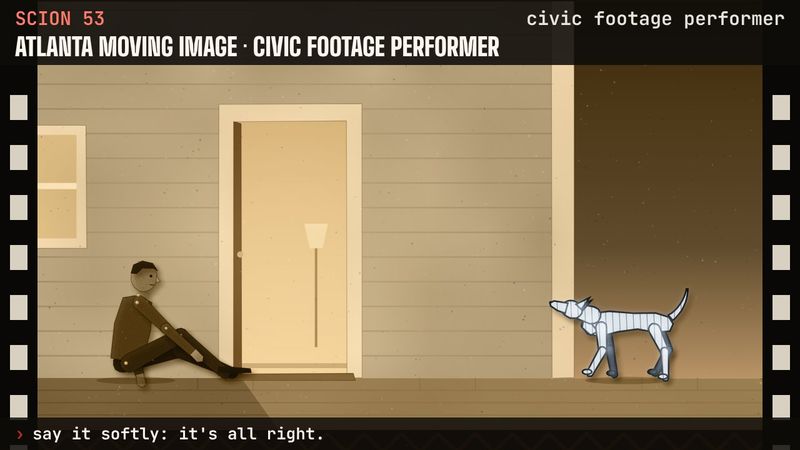 SCION 53PAE-02 · runAtlanta Moving ImageCivic Footage Performer
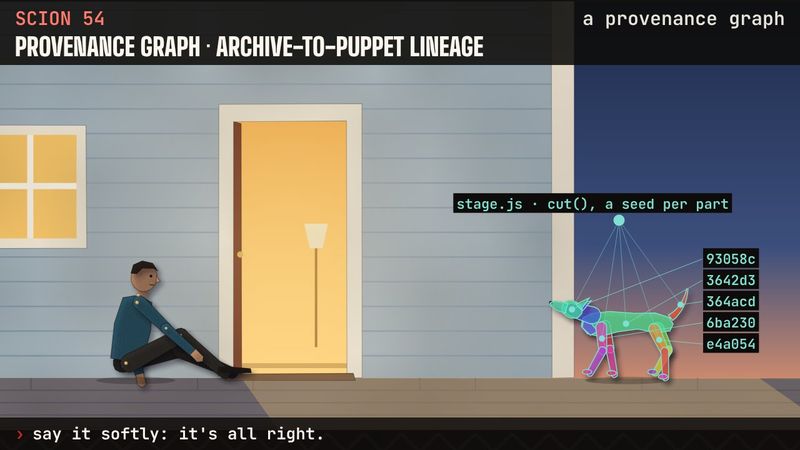 SCION 54PAE-02 · runProvenance GraphArchive-to-Puppet Lineage
Which terms do which work, and where they collide.
| Candidate | What it emphasizes | Assessment |
|---|---|---|
| Ekphrastic Operations | descriptions that act upon worlds | best umbrella |
| Ekphrastic Orchestration | coordinating agents, tools, media and performances | excellent subsystem |
| Operative Ekphrasis | the foundational theoretical concept | best dissertation term |
| Prompt Orchestration | coordinating prompts and model workflows | useful technique, too narrow for the thesis |
| Ekphrastic Ontologies | descriptions constituting objects and worlds | useful research branch |
The argument in one breath: operative ekphrasis is the phenomenon investigated. PEO is the theoretical and experimental model. PAELEO is the language and working environment in which descriptions are authored, executed, contested and evaluated. AEL is the institutional lineage from which it develops: a laboratory that develops a language for operating within environments.
 CRASH LAB