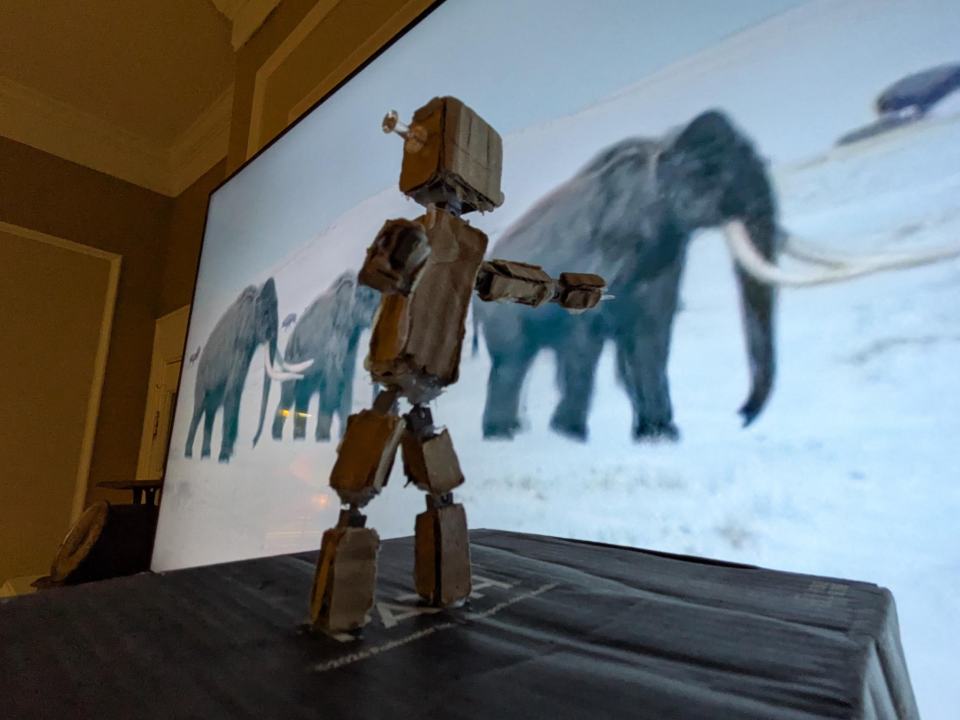
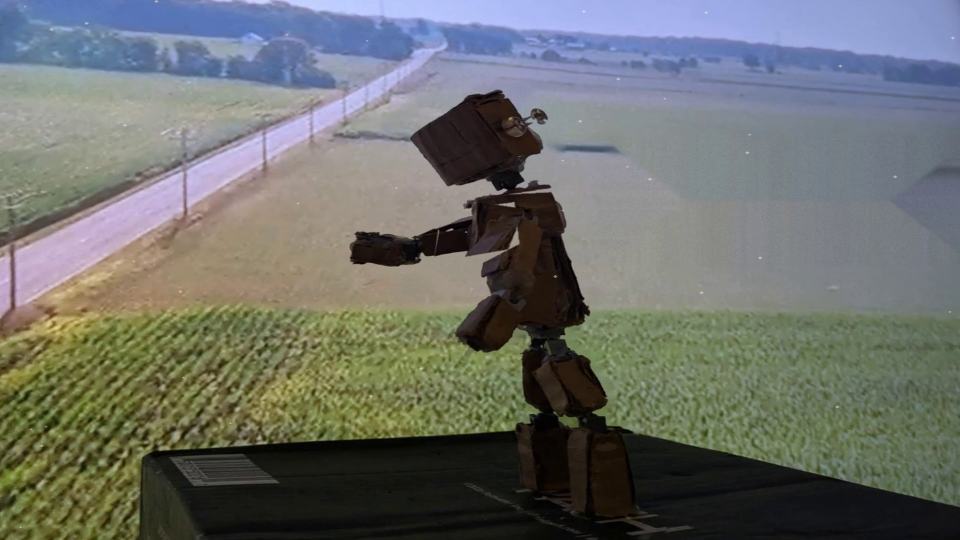
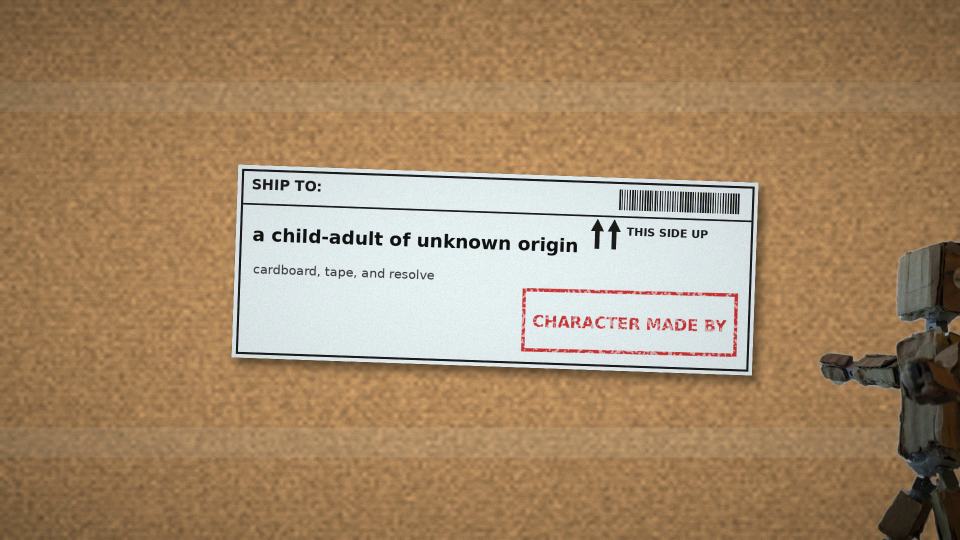
The program for everything in Crash Lab made of cardboard cut-outs. Boone is a handmade cardboard puppet. He was photographed on a box in front of a TV, cut into parts, and set into worlds where time stops for everything except him.
Ten case studies from October 18 and 19, 2026, in the order they were made. Each one shows how the film was built, with the real sheets, one thing to try with your own hands, and what broke along the way.
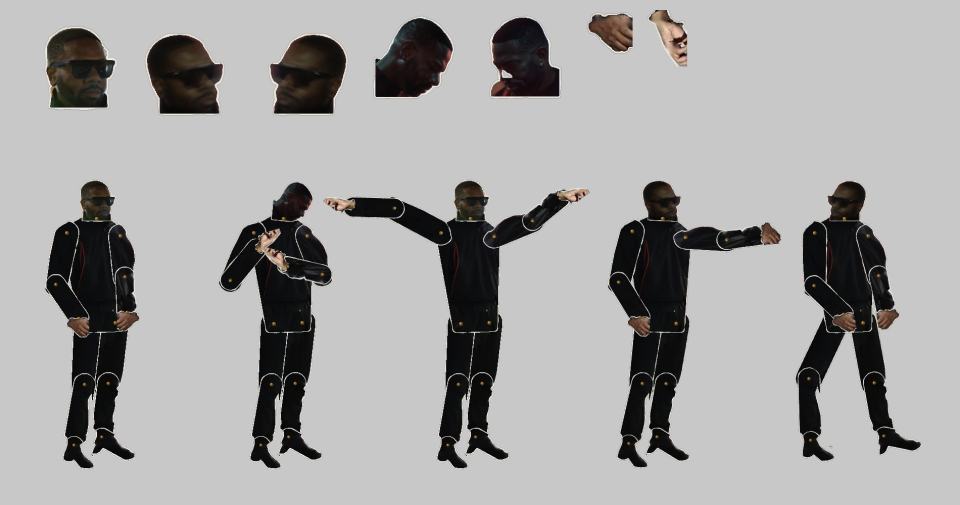
Can photographs of a cardboard puppet be cut into parts and made to move?
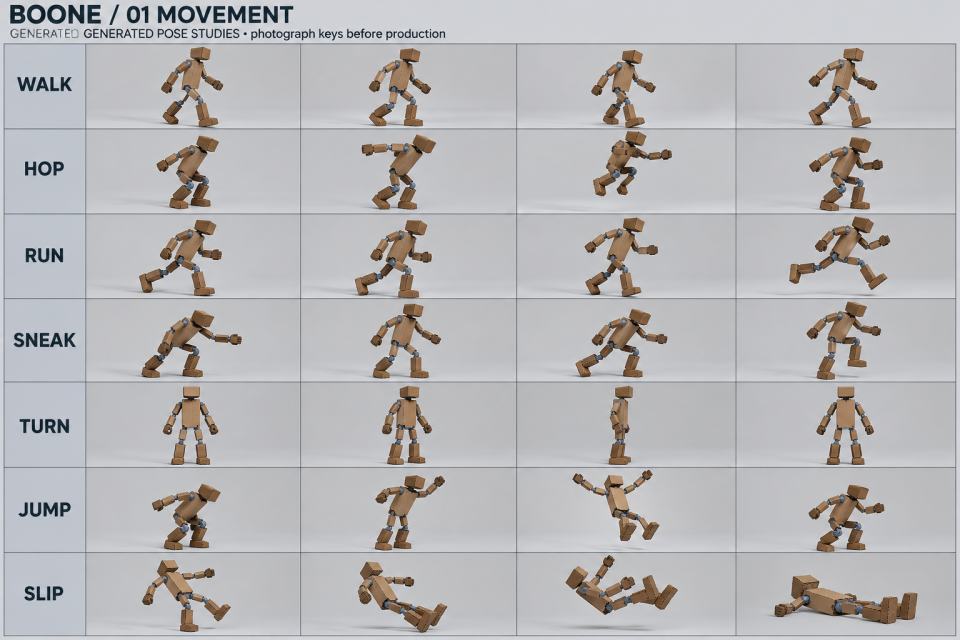
Every moving part is a crop of the photograph itself, and the hole it leaves is painted back in. Boone keeps his real cardboard, tape and shadows.
Can the set tell the person with the camera what to do, without a paragraph of instructions?
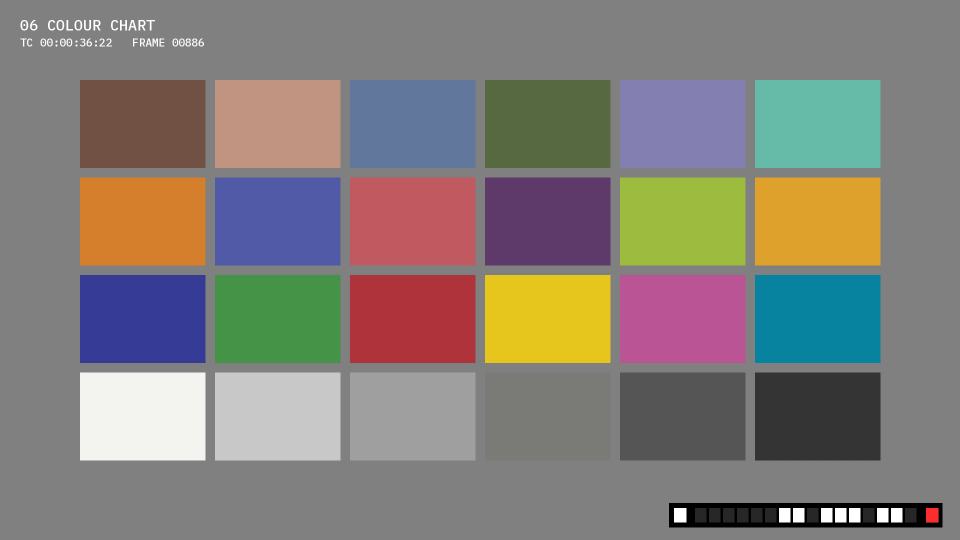
The TV behind Boone prints its own frame number on every frame. Any photograph of the set can be matched to the exact background frame that was showing.
Bottom right of every frame: a white start square, sixteen bits, a red end square. Drag through the reel, or click the bits to write a frame number yourself.
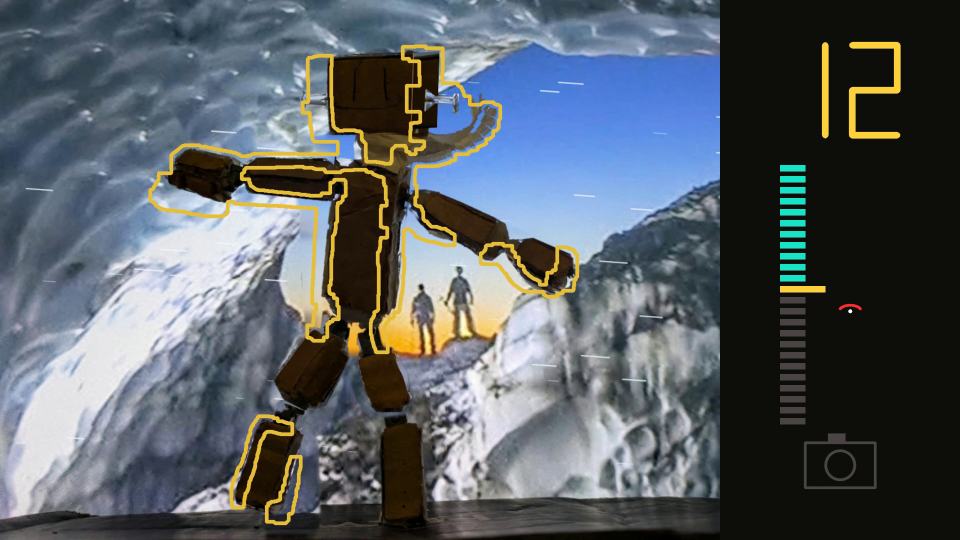
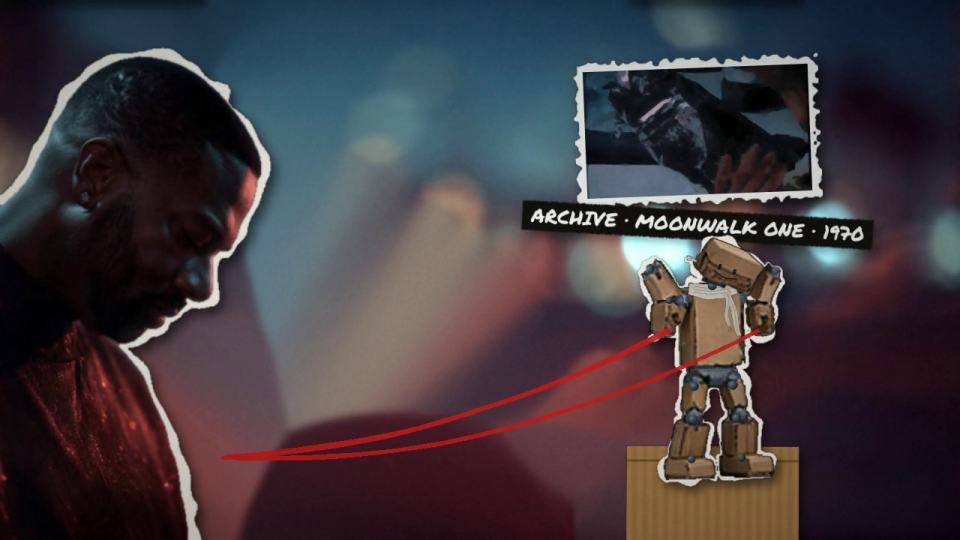
Can the movement of a famous rooftop scene be measured and given to Boone without using a single frame of it?
Only numbers leave the reference: joint angles, camera motion, light levels. The pictures stay behind, and Boone performs the numbers.
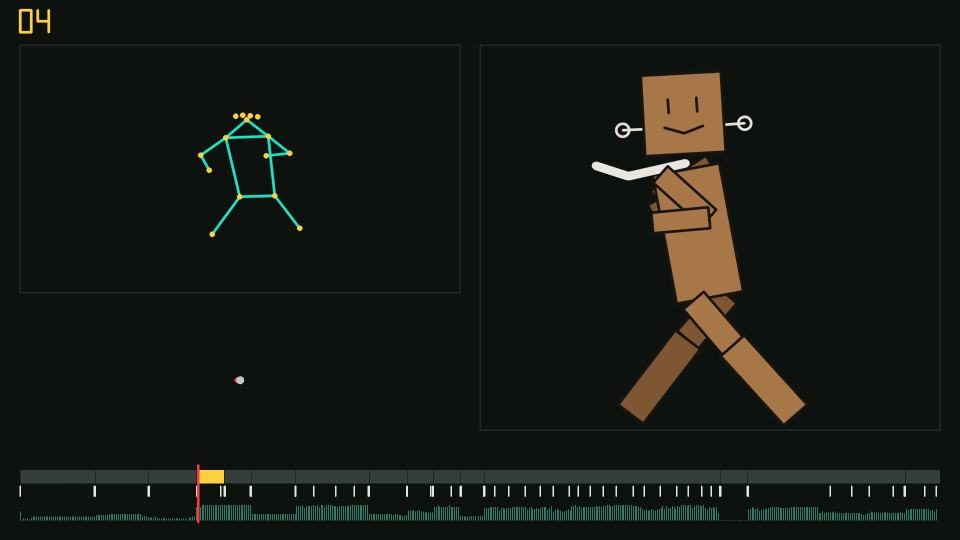
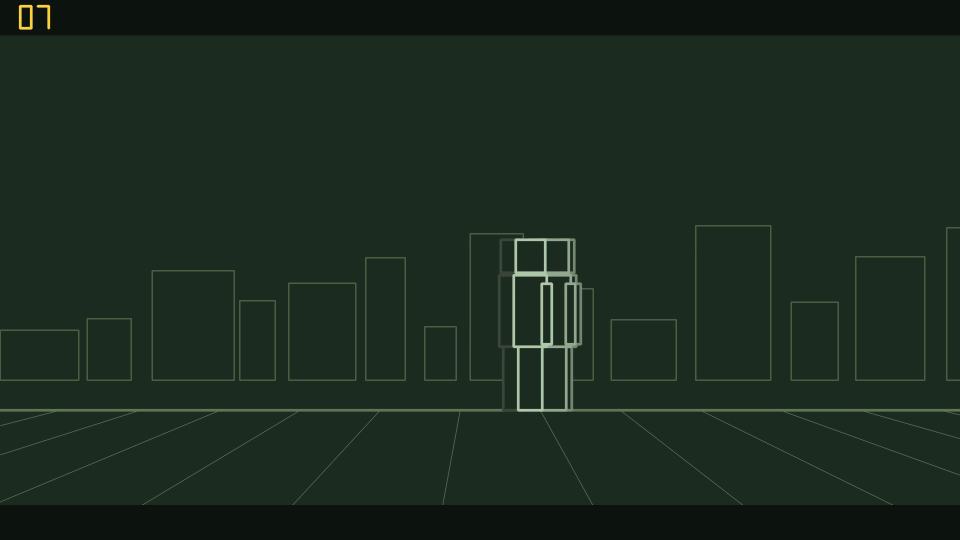
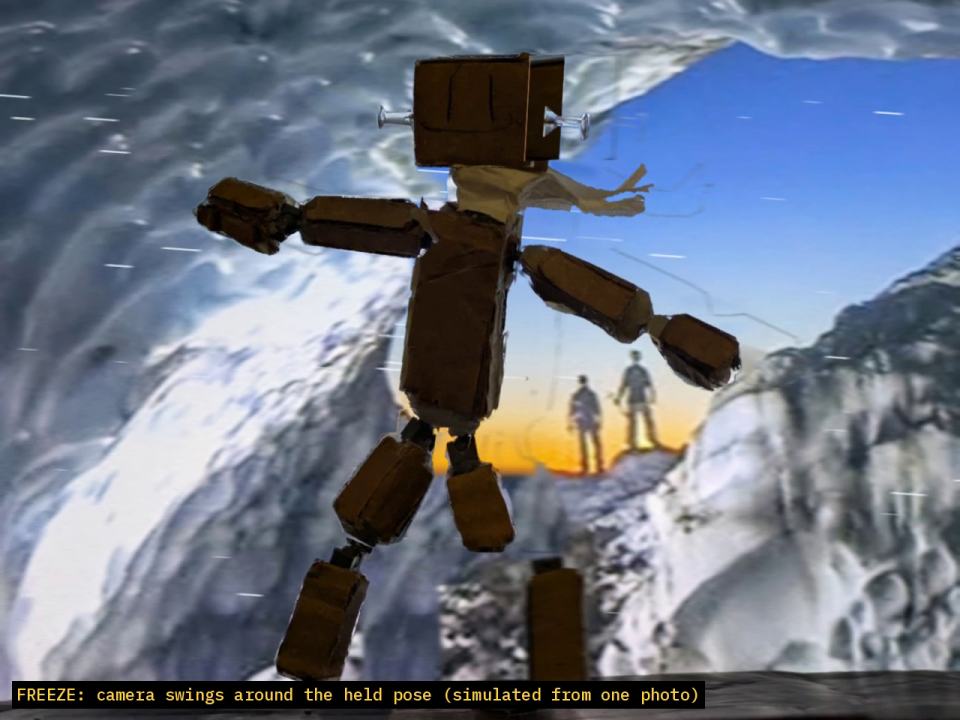
One photograph can fake an orbit. What does a real one take?
Put Boone on a hand-cranked turntable stool, the butter churn, hold one pose, and solve the angle of every frame. Then ask Marble 2 for the same rooftop at those same angles.
Drag the angle. You see three pictures for that angle: the phone frame whose solved angle is nearest, the Marble 2 view generated at it, and the two put together with his feet on the orbit centre.
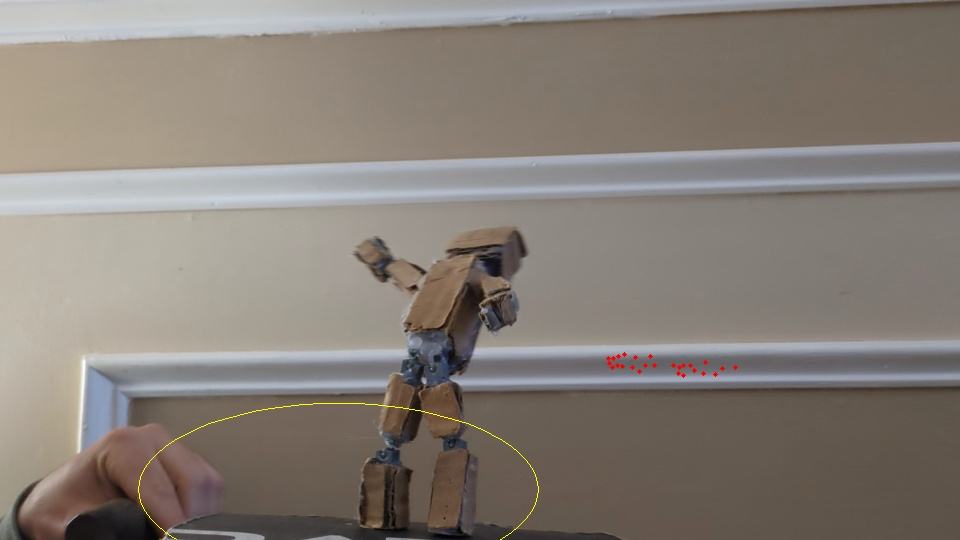
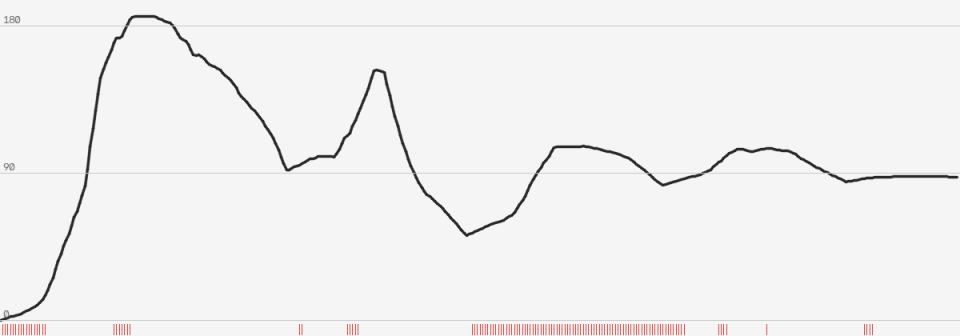
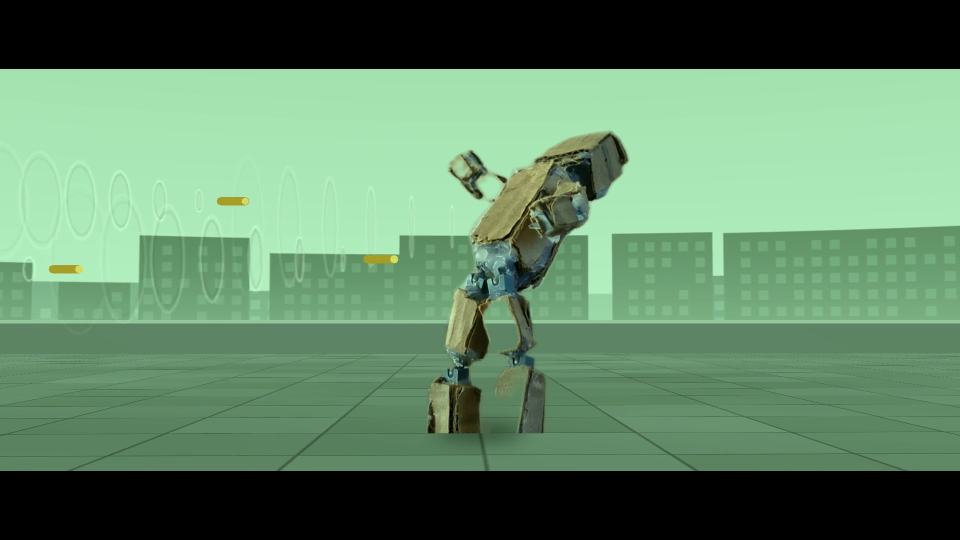
Does the dodge still read when the roof, the skyline, the guns and the bullets are all cardboard?
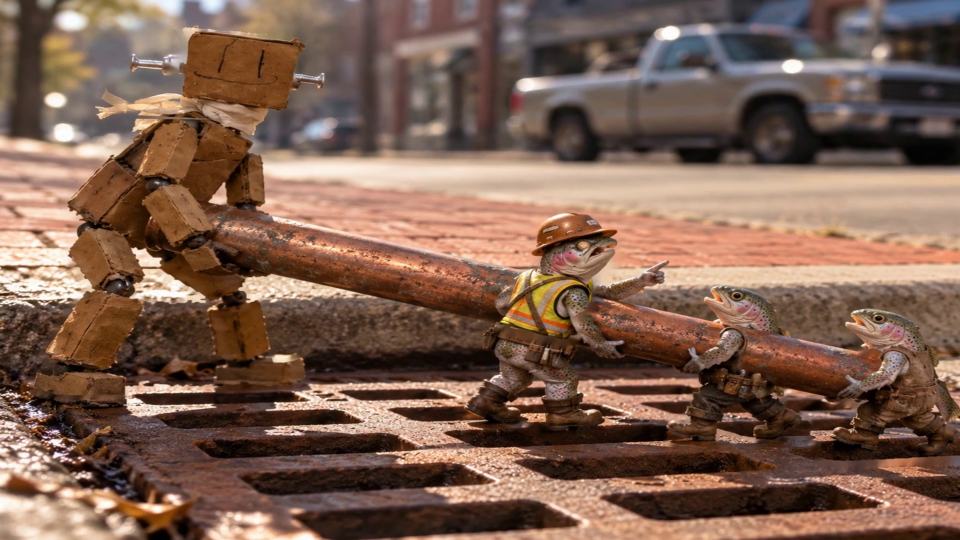
Make every effect from the puppet's own material: slugs on fishing line, construction-paper muzzle flashes, torn tissue smoke. Nothing glows.
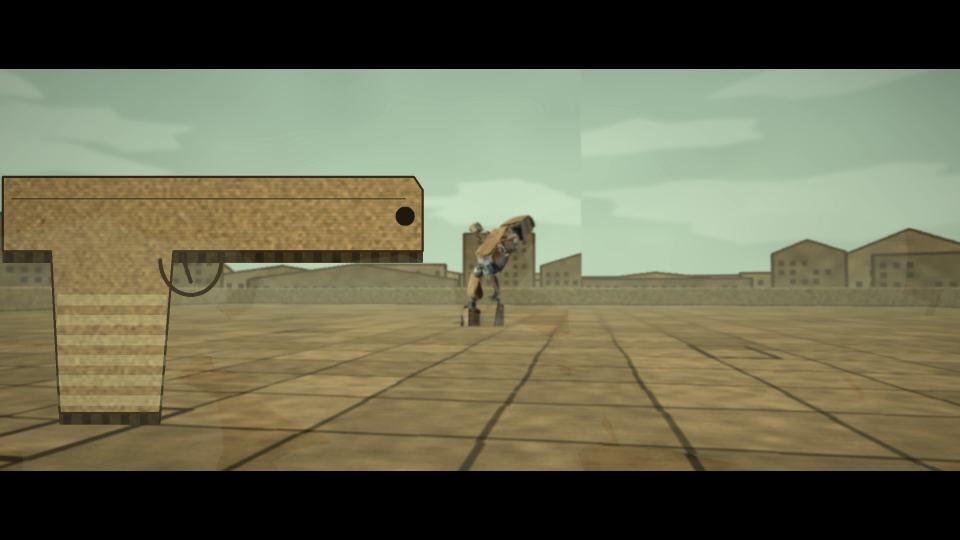
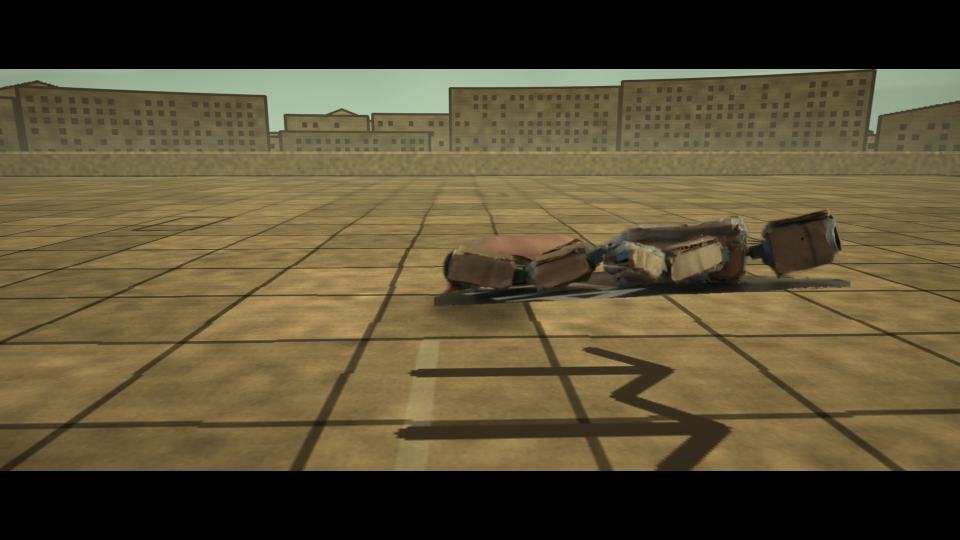
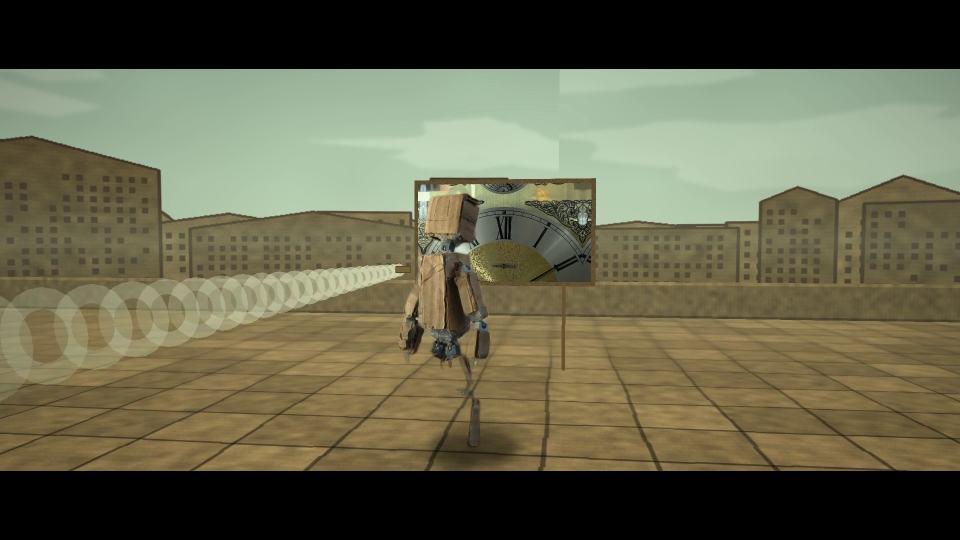
Can one shot run on two clocks at once?
Everything except Boone and the camera runs on world time, and world time is a curve you can draw. Anything he lets go of joins the world's time, so his guns hang in the air where his hands were.
Drag screen time. The curve is the world's rate: 1 is real time, 0 is stopped. Boone's clock always runs at 1.
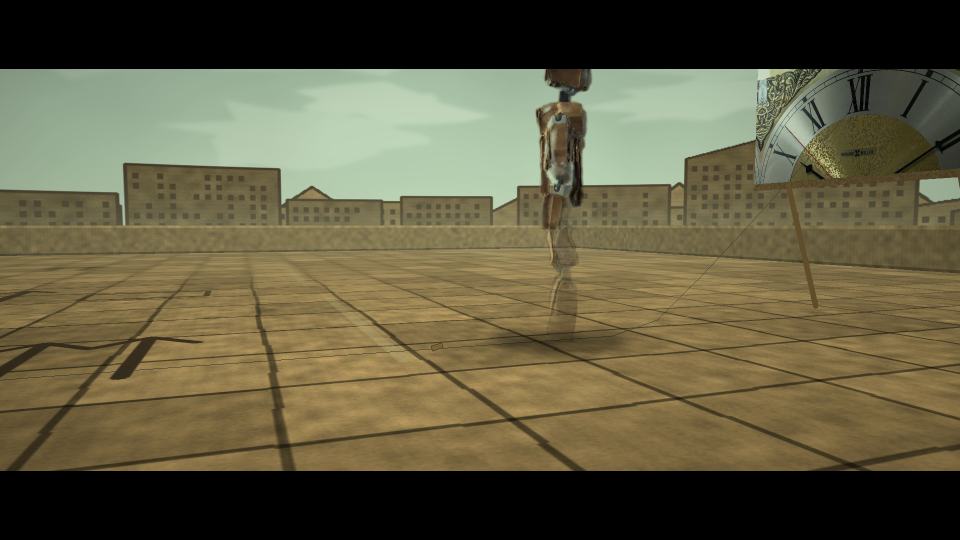
Can time that runs only near Boone be seen and heard?
Every drop has its own clock. Its rate is full within 0.25 m of Boone and falls to nothing at 0.95 m, so time leaks out of him as he walks.
Each dot is a drop hanging in the air. Press walk, or drag Boone yourself. Drops near him fall on their own clock and stop when he has gone. This is the rule from the episode's code, run in your browser and seen from the side.
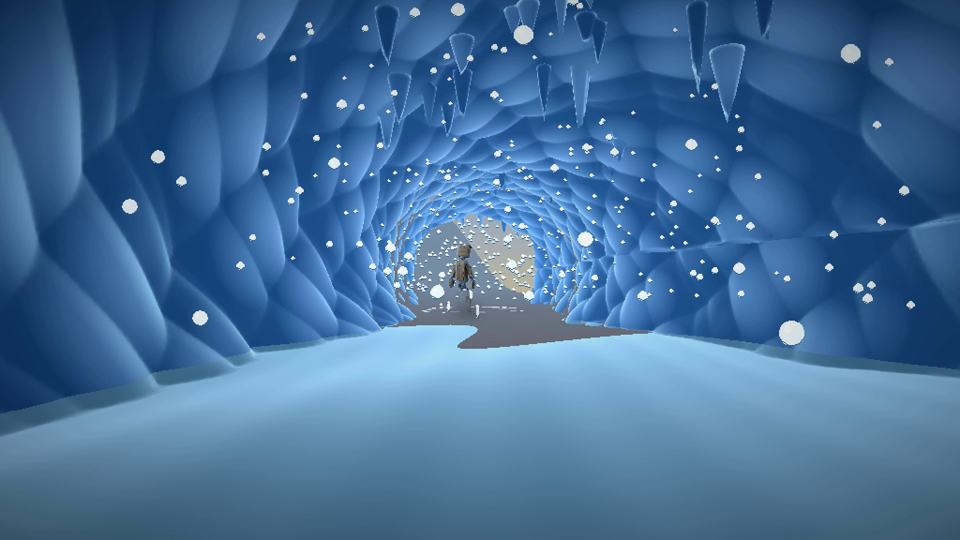
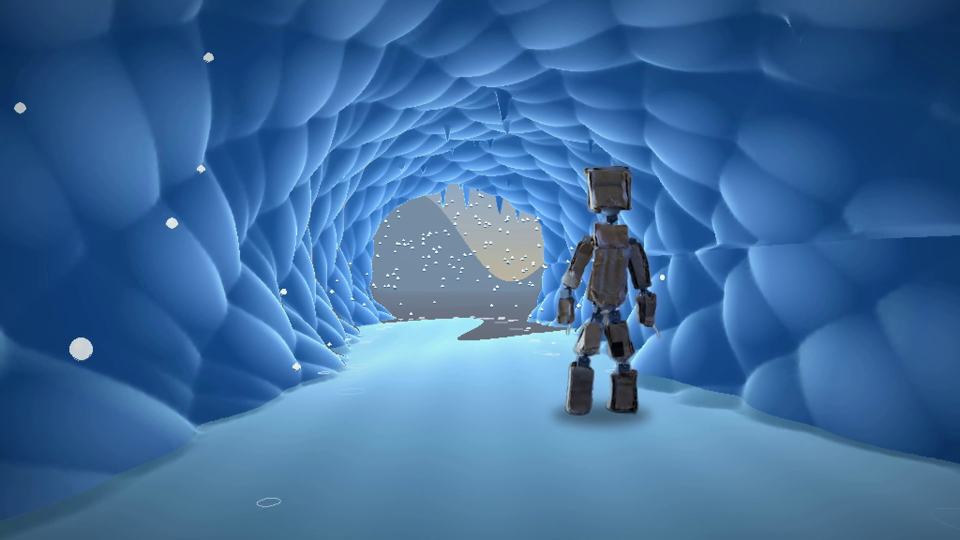
Can found film, photographs and drawing share one frame and still read as one world?
The world's lines boil on world time and stop when time stops. Boone's lines boil on screen time and keep going. The archive film obeys the same rule: when time stops, the film stops on its frame and its grain freezes.
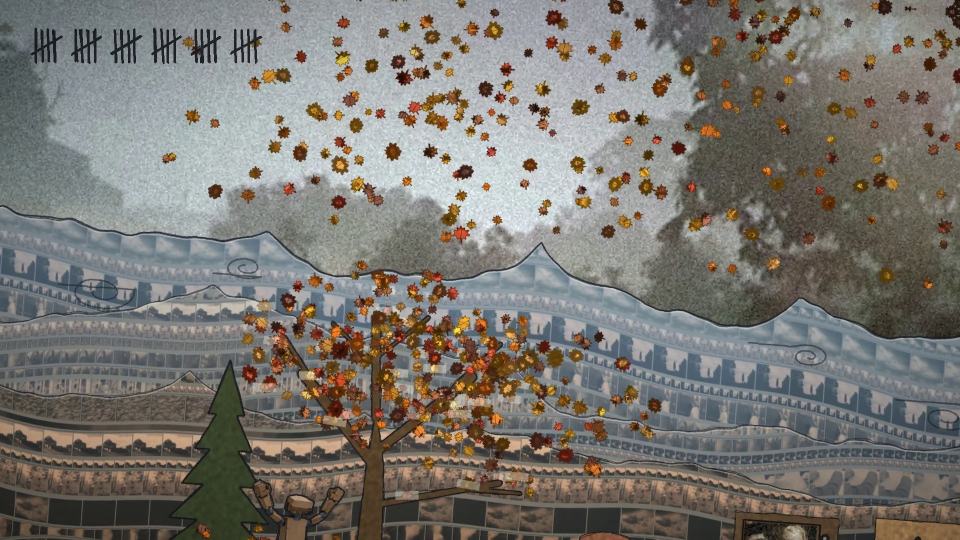
Can one authored interaction drive every character, camera and sound in a scene?
The brace is written once, in world space, as ten states. Boone's hands, the fitter's wrench, the elbow, the water, the clock and the cameras are all read from that one record, so nobody disagrees about when a touch starts or ends.
The clock's one rule: it runs only while the water presses, and it runs backward, faster as the pressure rises.
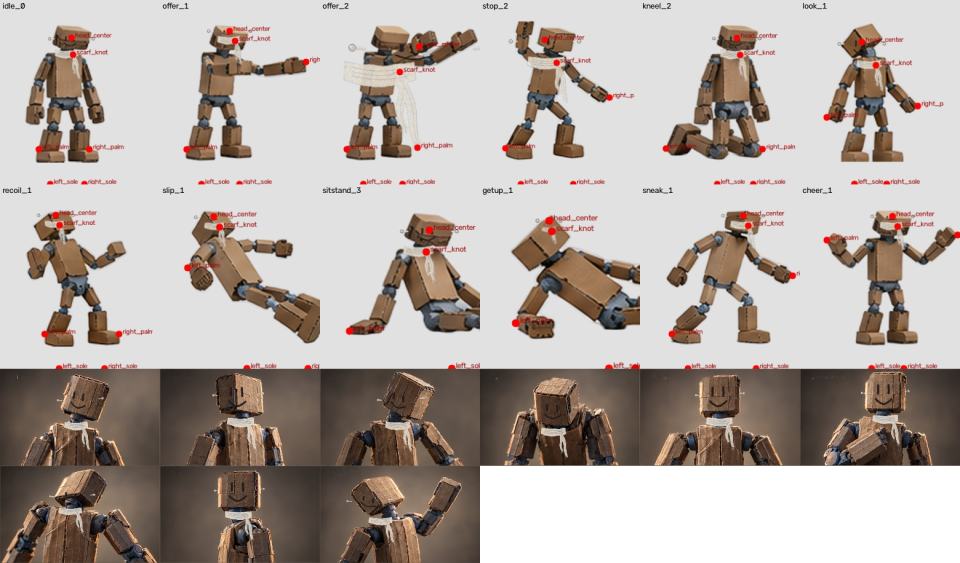
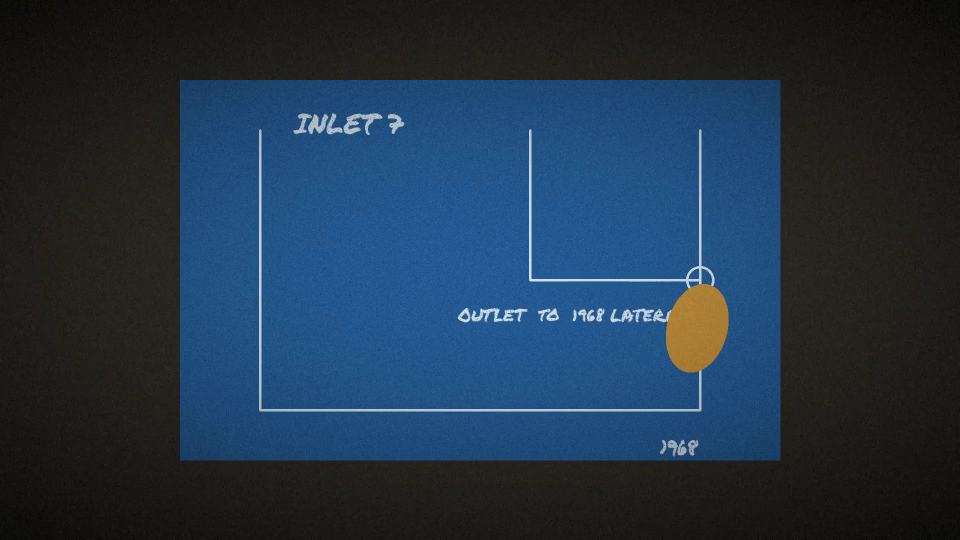
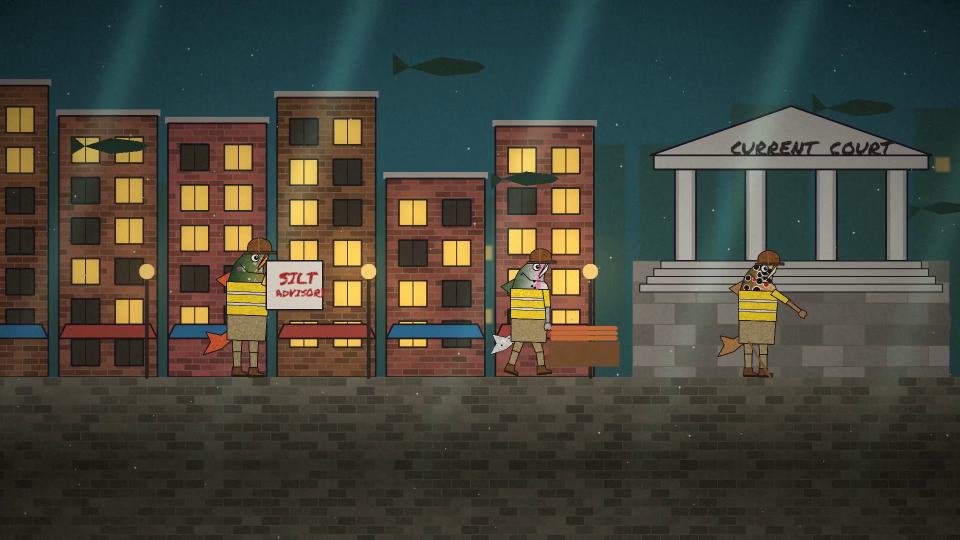
Can Boone be dropped into another lab's cel database and clock?
Work to the existing clock. The patch runs from 491.442 to 500.202 s of the suite, and every beat lands on a word time from the reading: blood, hands, fingerprints, sun.
 CRASH LAB