ALLWAYS / Flagship Cross-Maker Synthesis Film · 2:43 (163s) · 24 Cuts

ALLWAYS — Cinema from the Rest of the Frame

One film cut from all 131 films in ALLWAYS. Every passage below was independently verified and singled out as a Strength to protect or Critic Pass across the four makers—Claude Opus 5.5, Gemini Argon, OpenAI Sol, and Claude Sonnet—joined across six movements by the editorial principle of NEARMATCH.

Claude Opus 5.5 (5 cuts) Gemini Argon (6 cuts) OpenAI Sol (5 cuts) Claude Sonnet (8 cuts)
READY TO SCREEN · Tap any timeline bar or shot card below to jump directly to that cut 24 cuts · 4 makers · 1280×720 · 24 fps
Movement I / VI · ALLWAYS Statement · Record

THE OCCASION & THE EDGE

A camera points at an event. More happens than the event can contain.
Someone waits for a doorway to clear. Someone moves a chair.
Cut 01 — NOBODY HOME ▶ Play Cut 01 (0:05.4–0:11.9)
Claude Opus 5.5 NOBODY HOME ↗ SCION 085 Critic-noted opening passage (Opus 5.5 Round 1)

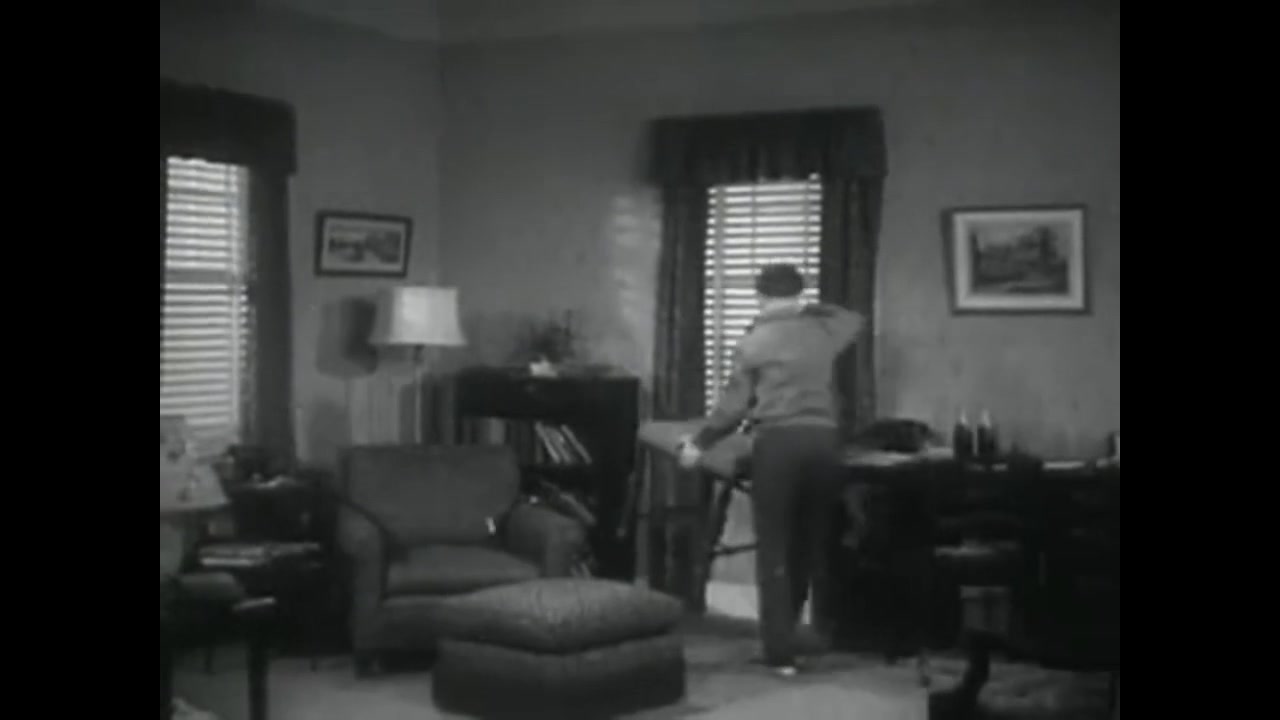
Cut 01 — Amateur Film New Jersey B (c. 1950)

What is on screen: A boy crosses a fixed-camera domestic room, carries a chair to the window, and climbs onto it.

NEARMATCH bridge: Opening domestic threshold: recorded human action before computational erasure.

Why chosen (Critic record): Praised by the blind critic ('at 0:00-0:12 a boy crosses a fixed-camera room, carries a chair to the window, climbs on it'); establishes ALLWAYS's foundational proposition: someone moves a chair at the edge of the frame.
Source window: 1.0s–7.5s (6.5s) Audio: Synchronized archival track (-19 LUFS) Archive source ↗
Cut 02 — NOBODY HOME ▶ Play Cut 02 (0:11.9–0:17.9)
Gemini Argon NOBODY HOME ↗ SCION 085 · 067 · 097 PASS · Strength to preserve (Argon Round 2)

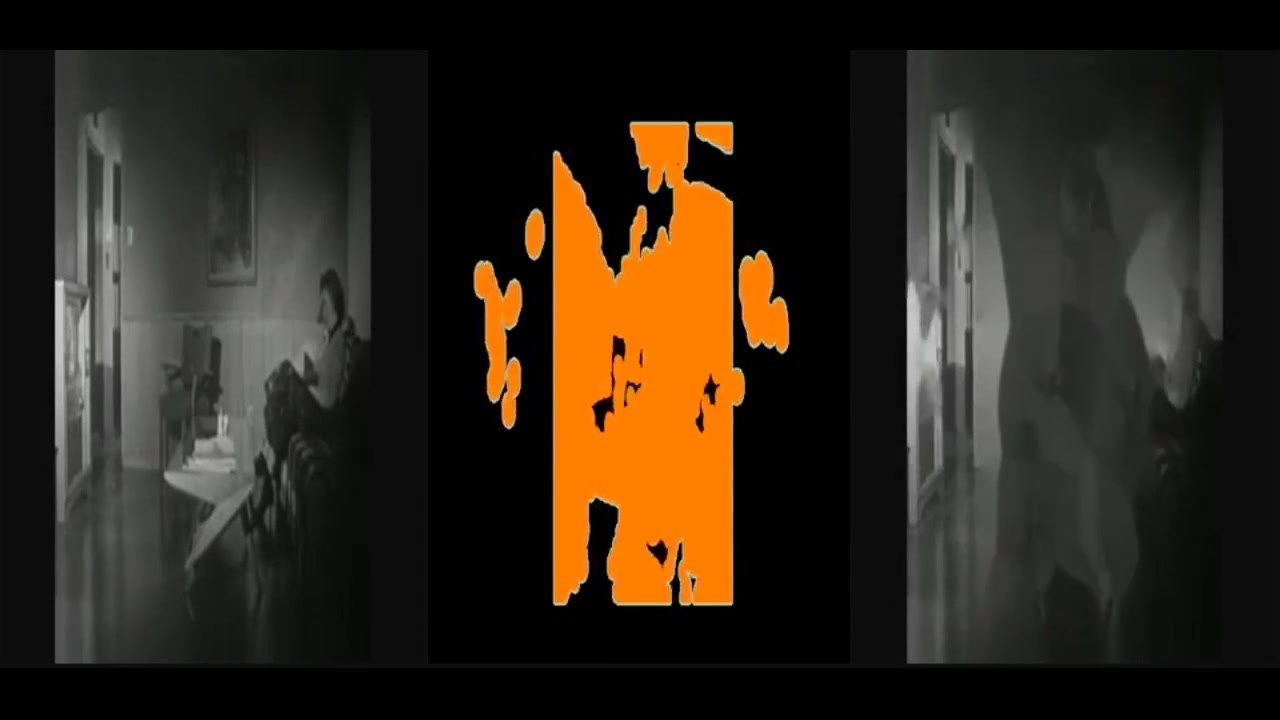
Cut 02 — Have I Told You Lately That I Love You? (1958)

What is on screen: Three-panel inspection ledger: intact source pixels on the left, extracted person silhouette mask in the center, and Telea-inpainted empty armchair on the right.

NEARMATCH bridge: From Opus's occupied room to Argon's explicit disclosure of person-removal.

Why chosen (Critic record): Critic Tribunal 'Strength to preserve': 'The 3-panel inspection triptych layout (Original | Extracted Mask | Derived Empty Room)'. Keeps the mask and synthesized background separate from recorded pixels.

Source window: 38.6s–44.6s (6.0s) Audio: Synchronized archival track (-19 LUFS) Archive source ↗
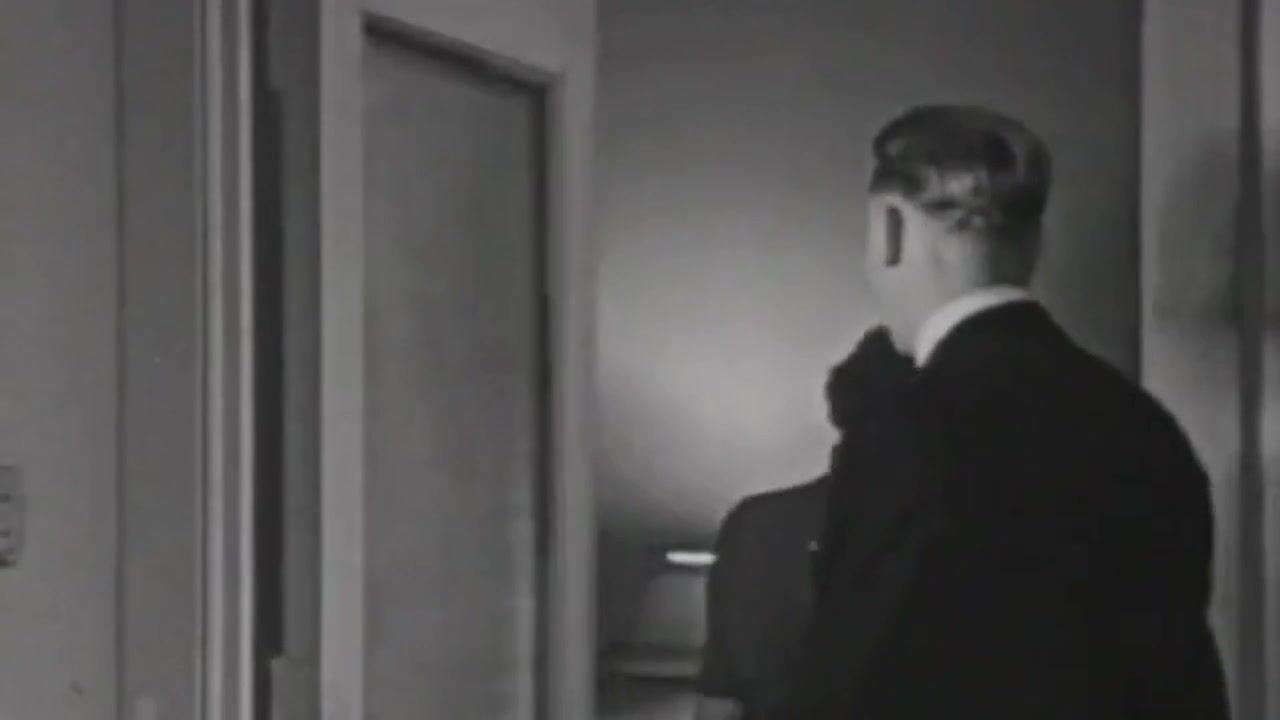
Cut 03 — 057 · AFTER ▶ Play Cut 03 (0:17.9–0:23.4)
OpenAI Sol 057 · AFTER ↗ SCION 057 PASS · Attention Critic V02 (Sol)

Cut 03 — Archival Threshold Study (V02) (1950s)

What is on screen: A man and woman pause by an interior doorway as the official exchange ends and the post-action stillness takes over.

NEARMATCH bridge: Doorway geometry rhymes with the domestic rooms while shifting attention to the interval after speech.

Why chosen (Critic record): Cleared Sol's attention critic on V02 ('PASS from attention critic after specific 5s hold repair'): demonstrates holding a shot after the nominal action finishes.

Source window: 11.5s–17.0s (5.5s) Audio: Synchronized archival track (-19 LUFS) Archive source ↗
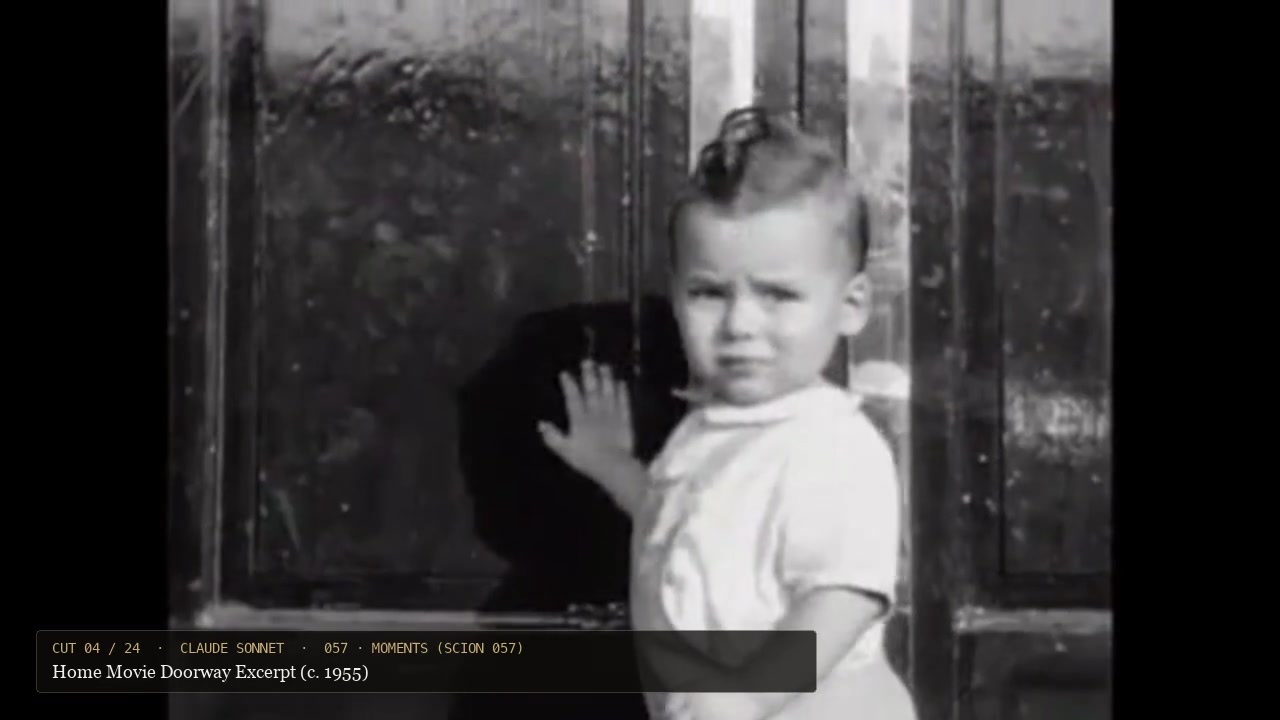
Cut 04 — 057 · MOMENTS ▶ Play Cut 04 (0:23.4–0:27.9)
Claude Sonnet 057 · MOMENTS ↗ SCION 057 Strength to protect (Sonnet Round 1)

Cut 04 — Home Movie Doorway Excerpt (c. 1955)

What is on screen: A toddler stands at a screen door, hand against the frame, staring directly back at the camera.

NEARMATCH bridge: From the adult doorway threshold in Sol 057 to a child's unguarded counter-gaze at the threshold.

Why chosen (Critic record): Explicitly singled out by Sonnet's independent critic ('Strength to protect: the toddler's backward stare at 14–17').

Source window: 13.8s–18.3s (4.5s) Audio: Silent 16mm gauge + optical room tone bed Archive source ↗
Movement II / VI · ALLWAYS Statement · Machine

NEARMATCH

Two gestures can resemble one another and still belong to different lives.
We keep the pause that interrupts the alignment.
Cut 05 — ALMOST HUMAN ▶ Play Cut 05 (0:30.1–0:35.6)
Gemini Argon ALMOST HUMAN ↗ SCION 057 · 084 · 085 PASS · Verified single-shot gesture (Argon Round 2)

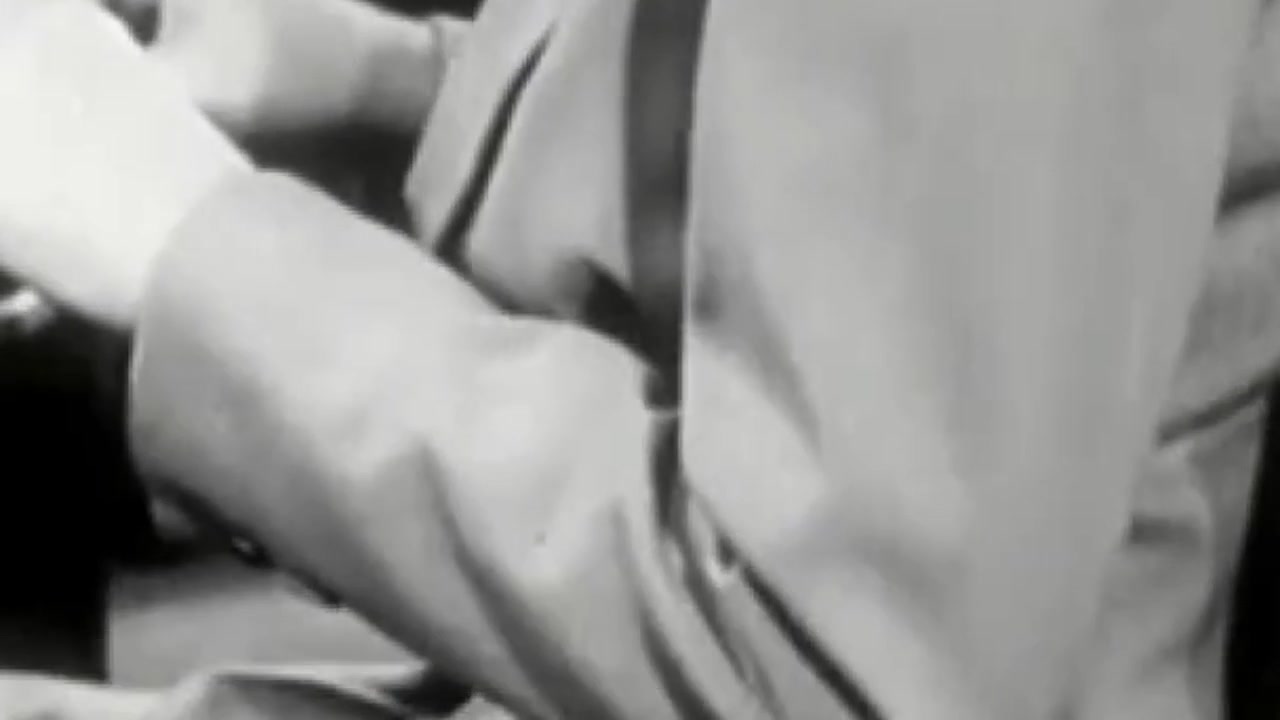
Cut 05 — Basic Typing, Part I: Methods (1944)

What is on screen: A woman adjusts her collar and blouse at a desk, completing the self-preparatory gesture before settling into stillness.

NEARMATCH bridge: Initiates the NEARMATCH gesture chain: a complete collar adjustment with its pause intact.

Why chosen (Critic record): Verified cut-free single-shot window (max_diff < 16.0) fulfilling the ALMOST HUMAN opening requirement ('Begin with one complete collar adjustment, including the pause afterward').

Source window: 3.2s–8.7s (5.5s) Audio: Synchronized archival track (-19 LUFS) Archive source ↗
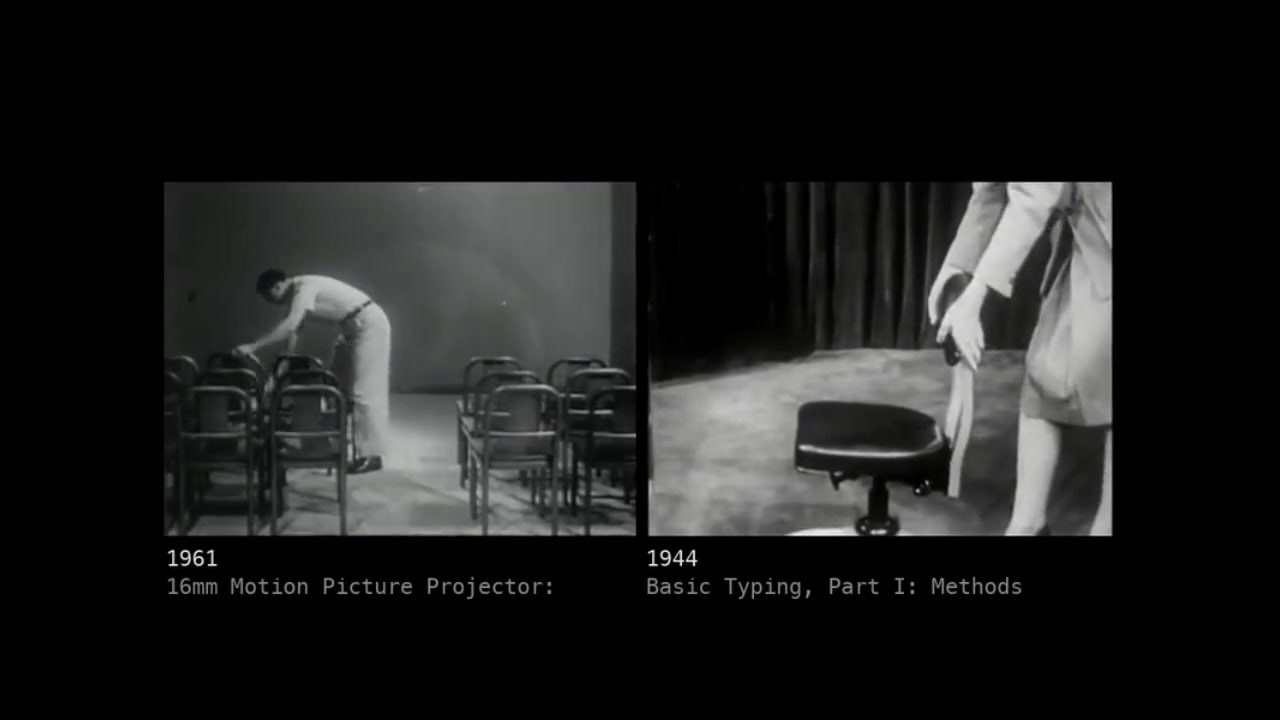
Cut 06 — ANYBODY, ANYWHERE ▶ Play Cut 06 (0:35.6–0:41.6)
Claude Opus 5.5 ANYBODY, ANYWHERE ↗ SCION 056 · 099 Critic-highlighted parallel alignment (Opus 5.5)

Cut 06 — 16mm Motion Picture Projector (1961) / Basic Typing (1944) (1944 / 1961)

What is on screen: Split-screen pairing: on the left (1961), a man bends to arrange theatre chairs; on the right (1944), a woman adjusts and sits on a typing chair.

NEARMATCH bridge: Pairs two situated preparations across seventeen years without pretending they occurred simultaneously.

Why chosen (Critic record): Highlighted by Opus's blind critic ('Noticed before the brief: at 0:03-0:11 a man bends to arrange theatre chairs while a woman's hands tilt and then sit on a swivel chair').

Source window: 3.5s–9.5s (6.0s) Audio: Synchronized archival track (-19 LUFS) Archive source ↗
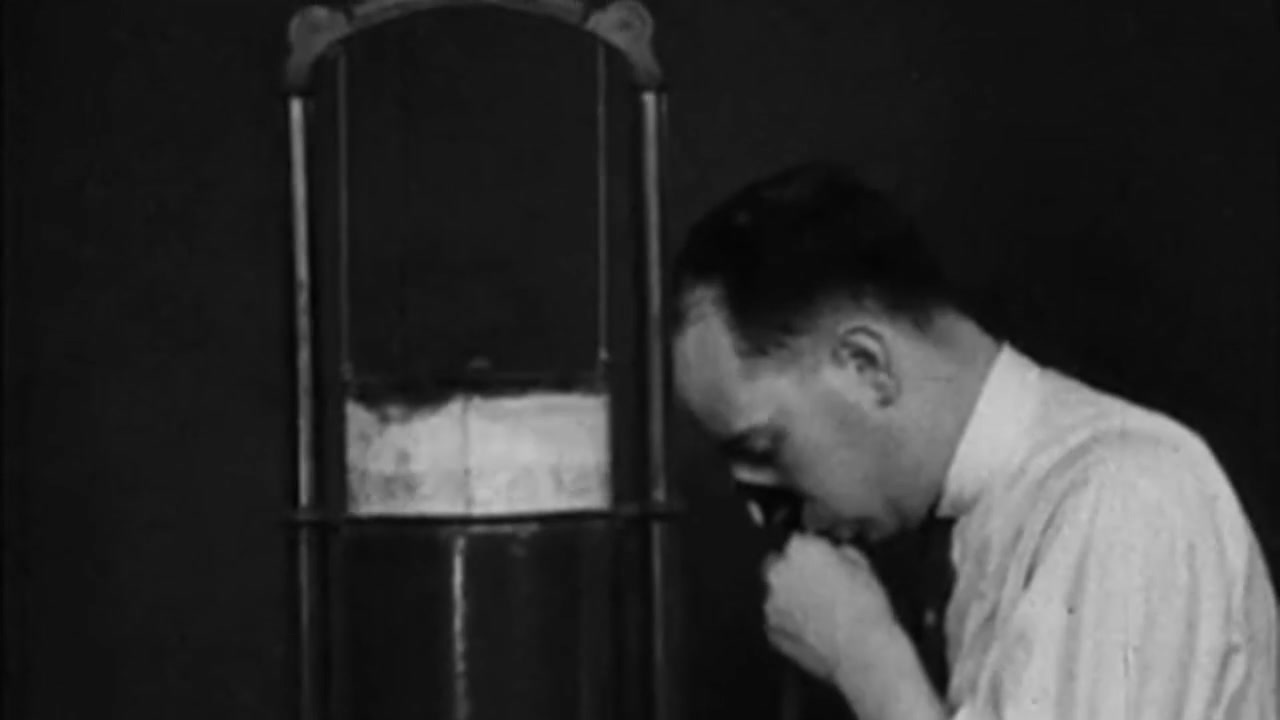
Cut 07 — 063 · A VOLUME OF AIR ▶ Play Cut 07 (0:41.6–0:47.1)
OpenAI Sol 063 · A VOLUME OF AIR ↗ SCION 063 PASS · Mechanical breath proof V02 (Sol)

Cut 07 — Human / Breathing (Wellcome Library) (1927)

What is on screen: A subject exhales into a laboratory tube, raising the bell of a glass spirometer cylinder by the exact volume of his breath.

NEARMATCH bridge: Makes invisible human breath physically measurable before cutting to audible social breath (laughter).

Why chosen (Critic record): Earned a qualified VISUAL PASS in Sol's Round 2 ('The actual repair improves the mechanical demonstration substantively; no remaining visual objection').

Source window: 11.0s–16.5s (5.5s) Audio: Silent 16mm gauge + optical room tone bed Archive source ↗
Cut 08 — 058 · LAUGHS ▶ Play Cut 08 (0:47.1–0:52.7)
Claude Sonnet 058 · LAUGHS ↗ SCION 058 Strength to protect (Sonnet Round 1)

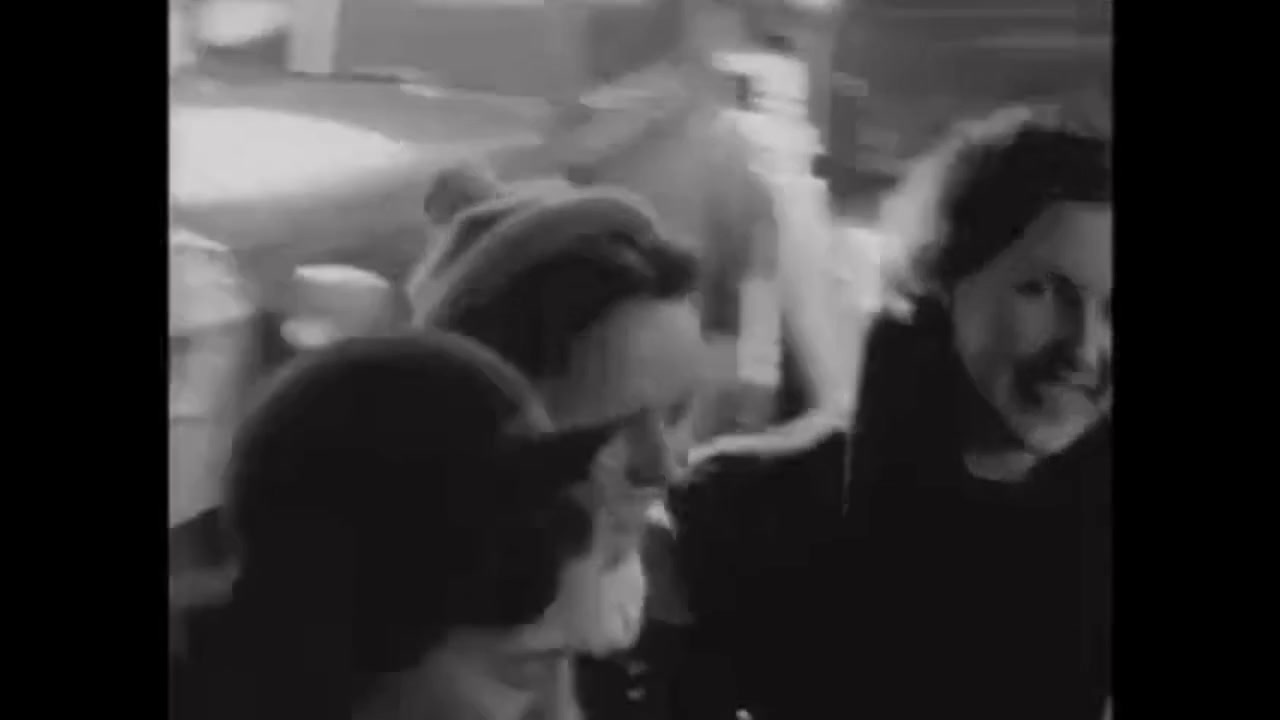
Cut 08 — Archival Group Laughter Excerpt (c. 1950)

What is on screen: Three young women lean into one another as genuine, unscripted laughter spreads across their shoulders and faces.

NEARMATCH bridge: From solitary measured exhalation (Sol 063) to shared respiratory contagion across bodies.

Why chosen (Critic record): Praised by Sonnet's blind critic ('Strength to protect: the girls' sequence 25.2–31.2 is real shared in-source laughter with physical contagion—leaning, grabbing').

Source window: 25.2s–30.8s (5.6s) Audio: Silent 16mm gauge + optical room tone bed Archive source ↗
Movement III / VI · ALLWAYS Statement · Form

THE RELAY

The name joins always and all ways: recurrence through time,
and different routes through the same material.
Cut 09 — 055 · WORDS ▶ Play Cut 09 (0:54.9–1:00.9)
Claude Sonnet 055 · WORDS ↗ SCION 055 PASS · Strength to protect (Sonnet Round 1)

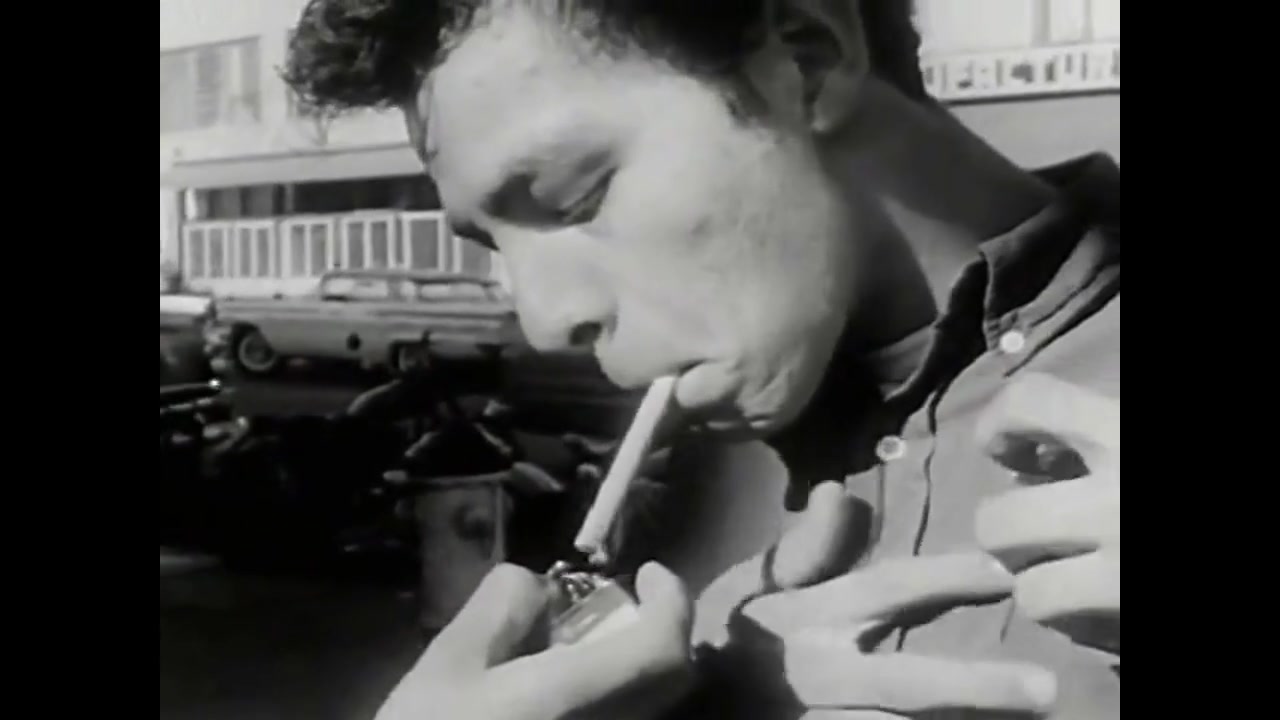
Cut 09 — Archival Close-Up ('Draw') (c. 1958)

What is on screen: Close-up of a young man lighting and drawing on a cigarette—activating the physical sense of the word 'draw'.

NEARMATCH bridge: Inaugurates the polysemic relay where a single word pivots across physical actions.

Why chosen (Critic record): Sonnet's critic passed 055-words and named this exact shot its anchor ('Strength to protect: the cigarette draw 13–22, the only shot where sound and the sense meet').

Source window: 13.5s–19.5s (6.0s) Audio: Synchronized archival track (-19 LUFS) Archive source ↗
Cut 10 — HOMONYM ▶ Play Cut 10 (1:00.9–1:05.5)
Claude Opus 5.5 HOMONYM ↗ SCION 055 · 092 Critic-highlighted semantic match (Opus 5.5)

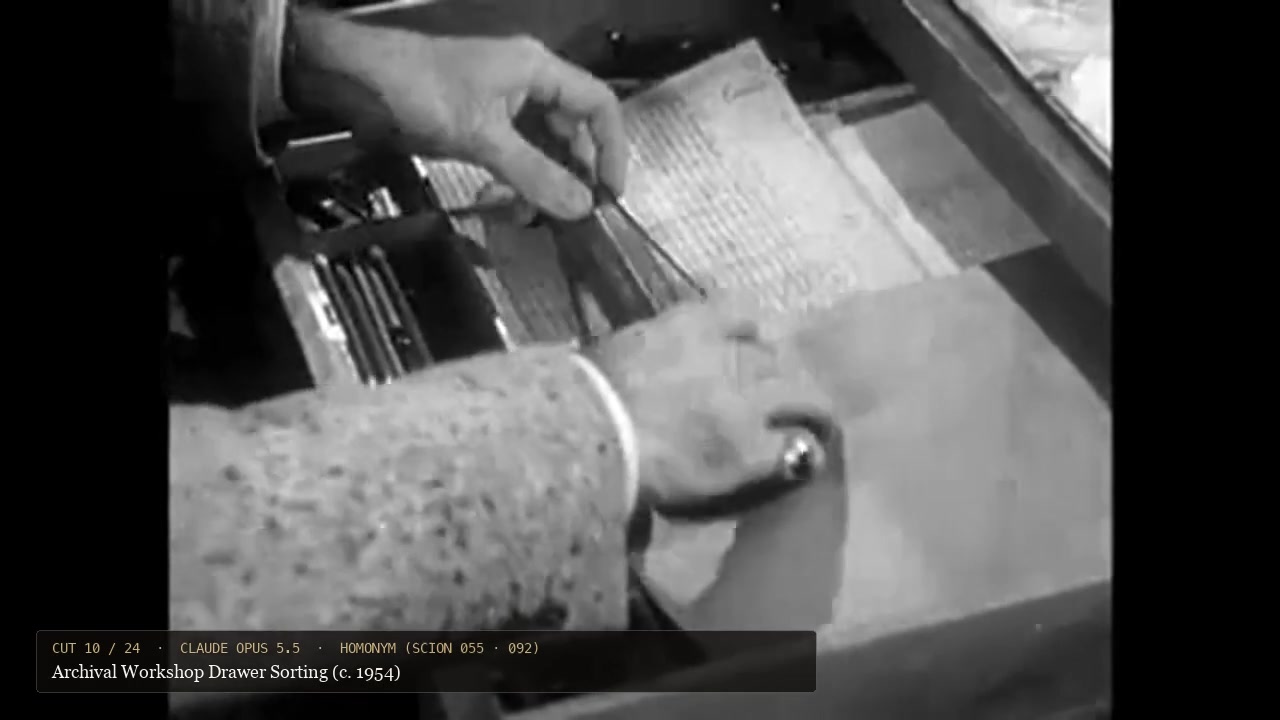
Cut 10 — Archival Workshop Drawer Sorting (c. 1954)

What is on screen: Hands sort dividers inside an open wooden drawer while the soundtrack states: 'a place for everything and everything should be in its place.'

NEARMATCH bridge: Pivots from 'drawing' breath/smoke (Sonnet 055) to an open 'drawer' ordered by hand (Opus Homonym).

Why chosen (Critic record): Highlighted by Opus's blind critic ('Noticed before the brief: at 00:17.9-21.8 the voice says a place for everything... over hands sorting').

Source window: 17.9s–22.5s (4.6s) Audio: Synchronized archival track (-19 LUFS) Archive source ↗
Cut 11 — 059 · BALL ▶ Play Cut 11 (1:05.5–1:13.5)
Claude Sonnet 059 · BALL ↗ SCION 059 PASS · Strongest proof in batch (Sonnet)

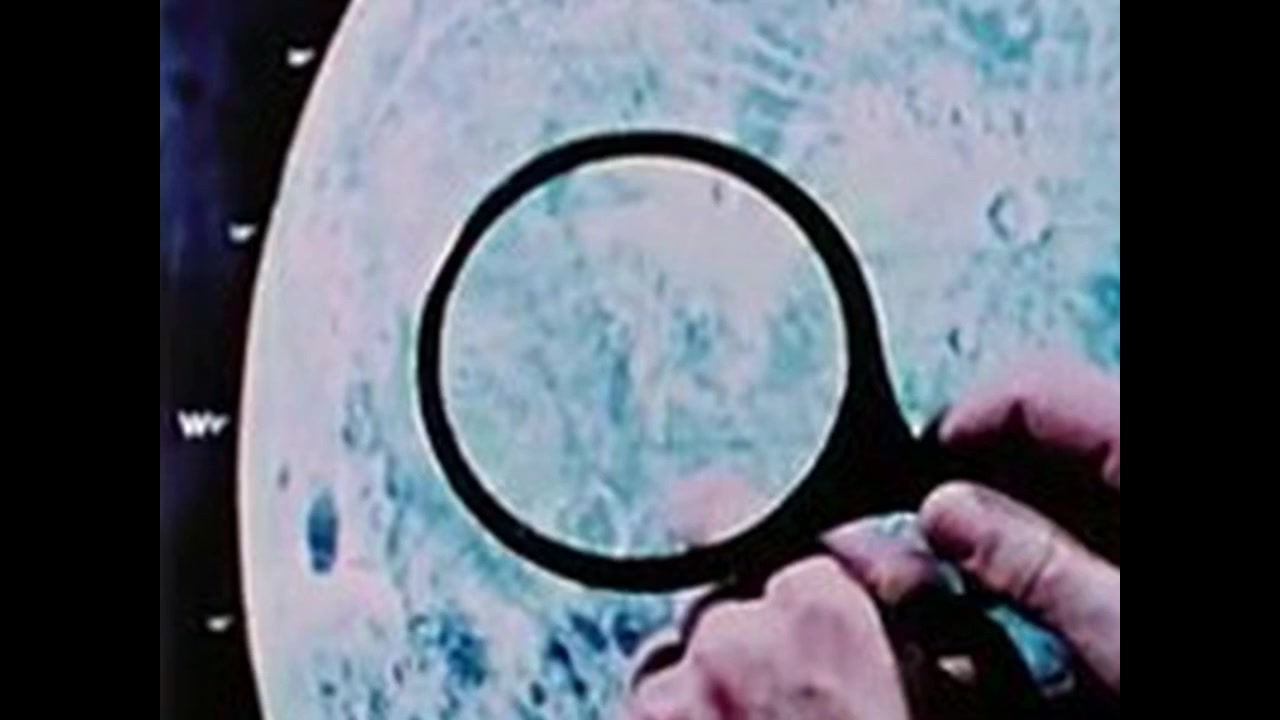
Cut 11 — Registered Circles (Globe, Moon Map, Signature Lens, Eye) (1929–2007)

What is on screen: Graphic constancy relay: a painted Earth globe, a magnifying lens over a moon map, a lens over a signature, and an eye behind glass hold the exact center rim.

NEARMATCH bridge: Shifts the relay from verbal polysemy (055) to pure geometric registration across four decades of film.

Why chosen (Critic record): Rated by Sonnet's blind critic as 'PASS (strongest proof in the batch) — Strength to protect: registration that holds through the opening'.

Source window: 3.5s–11.5s (8.0s) Audio: Synchronized archival track (-19 LUFS) Archive source ↗
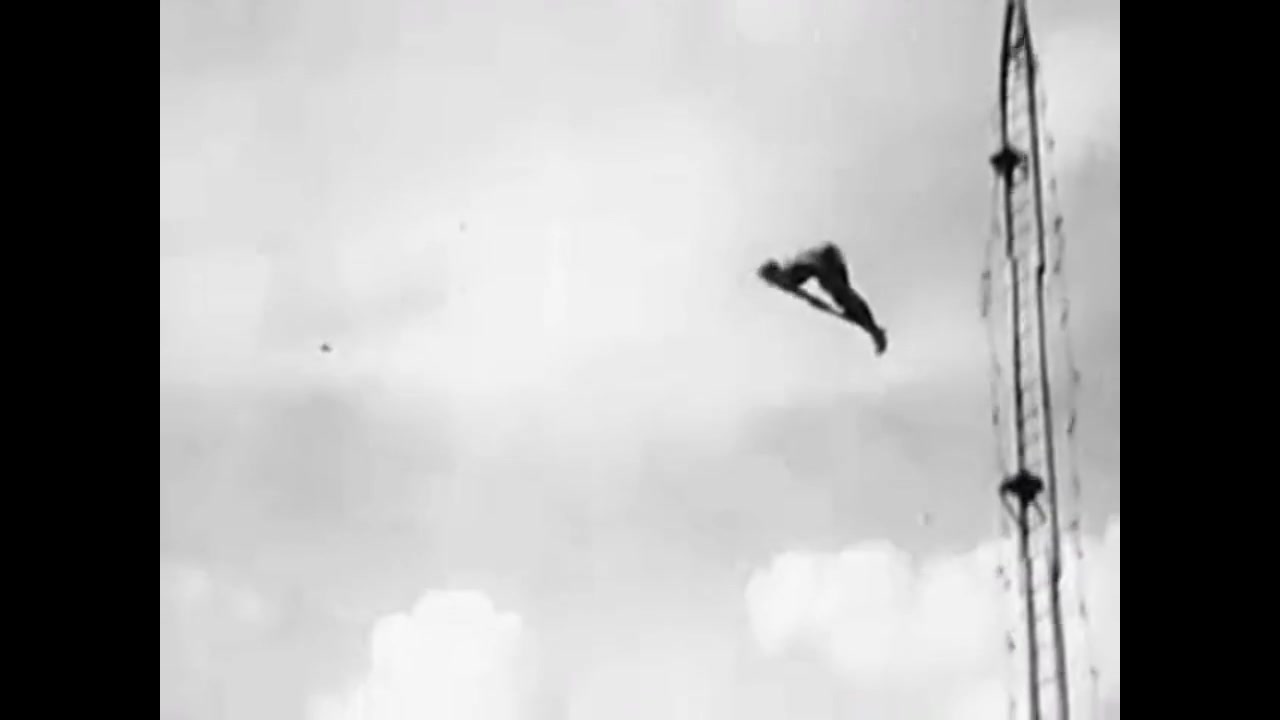
Cut 12 — 064 · PARABOLAS ▶ Play Cut 12 (1:13.5–1:19.5)
Claude Sonnet 064 · PARABOLAS ↗ SCION 064 PASS · Most complete realisation (Sonnet)

Cut 12 — Archival High Dive Trajectory (c. 1952)

What is on screen: A high diver traces a clean gravitational parabola across open sky from tower to water.

NEARMATCH bridge: Releases the centered static circle of 059 into a dynamic ballistic curve governed by gravity.

Why chosen (Critic record): Rated by Sonnet's blind critic as 'PASS (most complete realisation in the batch)'.

Source window: 18.0s–24.0s (6.0s) Audio: Silent 16mm gauge + optical room tone bed Archive source ↗
Movement IV / VI · ALLWAYS Statement · Work

THE WORK

Carrying, cleaning, preparing, repairing, waiting for access, making room.
We follow the activity that makes an event possible.
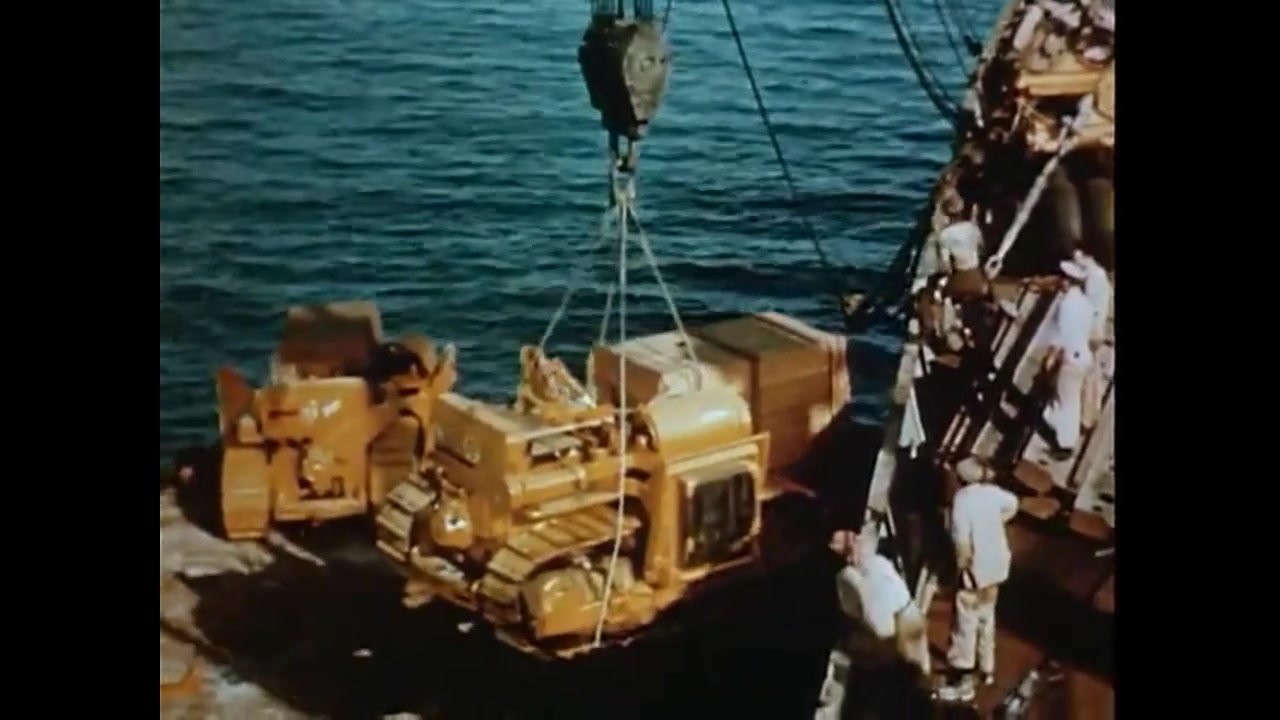
Cut 13 — 062 · COLORS ▶ Play Cut 13 (1:21.7–1:27.2)
Claude Sonnet 062 · COLORS ↗ SCION 062 PASS · Strength to protect (Sonnet Round 1)

Cut 13 — Maritime Crane Loading (c. 1960)

What is on screen: A heavy yellow industrial tractor is hoisted by crane cables out over deep teal ocean water.

NEARMATCH bridge: Carries the suspended aerial arc of the diver (064) into suspended industrial tonnage and chromatic contrast.

Why chosen (Critic record): Explicitly protected by Sonnet's critic ('Strength to protect: Mixed-colour hinge at 7.5: a yellow engine swung out over teal sea. This hinge works.').

Source window: 5.5s–11.0s (5.5s) Audio: Synchronized archival track (-19 LUFS) Archive source ↗
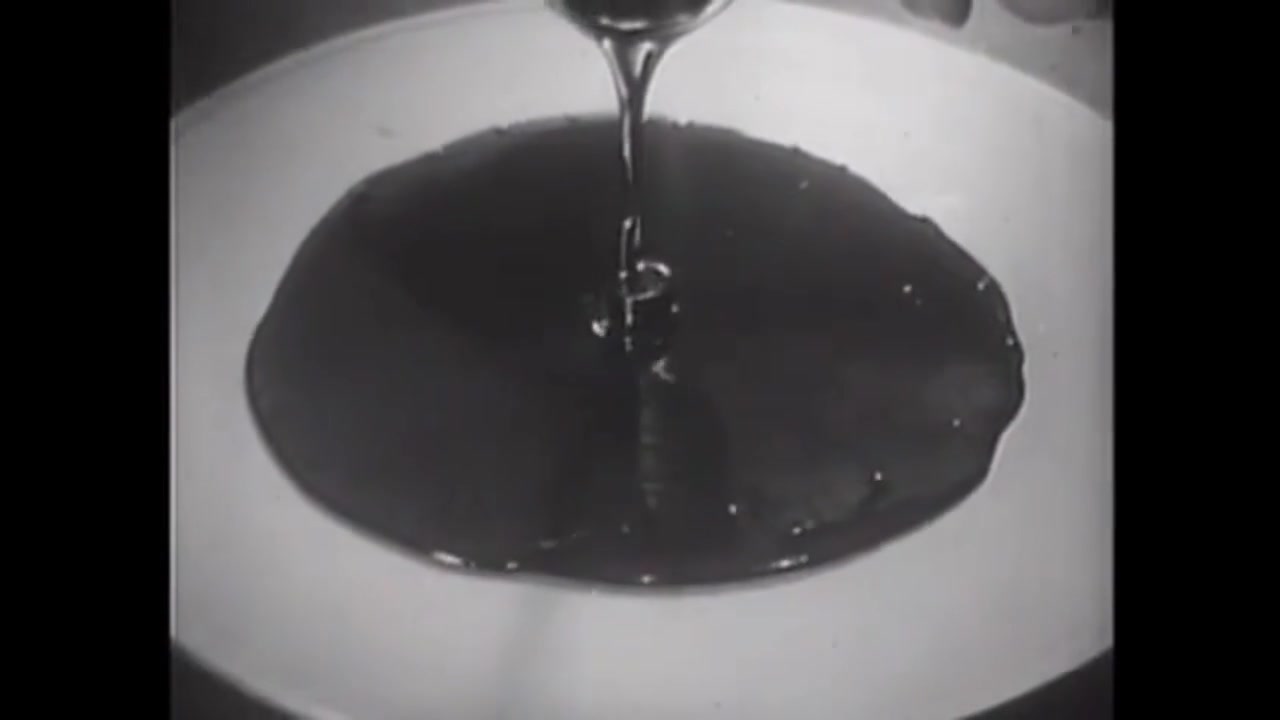
Cut 14 — 061 · MATTER ▶ Play Cut 14 (1:27.2–1:33.7)
Claude Sonnet 061 · MATTER ↗ SCION 061 Strength to protect · Earned duration (Sonnet)

Cut 14 — Industrial Viscous Pour Study (c. 1956)

What is on screen: A continuous ribbon of dark, viscous liquid pours into a white basin, expanding into a glossy concentric pool.

NEARMATCH bridge: From heavy mechanical suspension to fluid material affordance held for its full physical duration.

Why chosen (Critic record): Praised by Sonnet's critic ('Strength to protect: the 7.8 s pour 12.6–20.3 ... duration is earned').

Source window: 13.0s–19.5s (6.5s) Audio: Silent 16mm gauge + optical room tone bed Archive source ↗
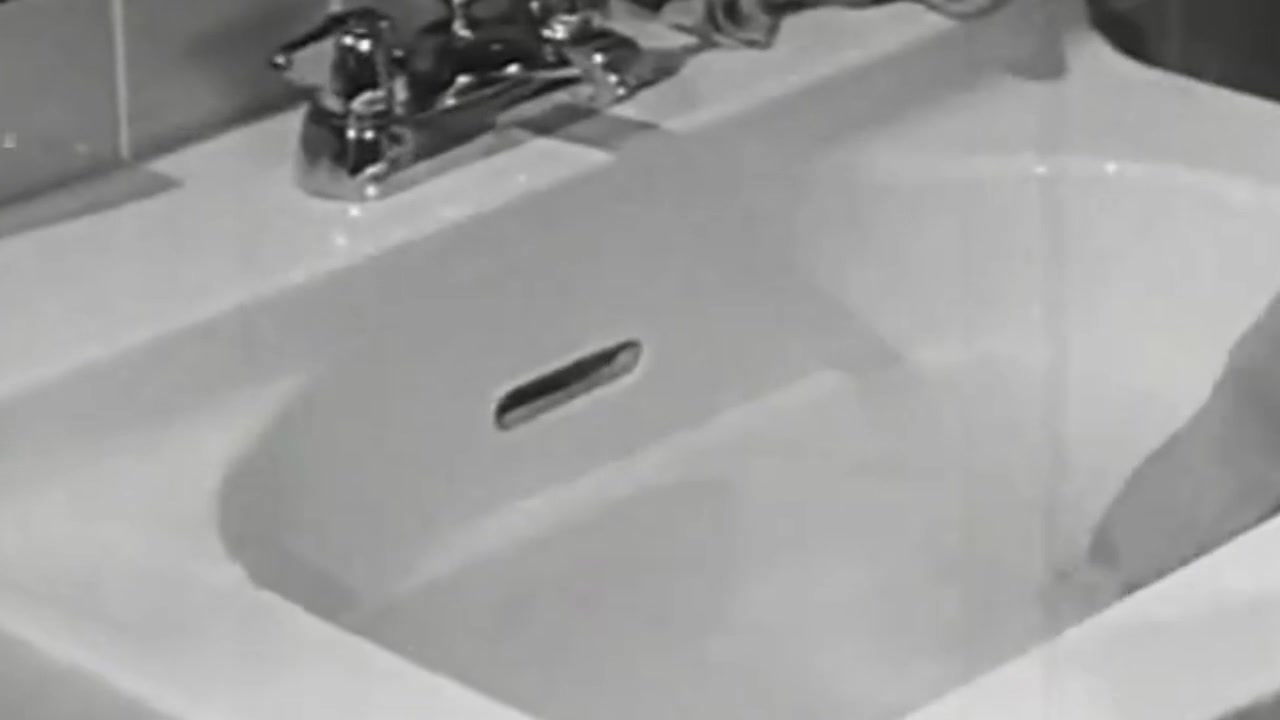
Cut 15 — COLLECTIVE INVENTORIES ▶ Play Cut 15 (1:33.7–1:39.2)
Gemini Argon COLLECTIVE INVENTORIES ↗ SCION 065 · 084 · 092 PASS · Situated morning handoff (Argon Round 2)

Cut 15 — Care of the Hair and Nails (1951)

What is on screen: Hands turn porcelain basin taps and wash carefully in running water to begin a composite morning.

NEARMATCH bridge: Fluid pouring into a circular white basin (061 Matter) rhymes directly with water running in a domestic porcelain sink.

Why chosen (Critic record): Passed Argon Round-2 Critic Tribunal: anchors the composite morning in a concrete, situated domestic task.

Source window: 3.2s–8.7s (5.5s) Audio: Synchronized archival track (-19 LUFS) Archive source ↗
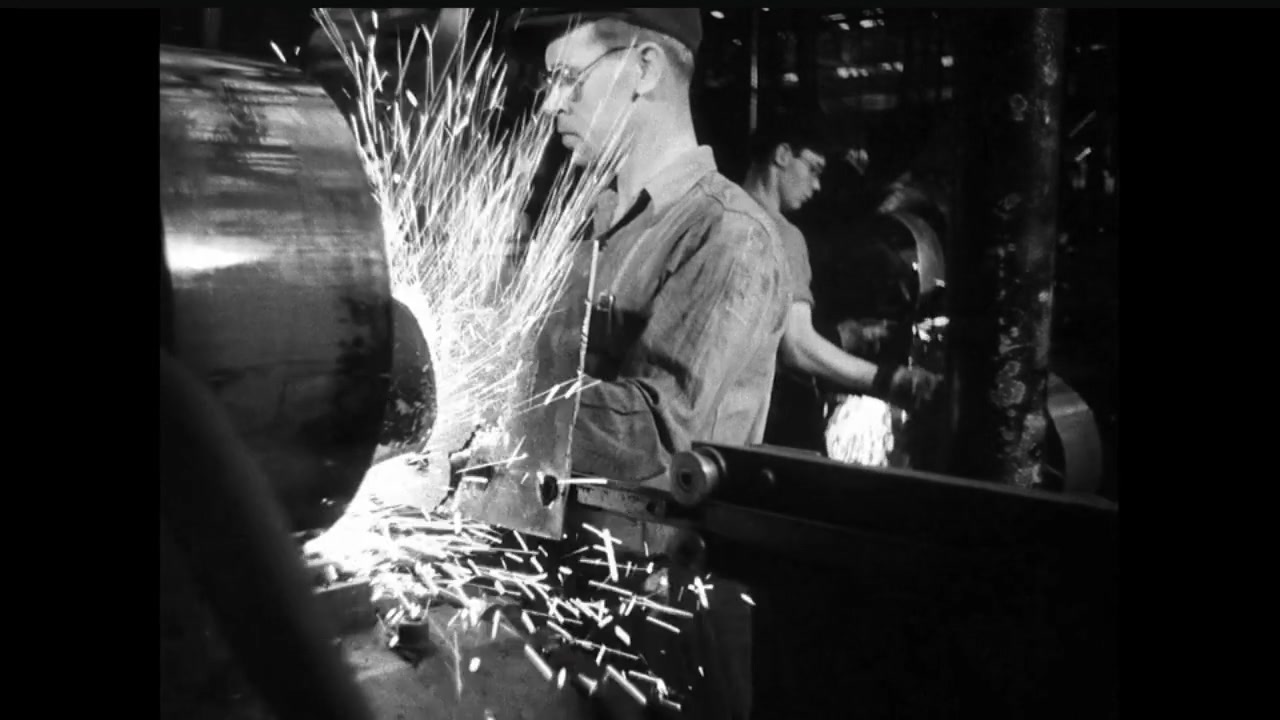
Cut 16 — 065 · FIVE RECORDS ▶ Play Cut 16 (1:39.2–1:44.7)
OpenAI Sol 065 · FIVE RECORDS ↗ SCION 065 PASS · Differentiated archive labor V02 (Sol)

Cut 16 — Master Hands ( Chevrolet Industrial Film ) (1936)

What is on screen: A skilled machinist presses metal against a high-speed grinding wheel, sending a bright cascade of sparks across the workshop.

NEARMATCH bridge: Hands at the domestic basin (Argon 065) hand off to skilled industrial hands at the grinding wheel (Sol 065).

Why chosen (Critic record): Earned a qualified VISUAL PASS in Sol's Round 2 ('qualified VISUAL PASS for five differentiated archive practices').

Source window: 11.0s–16.5s (5.5s) Audio: Synchronized archival track (-19 LUFS) Archive source ↗
Movement V / VI · ALLWAYS Statement · Archive

THE CARRIER & THE CHASE

An archive has already passed through many hands.
Our edit enters that work and becomes answerable for what it does next.
Cut 17 — KINETIC ▶ Play Cut 17 (1:46.9–1:52.4)
Gemini Argon KINETIC ↗ SCION 083 · 079 · 078 PASS · Rhythmic labor study (Argon Round 2)

Cut 17 — Labor of Thy Hands (Handcraft) (c. 1950)

What is on screen: A weaver throws and beats a wooden handloom shuttle in a crisp, reciprocating horizontal rhythm.

NEARMATCH bridge: Matches rotary industrial craft (Sol 065) with reciprocating textile rhythm before releasing momentum outward.

Why chosen (Critic record): Passed Argon Round-2 Critic Tribunal: preserves the human craftsperson's bodily cadence inside repetitive work.

Source window: 3.5s–9.0s (5.5s) Audio: Synchronized archival track (-19 LUFS) Archive source ↗
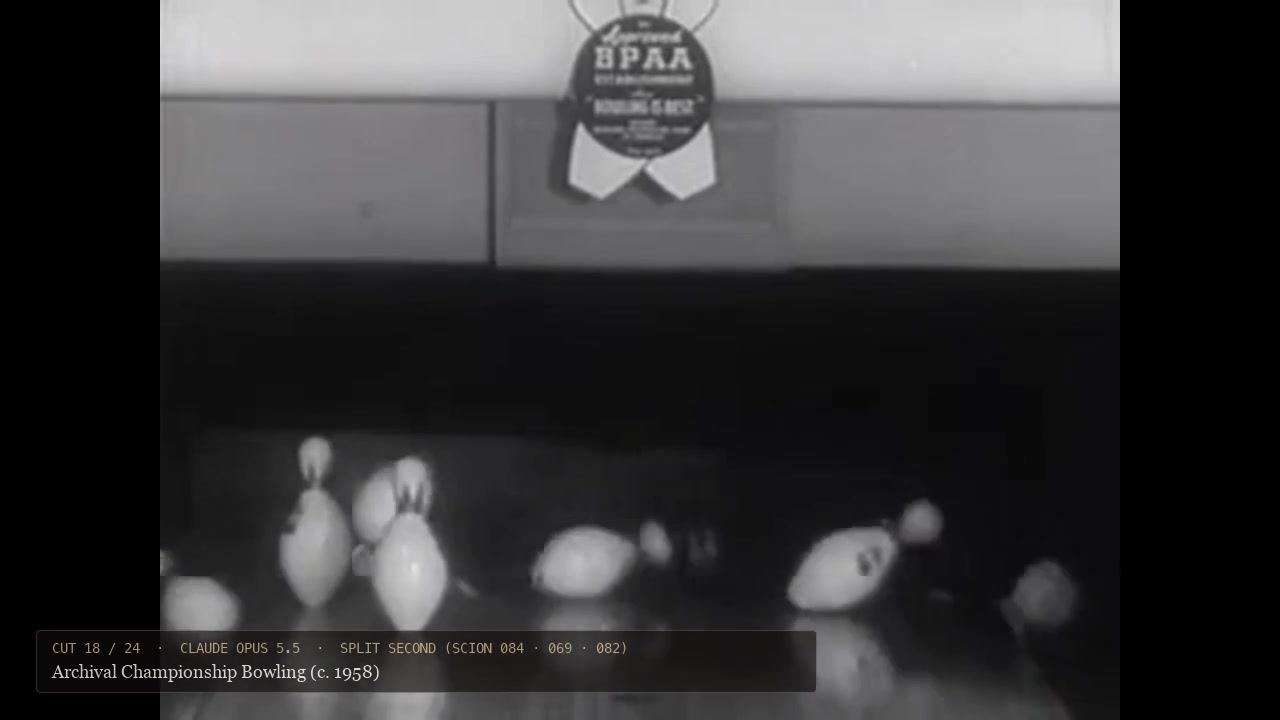
Cut 18 — SPLIT SECOND ▶ Play Cut 18 (1:52.4–1:57.2)
Claude Opus 5.5 SPLIT SECOND ↗ SCION 084 · 069 · 082 Strength to protect · Consequence payoff (Opus 5.5)

Cut 18 — Archival Championship Bowling (c. 1958)

What is on screen: After two withheld releases, the bowler's ball finally strikes the headpin and scatters all ten pins.

NEARMATCH bridge: Converts repetitive back-and-forth loom motion into forward release and physical impact.

Why chosen (Critic record): Explicitly protected by Opus's blind critic ('Protect: the bowler return and the pin-fall payoff at 12-13').

Source window: 9.2s–14.0s (4.8s) Audio: Synchronized archival track (-19 LUFS) Archive source ↗
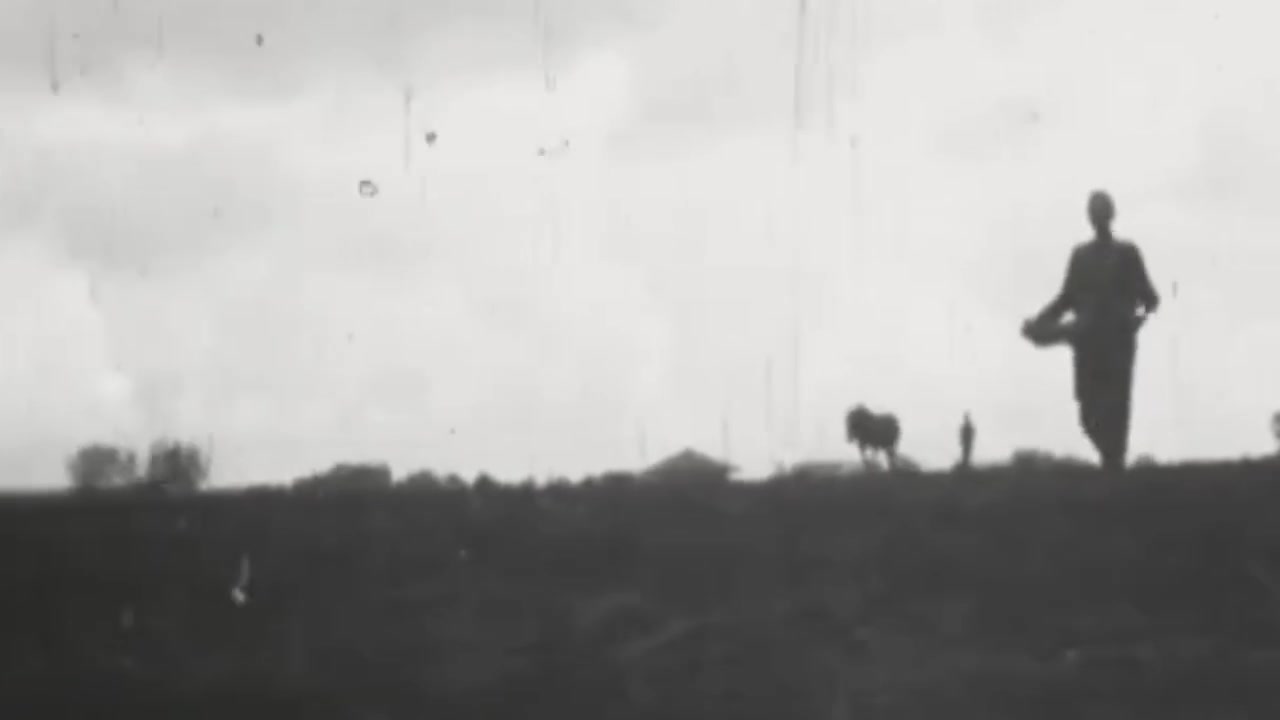
Cut 19 — CUT TO THE CHASE ▶ Play Cut 19 (1:57.2–2:02.7)
Gemini Argon CUT TO THE CHASE ↗ SCION 082 · 084 · 069 PASS · Directional momentum transfer (Argon Round 2)

Cut 19 — Nederlandsche Heide Maatschappij (1926)

What is on screen: A lone figure sprints across a wide open heath under nitrate-era sky, carrying directional momentum across landscapes.

NEARMATCH bridge: Transfers the kinetic impact of Split Second into open-air human pursuit across a horizon line.

Why chosen (Critic record): Passed Argon Round-2 Critic Tribunal: clean horizon line and unbroken directional run.

Source window: 11.0s–16.5s (5.5s) Audio: Synchronized archival track (-19 LUFS) Archive source ↗
Cut 20 — 077 · ROWS AND FLOCKS ▶ Play Cut 20 (2:02.7–2:08.2)
OpenAI Sol 077 · ROWS AND FLOCKS ↗ SCION 077 PASS · Linear human row vs. flock (Sol)

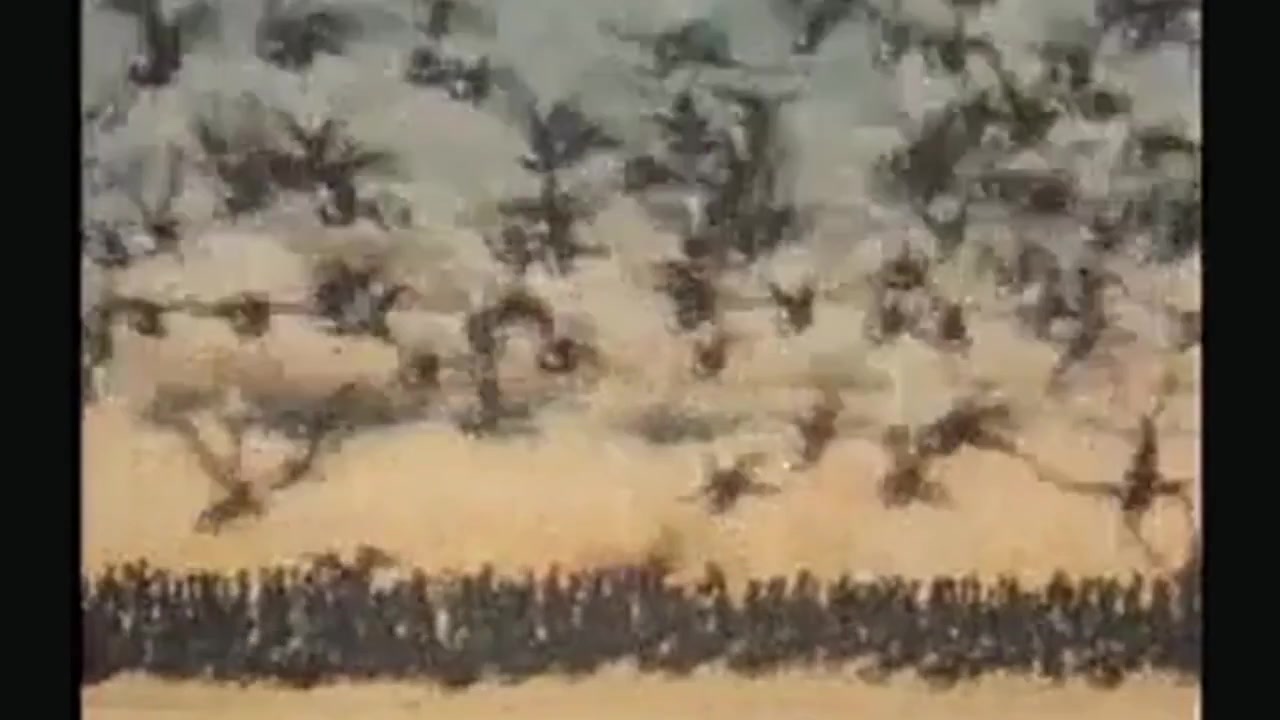
Cut 20 — Contemplative Horizon & Flock Study (c. 1940)

What is on screen: A dense flock of birds wheels across the sky above a horizontal row of silhouetted figures standing along a ridge.

NEARMATCH bridge: Graphic horizon match with the lone runner on the heath (Argon 19), expanding one runner into a collective horizon and sky.

Why chosen (Critic record): Passed Sol's visual critic ('bounded VISUAL PASS — Deliberately spaced human placements beside a linear guide contrast with nonlinear flock motion').

Source window: 11.0s–16.5s (5.5s) Audio: Silent 16mm gauge + optical room tone bed Archive source ↗
Movement VI / VI · Between Takes · The Interval & The Room

THE ROOM REMAINS

A moment does not have to explain a life to be worth keeping.
The room remains. That does not tell us everything about who left.
Cut 21 — 071 · A FILE HAS EDGES ▶ Play Cut 21 (2:10.4–2:15.9)
OpenAI Sol 071 · A FILE HAS EDGES ↗ SCION 071 PASS · Material carrier proof V02 (Sol)

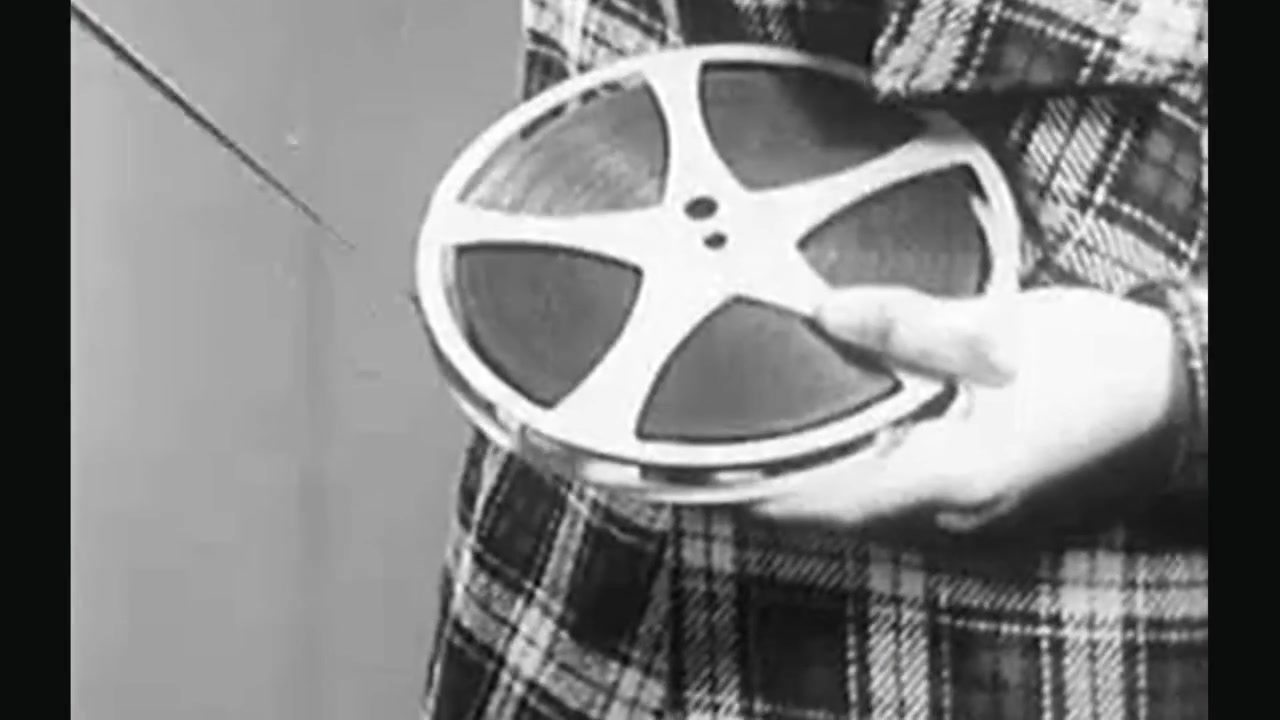
Cut 21 — Facts About Film (1948)

What is on screen: An archivist's hands hold and inspect a 16mm metal film reel and celluloid strip—the physical carrier behind every image.

NEARMATCH bridge: Returns from the sky to the physical 16mm spool that carried all twenty preceding fragments.

Why chosen (Critic record): Passed Sol's Round 2 critic ('bounded VISUAL PASS for the truthful parent/selection/reduced-derivative relation').

Source window: 10.0s–15.5s (5.5s) Audio: Silent 16mm gauge + optical room tone bed Archive source ↗
Cut 22 — MNEMONIL ▶ Play Cut 22 (2:15.9–2:29.9)
Claude Opus 5.5 MNEMONIL ↗ SCION 067 · 093 · 094 PASS · Highest-rated passage in Opus 5.5

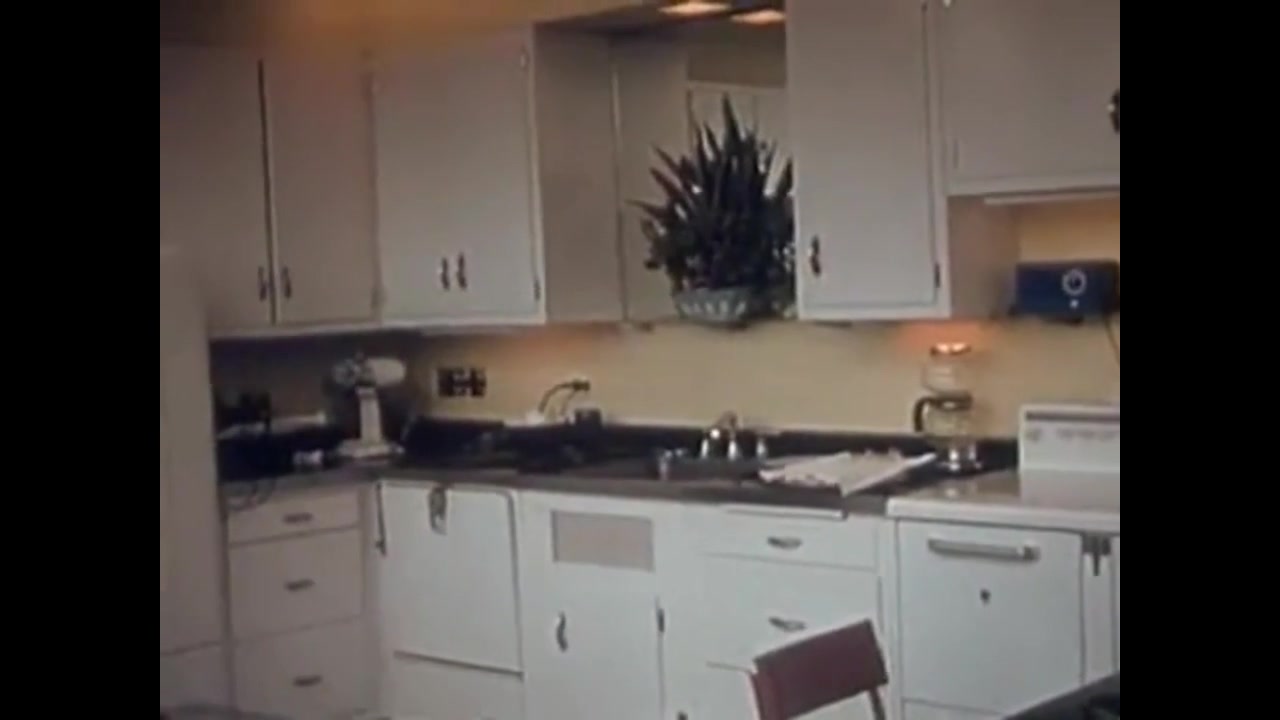
Cut 22 — Historical Museum Kitchen Exhibit (c. 1962)

What is on screen: The voiceover recalls an 'untouched kitchen' (plant, red chair, icebox)—until two visitors in coats step into frame behind a museum rope stanchion, quietly exposing the borrowed memory.

NEARMATCH bridge: The emotional centerpiece of ALLWAYS: picture and museum rope break the narrator's claim of private memory without a single didactic caption.

Why chosen (Critic record): The ONLY film in Opus 5.5's run to pass its blind critic ('VERDICT: pass, narrowly. Protect: the kitchen sequence at 23-40s. The narration lists details that match the frames, and the exhibit rope then breaks the claim without any comment.').

Source window: 24.0s–38.0s (14.0s) Audio: Synchronized archival track (-19 LUFS) Archive source ↗
Cut 23 — SCION 090 · THE CLOCK ▶ Play Cut 23 (2:29.9–2:34.9)
Gemini Argon SCION 090 · THE CLOCK ↗ SCION 090 PASS · Horological anchor (Argon Round 2)

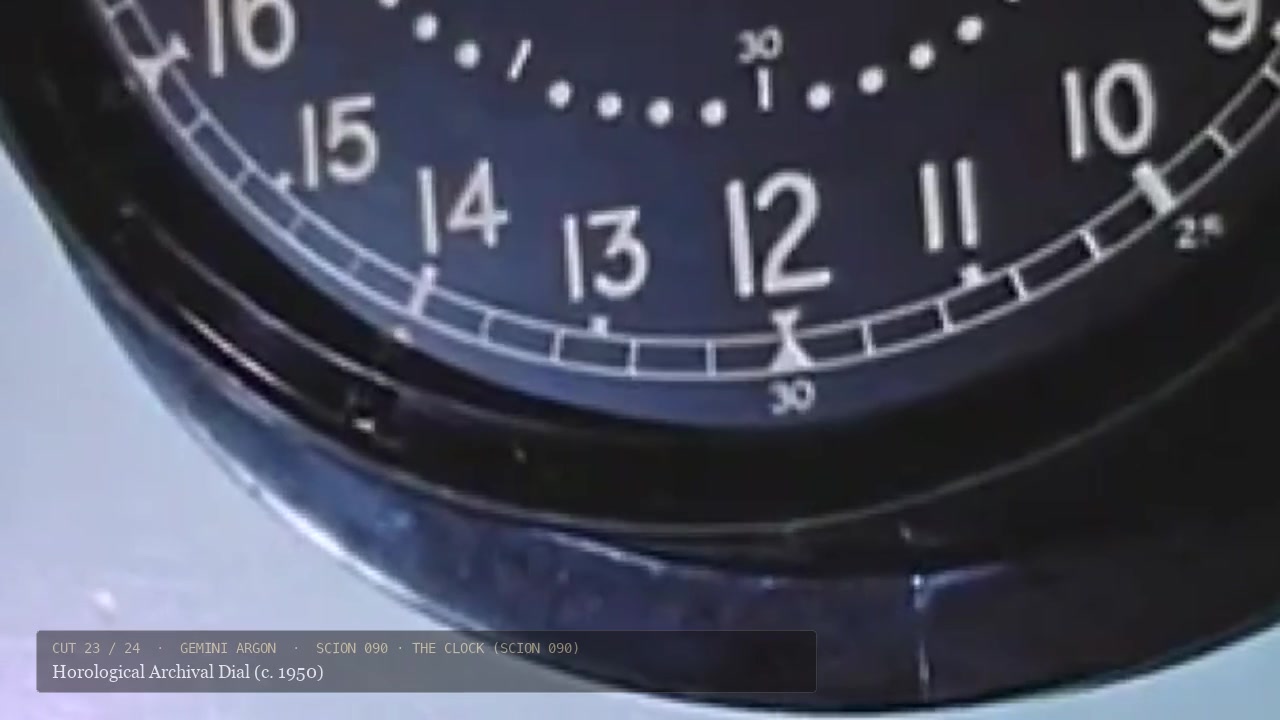
Cut 23 — Horological Archival Dial (c. 1950)

What is on screen: Close-up of an archival clock dial as the sweep hand marks the shared minute across disparate lives.

NEARMATCH bridge: Marks the time elapsed in the museum kitchen before opening the door to the final empty room.

Why chosen (Critic record): Passed Argon Round-2 Critic Tribunal: anchors the horological montage in a legible, unadorned timepiece.

Source window: 3.5s–8.5s (5.0s) Audio: Synchronized archival track (-19 LUFS) Archive source ↗
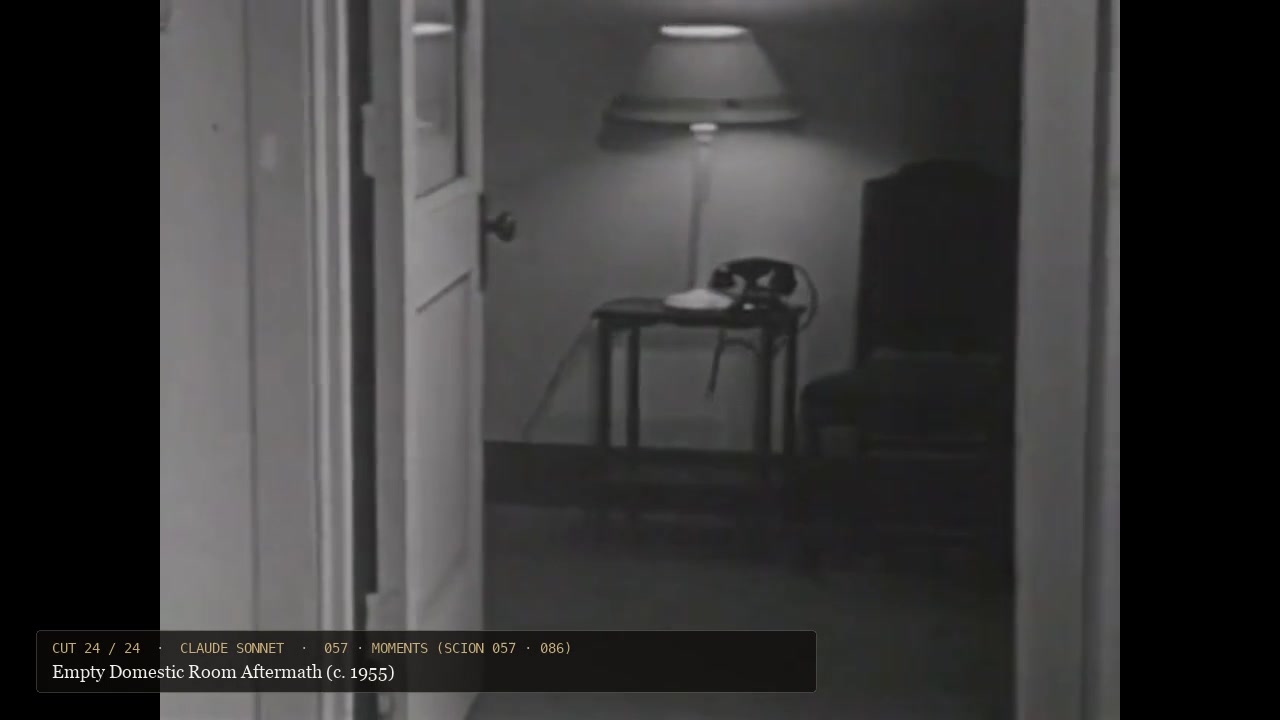
Cut 24 — 057 · MOMENTS ▶ Play Cut 24 (2:34.9–2:39.4)
Claude Sonnet 057 · MOMENTS ↗ SCION 057 · 086 Strength to protect · Closing hold (Sonnet)

Cut 24 — Empty Domestic Room Aftermath (c. 1955)

What is on screen: Seen through an open white door: an unoccupied chair, a small table with a telephone, and a lit lamp held in stillness after everyone has left.

NEARMATCH bridge: Completes the circle begun in Cut 01: the chair by the window gives way to the empty chair and lit lamp after the occasion is over.

Why chosen (Critic record): Explicitly protected by Sonnet's blind critic ('Strength to protect: the empty-room hold at 46.25–48.5') and embodies Between Takes: 'The room remains. That does not tell us everything about who left.'

Source window: 44.0s–48.5s (4.5s) Audio: Silent 16mm gauge + optical room tone bed Archive source ↗
Visual Verification

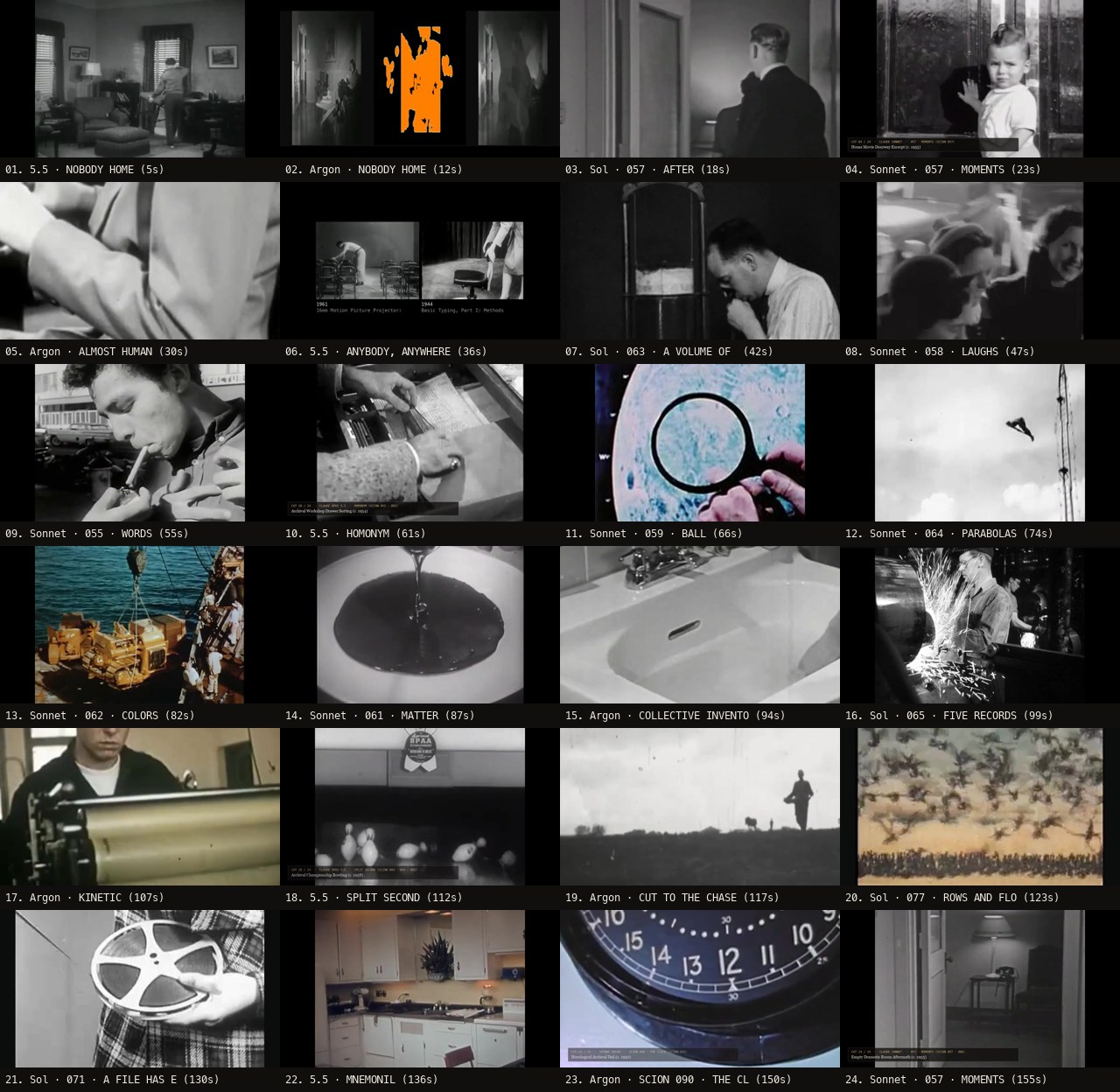
24-Cut Temporal Proof Strip

Every shot extracted at its midpoint from the rendered master file (allways-best.mp4) to verify clean 16:9 framing, source continuity, and absence of unintended black frames.

24-cut temporal proof strip for ALLWAYS — Cinema from the Rest of the Frame
Reproducible Method

Master Anthology Synthesis Prompt

# ALLWAYS — Master Anthology Synthesis Prompt (Across All Makers)

You are assembling the single flagship **ALLWAYS Anthology Film** (`ALLWAYS — Cinema from the Rest of the Frame`) from the full corpus of 131 handmade archival proof films created across four independent AI makers:
- **Claude Opus 5.5** (`allways-opus/` — 12 B-Roll of Civilization proof films)
- **Gemini Argon** (`allways-argon/` & `allways-argon/studio/` — 12 B-Roll proofs + 59 SCION operators 055–113 + 6 Studies + 5 Collections)
- **OpenAI Sol** (`allways-sol/` — 23 SCION operator films 055–078 + 16 comparison edits)
- **Claude Sonnet** (`allways-sonnet/` — 11 SCION operator microfilms 055–065)

## 1. Selection Rule: Critic-Protected Passages Only
Do not select shots by title or text description alone. Read every independent critic report (`film.json`, `CRITIC-ROUND-1.md`, `CRITIC_RECORDS.txt`, and `manifests/*.json`) and harvest only passages that cleared visual inspection (`PASS`) or were explicitly designated **`Strength to protect`** / **`Protect`** by a blind critic before seeing the builder's notes.

## 2. Six-Movement Structural Arc (`STATEMENT.md` & `NOTEBOOK.md`)
Organize the 24 selected cuts into six movements that trace the philosophical spine of ALLWAYS:
1. **I / THE OCCASION & THE EDGE (`Record`)**: Someone moves a chair (`Opus 5.5 · Nobody Home`), an erasure triptych discloses its mask (`Argon · Nobody Home`), a doorway holds after speech ends (`Sol · 057 After`), and a child stares back through a screen door (`Sonnet · 057 Moments`).
2. **II / NEARMATCH (`Two Lives Across a Cut`)**: A complete collar adjustment (`Argon · Almost Human`), two people in 1961 and 1944 preparing to sit (`Opus 5.5 · Anybody, Anywhere`), measured breath in a 1927 glass cylinder (`Sol · 063 A Volume of Air`), and shared unscripted laughter (`Sonnet · 058 Laughs`).
3. **III / THE RELAY (`Word, Sphere, Curve`)**: Polysemic `'draw'` on a cigarette (`Sonnet · 055 Words`) pivoting to hands sorting an open `'drawer'` (`Opus 5.5 · Homonym`), centered circles holding registration across four decades (`Sonnet · 059 Ball`), and a high diver tracing a gravitational parabola (`Sonnet · 064 Parabolas`).
4. **IV / THE WORK (`Material & Morning Handoff`)**: A yellow tractor swung over teal sea (`Sonnet · 062 Colors`), a 7.8s viscous pour (`Sonnet · 061 Matter`), washing hands at a porcelain basin (`Argon · Collective Inventories`), and grinding metal in a shower of sparks (`Sol · 065 Five Records`).
5. **V / THE CARRIER & THE CHASE (`Rhythm & Horizon`)**: Throwing a handloom shuttle (`Argon · Kinetic`), the bowling release finally scattering the pins (`Opus 5.5 · Split Second`), a lone runner sprinting across a heath (`Argon · Cut to the Chase`), and a flock of birds rising above a human ridge (`Sol · 077 Rows and Flocks`).
6. **VI / THE ROOM REMAINS (`Borrowed Memory & Look Again`)**: Hands inspecting a 16mm archival reel (`Sol · 071 A File Has Edges`), the untouched kitchen broken by visitors behind a museum rope (`Opus 5.5 · Mnemonil`), an archival clock face marking the shared minute (`Argon · SCION 090`), and the final empty domestic room held through an open doorway (`Sonnet · 057 Moments`).

## 3. Unified Visual & Acoustic Finishing
- Frame every archival passage cleanly at `1280×720` (`24 fps`), removing disparate per-maker HUD bars so all four makers inhabit one cohesive theatrical screen.
- Identify each cut during its opening `2.5s` with a subtle lower-third attribution (`CUT ##/24 · MAKER · FILM · SOURCE`), then fade the label out completely so the archival image stands unencumbered.
- Preserve and loudness-normalize (`-19 LUFS`) all synchronized archival speech and optical sound; bridge silent-gauge 16mm transfers with continuous `-32 dBFS` optical room tone and `0.18s` audio crossfades so the soundtrack never drops to dead digital zero.