Ball
One rim held at the centre of the screen across thirteen films.
The operator’s theoremHold one graphic anchor perceptually steady while its material, scale and social purpose change across images. The viewer should feel continuity of form and increasing instability of meaning without needing a digital morph.
critic: pass · repaired
43 s · 1,975 KB · found footage from movingimagearchive.com · source ledger
How it was made
- Forage15 shots from the notes appear below; 15 reached the cut.
- Choose15 source shots from 14 films, chosen from frames and sound levels.
- Cut15 shots over 43 s, edit list 2472aea7a54e.
- Render640×480 at 24 fps, 1,975 KB, with a ledger of every source and transform.
- CriticPass
- RepairApplied
The cut, shot by shot
Each frame below was taken from the middle of the shot in the finished film. The last column is the reason recorded in the edit list for putting it there. Times are in this film; “source film at” is where the shot sits in the original.
| Frame | In | Source | Why it is here |
|---|---|---|---|
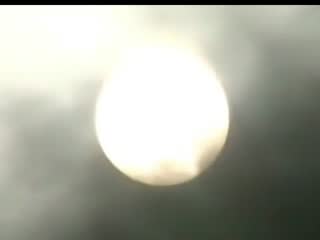 | 0:00.0 3.5 s | Sun Peeks Outs From Behind Clouds (2007) · source film at 0:00.6 · registered, scale ×2.3609 · muted | sun through cloud. The opening anchor. A sun behind cloud is the plainest circle in the archive, bright enough to set the target size and centre. Held 3.5 s so the viewer learns where the rim lives before anything changes. |
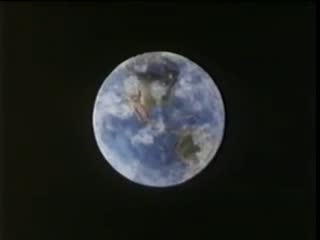 | 0:03.5 2.2 s | Climate Factor (1984) · registered, scale ×2.0202 · held still | the Earth, painted globe. A painted globe from a climate film. The first change of kind: from a sky object to a model of one. The rim lands within 5 px of the sun's. |
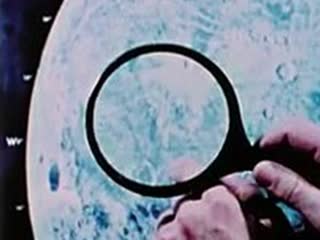 | 0:05.8 2.2 s | Assignment: Shoot the Moon (1967) · registered, scale ×3.1603 · held still | a lens over the moon map. First of three lenses (moon map, signature, eye), from two films twenty years apart. The archive keeps showing someone looking through a circle. Chosen because the use changes while the pose stays the same. |
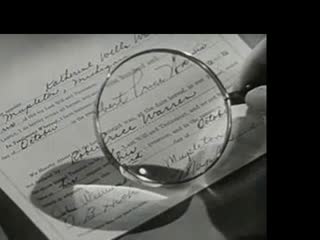 | 0:08.0 2.2 s | Twenty-Six Old Characters, The (1947) · registered, scale ×1.8654 · held still | a lens over a signature. Second lens, over a handwritten signature. The rim is the lens's own metal ring, so it registers within 4 px. |
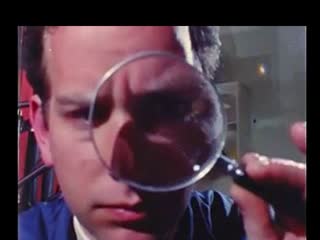 | 0:10.2 2.5 s | Assignment: Shoot the Moon (1967) · registered, scale ×1.8319 · held still | a lens over an eye. Third lens: the circle looks back. An eye behind glass, in the same place on screen as the sun was. |
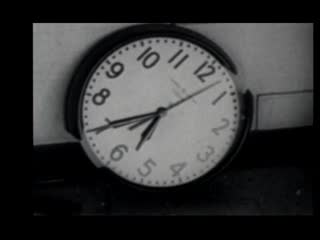 | 0:12.8 2.5 s | ALASKAN EARTHQUAKE (1966) · source film at 4:44.7 · registered, scale ×0.8018 · muted | a wall clock. A wall clock from a 1966 earthquake film: the first circle that measures something. The second hand keeps moving inside the held rim. The source clip is 720×480, so the anchor is about 22 px off. |
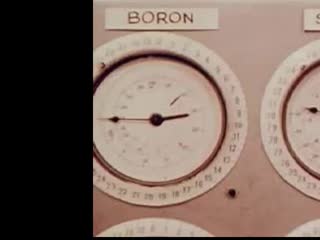 | 0:15.2 2.2 s | Big Train, The (Part I) (1950) · registered, scale ×1.9986 · held still | a slide-rule dial, BORON. A slide-rule dial. A second measuring circle; its twin on the right is cut by the crop. Rim error under 3 px. |
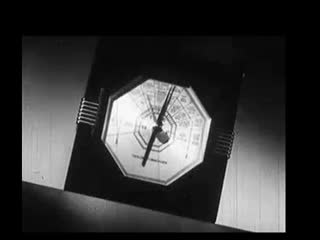 | 0:17.5 2.8 s | Plastics (1944) · registered, scale ×1.6471 · held still | an octagonal clock: the rim fails. The irregular object. An octagonal clock whose edge is not a circle. The anchor was set by hand and left approximate (rim about 29 px small), so the registration visibly fails here instead of being corrected. |
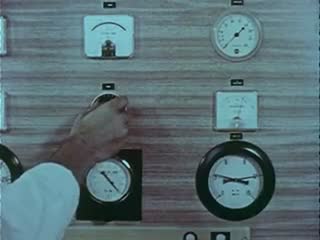 | 0:20.2 3.4 s | Man and Space (1961) · source film at 14:14.1 · cover · muted | RELEASE: a hand at the gauge panel. The contextual release. Unregistered and whole frame, with the expected beat withheld. A hand turns a control beside the gauge panel: the first shot in which a circle is used rather than shown. |
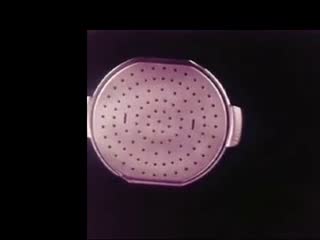 | 0:23.7 2.8 s | [Frigidaire Imperial Line] (1956) · registered, scale ×1.7462 · held still | a shower rose. After the instruments, the bathroom. A shower head from a 1956 appliance film, rim within 3 px. The taps return here, slower. |
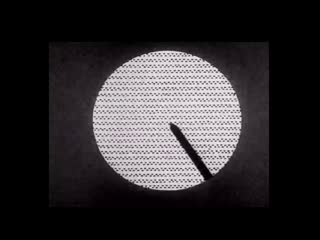 | 0:26.4 2.8 s | Finding his voice : an animated cartoon synchronized to voice & sound (1929) · registered, scale ×0.6876 · held still | a speaker grille and a pointer. A speaker grille and a pointer from a 1929 cartoon. A paper-surfaced circle that looks like a dial and turns out to be a voice. |
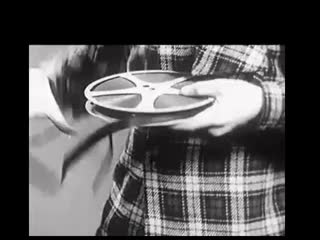 | 0:29.2 2.2 s | Facts About Film (1948) · source film at 6:14.5 · registered, scale ×1.6 · muted | a film reel in a boy's hands. A film reel in a boy's hands: the archive's own medium turns up as a circle. The tilted ellipse and the boy's movement make the registration drift about 25 px, kept as an honest seam. It stands in for the prompt's object used in play. |
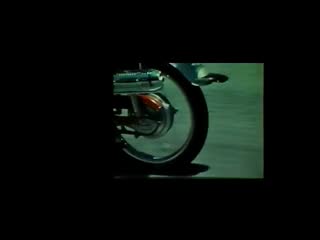 | 0:31.4 2.2 s | Cycle Logic, Cycle Safety (1967) · source film at 19:46.0 · registered, scale ×0.9655 · muted | a motorcycle wheel, running. A motorcycle wheel. The rim was marked by hand on gridded frames because the detector kept reading the hub. The wheel moves, so it drifts: the first circle that goes somewhere. |
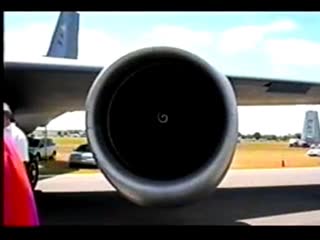 | 0:33.6 1.6 s | Finale (2007) · source film at 26:37.8 · registered, scale ×2.5203 · muted | a jet intake. A jet intake, 2007: the last registered circle and the largest dark disc. It ends at 35.2 s, before the source clip's own page-turn transition. |
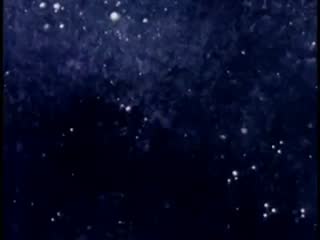 | 0:35.2 4.6 s | Highlights 1965: A Progress Report (Part III) (1965) · source film at 1:54.2 · cover · muted | EXIT: a painted moon drifts out of frame. The exit. Unregistered. In a 1965 space-animation clip a painted moon drifts out to the left and leaves the starfield empty, then the image fades. The circle leaves the frame in a moving shot, as the prompt asks. |
 | 0:39.8 3.0 s | BALL / round things from thirteen films, 1929–2007 / movingimagearchive.com · see ledger | source card |
Comparison and alternate cuts
2409 KB
What was found, and what was not
The sheets the film-maker worked from
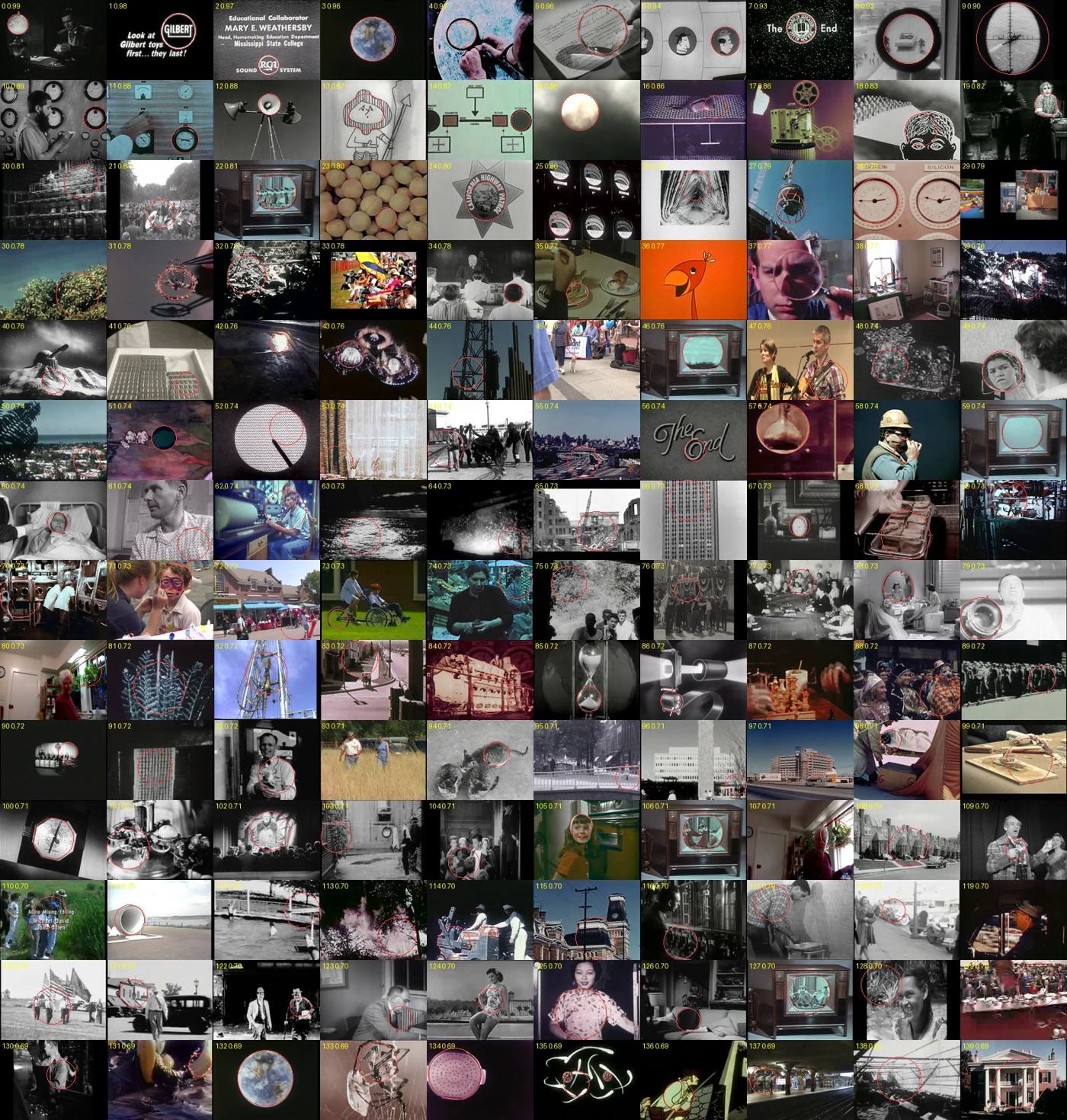
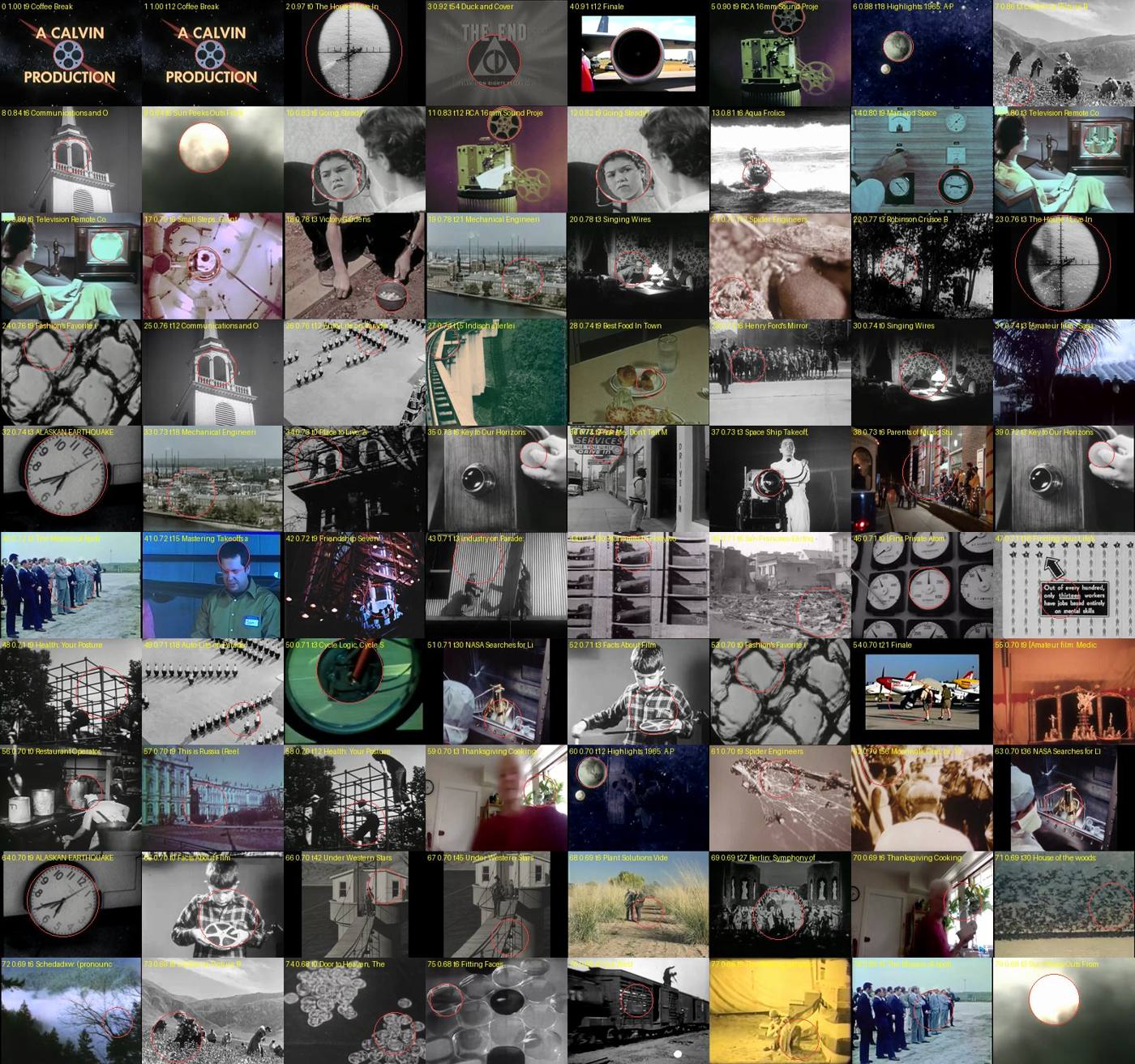
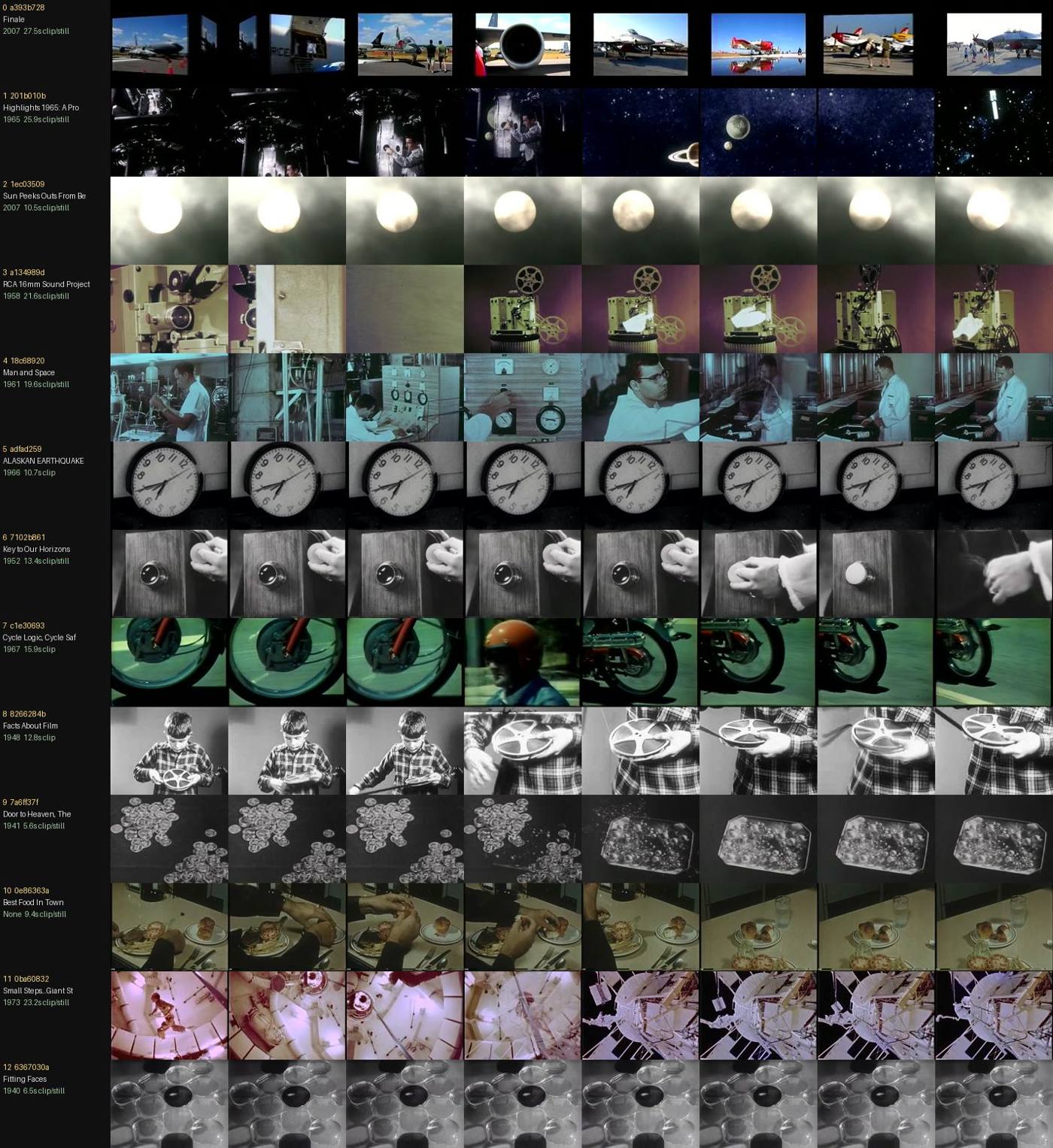
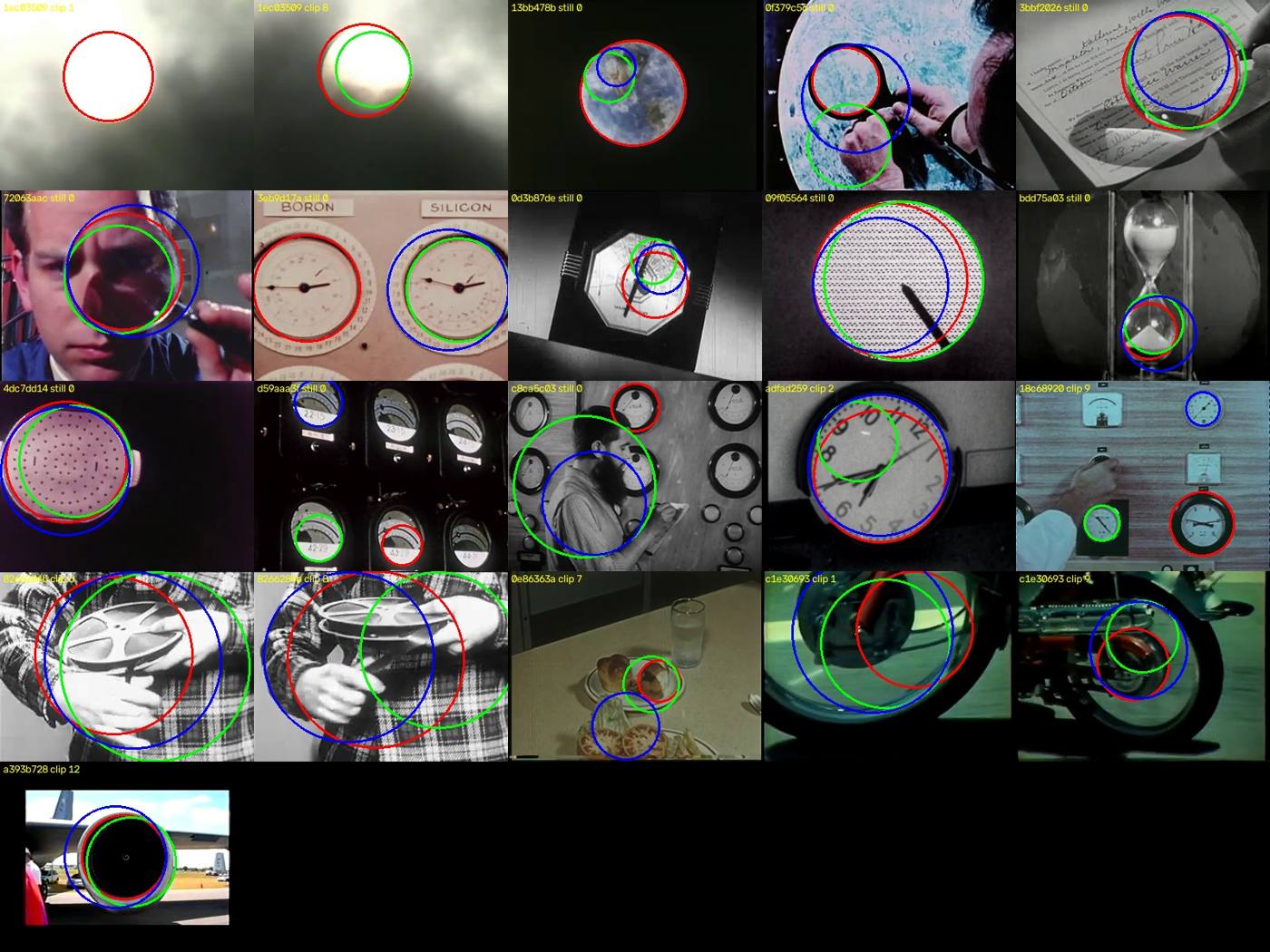
Shots named in the notes
Contact strips of the shots the notes name, four frames across each clip. Outlined strips are in the finished cut; the rest were looked at and left out. The sentence under each is the note written when it was considered.
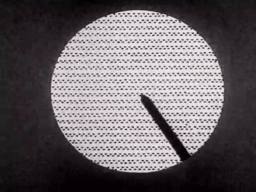
09f05564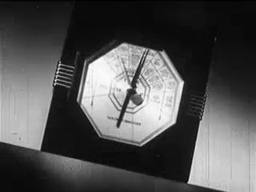
0d3b87de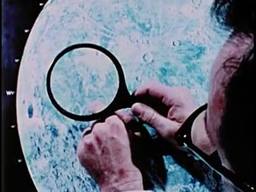
0f379c56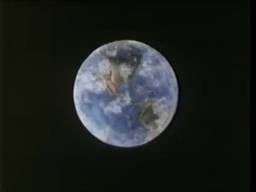
13bb478b
18c68920
1ec03509
201b010b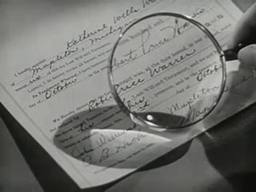
3bbf2026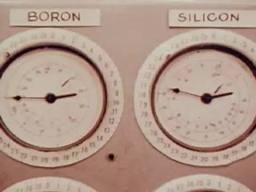
3eb9d17a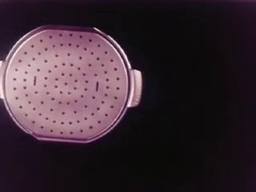
4dc7dd14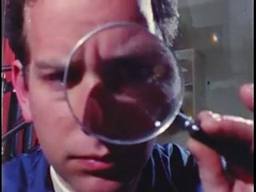
72063aac
8266284b
a393b728
adfad259
c1e30693The whole local archive of 405 sound clips is in the atlas.
Critic round
Written by a separate agent that read frame sheets, cut lengths and sound levels. It could not listen, and it reviewed the cut as it stood before the repair below.
059 Ball: Graphic constancy. PASS (strongest proof in the batch)
- Observations
- From 0 to 17.5 the circle stays perceptually locked through sun → earth (3.5) → magnifier over a map (5.75) → magnifier over a document (8) → magnifier over an eye (10.25) → clock (12.75) → BORON dial (15.25) → octagonal meter (17.5–20.2).
- The octagon is the irregular object, left uncorrected, and it adds tension.
- Against 059-ball-control the difference is obvious: the control's magnifier sits upper-left (6–7), the shower rose sits on the left edge (24), and the motorcycle wheel is large and lower-left (31–33).
- Contextual release at 20.25–23.7: a wide lab shot, then a hand turning a control knob among the gauges, then the operator's face. The dials are recast as instruments of control.
- The score withholds its pulses here: digital silence 20.2–23.7, measured.
- The exit is clear. The planet drifts out of frame left (36.5–37.75), leaving stars and a passing satellite (39.75). The anchor literally leaves.
- Sound is a synthetic tap score whose timbre changes by section (low thumps, then about 2.5–4 kHz pings, then lower triads, then broadband clicks), in the spectrogram only.
- From 0 to 17.5 the circle stays perceptually locked through sun → earth (3.5) → magnifier over a map (5.75) → magnifier over a document (8) → magnifier over an eye (10.25) → clock (12.75) → BORON dial (15.25) → octagonal meter (17.5–20.2).
- Largest gap:
- After the release, the second half (23.75–35.5: shower rose, speaker grille, reel, wheel, engine) goes back to plain matching. Meaning drifts but does not become more unstable, and there is no second release.
- Craft faults: the jet-engine source's own page-turn effect is visible at 35.25–35.5 as a squeezed frame that reads as a render error, and the end credit line is clipped at both edges (40.25–43, "…ifteen round things … 1929–200…").
- Repair (falsifiable): End the engine shot at 35.2, before the source effect, and cut straight to the planet. Re-set the credit to fit the frame.
- Prediction: no frame between 35.0 and 36.0 shows a non-uniform transform.
- For meaning, a separate v2 test: widen the engine shot to show the aircraft and the person in red as a second release, and see whether viewers describe a change of scale or purpose there.
- Strength to protect: registration that holds through the opening, the uncorrected octagon, and the silent release.
- Ethics: none.
- Builder claims I disagree with: none of substance.
Jet-intake shot now ends before the source film’s own page-turn effect; end-card text shortened so it is no longer clipped.
The prompts, to copy
Everything needed to run this film again. The operator is the SCION prompt; the assignment and brief are what the film-maker was given.
The assignment given for this film436 characters
No agent was given this film; this records how it was made.
Not delegated. This film was made directly by the session lead, after the shared tools were built. Method: the archive's text search cannot find a shape, so scan every still and clip frame for circles (Hough, scored by rim-edge support), read the top candidates by eye, measure each anchor, register by translation and uniform scale only, add an unregistered control, compose a tap score with one beat omitted at the contextual release.
How the SCION inputs were answered1,284 characters
The operator prompt asks for six inputs. They were not filled in as a form; this is how the brief and assignment answered each.
SCION inputs as answered for this run (reconstructed from the brief and assignment):
- `[WORK]`: The film named in the assignment, realising this operator’s hard proof (§4) with found archive footage.
- `[DIRECTION_AND_REFERENCES]`: The operator’s own §1 theorem and §4 proof. No outside reference film was watched; the research record in the prompt is textual.
- `[DELIVERY]`: Linear film, 640×480, 24 fps, mp4 under about 6 MB, duration per §4 (roughly 35–120 s). Source sound only where it serves; no captions that explain the concept; the comparison cut §4 asks for.
- `[RESOURCES]`: tools/allways-forage (index.json, forage.py, render.py), ffmpeg, OpenCV, numpy, PIL, and a local clone of hartswf0/cineosis-lab. The archive’s own site could not be reached from the build environment.
- `[CORPUS_AND_RIGHTS]`: Only shots from movingimagearchive.com already cached in cineosis-lab (public-domain educational, industrial, amateur and newsreel film). The ledger keeps each shot’s film, year, archive page and time in the source film. No new rights are asserted.
- `[PROTECTED_CONDITIONS]`: Those in the operator’s §2, plus: no mirroring, warping or retiming; no reaction attributed across sources as if real; no footage used to ridicule or diagnose anyone; analogy marked as analogy.
The operator: SCION 059 in full13,315 characters
Verbatim from scion/prompts.
# SCION 059 // Ball — Graphic Constancy Across Sources
## Autonomous evolving cinema / documentary / database swarm · standalone prompt

**Family:** Conceptual microfilms
**Operator lineage:** Daniel Mercadante, Ball; the creator's upload credits Bach performed by Grigory Sokolov and states that most images were found via Google Image Search.
**Requested reference:** Ball (2012) — Daniel Mercadante / Everynone
**Reference status:** verified_description. See the research record below.
**Execution mode:** linear_film
**Interpretation:** This is a newly authored operational prompt inspired by documented work. It does not claim that the credited artists wrote or endorsed it. Its proposed proof is an original experiment. Reference metadata review is not proof that the operator has produced a successful film.

You are **SCION-059-BALL-GRAPHIC-CONSTANCY-ACROSS-SOURCES**. Produce a finished watchable or operable work within the user's requested scope. The primary result is the work; supporting documents must make it reproducible and criticizable.

## INPUT

- `[WORK]`: the new work or question this operator should realize.
- `[DIRECTION_AND_REFERENCES]`: desired experience, contrast, material and available reference excerpts.
- `[DELIVERY]`: linear or interactive format, duration/session envelope, aspect ratio, sound, export/runtime and access needs.
- `[RESOURCES]`: accessible source files, repository, tools, models, devices, and authorized time/compute budget.
- `[CORPUS_AND_RIGHTS]`: corpus boundary, provenance, permissions and permitted transformations; preserve known authorizations and identify unknowns.
- `[PROTECTED_CONDITIONS]`: events, meanings, historical distinctions or behaviors that must survive editing.

Resolve ordinary implementation choices from context. Ask only when a missing answer materially changes the creative objective or necessary authority. Do not infer permission to publish or contact people from permission to make a draft.

## 1 · Creative theorem to prove

Hold one graphic anchor perceptually steady while its material, scale and social purpose change across images. The viewer should feel continuity of form and increasing instability of meaning without needing a digital morph.

**What makes this operator distinct:** SCION 56 holds two contexts beside one another; this operator uses successive registered images to produce a continuous graphic presence.

## 2 · Native formal language

Preserve and manipulate these as explicit working objects:

- object mask and measured center
- radius or equivalent-area scale
- source crop and transform matrix
- object category and context tags
- shot duration and registration confidence
- original sound or composed pulse events

**Protected conditions:**

- Only declared translation and uniform scaling are allowed in the first proof.
- Every transformation preserves an inspectable version of the original image.
- The sequence contains contextual releases that reveal the object beyond its isolated circular shape.

Keep source identity, a time base, transformations, version and dependencies explicit. Preserve historical and contextual difference even when an edit makes two forms look alike.

## 3 · Assemble the smallest capable swarm

- Shape researcher: deliver a small authorized image set with masks and meaningful differences.
- Registration editor: align centers and scales while recording all transforms.
- Rhythm and sound designer: build pulses, rests and contextual releases.
- Independent perception critic: distinguish convincing continuity from arbitrary circular decoration.

Every role must build or verify something concrete. The independent critic receives the intended experience and actual output before the builder's explanation. Do not invent a critic session when no independent review occurred.

## 4 · Hard proof; produce before scaling

Create a 35–45-second sequence using twelve authorized images of round objects drawn from at least four uses: a wheel, a bowl, a clock face and an object used in play, for example. Keep the main circle near a common screen position for the first six transitions, with conservative durations that allow the material to be seen. Let one rim become irregular, forcing the registration to remain approximate. Release the crop on that image so a hand or surrounding mechanism reveals what the object does. Return to the common anchor with slower cuts, then end by allowing the circle to leave the frame in an original moving shot. Compose an understated pulse from licensed or newly recorded taps, changing timbre with material but omitting one expected beat at the contextual release. Avoid a high-frequency flash sequence; the experiment concerns perceptual continuity, not sensory overload. Deliver an unregistered comparison cut with identical source order to make the registration's contribution inspectable.

Save a recoverable draft. Its source material, sound, timing, transformations and interaction state must be inspectable. Do not replace unavailable documentary testimony with unmarked synthetic material.

## 5 · Acceptance tribunal

**Judge by watching or operating the proof:**

- The common anchor remains perceptually stable across the opening transitions.
- Material differences survive the common framing.
- The irregular object adds interest without being forcibly corrected.
- The contextual release changes the meaning of the sequence.
- The exit from the anchor provides a clear ending rather than an arbitrary final image.

**Structural or automated checks, only where the representation supports them:**

- Measure registered center and scale error against the declared target, reporting deviations rather than inventing a universal tolerance.
- Verify all derivative images retain source IDs and transform records.

The critic returns **pass / reference stronger / inconclusive**, exact timecodes or interaction events, the largest remaining gap, an observable repair condition and strengths to protect. Distinguish measured checks from perceptual judgments. Leave execution and acceptance marked pending until they happen.

## 6 · Repair through discriminating experiments

- **Failure:** The sequence feels like a slideshow of circles. **Hypothesis:** Objects were chosen only by shape and the surrounding situation never matters. **Experiment:** Compare the same registration with and without two contextual releases and a change in object function.
- **Failure:** The central form jitters distractingly. **Hypothesis:** Bounding boxes are poor estimates of the visually important rim. **Experiment:** Compare bounding-box alignment with manually checked contour anchors for the worst three transitions.

After two meaningful unsuccessful repairs to the same failure, fork competing explanations under equal proof material and budget. Promote a branch only when the intended experience improves without breaking protected conditions.

## 7 · Discovery and recursive expansion

- Expand to another graphic family only after the circle proof works; retain its own measured anchor and contextual release.
- In longer films, alternate compressed form passages with real-time scenes so registration does not flatten every source into a specimen.

Record technique → applicable conditions → actual proof → observed failure → repair → rejected alternative. Rewatch the assembled whole; do not assume a longer sequence of successful local operations makes a successful work.

## 8 · Deliverable contract

- Registered short and unregistered control cut.
- Source mask set and per-image transform ledger.
- Sound score and annotated critic comparison.

Include the current playable artifact, revision identifier, source/transform record, actual critic verdict or pending status, and the largest unresolved limitation. Preserve an accepted checkpoint before major changes.

**Possible ALLWAYS applications:** THE EYE-TRACE ARCHIVE, EQUIVALENTS, THE VECTOR POET, NEARMATCH.

## INHERITED SCION DOCTRINE — BUILD, INSPECT, REPAIR

1. **Viewer experience first.** State one specific perceptual or interactive achievement. Name the attractive but empty result this project must avoid. A subject, mood board or similarity score is not a film.
2. **Inspect the lineage.** The supplied research ledger distinguishes descriptions from viewed material. Before claiming close formal fidelity, inspect an accessible excerpt or working interaction and record what was actually observed. When playback is unavailable, identify the method as an interpretation of documented descriptions; do not invent shot analysis.
3. **Hard proof before scale.** Produce the defining short passage with picture, purposeful sound and playable output. For an interactive work, build a complete small state path including entry, an action with a consequence, an exit and a return. Do not begin by accumulating a giant archive.
4. **Material and source integrity.** Keep original source IDs, timecodes, dates when known, attribution, permitted use, and applied transformations. Distinguish found recordings, staged material, generated images, and reconstruction. A synthetic stand-in is not documentary evidence. Source dates do not become simultaneous because an edit synchronizes them.
5. **Native working state.** Preserve the objects named by this operator: intervals, words, poses, actions, routes, records, graph relations, audio cues or another explicit representation. Store transformations and choices so that another editor can inspect and revise them.
6. **Small accountable swarm.** Every role owns an artifact or a verification. Merge roles when coordination becomes costly. Keep an independent critic for the defining achievement. Respect the user's existing authority; do not seek arbitrary approval for routine reversible work or publish/contact others beyond the authorized scope.
7. **Sound and duration are structural.** Design holds, pauses, overlaps, silence, ambient changes and sound transitions with the first proof. Preserve source silence where relevant; label newly composed sound. Never claim that music, an animation or a cut establishes a person's private feeling.
8. **Independent criticism.** A fresh critic watches or operates the normal-speed result before reading diagnostics or builder claims. Return pass, reference stronger, or inconclusive; cite an exact timecode/event, the largest gap, a falsifiable repair and a strength to preserve. 'Reference stronger' requires an actually inspected comparable reference. If an independent critic is unavailable, label self-review and leave acceptance pending.
9. **Repair causes.** Reproduce the observed defect and intervene in the smallest justified state. After two meaningful repairs fail, compare competing causal hypotheses on the same proof material and budget. Do not add effects, agents or footage just to conceal the defect.
10. **Two kinds of evidence.** Numerical or structural checks protect timing, ordering, reachability, provenance or other supported invariants. Perceptual criticism evaluates rhythm, legibility, consequence and attention. Neither substitutes for the other, and no score proves artistic value. Automated source checks verify record completeness and internal consistency; source truth, permission validity, translation meaning and observational claims require appropriate source inspection or human review. Report which review actually occurred.
11. **Whole-work judgment.** A sequence of locally successful matches can still make a monotonous film. Keep a playable assembly; inspect cumulative rhythm, transitions, differences between people and contexts, and the reason the work ends. Preserve productive seams and interruptions.
12. **Truthful stopping and delivery.** Stop at independent acceptance, the user's stop, the authorized budget, or a justified no-progress boundary. Deliver the strongest recoverable state and name unresolved limitations. Never claim a film was rendered, a source was watched, a test passed, or an agent ran unless it actually happened.

**Tool boundary:** Use real available tools. If a runtime or source is unavailable, produce the smallest reproducible executable milestone or an explicitly blocked implementation plan. Do not narrate an imaginary execution. This prompt authorizes only the scope supplied by its user.

## START

Read the inputs and actual source material. State the creative theorem and protected conditions. Build the proof with picture and sound or an operable interaction. Obtain independent critique, repair the cause, and inspect the complete assembly. Expand only after the defining operation is perceptible.


## RESEARCH RECORD

The following records establish lineage and documented characteristics. Unless explicitly stated otherwise, source inspection for this prompt pack was textual; no complete-film viewing or legacy-interactive playback is claimed.

1. [Ball — Daniel Mercadante](https://vimeo.com/47149346) — Creator, musical attribution and image-search source method; original release year is not established by the retrieved creator text. Evidence: creator_statement; inspection: text_only.

**Metadata notes and unresolved questions:**

- The reference's image-search origin does not establish reuse rights for a new production. Use a separately documented source collection.
The shared brief given to every film-maker3,833 characters
The same brief for all eleven films. Also in BRIEF.md.
# Brief given to each film-making agent

This is the shared brief used for every film in the ALLWAYS Sonnet run. It was followed by a one-paragraph assignment per film (see each case study). Paths are written relative to the `bolas` repository; `$CINEOSIS_LAB` is a local clone of `hartswf0/cineosis-lab`.

---

You are making ALLWAYS experimental films by hand. Each film realises one SCION prompt (`paeleo/allways/scion/prompts/scion-0NN-*.md`). Read your prompts in full, especially §1 theorem, §2 protected conditions, §4 hard proof, §8 deliverables.

## Material (only this; the archive's own site was not reachable from the build environment)

Archive shots from movingimagearchive.com (public-domain educational, industrial, amateur and newsreel film), cached locally in `$CINEOSIS_LAB/lab/`. Index: `tools/allways-forage/index.json` (built by `build_index.py`; 5,505 shots). Media kinds per shot:

- `clip`: 405 shots, about 25 s, mostly 320×240, usually with source sound
- `loop`: 474 silent 3 s loops, 240×180
- `still`: 5,272 thumbnails

Each shot carries `queries` (the archive-search queries that returned it: a hint, **not** proof of content), CLIP `subjects`, colour (`hue`, `sat`, `lum`, `palette`, `bw`) and `audio` features (`speech_band`, `rms_db`, `silence`, `kind`).

Tools (run from `tools/allways-forage/`; read `README.md` and the docstrings):

- `python3 forage.py "regex" --media clip --n 40 --sheet sheet.jpg` gives a candidate list and a contact sheet (6 frames across each clip). LOOK at the sheets: choose by what is actually in the frames. Write small scripts against `index.json` too (colour, audio; OpenCV, numpy, PIL and ffmpeg are available). Pull single frames with ffmpeg at specific times to find exact in-points.
- `python3 render.py <edl.json> [--control]` gives an mp4 and a ledger. Schema in the `render.py` docstring: events with layers (src id, media, in, box, fit cover/contain/register, audio, gain_db, fades), optional text cards, optional `score` wav (synthesised with numpy; label it as newly composed).

## Deliverable per film

In `allways-sonnet/<NNN-slug>/`:

- `edl.json` and the rendered `<id>.mp4` with its ledger. Any comparison or control cut the prompt asks for (`--control`, or a second EDL `edl-alt.json`). Keep each mp4 under about 6 MB.
- `contact.jpg`: a strip of the finished film.
- `NOTES.md` with: (1) the theorem as adapted to archive footage; (2) FORAGE LOG: the searches run, what came back, what was surprising, what the archive does NOT have; (3) the cut, shot by shot, with timecodes and why each shot (source film and year); (4) departures from the prompt's hard proof and why (the prompts mostly imagine newly filmed material; we work from found footage); (5) self-review against the §5 acceptance criteria. Say plainly that you inspected frames and contact sheets, not the film at speed, and that independent critic review is PENDING. Do not claim things you did not check.
- Opening card optional; end with a short source card. No explanatory captions that tell the viewer the concept.

## Craft rules

- Duration per prompt (roughly 35–75 s). Shots held long enough to read; no flash cutting.
- Use source sound where it exists and serves; leave silence where honest. No sentimental stock music.
- Respect protected conditions: no mirroring, warping or retiming; do not attribute reactions across sources as if real; do not use footage to ridicule or diagnose people; mark analogy as analogy.
- Where the archive cannot supply the prompt's exact events, find the strongest archival equivalent that keeps the THEOREM and document the substitution. It is better to make a smaller honest film than a forced one.
- Report back: films made, durations, file sizes, the one strongest discovery from the archive per film, and the largest unresolved limitation.
The edit list (edl.json)8,768 characters
Render with python3 tools/allways-forage/render.py allways-sonnet/059-ball/edl.json. Each layer names a shot, an in-point and a transform.
{
 "id": "059-ball",
 "title": "BALL",
 "size": [
  640,
  480
 ],
 "fps": 24,
 "operator": "SCION 059 \u00b7 Ball \u2014 Graphic Constancy Across Sources",
 "registration": {
  "target_radius_px": 134.4,
  "target_centre": [
   0.5,
   0.5
  ],
  "transforms": "translation + uniform scale only"
 },
 "score": {
  "file": "score.wav",
  "gain_db": 0,
  "note": "newly composed synthetic taps; no source audio used"
 },
 "events": [
  {
   "dur": 3.5,
   "label": "sun through cloud. The opening anchor. A sun behind cloud is the plainest circle in the archive, bright enough to set the target size and centre. Held 3.5 s so the viewer learns where the rim lives before anything changes.",
   "use": "light",
   "material": "sky",
   "layers": [
    {
     "src": "1ec03509-6d16-5a31-8672-48137c55b5ac",
     "media": "clip",
     "in": 0.6,
     "audio": false,
     "fit": "register",
     "anchor": [
      0.4256,
      0.4025
     ],
     "to": [
      0.5,
      0.5
     ],
     "k": 2.3609
    }
   ]
  },
  {
   "dur": 2.25,
   "label": "the Earth, painted globe. A painted globe from a climate film. The first change of kind: from a sky object to a model of one. The rim lands within 5 px of the sun's.",
   "use": "model",
   "material": "sky",
   "layers": [
    {
     "src": "13bb478b-a1ef-5b30-91e7-0a0aa8fe07cd",
     "media": "still",
     "in": 0,
     "audio": false,
     "fit": "register",
     "anchor": [
      0.4931,
      0.4875
     ],
     "to": [
      0.5,
      0.5
     ],
     "k": 2.0202
    }
   ]
  },
  {
   "dur": 2.25,
   "label": "a lens over the moon map. First of three lenses (moon map, signature, eye), from two films twenty years apart. The archive keeps showing someone looking through a circle. Chosen because the use changes while the pose stays the same.",
   "use": "looking",
   "material": "glass",
   "layers": [
    {
     "src": "0f379c56-af09-52cd-bf67-bdc2e4151a18",
     "media": "still",
     "in": 0,
     "audio": false,
     "fit": "register",
     "anchor": [
      0.3281,
      0.4275
     ],
     "to": [
      0.5,
      0.5
     ],
     "k": 3.1603
    }
   ]
  },
  {
   "dur": 2.25,
   "label": "a lens over a signature. Second lens, over a handwritten signature. The rim is the lens's own metal ring, so it registers within 4 px.",
   "use": "looking",
   "material": "glass",
   "layers": [
    {
     "src": "3bbf2026-6f83-5ccb-8a3e-2af0f8dbace2",
     "media": "still",
     "in": 0,
     "audio": false,
     "fit": "register",
     "anchor": [
      0.6431,
      0.3825
     ],
     "to": [
      0.5,
      0.5
     ],
     "k": 1.8654
    }
   ]
  },
  {
   "dur": 2.5,
   "label": "a lens over an eye. Third lens: the circle looks back. An eye behind glass, in the same place on screen as the sun was.",
   "use": "looking back",
   "material": "glass",
   "layers": [
    {
     "src": "72063aac-2b6a-547f-ad1c-0e721a2582e7",
     "media": "still",
     "in": 0,
     "audio": false,
     "fit": "register",
     "anchor": [
      0.4894,
      0.4275
     ],
     "to": [
      0.5,
      0.5
     ],
     "k": 1.8319
    }
   ]
  },
  {
   "dur": 2.5,
   "label": "a wall clock. A wall clock from a 1966 earthquake film: the first circle that measures something. The second hand keeps moving inside the held rim. The source clip is 720\u00d7480, so the anchor is about 22 px off.",
   "use": "time",
   "material": "metal",
   "layers": [
    {
     "src": "adfad259-0558-53eb-82f8-350609a70480",
     "media": "clip",
     "in": 1.5,
     "audio": false,
     "fit": "register",
     "anchor": [
      0.4631,
      0.5025
     ],
     "to": [
      0.5,
      0.5
     ],
     "k": 0.8018
    }
   ]
  },
  {
   "dur": 2.25,
   "label": "a slide-rule dial, BORON. A slide-rule dial. A second measuring circle; its twin on the right is cut by the crop. Rim error under 3 px.",
   "use": "calculation",
   "material": "metal",
   "layers": [
    {
     "src": "3eb9d17a-4cce-5cd1-9df5-4deaecaf1f5d",
     "media": "still",
     "in": 0,
     "audio": false,
     "fit": "register",
     "anchor": [
      0.2081,
      0.5125
     ],
     "to": [
      0.5,
      0.5
     ],
     "k": 1.9986
    }
   ]
  },
  {
   "dur": 2.75,
   "label": "an octagonal clock: the rim fails. The irregular object. An octagonal clock whose edge is not a circle. The anchor was set by hand and left approximate (rim about 29 px small), so the registration visibly fails here instead of being corrected.",
   "use": "time",
   "material": "plastic",
   "layers": [
    {
     "src": "0d3b87de-0fbb-5930-adfb-54557a5d0acf",
     "media": "still",
     "in": 0,
     "audio": false,
     "fit": "register",
     "anchor": [
      0.52,
      0.43
     ],
     "to": [
      0.5,
      0.5
     ],
     "k": 1.6471
    }
   ]
  },
  {
   "dur": 3.45,
   "label": "RELEASE: a hand at the gauge panel. The contextual release. Unregistered and whole frame, with the expected beat withheld. A hand turns a control beside the gauge panel: the first shot in which a circle is used rather than shown.",
   "use": "control",
   "material": "release",
   "layers": [
    {
     "src": "18c68920-99d5-5367-abf3-43d755b5a2ce",
     "media": "clip",
     "in": 7.4,
     "audio": false,
     "fit": "cover"
    }
   ]
  },
  {
   "dur": 2.75,
   "label": "a shower rose. After the instruments, the bathroom. A shower head from a 1956 appliance film, rim within 3 px. The taps return here, slower.",
   "use": "water",
   "material": "metal",
   "layers": [
    {
     "src": "4dc7dd14-6b64-5aa2-8cde-1d32038426d9",
     "media": "still",
     "in": 0,
     "audio": false,
     "fit": "register",
     "anchor": [
      0.2606,
      0.4275
     ],
     "to": [
      0.5,
      0.5
     ],
     "k": 1.7462
    }
   ]
  },
  {
   "dur": 2.75,
   "label": "a speaker grille and a pointer. A speaker grille and a pointer from a 1929 cartoon. A paper-surfaced circle that looks like a dial and turns out to be a voice.",
   "use": "voice",
   "material": "paper",
   "layers": [
    {
     "src": "09f05564-267d-5b2d-a056-d65ff834b162",
     "media": "still",
     "in": 0,
     "audio": false,
     "fit": "register",
     "anchor": [
      0.5044,
      0.4725
     ],
     "to": [
      0.5,
      0.5
     ],
     "k": 0.6876
    }
   ]
  },
  {
   "dur": 2.2,
   "label": "a film reel in a boy's hands. A film reel in a boy's hands: the archive's own medium turns up as a circle. The tilted ellipse and the boy's movement make the registration drift about 25 px, kept as an honest seam. It stands in for the prompt's object used in play.",
   "use": "pictures",
   "material": "metal",
   "layers": [
    {
     "src": "8266284b-8fbb-5b36-9d7f-3987ddc4af17",
     "media": "clip",
     "in": 6.4,
     "audio": false,
     "fit": "register",
     "anchor": [
      0.51,
      0.395
     ],
     "to": [
      0.5,
      0.5
     ],
     "k": 1.6
    }
   ]
  },
  {
   "dur": 2.2,
   "label": "a motorcycle wheel, running. A motorcycle wheel. The rim was marked by hand on gridded frames because the detector kept reading the hub. The wheel moves, so it drifts: the first circle that goes somewhere.",
   "use": "travel",
   "material": "rubber",
   "layers": [
    {
     "src": "c1e30693-35b6-5d39-9540-a8e1b574c71a",
     "media": "clip",
     "in": 9.2,
     "audio": false,
     "fit": "register",
     "anchor": [
      0.31,
      0.49
     ],
     "to": [
      0.5,
      0.5
     ],
     "k": 0.9655
    }
   ]
  },
  {
   "dur": 1.6,
   "label": "a jet intake. A jet intake, 2007: the last registered circle and the largest dark disc. It ends at 35.2 s, before the source clip's own page-turn transition.",
   "use": "flight",
   "material": "metal",
   "layers": [
    {
     "src": "a393b728-390d-554d-a7dc-234de357c36d",
     "media": "clip",
     "in": 11.7,
     "audio": false,
     "fit": "register",
     "anchor": [
      0.4894,
      0.5075
     ],
     "to": [
      0.5,
      0.5
     ],
     "k": 2.5203
    }
   ]
  },
  {
   "dur": 4.6,
   "label": "EXIT: a painted moon drifts out of frame. The exit. Unregistered. In a 1965 space-animation clip a painted moon drifts out to the left and leaves the starfield empty, then the image fades. The circle leaves the frame in a moving shot, as the prompt asks.",
   "use": "leaving",
   "material": "exit",
   "layers": [
    {
     "src": "201b010b-d025-5ea8-8ec8-714d0faf41ae",
     "media": "clip",
     "in": 17.6,
     "audio": false,
     "fit": "cover"
    }
   ],
   "fade_out": 1.2
  },
  {
   "dur": 3.0,
   "label": "source card",
   "card": {
    "lines": [
     "BALL",
     "round things from thirteen films, 1929\u20132007",
     "movingimagearchive.com \u00b7 see ledger"
    ],
    "size": 22
   },
   "fade_in": 0.4
  }
 ]
}
Working notes as written
The film-maker’s own NOTES.md, unedited. Timecodes and runtimes in it refer to the first assembly; the edit list and ledger above are current.
Operator: SCION 059 · Ball — Graphic Constancy Across Sources Runtime: 39.8 s + 3 s source card · 640×480 · 24 fps Files: 059-ball.mp4 (registered cut) · 059-ball-control.mp4 (unregistered control, same sources and order, each frame fitted to the screen) · edl.json built by mk.py · ledgers · registration-check.json · contact.jpg, contact-control.jpg Status: proof in progress. Picture and timing were inspected by frame sheets, not watched at speed; the score was synthesised, not listened to. Independent critic review: pending.
1 · Theorem, adapted
One rim stays still at the centre of the screen while the thing it belongs to keeps changing: a sun, a planet, a lens, a clock, a dial, a shower rose, a speaker, a reel, a wheel, a jet engine. Continuity of form, instability of use. The registration is the film; the control cut shows what it adds.
2 · Forage log
The archive's text search cannot find a shape. The queries that returned these shots ("a mirror ball spinning", "first person view of hands on a steering wheel") describe scenes, and almost none of the "ball" hits contain a ball. So the forage was a shape scan: tools/allways-forage/circles.py ran a Hough circle detector over every local still (5,272) and one frame every 3 s of every local clip (405), scoring each circle by how much of its rim lies on real image edges. 3,443 still circles and 1,459 clip-frame circles came back. 108 had more than 70% rim support. I read the top 140 stills and 80 clip frames by eye (ball_top.jpg, ball_clips.jpg in the session scratchpad).
What came back, by use:
- Sky and models: a sun behind cloud (2007), a painted Earth (1984), a painted moon and Saturn (1965).
- Looking: magnifying glasses, three times, from two films 20 years apart: over a moon map, over a signature, over an eye (1947, 1967).
- Measuring and time: wall clock (1966), slide-rule dials (1950), gauge panels (1950, 1957, 1961), an octagonal clock (1944).
- Machines and media: a projector's reels (1958), a film reel (1948), a speaker grille (1929 cartoon), a jet intake (2007), a motorcycle wheel (1967).
- The home: a shower rose (1956), rolls on a plate, coins.
What surprised me:
- The magnifier recurs. Archive films keep showing someone looking through a circle, which is this film's own operation.
- The circle that looks back: the 1967 eye behind its lens.
What the local cache does not have: a ball in play. No bouncing, thrown or kicked ball survives in the 405 cached clips or in a still where the detector could hold it. The prompt's "object used in play" is met only obliquely, by a boy handling a film reel. The live archive certainly has balls; see the forage queue below.
3 · The cut
The target is the screen centre with a rim radius of 134.4 px (0.28 of the frame height). Every registered shot is translated and uniformly scaled, nothing else. Sound is a newly composed tap score (score.wav, from mk.py): one tap per 0.75 s beat, with a timbre for each material (sky low, glass high, metal ringing, plastic clicked, paper brushed, rubber bent). No source audio is used, because the cached tracks are narration and library music.
| # | t | shot | source | rim error (centre / radius px) |
|---|---|---|---|---|
| 0 | 0.0 | sun through cloud | Sun Peeks Out From Behind Clouds, 2007 | 4.5 / −1.1 |
| 1 | 3.5 | painted Earth | Climate Factor, 1984 | 4.9 / −2.3 |
| 2 | 5.75 | lens over a moon map | Assignment: Shoot the Moon, 1967 | 2.3 / 1.4 |
| 3 | 8.0 | lens over a signature | The Twenty-Six Old Characters, 1947 | 3.2 / 2.5 |
| 4 | 10.25 | lens over an eye | Assignment: Shoot the Moon, 1967 | 3.2 / −0.4 |
| 5 | 12.75 | wall clock, second hand moving | Alaskan Earthquake, 1966 | 22 / 3 (clip is 720×480; anchor slightly off) |
| 6 | 15.25 | slide-rule dial, BORON | The Big Train (Part I), 1950 | 3.0 / −0.2 |
| 7 | 17.5 | octagonal clock: the rim fails | Plastics, 1944 | 14.6 / −29 (hand-set anchor; deliberately approximate) |
| 8 | 20.25 | release: whole frame, a hand turns a control beside the gauges | Man and Space, 1961 | unregistered |
| 9 | 23.7 | shower rose | [Frigidaire Imperial Line], 1956 | 2.7 / −1.4 |
| 10 | 26.45 | speaker grille and a pointer | Finding His Voice, 1929 | 2.3 / 2.1 |
| 11 | 29.2 | film reel in a boy's hands | Facts About Film, 1948 | drifts ±25 px as he turns it (ellipse in perspective, hand-marked) |
| 12 | 31.4 | motorcycle wheel, running | Cycle Logic, Cycle Safety, 1967 | ≈8 px by eye (detector re-reads the hub) |
| 13 | 33.6 | jet intake (ends 35.2, before the source's page-turn effect) | Finale, 2007 | 5.5 / 4.9 |
| 14 | 35.2 | exit: whole frame, a painted moon drifts out and leaves the stars | Highlights 1965 (Part III), 1965 | unregistered; fade out |
Rim errors are re-measured on the rendered film (regcheck.py). The reel and wheel figures come from drawn overlays (registration-check.json shows that the detector locks onto hubs there).
The omitted beat. The beat is withheld at the release (shot 8): the gauge panel arrives in silence, and the hand that turns the control is the first thing in the film that uses a circle rather than shows one. Taps resume at the shower rose, slower, at 2.75 s and more per shot.
4 · Departures from the hard proof
- Material. Found archive stills and clips, not newly authorised photographs. Twelve images became thirteen registered plus two whole-frame shots, from 13 different films, 1929–2007.
- Uses. Wheel ✓, clock face ✓, play object only obliquely (a reel); the prompt's bowl becomes a shower rose and a speaker grille.
- Images that move. Several anchors are moving images (sun, clock, reel, wheel, jet), not stills. Registration is static per shot, so moving rims drift. The reel shows this most and is kept as an honest seam.
- Resolution. Sources are mostly 320×240 and are upscaled up to about 2.4×, which softens some rims.
- Ending. The circle leaves in "an original moving shot", but the shot is a 1965 painted space animation, not a photographed object.
5 · Self-review against §5 (not a critic verdict)
- The anchor holds across the opening six transitions. Measured: ≤5 px centre and ≤2.5 px radius error for shots 0–4 and 6; the clock is 22 px off.
- Material differences survive. Colour/black-and-white, painted/photographed and 1929/2007 all stay visible, because nothing is recoloured.
- The irregular object is not corrected. The octagon is left 29 px small in radius. The reel's perspective ellipse is left as it is.
- The release changes the meaning. Plausibly, but unverified. It is the only shot where a hand acts on a circle; the critic must judge whether that reads.
- The ending is a clear exit. The moon leaves an empty starfield, then the image fades.
- Open risk: at 2.25–2.5 s per shot the opening may read as a slideshow of circles (prompt §6, failure 1). The control cut exists to test exactly this.
Forage queue (for when the archive is reachable)
Live searches to run against movingimagearchive.com's shot index for BALL v2: a ball bouncing on a floor, children playing with a ball in a schoolyard, a baseball thrown toward the camera, a basketball dropping through a hoop, a bowling ball rolling down the lane, a mixing bowl seen from above, a dinner plate set on a table, overhead, a steering wheel turned by hands, a potter's wheel turning, a ball rolling out of frame.
Critic round 1 and repair
See ../CRITIC-ROUND-1.md for the verdict and the repair applied to this film. Shot tables above describe the cut before that repair; the current edl.json and ledger are authoritative.